
EN
EN
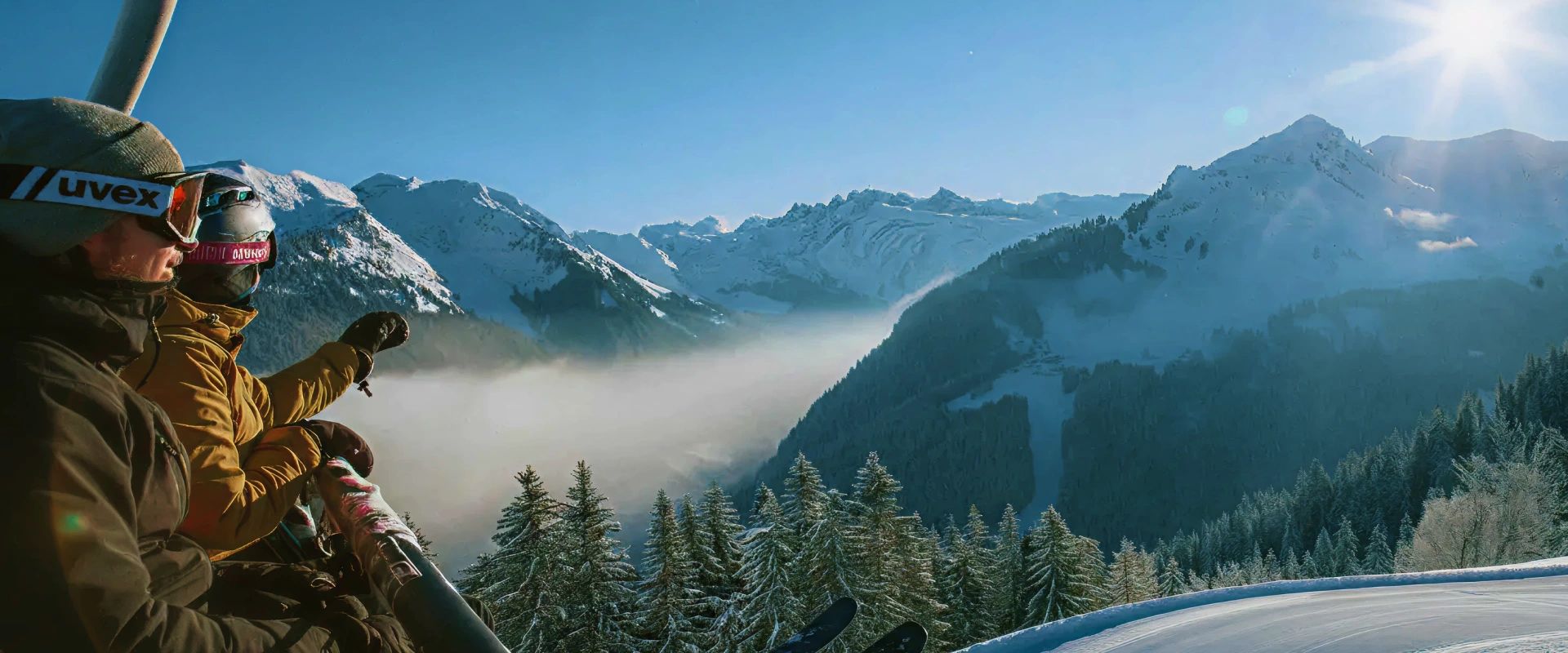
Summer skiing exists in a different register from a regular winter holiday. The days on snow are shorter, the terrain is glacier-only, and the rhythm of each day - early mornings on the mountain, warm afternoons off it - creates a holiday that feels more like a split between skiing and alpine summer travel. It is a niche within a niche, but for the people who have tried it, it tends to stick. This guide covers how summer skiing works in practice: the conditions, the kit, the logistics, and what to realistically expect from your time on a glacier. If you already know you want to go and need help choosing where, our Best summer ski resorts in Europe 2026 list compares the main glacier options side by side.
Summer skiing in Europe takes place on glaciers - permanent ice fields high in the mountains where snow persists year-round. The resorts that run summer operations are a small subset of the winter ski map: a handful of locations in Switzerland, Austria, France, and Italy, all sitting above roughly 2,700 m. The biggest names are Zermatt, Hintertux, Saas-Fee, Tignes, and Les 2 Alpes, with Cervinia and Passo Stelvio adding Italian options.
The ski areas themselves are significantly smaller than their winter equivalents. Where a resort like Tignes might have 300 km of pistes in winter, the summer glacier operation covers around 15 km. This is normal across the board - summer skiing is not about variety of terrain. It is about the quality of the snow, the setting, and the experience of skiing when most of the world is on a beach.
Two of these glaciers - Zermatt's Matterhorn glacier paradise and Austria's Hintertux - are open year-round with no closure period at all. The rest operate seasonal windows, typically opening in June and closing sometime between late July and early October, depending on conditions. Passo Stelvio runs one of the longest seasons, often staying open into November.
Glacier opening dates shift from year to year depending on snowfall and temperatures, so exact dates are always worth checking close to your trip. As a rough guide, the main summer windows look like this:
Year-round: Zermatt and Hintertux never close. You can ski on their glaciers in any month of the year.
June to September: Saas-Fee, Cervinia (via the Zermatt link), and Passo Stelvio run longer summer seasons. Saas-Fee typically opens mid-June and closes in early October. Passo Stelvio can run from late May to early November.
June to late July / early August: Tignes, Les 2 Alpes, and Val d'Isere have shorter windows tied more closely to snow conditions. Val d'Isere's glacier usually has the shortest season of the main options - sometimes just three to four weeks.
The pattern across all of them is the same: the earlier in summer you go, the better the snow. June and early July are generally the strongest weeks. By late August, the resorts that are still open tend to have less coverage and softer conditions, though the year-round glaciers maintain grooming throughout.
The single biggest difference between summer and winter skiing is what happens to the snow as the day progresses. On a glacier at 3,000 m, the morning surface can be firm, fast, and well-groomed - excellent skiing by any standard. By late morning, the sun softens the top layer and the snow becomes heavier and slower. By early afternoon, on a warm day, it can feel like skiing through mashed potato. This is why every summer glacier resort runs morning-only hours.
Visibility is usually good. Summer means longer daylight hours and clearer skies, which helps on the glacier. The trade-off is sun glare - UV at altitude is significantly stronger than at sea level, and the reflection off bright snow in direct sunshine is intense. Good goggles with a high-light lens, a strong SPF, and lip protection are not optional.
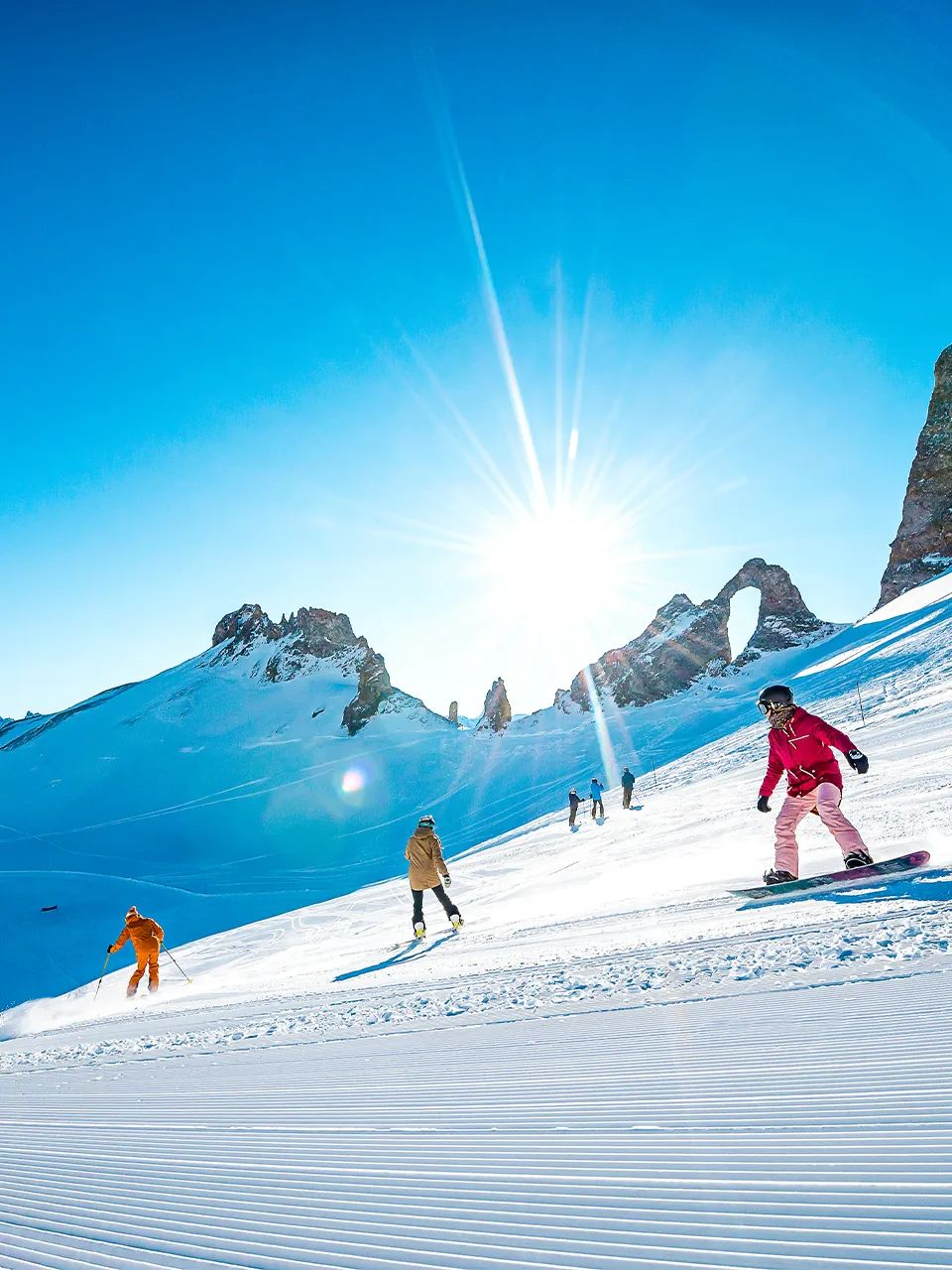
The terrain itself is groomed pistes rather than off-piste or powder. Most summer glacier areas maintain a set of blue and red runs alongside a terrain park, and the piste teams groom early each morning to give the best surface for the opening hours. Do not expect the full range of a winter resort - the runs are fewer, shorter, and on glacier terrain that tends to be more uniform. What you are getting is reliable, well-maintained snow at a time of year when it should not exist.
The kit for summer skiing is mostly the same as winter, with a few adjustments for the temperature range. Early mornings on the glacier can be cold - especially if you are on the first lift at 7:00 - but by mid-morning the sun at altitude warms things up quickly. Layering is more important than heavy insulation.
A good setup is a light base layer, a mid-layer fleece or softshell, and a waterproof jacket that you can open or remove as the morning heats up. Ski trousers work fine; some people prefer lighter waterproof trousers for summer. Gloves should be lighter than winter weight - thin waterproof gloves or spring gloves are ideal.
The single most important item is sun protection. At 3,000 m in July, the UV is roughly twice as strong as at sea level, and the snow reflects it upward into areas you would not normally burn - under the chin, inside the nostrils, the backs of the ears. SPF 50 is the baseline, reapplied every couple of hours, and a good lip balm with SPF is essential. Goggles should have a high-light or photochromic lens; the contrast between bright glacier and shadow can be extreme.
For the afternoons off the glacier, pack as you would for a summer mountain holiday: walking shoes, shorts, a sun hat, and something warmer for the evenings. Most glacier villages have a warm, sunny microclimate in the afternoons that feels nothing like a ski holiday.
The rhythm of a summer ski day is unlike anything in winter. An early alarm - 6:00 or 6:30 - gets you to the glacier lifts for opening, which is typically between 7:00 and 8:00 depending on the resort. The first hour is often the best skiing of the day: the snow is firm, the runs are empty, and the light across the glacier in early morning is something worth setting the alarm for.
By 10:00 or so the snow starts to soften, and the runs begin to feel heavier. Most recreational skiers start to slow down around this point, and the terrain park crowd takes over as the features ride better in softer snow. By noon, a lot of people are heading down.
The lifts close between 12:00 and 14:30 depending on the resort and conditions, and from there the day becomes a summer mountain holiday. People swim in lakes, hike, mountain bike, eat long lunches, and sit on terraces in the sunshine. It is this combination - the morning skiing and the afternoon everything else - that gives summer ski holidays their distinctive character. The skiing hours are limited, but the day as a whole does not feel short.
Summer skiing works best for people who already ski and want more of it outside the main season. Freestyle skiers and snowboarders who want park time in the sun, race teams and coaches who need training terrain, or recreational skiers who simply cannot wait until December - these are the groups that make up most of the glacier traffic in July. It also works well as a dual-purpose holiday: a few mornings on snow combined with hiking, biking, or just exploring an alpine valley in summer.
It is less well suited to complete beginners. The glacier terrain tends to be steeper than nursery slopes, the conditions change through the morning, and most summer operations have limited beginner-specific infrastructure compared to a full winter resort. A few resorts - notably Hintertux and Les 2 Alpes - maintain gentler runs and ski schools in summer, but for a first-ever ski experience, a winter trip with the full range of resort facilities will be smoother.
It is also worth being honest about expectations. Summer skiing is not the same as a peak-season winter week. The terrain is smaller, the hours are shorter, and the snow - while real and well-maintained - does not feel the same as February powder. What it has instead is something winter cannot match: warm weather, long days, uncrowded glaciers, and the slightly surreal pleasure of skiing in a t-shirt at 3,000 m while the rest of Europe is at the beach.
Summer glacier lift passes tend to be shorter (half-day rather than full-day) and the accommodation in resort is usually less expensive than peak winter weeks. Flights can go either way depending on when you book. Overall, the direct skiing costs are often lower, but it depends on the resort and timing. Switzerland's glacier resorts are generally more expensive than the French or Austrian options.
Most of the resorts on this list have rental shops open through the summer season. Availability is generally good since demand is lower than in winter. The equipment is the same standard kit you would hire in the main season. If you are heading to one of the smaller glacier operations like Passo Stelvio, it is worth confirming rental availability in advance, as the setup there is more basic.
Summer glacier terrain parks are a real highlight for snowboarders and freestyle skiers. Several resorts - Hintertux, Les 2 Alpes, Tignes, and Saas-Fee in particular - maintain well-built parks with kickers, rails, and halfpipes through the summer. The softer snow in late morning is actually better for park riding than the firm early-morning surface, so snowboarders often time their sessions a little later in the day.
This is where summer skiing differs most from a winter holiday. The afternoons are warm, sunny, and free - most people hike, swim, mountain bike, or simply sit on a terrace. Zermatt, Saas-Fee, and Val d'Isere have strong hiking networks. Tignes and Les 2 Alpes are excellent for mountain biking. The combination of morning skiing and afternoon summer activities is what makes the format work as a holiday, not just a ski trip.
Some resorts run ski schools on the glacier in summer, though the availability is more limited than in winter. Hintertux and Les 2 Alpes are the most reliable options for summer lessons, and both cater to a range of levels including intermediate and advanced coaching. If lessons are important to your trip, check with the resort before booking - not every glacier has a full summer teaching programme.
Ready to plan a summer ski trip? WeSki’s AI trip planner can match you to the right glacier resort based on your dates and what matters most to you

WeSki is a trading name operated by Wetrip Weski Ltd (BR021500). All the flights and flight-inclusive holidays on this website are financially protected by the ATOL scheme. When you pay you will be supplied with an ATOL Certificate. Please ask for it and check to ensure that everything you booked (flights, hotels and other services) is listed on it. Please see our booking conditions for further information or for more information about financial protection and the ATOL Certificate go to: www.caa.co.uk.
Package holidays that do not include travel by air are financially protected via ABTOT.
For the latest travel advice from the Foreign & Commonwealth Office visit www.gov.uk/foreign-travel-advice.