EN
EN
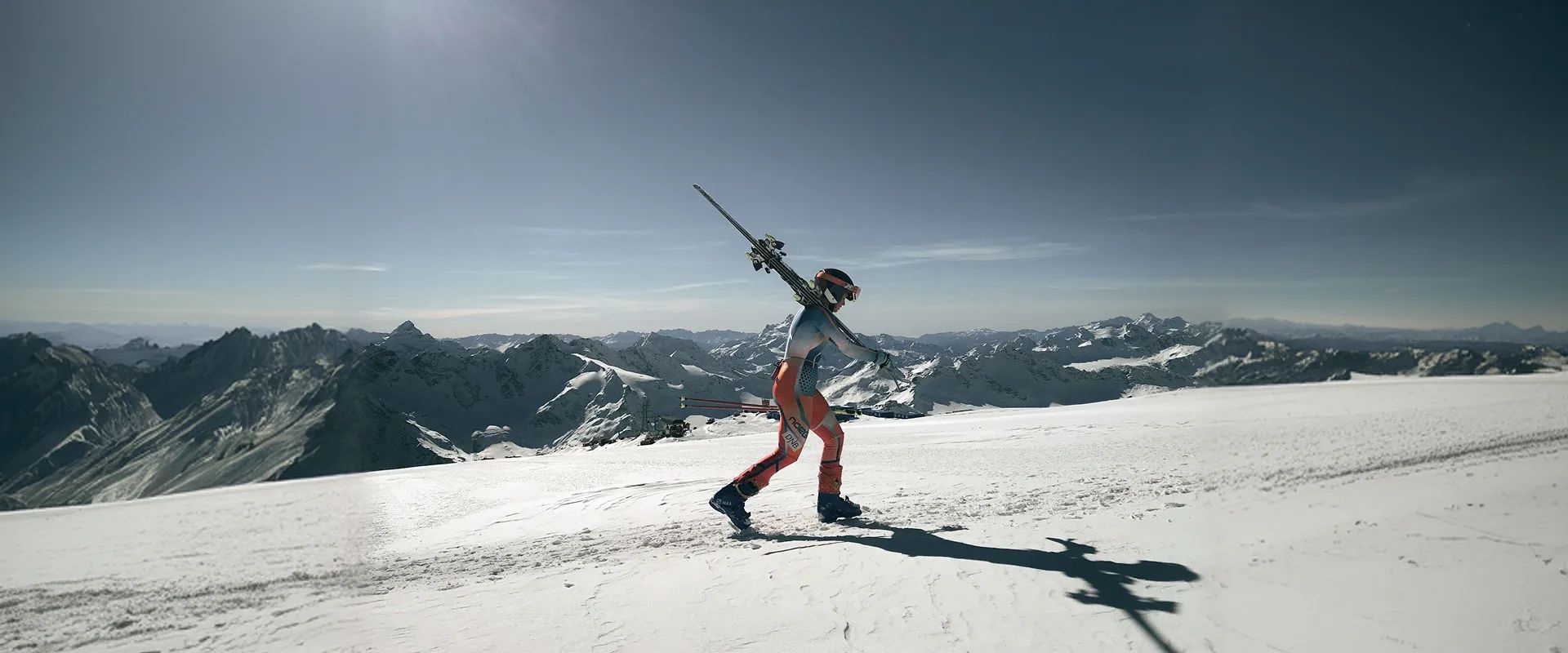
Skiing asks more of your body than most holidays do. A week on the slopes means six or seven hours a day of sustained leg work, constant balance adjustments, and the kind of full-body effort that catches people off guard if they haven't prepared. The good news is that six weeks of targeted training makes a noticeable difference - not just to how well you ski, but to how much you enjoy it. If you're curious about which muscles do the heavy lifting and why, our guide to what muscles skiing uses covers the detail. And if you're looking for specific exercises to add to your routine, our best exercises to prepare for a ski holiday list has you covered. This guide pulls everything together into a structured plan you can start today.
Running three times a week or holding a gym membership doesn't automatically prepare you for skiing. The demands are specific: skiing loads your quads and glutes in a sustained, semi-crouched position for hours at a time. Your core works constantly to keep you balanced over uneven terrain. Your ankles and knees absorb repeated small shocks, and your cardiovascular system has to cope with effort at altitude, where the air is thinner and your heart rate rises faster than at sea level.
People who arrive on the slopes without any preparation tend to hit a wall on day two or three. Their legs burn out by lunchtime, their lower back tightens up, and by the afternoon they're sitting in a cafe rather than skiing. The point of a ski fitness plan isn't to turn you into an athlete - it's to make sure your body can handle six full days of skiing, so you actually get to use the time you've paid for.
The plan below focuses on the four things that matter most: leg strength, core stability, cardiovascular endurance, and flexibility. You don't need a gym, though having access to one helps. Most of these exercises can be done at home with no equipment at all.
Your legs do the majority of the work when you ski. Quads, hamstrings, glutes, and calves all fire continuously - and they do it in positions your body isn't used to holding. The burning sensation most people feel on their first day comes from their quads being loaded in a bent-knee stance for far longer than normal life requires.
Wall sits are the single most ski-specific exercise you can do at home. Slide your back down a wall until your thighs are parallel to the floor and hold. Start with 30 seconds and build towards two minutes. It replicates the sustained quad contraction you'll feel on every run. Squats and lunges build the dynamic strength that helps you absorb bumps and change direction. Bulgarian split squats are particularly useful because they train each leg independently, which matters when you're weighting one ski more than the other through turns.
Calf raises are worth including too. Your calves work hard to keep pressure on the front of your ski boots, and weak calves lead to shin pain that can cut a ski day short. Two sets of 15 on each leg, three times a week, is enough to make a difference.
Core stability matters in skiing because you're constantly making micro-adjustments to stay balanced. Every turn, every bump, every change of terrain asks your trunk muscles to fire and stabilise. A strong core also protects your lower back, which takes a pounding on longer runs and steeper terrain.
Planks are the obvious starting point, but don't stop there. Side planks are arguably more important for skiing because they train the lateral stability you need when edging. Dead bugs train the coordination between your upper and lower body - lying on your back, extending opposite arm and leg while keeping your lower back flat on the floor. It sounds simple, but it builds exactly the kind of controlled movement skiing requires.
If you have access to a gym, cable woodchops and Pallof presses add rotational strength, which helps with carved turns and absorbing moguls. At home, Russian twists with a water bottle or book work as a substitute. Aim for core work three times a week, around 10 to 15 minutes per session. Consistency matters more than intensity here.
Skiing isn't steady-state cardio like jogging. It's interval-based: short, intense bursts of effort on each run followed by a rest period on the chairlift. Training your cardiovascular system to handle this stop-start pattern makes a real difference to how you feel by mid-afternoon.
High-intensity interval training (HIIT) replicates this pattern well. Try 30 seconds of maximum effort - squat jumps, burpees, or cycling sprints - followed by 60 seconds of rest, repeated eight to ten times. Two sessions a week in the weeks before your trip is plenty.
Cycling (indoor or outdoor) is particularly good for ski fitness because it loads the quads in a similar way. If you have access to a stationary bike, try alternating between seated climbing and standing sprints. Hill walks with a loaded rucksack build leg endurance and prepare your body for the altitude too. Swimming is gentler on the joints and works well as a recovery-day option.
Tight hips, stiff ankles, and inflexible hamstrings limit your skiing more than most people realise. Good ankle mobility lets you flex into your boots properly, which is the foundation of ski technique. Hip flexibility helps you absorb terrain and maintain a balanced stance. Tight hamstrings pull on your lower back and make it harder to hold a good skiing position.
Spend 10 minutes after each training session on stretching. Hip flexor stretches (the classic lunge stretch with your back knee on the floor), hamstring stretches, and calf stretches are the most important. Ankle circles and deep bodyweight squats with heels flat on the floor improve the ankle dorsiflexion that ski boots demand.
Yoga or a general mobility routine once a week adds recovery time and addresses areas you might miss with standalone stretches. It's not essential, but people who include it tend to feel less stiff during the second half of their ski week.
Here's how to structure the six weeks before your trip. The plan assumes three to four training days per week, with each session lasting 30 to 45 minutes.
| Weeks | Focus | Key sessions |
|---|---|---|
| 1 - 2 | Build a base | 2x leg strength (squats, lunges, wall sits), 1x core, 1x steady cardio (30-min cycle or walk) |
| 3 - 4 | Increase intensity | 2x leg strength (add Bulgarian split squats, step-ups), 2x core, 1x HIIT (8 rounds), 1x steady cardio |
| 5 | Peak week | 2x leg strength (heavier or longer holds), 2x core, 2x HIIT (10 rounds), stretch after every session |
| 6 | Taper and maintain | 1x leg strength (lighter), 1x core, 1x HIIT (6 rounds), daily stretching. Rest the final 2 days before travel |
The taper in week six is important. Arriving on the slopes with sore muscles from a hard session two days earlier defeats the purpose. Give your body time to recover so you start your holiday fresh.
If you're already active, you can increase the intensity from week one - add weight to your squats, extend your HIIT rounds, or include plyometric exercises like box jumps and lateral bounds. The structure stays the same; you're just raising the ceiling.
If you're starting from scratch, begin gently. Bodyweight squats, wall sits of 15 to 20 seconds, and brisk walks are a fine starting point. The goal in weeks one and two is to build the habit and let your joints adapt. Progress will come quickly once you're consistent.
If you have knee issues, swap high-impact exercises for their lower-impact equivalents. Step-ups instead of jump squats. Cycling instead of running. Wall sits with a stability ball behind your back to reduce joint stress. Strengthening the muscles around the knee is one of the best things you can do to protect it on the slopes, but pushing through pain is counterproductive.
Train in your ski socks. If you already own ski socks, wear them for wall sits and calf raises in the final two weeks. It's a small thing, but it helps your feet adjust before you spend a full day in boots.
Don't skip rest days during your holiday. Even with good preparation, a rest day mid-week (usually day three or four) makes the second half of your trip more enjoyable. Most resorts have pools, spas, or village walks that make a non-skiing day feel like part of the holiday rather than a missed opportunity.
Warm up on the slope, not just before it. Start each ski day with a gentle run to let your muscles warm up gradually. Heading straight for the steepest piste on cold legs is how most muscle strains happen.
Hydrate more than you think you need. Altitude and cold air dehydrate you faster than you'd expect. Dehydration leads to fatigue and muscle cramps, which undoes your fitness preparation. Carry water and drink steadily throughout the day.
Six weeks is the sweet spot for most people. It's long enough to build meaningful strength and endurance without needing a dramatic lifestyle change. If you only have three or four weeks, you can still make a difference - focus on wall sits, squats, and one or two HIIT sessions a week. Even two weeks of targeted leg work is better than nothing.
Not at all. Every exercise in this plan has a bodyweight version you can do at home. A gym gives you more options - cable machines, heavier weights, stationary bikes - but it's a preference, not a requirement. A clear wall and a bit of floor space are enough to run the full programme.
It helps beginners more than anyone else. Learning to ski is physically tiring because your body hasn't built the muscle memory to move efficiently yet. Stronger legs and better endurance mean you can spend more time in lessons and less time resting, which speeds up the whole learning process. If you're new to skiing, our beginner's guide to skiing covers what to expect from your first week.
Wall sits. They're simple, they require no equipment, and they train the exact muscle group that takes the most punishment on the slopes - your quads in a sustained bent-knee position. If you only do one exercise from this plan, make it wall sits, three times a week, building from 30 seconds towards two minutes.
Skiing itself is the workout during your holiday. Six hours on the slopes is more than enough physical activity for one day. Focus instead on recovery: stretch each evening, stay hydrated, eat well, and take a rest day if your body asks for one. The training beforehand is what lets you enjoy every day on the mountain without burning out.
Got a clearer picture of what you need? WeSki’s AI trip planner turns it into a shortlist - tell it your dates, your level, and what matters to you, and it'll match you to the right resort.