EN
EN
A ski holiday over New Year is one of the most popular weeks in the season - and one of the most rewarding if you plan it well. The snow is usually deep, the resorts are in full swing, and there's a feeling of marking the turn of the year somewhere meaningful rather than in a living room. The flip side is that it's peak season: accommodation fills early, slopes are busier than average, and getting the logistics right matters more than it would in a quiet January week. This guide covers the practical side of planning a New Year ski trip - when to book, what to expect on the ground, and how to make the most of the week. If you're looking for specific resort recommendations, our best ski resorts for New Year 2026/27 list covers ten options across the Alps, from big celebrations to peaceful mountain villages.
New Year is the single highest-demand week for ski accommodation in most Alpine resorts, alongside February half term. The practical consequence is simple: the earlier you book, the more choice you'll have. Six to nine months ahead is a reasonable target for the most popular resorts - Val Thorens, Zermatt, St Anton, and similar - where the best-located properties fill up first.
That said, booking early doesn't mean rushing. Take time to decide what kind of New Year you want before committing. A resort that's ideal for a big celebration might not suit someone looking for a quiet mountain week, and the difference between the two is stark. Knowing what you're after makes the booking decision much simpler when you do pull the trigger.
Some availability does reappear closer to the date as plans change, but relying on late availability over New Year is more of a gamble than at any other time of the season. If you have a specific resort in mind, early is better.
The days between Christmas and New Year have a particular rhythm in a ski resort. Many guests arrive on 26th or 27th December, so there's a turnover energy early in the week as the Christmas crowd overlaps with the New Year one. By the 28th, the resort has settled and the week ahead feels like its own thing - not the tail end of Christmas but not yet the party either.
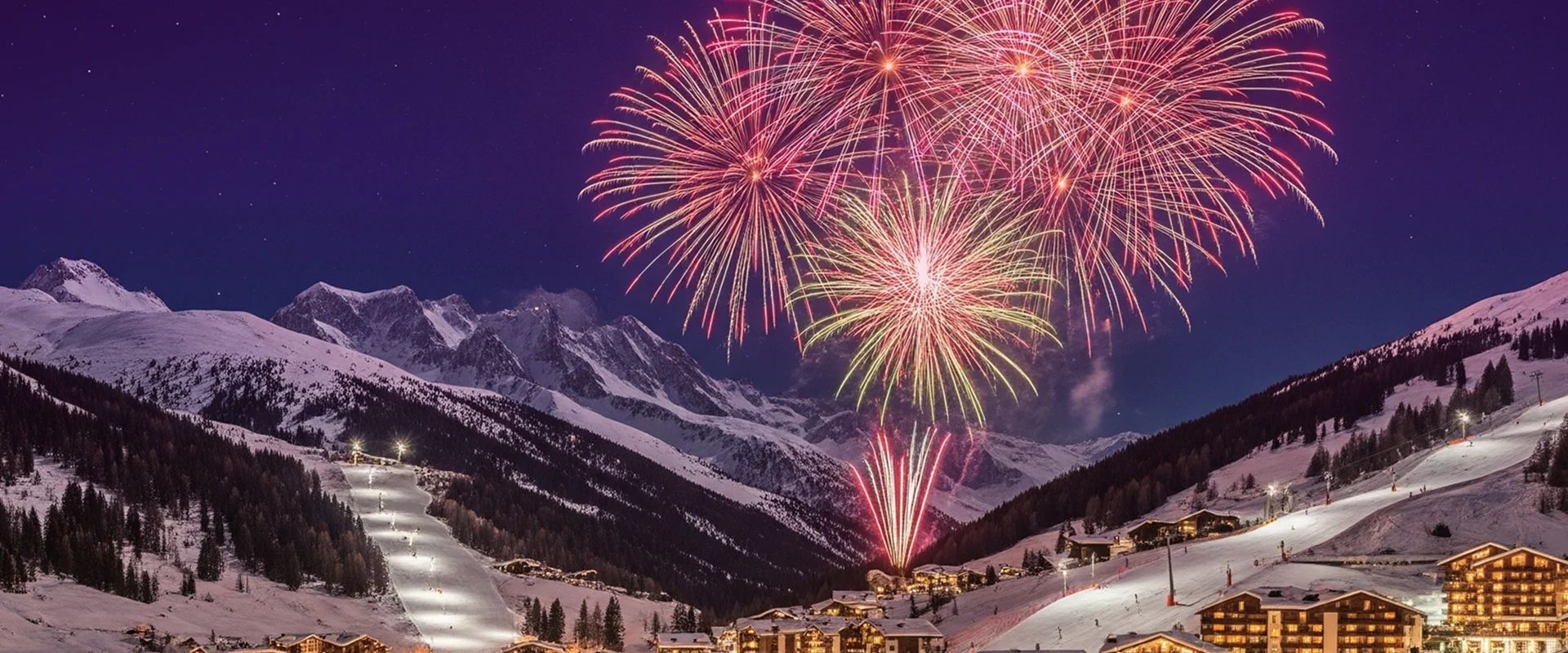
The 31st itself varies enormously by resort. In places like Ischgl, Val Thorens, or St Anton, it's an event - public stages, music, fireworks, crowds. In smaller villages or quieter Swiss resorts, it might be a fireworks display over the valley and a glass of something in the village square before heading to bed. Neither version is better; they're just different holidays. The 1st of January tends to be quiet on the slopes wherever you are, which makes it one of the best skiing days of the week if you can get yourself up.
Late December falls in the early-to-mid season for most Alpine resorts, which means conditions are usually good at altitude but can be variable at lower levels. Resorts with village altitudes above 1,500m and skiing above 2,500m are the safest bets for reliable snow cover - places like Val Thorens, Zermatt, and Saas-Fee are rarely caught out.
Lower villages occasionally need a few weeks of cold weather before the snowpack builds properly on runs back to base. Modern snowmaking across Europe's major resorts has reduced this risk significantly, and most main pistes are guaranteed to be open by the Christmas-New Year period. But if guaranteed snow-to-the-door skiing matters to you, high-altitude resorts are the more reliable choice.
Glacier-accessed resorts have an extra layer of reliability. Zermatt's Klein Matterhorn (3,883m), Val Thorens' Peclet glacier, and Saas-Fee's Allalin sector all have snow year-round, so late December is comfortably within their season regardless of how the early winter has gone.
Getting to and from a ski resort over the New Year period takes a little more thought than mid-season travel. Flights and train tickets fill up earlier, transfer roads are busier on changeover days, and some regional airports run reduced schedules between the holidays.
The main changeover days for New Year ski weeks are typically 27th-28th December (arriving) and 3rd-4th January (departing). If you can fly a day either side of these peaks, you'll find the airports and transfer routes notably calmer. Geneva, Innsbruck, and Salzburg are the busiest gateway airports for Alpine resorts, and all three see their heaviest ski-season traffic during the Christmas-New Year changeover.
Transfer times themselves don't change, but mountain roads can be slower in heavy snow. Resorts with short airport transfers - Mayrhofen from Innsbruck (1 hour), Courmayeur from Geneva (1 hour 45 minutes) - take the stress out of peak-day travel more than a resort that's three hours from the nearest airport.
This is probably the most important decision for a New Year ski trip, and it's one that's worth getting right before you book. The difference between a resort built for celebration and one built for quiet is dramatic on the 31st, and you don't want to be in the wrong one.
Party resorts like Ischgl, Val Thorens, and St Anton invest in the New Year's Eve production - stages, sound systems, headline acts, fireworks choreographed to music. The atmosphere is electric, the crowds are large, and the bars stay open until the small hours. If that's what you want, these resorts deliver it better than almost any non-ski destination you could name.
Peaceful resorts take a different approach. Places like Saas-Fee, Courmayeur, and Zermatt mark midnight without making it the centrepiece. Fireworks, a glass raised in a village square, and then quiet. The mountains are the point, not the party. For couples, families with younger children, or anyone who'd rather start the year on a quiet piste than in a crowd, these resorts get the balance exactly right.
Some resorts sit in between - Meribel and Mayrhofen, for example, have celebrations without the mega-event feel, and that middle ground suits groups where people want different things.
Peak weeks mean busier slopes, longer lift queues, and fuller mountain restaurants at lunchtime. None of this is a reason to avoid New Year skiing - it's still a brilliant week to be on the mountain - but a few adjustments make the experience noticeably better.
Timing is the simplest lever. Most guests head to the main gondola between 9am and 10am. If you're on the first lift at opening time, you'll get an hour or more of quiet slopes before the crowds arrive. Similarly, the lunch rush between 12pm and 1.30pm clears the pistes - if you can eat earlier or later, the runs are yours.
Geography helps too. Big ski areas like the Three Valleys, Ski Arlberg, and the Dolomiti Superski network have enough terrain that crowds disperse. The further you go from the main village gondola, the quieter it gets. In Meribel, that means heading toward the Mont Vallon sector. In St Anton, it's the Rendl area across the valley. In any big resort, there's always a quiet corner if you're willing to explore.
The 1st of January is, quietly, one of the best days of the entire ski season. A significant proportion of the resort is sleeping off the night before, which means the slopes - particularly the higher ones - are remarkably empty for a peak-season day. If you can manage an early start, the morning skiing on New Year's Day is often as good as it gets all week.
Some resorts lean into this. Mountain restaurants open for New Year's Day brunch, and a few organise morning events - sunrise viewing from a cable car station, a champagne toast at altitude, or a special first-run experience. Check what your resort puts on, because these moments are often the unexpected highlights of the week.
Even if you celebrated hard the night before, it's worth getting out by late morning. The afternoon of the 1st still tends to be calmer than a normal peak-season day, and there's something satisfying about starting the year with a few good runs in clear mountain air.
Arrive a day early if you can. Getting to a resort on the 28th or 29th rather than the 30th gives you time to find your feet, pick up equipment, and settle in before the celebrations start. It also avoids the busiest transfer day of the week.
Book New Year's Eve dinner early. Whether it's a restaurant in the village or a mountain hut doing a special evening, tables fill weeks in advance in popular resorts. If dining out on the 31st is part of your plan, sort it before you travel.
Set an alarm for the 1st. New Year's Day morning skiing is properly special - empty slopes, fresh grooming, and the whole mountain to yourself. Even a late start still catches the calm before the afternoon fills up.
Use the big ski area. Resorts in the Three Valleys, Ski Arlberg, or the Dolomiti Superski network have so much terrain that you can always find a quiet pocket. Head away from the main gondola station and the crowds thin out fast.
For many skiers, the atmosphere of New Year in a ski resort makes the premium worthwhile. The combination of good snow, festive celebrations, and the feeling of starting the year on the mountain is hard to replicate at other times. The trade-off is higher pricing and busier slopes, but if you book early and choose a resort with a big ski area, the experience is well worth it.
Some resorts and accommodation providers accept shorter stays over New Year, though many require a minimum of a week during peak dates. A four or five-night stay arriving on the 28th or 29th December is sometimes available, particularly in hotel accommodation. Chalets and self-catered apartments tend to run Saturday-to-Saturday or Sunday-to-Sunday during peak weeks.
The usual ski holiday packing list applies, with a couple of additions. Late December means shorter daylight hours and colder temperatures, so warm mid-layers and a good-quality base layer matter more than in spring. If you're planning to go out on New Year's Eve, pack something to change into - most people dress up slightly for the evening, even in casual resort towns.
Most ski schools run group and private lessons throughout the Christmas and New Year period, though demand is high and popular time slots fill up quickly. If lessons are part of your plan, book them when you book the holiday rather than leaving it until you arrive. Ski schools in busy resorts often run at full capacity during peak weeks, so early booking secures your preferred instructor and timing.
They're different holidays with different feels. Christmas week tends to be quieter and more family-oriented, with a focus on tradition and atmosphere. New Year has more energy, building toward the 31st, and the celebrations are generally more outward-facing. Snow conditions are similar for both. The choice comes down to what kind of week you want rather than one being objectively better than the other.
Got a clearer picture of what you need? WeSki’s AI trip planner can turn your priorities into a shortlist of resorts and packages in seconds - tell it what matters and let it do the searching.