EN
EN
It's one of the first questions anyone asks before a snow holiday: should I ski or snowboard? The two sports share the same mountains, but the way you move, the gear you wear, and the learning curve you'll face are all quite different. This guide breaks down the real differences - how each sport feels to learn, where each one has an edge, and what matters most when you're choosing for the first time. If you've already decided on snowboarding and want to know where to go, our best snowboarding resorts in Europe list covers the top picks. And if you're ready to get started, our beginner's guide to snowboarding walks you through everything from first lessons to first turns.
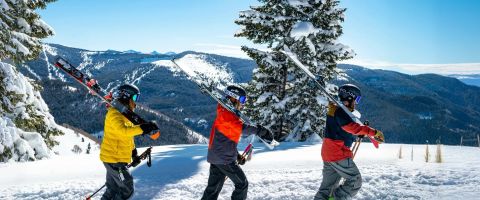
The most visible difference is right there on your feet. Skiers stand on two separate planks, each with its own binding and boot, facing forwards down the slope. Snowboarders stand sideways on a single wide board, with both feet fixed to it - closer to surfing or skateboarding in stance.
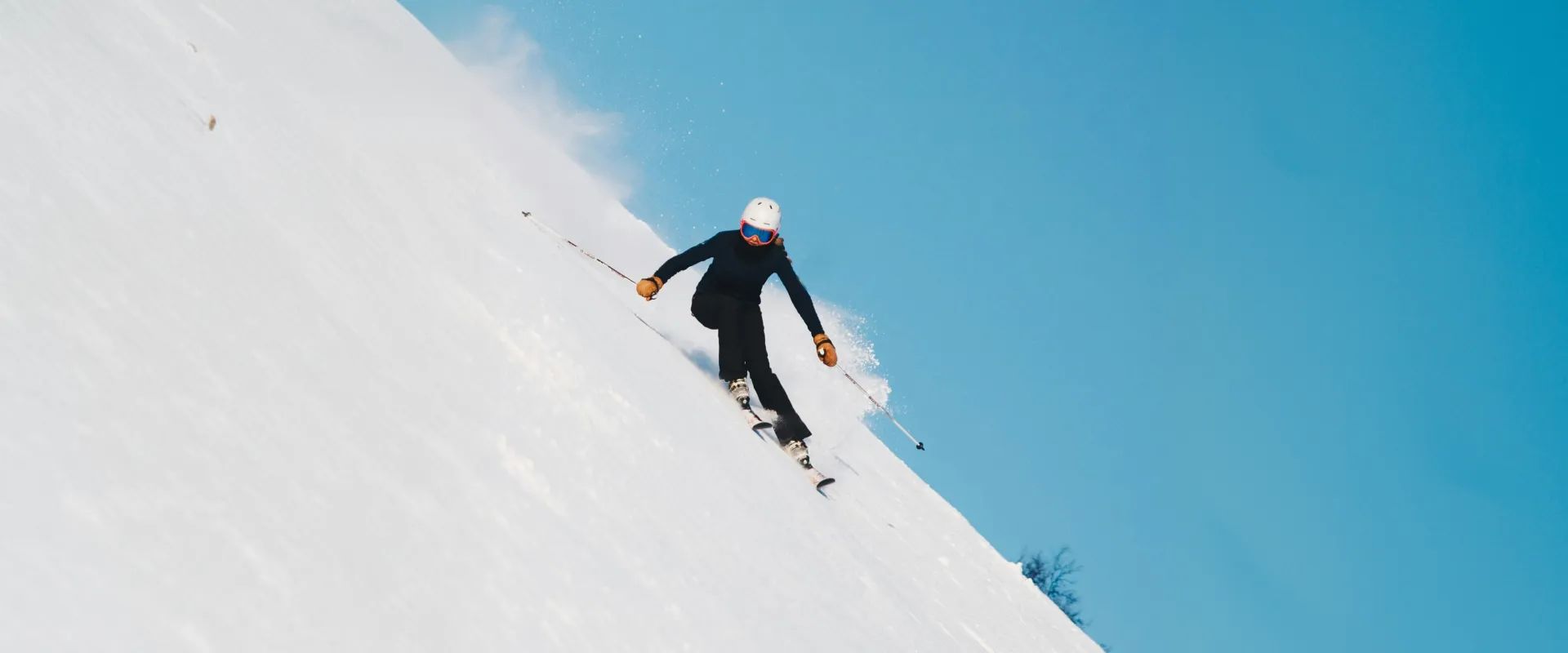
This changes everything about how you move. Skiers turn by shifting weight between their left and right ski, using poles for balance and timing. Snowboarders shift weight between the toe edge and heel edge of the board, using their upper body to initiate turns. Neither approach is harder in absolute terms - they're just different movement patterns, and most people find one clicks faster than the other.
One practical note: skiers can walk (awkwardly) in their boots and shuffle along flat sections. Snowboarders need to unclip one foot to walk, and flat terrain can mean a lot of pushing with your free foot. It's a small thing, but it shapes the day more than you'd expect.
This is where the two sports diverge most sharply. Skiing tends to be easier in the first few hours. Having two separate legs gives you a more natural sense of balance, and the snowplough (pizza shape) lets you slow down almost immediately. Most first-time skiers are making tentative turns down a gentle slope by the end of day one.
Snowboarding's first day is notoriously tough. Standing sideways with both feet locked in feels unnatural, and the board can catch an edge without warning - sending you onto your knees, your backside, or occasionally face-first into snow. It's common to spend a good portion of the first morning getting up from falls.
Here's the twist, though: once a snowboarder gets past that initial hurdle - usually by day two or three - progression can accelerate quickly. The mechanics of linking turns on a board are simpler than refining parallel ski technique. Many instructors describe the learning curves as opposites: skiing is easy to start and harder to master, while snowboarding is harder to start but quicker to reach a comfortable cruising level.
Whatever you choose, lessons make the single biggest difference in your first week. Both sports have specific techniques that are very difficult to figure out alone, and an instructor compresses days of trial and error into hours of structured progress.
The kit list looks different for each sport, and the boots are the biggest practical distinction. Ski boots are rigid plastic shells with metal buckles - they hold your foot and ankle firmly for precise control, but they're not comfortable to walk in. Snowboard boots are softer, closer to a stiff walking boot, and most people find them far more pleasant to wear around the resort.
Skiers carry poles; snowboarders don't. Snowboarders generally need wrist guards (catching yourself on outstretched hands is common while learning), impact shorts for the inevitable sitting-down falls, and good waterproof trousers - you'll spend more time in contact with the snow. Both sports benefit from a helmet, goggles, and layers that you can adjust throughout the day.
For first-timers, hiring equipment is the standard approach for both sports. A rental package will typically include the board or skis, boots, bindings, poles (for skiers), and a helmet. When you book a ski holiday through WeSki, equipment hire is part of the package, so there's no need to organise it separately.
Skiers and snowboarders use the same pistes, but each sport has terrain it handles more naturally. Skiing excels on steep, narrow slopes and in mogul fields, where having two independent legs lets you pick a nimble line. Flat cat-tracks (the narrow connecting paths between runs) are straightforward on skis but a slog on a snowboard - you'll see boarders unstrapping and walking on long flats.
Snowboarding has the edge in powder and off-piste. The wide board floats more naturally in deep snow, and the surfing-style stance makes it easier to adjust to variable conditions. Snow parks, too, tend to be more popular with boarders, though plenty of skiers ride them as well.
When choosing a resort, most major European ski areas cater well to both sports. The best snowboarding resorts tend to have good snow parks, few long flat sections, and a culture that welcomes boarders. Some smaller, more traditional resorts can feel very ski-focused - not unwelcoming, but the terrain layout may involve more flat traverses.
Both sports are full-body workouts, but they load the body differently. Skiing is heavy on your thighs and knees - the quadriceps take a sustained beating, especially during longer descents or in bumpy terrain. It's worth noting that knee injuries are the most common skiing injury, largely because the binding-release mechanism isn't foolproof and the legs can twist independently.
Snowboarding is harder on wrists, shoulders, and your core. Falls tend to be forward or backward (onto hands or tailbone), which is why wrist guards are strongly recommended for beginners. On the positive side, ankle and knee injuries are less common on a snowboard because both feet are locked into the same plane - your lower legs move as a unit.
Fitness preparation is similar for both: strong legs, a solid core, and good cardiovascular endurance will serve you well regardless of which sport you choose. If you're already active, you'll feel the first-day ache either way - it uses muscles in combinations that everyday exercise rarely does.
This is subtle, but it shapes the experience. Skiing is the older sport, and traditional Alpine resorts were built around it. The culture leans slightly more conventional - think long lunches on sunny terraces, classic red jackets, and a broad age range on the slopes.
Snowboarding brought a different energy to the mountains from the 1980s onwards. Park riding, freestyle progression, and a looser dress code are all part of the culture. Resorts that lean into snowboarding (Avoriaz, Laax, Mayrhofen) tend to have strong park scenes, dedicated boarder events, and a younger crowd in the bars.
None of this should sway your decision on its own - choose the sport that appeals to you physically, not culturally. But it's worth knowing that the vibe around each sport differs, and you'll likely gravitate toward the community that matches your energy once you're on the mountain.
Skiing is typically easier to pick up in the first few hours, while snowboarding takes longer to feel comfortable but can accelerate quickly once the basics click.
Snowboard boots are softer and more comfortable off the slopes; ski boots are rigid and built for precision on them.
Flat connecting paths are much easier on skis. Deep powder and snow parks tend to favour snowboarders.
Lessons are essential for both sports - the technique is specific enough that self-teaching costs you days of progress.
There's no wrong choice. Both sports lead to the same mountains, the same views, and the same end-of-day feeling of having earned your evening.
The first day on a snowboard is generally more physically demanding than the first day on skis. Standing sideways with both feet fixed takes time to feel natural, and falls are more frequent early on. That said, many people who stick with it find they reach a comfortable cruising level quite quickly after the initial hurdle. The learning curves are different rather than one being objectively harder.
They can, and they often do. Skiers and snowboarders use the same lifts, the same pistes, and the same resort facilities. The only wrinkle is that lessons will be separate, so a mixed group won't be together during instruction time. Beyond that, you'll meet back up for lunch, ride lifts together, and share runs throughout the day.
Most ski schools start children on skis, partly because the forward-facing stance feels more intuitive at a young age and partly because the snowplough gives an immediate braking technique. Children who want to switch to snowboarding later can do so - many start boarding around age seven or eight, once they have enough balance and core strength. There's no rule, though; some kids take to a board straight away.
Not at all. Plenty of people learn both over successive holidays, or even switch mid-trip. It's worth committing to one sport for your first few days of lessons so the technique has time to settle, but there's nothing stopping you from trying the other next time. Some resorts let you swap equipment partway through a hire period if you want to experiment.
In Europe, this is almost unheard of. The vast majority of European resorts welcome both skiers and snowboarders across all lifts and pistes. A handful of small, traditional resorts may have limited park facilities, but outright bans are essentially a thing of the past on this side of the Atlantic.
Decided which sport you want to try? Use WeSki’s AI trip planner to find a resort that suits your plans - whether you're skiing, snowboarding, or bringing a group that wants to do both