EN
EN
 Stunning views
 Classic mountain charm
 Backcountry (off-trail) skiingStunning viewsClassic mountain charmBackcountry (off-trail) skiingStunning viewsClassic mountain charmBackcountry (off-trail) skiingStunning viewsClassic mountain charmBackcountry (off-trail) skiing
Heiligenblut am Großglockner is one of the most dramatically situated ski villages in the Alps - a small, historic mountain community at 1,301m in Carinthia, sitting directly beneath the Großglockner (3,798m), Austria's highest mountain. The famous pilgrimage church of St. Vinzenz, with its Gothic spire rising against the backdrop of the Großglockner's ice-covered pyramid, is one of the most photographed scenes in the Austrian Alps and has drawn travellers to this valley for centuries. The ski area rises from the village to 2,902m at the Gjaidtroghöhe, offering 55km of pistes across 13 runs served by 11 lifts, and - crucially - over 15km² of dedicated Freeride Arena for off-piste skiing and snowboarding in high-alpine terrain with up to 1,500m of vertical descent.
The skiing stretches across two main sectors: the Schareck (2,604m) and the Hochfleiss (2,902m), connected by ski routes and the extraordinary Tunnelbahn Fleissalm - a gondola that runs through a tunnel inside the mountain, one of the most unusual lift systems in the Alps. From the Schareck summit, the 7km valley descent back to Heiligenblut drops 1,300m of vertical through varied terrain above and below the treeline. The altitude ensures reliable snow conditions, and the predominantly high-alpine setting above the treeline means wide, open slopes with views across more than 40 peaks above 3,000m in the Hohe Tauern National Park - the largest protected area in the Eastern Alps.
Heiligenblut declares itself 'absolutely freeride-friendly' - a local culture and resort philosophy that actively promotes off-piste skiing with professional guiding, safety infrastructure, and a Freeride Checkpoint at the Rossbach mid-station where you can check conditions and test your avalanche transceiver for free. The Hohe Tauern National Park surrounding the village is one of the largest ski touring areas in the Eastern Alps, with a dedicated national park ski touring bus providing access to backcountry routes. Beyond the skiing, Heiligenblut is the southern gateway to the Großglockner High Alpine Road (one of Europe's most spectacular mountain passes, closed in winter but a defining feature of the landscape) and has a Trail of Legends walking route through the village's centuries of history. A reconstructed gold-mining village in the Fleisstal valley adds another dimension to this extraordinary mountain community.
Check out Heiligenblut ski deals to start planning your trip.
Heiligenblut am Großglockner is one of the most dramatically situated ski villages in the Alps - a small, historic mountain community at 1,301m in Carinthia, sitting directly beneath the Großglockner (3,798m), Austria's highest mountain. The famous pilgrimage church of St. Vinzenz, with its Gothic spire rising against the backdrop of the Großglockner's ice-covered pyramid, is one of the most photographed scenes in the Austrian Alps and has drawn travellers to this valley for centuries. The ski area rises from the village to 2,902m at the Gjaidtroghöhe, offering 55km of pistes across 13 runs served by 11 lifts, and - crucially - over 15km² of dedicated Freeride Arena for off-piste skiing and snowboarding in high-alpine terrain with up to 1,500m of vertical descent.
The skiing stretches across two main sectors: the Schareck (2,604m) and the Hochfleiss (2,902m), connected by ski routes and the extraordinary Tunnelbahn Fleissalm - a gondola that runs through a tunnel inside the mountain, one of the most unusual lift systems in the Alps. From the Schareck summit, the 7km valley descent back to Heiligenblut drops 1,300m of vertical through varied terrain above and below the treeline. The altitude ensures reliable snow conditions, and the predominantly high-alpine setting above the treeline means wide, open slopes with views across more than 40 peaks above 3,000m in the Hohe Tauern National Park - the largest protected area in the Eastern Alps.
Heiligenblut declares itself 'absolutely freeride-friendly' - a local culture and resort philosophy that actively promotes off-piste skiing with professional guiding, safety infrastructure, and a Freeride Checkpoint at the Rossbach mid-station where you can check conditions and test your avalanche transceiver for free. The Hohe Tauern National Park surrounding the village is one of the largest ski touring areas in the Eastern Alps, with a dedicated national park ski touring bus providing access to backcountry routes. Beyond the skiing, Heiligenblut is the southern gateway to the Großglockner High Alpine Road (one of Europe's most spectacular mountain passes, closed in winter but a defining feature of the landscape) and has a Trail of Legends walking route through the village's centuries of history. A reconstructed gold-mining village in the Fleisstal valley adds another dimension to this extraordinary mountain community.
Check out Heiligenblut ski deals to start planning your trip.
Skiing at Heiligenblut has a high-alpine character defined by its position beneath Austria's highest mountain. Most of the terrain sits above the treeline, with wide, open slopes and panoramic views across the Hohe Tauern peaks. The two sectors - Schareck and Hochfleiss - are connected by ski routes and the Tunnelbahn, and together provide 55km of groomed pistes plus four marked ski routes and six dedicated freeride sectors in the Freeride Arena. The terrain is predominantly red (8 runs), with 4 blue runs and 1 black, providing a range that suits intermediates and advanced skiers best.
The 7km descent from the Schareck summit to the village is the headline run - 1,300m of vertical through high-alpine terrain that opens up as you drop towards the treeline and finally into Heiligenblut with the Großglockner pyramid towering above the village church. The Hochfleiss sector reaches 2,902m, providing the highest skiing and the most reliable snow. The Tunnelbahn between the sectors is an experience in itself - riding through a mountain tunnel in a gondola is genuinely surreal and unlike anything else in Austrian skiing.
Beginners have two gentle learning areas at village level - the Sonnenalm and the Snowland children's zone, where young skiers learn with the support of the Grossglockner Snow Sports School. The wide blue runs on the lower slopes provide progression, and the Snowman Card makes family skiing affordable (€10/day for children under 10). However, the ski area's strength lies with intermediates and freeriders - beginners with a full week of learning ahead may find the progression to the upper mountain challenging, as some blues are steeper than their grading suggests.
The ski school runs courses from age four, with children's groups, private lessons, and specialist freeride instruction for older children and adults. Equipment hire is at two sport shops in the village. The uncrowded slopes and personal atmosphere make Heiligenblut a welcoming place to learn, even if the terrain is more limited for beginners than at larger resorts.
WeSki insider tip: The Snowland children's area at the valley station is a friendly, sheltered space for first-time skiers. The €10/day Snowman Card for children under 10 is outstanding value. Once children are confident on blues, take them up to the Schareck for the view of the Großglockner - skiing with Austria's highest mountain as your backdrop is a memory that lasts.
Intermediates have the ideal terrain at Heiligenblut. Eight red runs across the Schareck and Hochfleiss sectors provide engaging, varied descents on wide, well-groomed pistes with exceptional scenery. The 7km Schareck-to-Heiligenblut valley run (1,300m vertical) is a magnificent descent that builds in variety and intensity as you drop through the alpine terrain. The Hochfleiss runs from 2,902m provide high-altitude skiing with views that stretch to over 40 three-thousanders.
The uncrowded slopes are a real asset - you'll rarely queue for a lift, and the groomed pistes feel spacious and unhurried. The off-piste right beside the marked runs is accessible and friendly for intermediates looking to take their first tentative turns in powder. The mountain restaurants scattered across the ski area provide regular stops with traditional Carinthian food and the kind of panoramic views that make you forget to eat. A confident intermediate could ski the entire 55km in a day or two, but the quality of the terrain and the scenery reward repeated descents.
WeSki insider tip: Ski the 7km descent from the Schareck to Heiligenblut on a clear morning - it's 1,300m of varied terrain that starts in the high-alpine and finishes with the village church and the Großglockner pyramid filling your view. Take it slowly and stop to absorb the scenery. It's one of the most beautiful single runs in Austria.
Heiligenblut's Freeride Arena is the main attraction for experts. Over 15km² of high-alpine freeride terrain across six dedicated sectors, with up to 1,500m of vertical descent, provides some of the finest off-piste skiing in Carinthia. The terrain is almost entirely above the treeline, with open bowls, steep faces, and natural features shaped by the glaciated landscape of the Hohe Tauern. The Freeride Checkpoint at the Rossbach mid-station provides free avalanche transceiver testing and current conditions information - a safety feature that reflects the resort's commitment to responsible freeride culture.
The ski routes from the Schareck (Kasereck, Fleisstal, Hochfleiss, Schareck) provide marked but ungroomed descents for experienced skiers. For ski touring, the Hohe Tauern National Park is one of the largest touring areas in the Eastern Alps, with routes reaching the 3,000m+ peaks of the Goldberg group and beyond. A dedicated national park ski touring bus provides access to starting points. The Grossglockner Mountain Guides offer professional guiding for freeride, touring, and ice climbing. The 'Magical Moments' programme provides guided tours to places you'd never reach alone.
WeSki insider tip: The Freeride Checkpoint at the Rossbach mid-station is a free resource that every off-piste skier should use. Test your avalanche transceiver, check conditions and avalanche risk, and talk to the staff about route recommendations. Heiligenblut's 'absolutely freeride-friendly' philosophy means the local culture actively supports off-piste skiing - but always with respect for the mountain and proper preparation.
Heiligenblut's terrain suits snowboarding well. The wide, open slopes above the treeline are excellent for carving, and the Freeride Arena provides outstanding natural terrain for riders who enjoy powder and natural features. The high-alpine setting means the terrain is snowboard-friendly with few flat sections. The 'Winter. Beats. Mountains.' DJ events at 2,600m on selected weekends add a cultural dimension to the riding. The uncrowded slopes mean boarders have space to express themselves.
Off-piste skiing is Heiligenblut's defining feature. The Freeride Arena covers 15km² (1,500 hectares) of high-alpine terrain with six dedicated sectors and four marked ski routes. The freeride-friendly local culture, the Freeride Checkpoint safety infrastructure, and the professional guiding from the Grossglockner Snow Sports School and mountain guides combine to create one of the most accessible and well-supported freeride environments in Austria. The Hohe Tauern National Park provides backcountry touring access to some of the highest terrain in the Eastern Alps, with a dedicated ski touring bus. For ice climbing, guided excursions on frozen waterfalls are available through the snow sports school.
The Grossglockner Snow Sports School provides group and private lessons for all ages and abilities, from children's ski kindergarten (age 4+) to freeride guiding and ski touring. A private ski school in Heiligenblut offers additional options with local specialist knowledge. English-speaking instruction is available. Equipment hire is at two sport shops in the village. The 'TOP Adventures' programme provides specialist guiding for freeride, touring, and ice climbing.
Heiligenblut doesn't have a shaped terrain park - the resort's character is oriented towards natural terrain, freeride, and the mountain experience rather than manufactured freestyle features. The natural terrain in the Freeride Arena provides endless natural hits, banks, pillows, and features for riders who prefer playing with the mountain. For shaped parks, the neighbouring Nassfeld ski area (around 90 minutes by car) has a dedicated snowpark.
Heiligenblut is a welcoming family destination with a peaceful atmosphere and affordable pricing. The Snowland children's zone and the ski school's children's programmes from age four provide good beginner infrastructure, and the Snowman Card (€10/day for children under 10) makes family lift passes remarkably affordable. The village is small and safe for children to walk around, and the spectacular scenery - the Großglockner pyramid looming above the village church - gives the whole holiday a sense of mountain magic.
Older children will enjoy the valley descent from the Schareck, the Tunnelbahn ride through the mountain, and (for confident young skiers) the first taste of off-piste in the friendlier freeride sectors. The Trail of Legends walking route through the village teaches children about centuries of mountain history. The reconstructed gold-mining village in the Fleisstal offers gold panning and a fascinating glimpse into the valley's past. Tobogganing and snowshoe walks provide non-skiing alternatives.
Dining is traditional Carinthian - mountain huts on the slopes serve hearty food with panoramic views, and the village restaurants provide affordable, family-friendly evening meals. The free ski bus connects accommodation to the lift base station throughout the day. Prices across the board are lower than at the big-name Austrian resorts, making Heiligenblut one of the most affordable mountain holiday options for families.
Heiligenblut sits at the southern gateway to the Hohe Tauern National Park, beneath Austria's highest mountain, with centuries of history and a landscape of extraordinary natural beauty. The off-slope experiences here are as memorable as the skiing - and for many visitors, more so.
Beyond skiing and snowboarding:
For rest days and non-skiers:
Dining in Heiligenblut is traditional Carinthian mountain cooking in rustic settings with views that would justify the visit alone. Ten mountain restaurants are scattered across the ski area, with the huts at Wallackhaus, Spatzalm, and Fleissalm considered the standouts. Prices are very affordable by Austrian standards. The village has a handful of restaurants and hotel dining rooms serving Carinthian specialities.
WeSki insider tip: Have lunch at the Schareck summit restaurant on a clear day - the view of the Großglockner (3,798m) and over 40 three-thousanders stretching across the Hohe Tauern is one of the most spectacular dining panoramas in Austrian skiing. Order the Carinthian Käsnudeln (handmade cheese-filled pasta with brown butter) - it's the regional speciality and it tastes even better at 2,600m with Austria's highest mountain filling the window.
Après-ski in Heiligenblut is quiet, authentic, and mountain-focused. The Skischmankerln umbrella bar at the Rossbach mid-station provides a sociable end-of-day drink, and the mountain huts offer late-afternoon warmth before the last descent. In the village, a handful of hotel bars and the local Gasthöfe provide convivial evenings with Carinthian hospitality. This is not a party resort - and that's a fundamental part of its appeal.
The 'Winter. Beats. Mountains.' DJ events at 2,600m on selected weekends bring a spark of mountain-party energy, and the night skiing evenings under the floodlights provide a different atmospheric experience. But for most visitors, evenings in Heiligenblut mean a Carinthian dinner, a glass of wine by a fire, and the extraordinary stillness of a mountain village beneath Austria's highest peak. The stars at this altitude, without light pollution, are breathtaking.
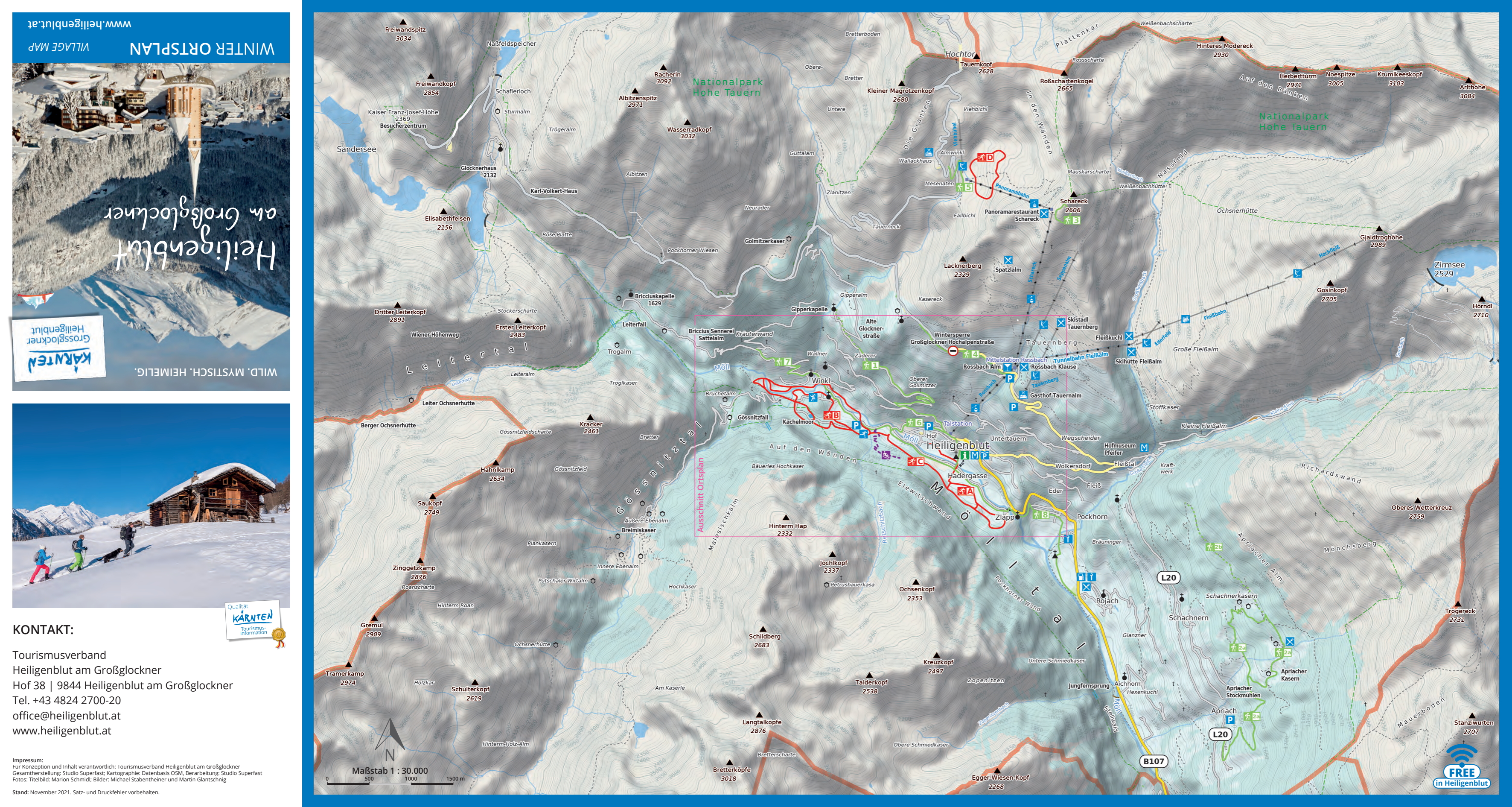
Accommodation in Heiligenblut is dominated by small, family-run hotels and guesthouses in the village and the surrounding area. The Nationalpark Lodge Grossglockner provides a modern option with direct slope access, and several traditional hotels have pool and wellness facilities. Self-catering apartments and farmhouse stays are also available. The village is compact and walkable, with a free ski bus connecting accommodation to the lift base stations. Prices are notably lower than at the better-known Austrian resorts.
Ski-in, ski-out options exist at the Fleissalm and near the Rossbach mid-station for those who want to be on the mountain rather than in the village. The quality of Carinthian hospitality is consistently warm, and the intimate scale of the village means you'll build genuine relationships with your hosts over a week's stay. Book early for peak weeks - accommodation in Heiligenblut is limited.
The Grossglockner lift pass covers all 55km of pistes and 11 lifts between 1,301m and 2,902m. Day passes, multi-day options, and the Snowman Card (€10/day for children under 10) are available. The SunnyCard season pass is valid across multiple Austrian ski areas. Dynamic pricing rewards advance online purchase. The lift pass represents excellent value by Austrian standards.
Check for family and multi-day pass options when booking your Heiligenblut ski holiday package through WeSki to find the best fit for your trip.
Two sport shops in the village provide equipment hire covering ski, snowboard, touring, snowshoe, and toboggan gear. Specialist freeride and touring equipment is available. The ski school can advise on equipment for off-piste and touring activities.
The village is compact and walkable. A free ski bus connects accommodation throughout the valley to the lift base stations during the ski season. The Rossbach gondola provides the main access to the ski area, with the Tunnelbahn Fleissalm connecting the two sectors on the mountain. A car is useful for excursions to Lienz and the wider Hohe Tauern area but isn't necessary for daily skiing.
Heiligenblut is in a relatively isolated position in northwestern Carinthia, at the foot of the Großglockner. In winter, the Grossglockner High Alpine Road is closed, so access is from the south via the Möll Valley. The nearest airports are Klagenfurt (around 130km, approximately two hours), Salzburg (around 200km, approximately two and a half hours), and Munich (around 350km, approximately three and a half hours). By train, Mallnitz and Lienz are the nearest stations, both around 40km away with bus connections. The drive from Salzburg or Munich through the Tauern tunnel is straightforward. The relative remoteness is part of Heiligenblut's appeal - this is a resort you make a deliberate journey to, and the reward is exceptional terrain, minimal crowds, and a landscape defined by Austria's highest mountain.
WeSki offers car rentals from the airport as well as private transfers to Heiligenblut. Add them to your Heiligenblut ski holiday package for seamless door-to-door travel.
The Großglockner (3,798m) is Austria's highest mountain - an ice-covered pyramid that dominates the horizon above Heiligenblut. You can see it from virtually every run in the ski area, and the view from the Schareck summit at 2,604m - with the Großglockner rising behind the village church below and over 40 three-thousanders stretching across the Hohe Tauern - is one of the most spectacular in Austrian skiing. The mountain is not skiable without serious mountaineering equipment and guiding, but its presence defines the landscape and the atmosphere of everything you do here.
The Freeride Arena at Grossglockner-Heiligenblut covers 15km² (1,500 hectares) of high-alpine freeride terrain with six dedicated sectors, four marked ski routes, and up to 1,500m of vertical descent. The terrain is almost entirely above the treeline, with open bowls, steep faces, and natural features in the glaciated Hohe Tauern landscape. A Freeride Checkpoint at the Rossbach mid-station provides free avalanche transceiver testing and conditions information. Professional guiding is available through the snow sports school and mountain guides.
The Tunnelbahn Fleissalm is a gondola that runs through a tunnel inside the mountain, connecting the Rossbach mid-station to the Fleissalm sector. It's the only lift of its kind in Austria and one of the most unusual cable car experiences in the Alps. The ride through the dark tunnel is genuinely surreal and is one of the distinctive features that makes skiing at Heiligenblut different from anywhere else.
Heiligenblut is a good family choice for those who value peace, scenery, and affordable skiing over busy resort infrastructure. The Snowland children's area, the ski school from age four, and the Snowman Card (€10/day for children under 10) provide good family facilities. The village is safe, walkable, and intimate. The Trail of Legends, the gold-mining village, and the Tunnelbahn add non-skiing excitement for children. The terrain is more limited for beginners than at larger resorts, but the quality and the setting are exceptional.
The ski area reaches 2,902m, and the majority of the terrain sits above 2,000m - ensuring reliable snow conditions throughout the season. The high-alpine position, combined with the Großglockner's influence on local weather patterns, delivers regular snowfall. The resort operates from mid-December to early April. The freeride terrain benefits from the altitude and north-facing aspects that preserve powder. Snow-making supplements natural coverage on the lower runs.
Relatively, yes. The Grossglockner High Alpine Road is closed in winter, so Heiligenblut is accessed from the south via the Möll Valley. The nearest airports (Klagenfurt, Salzburg) are two to two and a half hours away. Train connections via Mallnitz or Lienz add a further transfer. This remoteness is part of the appeal - the slopes are uncrowded, the powder stays untracked for longer, and the village retains the character of a genuine mountain community rather than a resort. For those willing to make the journey, the reward is outstanding.
The Fleisstal valley near Heiligenblut was a gold-mining area for centuries, and a settlement has been reconstructed on historical ground to show what life was like for the Alpine miners. The village includes original and rebuilt structures and offers gold panning for visitors. It connects to the wider gold-mining heritage of the Hohe Tauern, where gold was extracted from the mountains for hundreds of years before the industry declined in the 20th century.
 4.9/5
4.9/5I usually book flights, ground transportation, hotel, ski rental and lift tickets myself but this year used WeSki for a trip to Morzine. It was so much easier. Everything worked perfectly - ground transportation arrived on time and there was plenty of feedback throughout the whole process giving you confidence the vacation would go smoothly.

A really useful service that is so much easier to use than other 'all-inclusive' sites. It nicely bridges the gap between a travel agent and booking the trip yourself online. I'll use WeSki every time I go skiing from now on.
We booked a late minute skiing trip to Morzine through we ski. We looked at booking the trip ourselves but could get anywhere near the price quoted by we ski. The company was excellent and we had no problems at all from start to finish. I would definitely use them to book another weekend skiing trip.
Seamless experience from start to finish. I was spending ages trying to sort out a weekend break and managed to do it with we ski in minutes and for the same price as booking it all up yourself. Flight, transfers and accommodation was all as expected and faultless.