EN
EN
 Reliable snow resort
 Stunning views
 Hidden gemReliable snow resortStunning viewsHidden gemReliable snow resortStunning viewsHidden gemReliable snow resortStunning viewsHidden gem
Powderhorn sits on the northern flank of Grand Mesa - the largest flat-topped mountain in the world - near the town of Mesa in western Colorado. It's a place that feels genuinely removed from the well-trodden Colorado ski circuit. There are no designer boutiques, no celebrity sightings, and no queues snaking across the car park. What you get instead is 1,600 acres of uncrowded terrain, a base elevation above 2,499m, and a community-run mountain with the kind of relaxed, welcoming atmosphere that bigger resorts left behind decades ago. Powderhorn has been a local favourite on Colorado's Western Slope since the 1960s, and that small-mountain spirit still defines the experience.
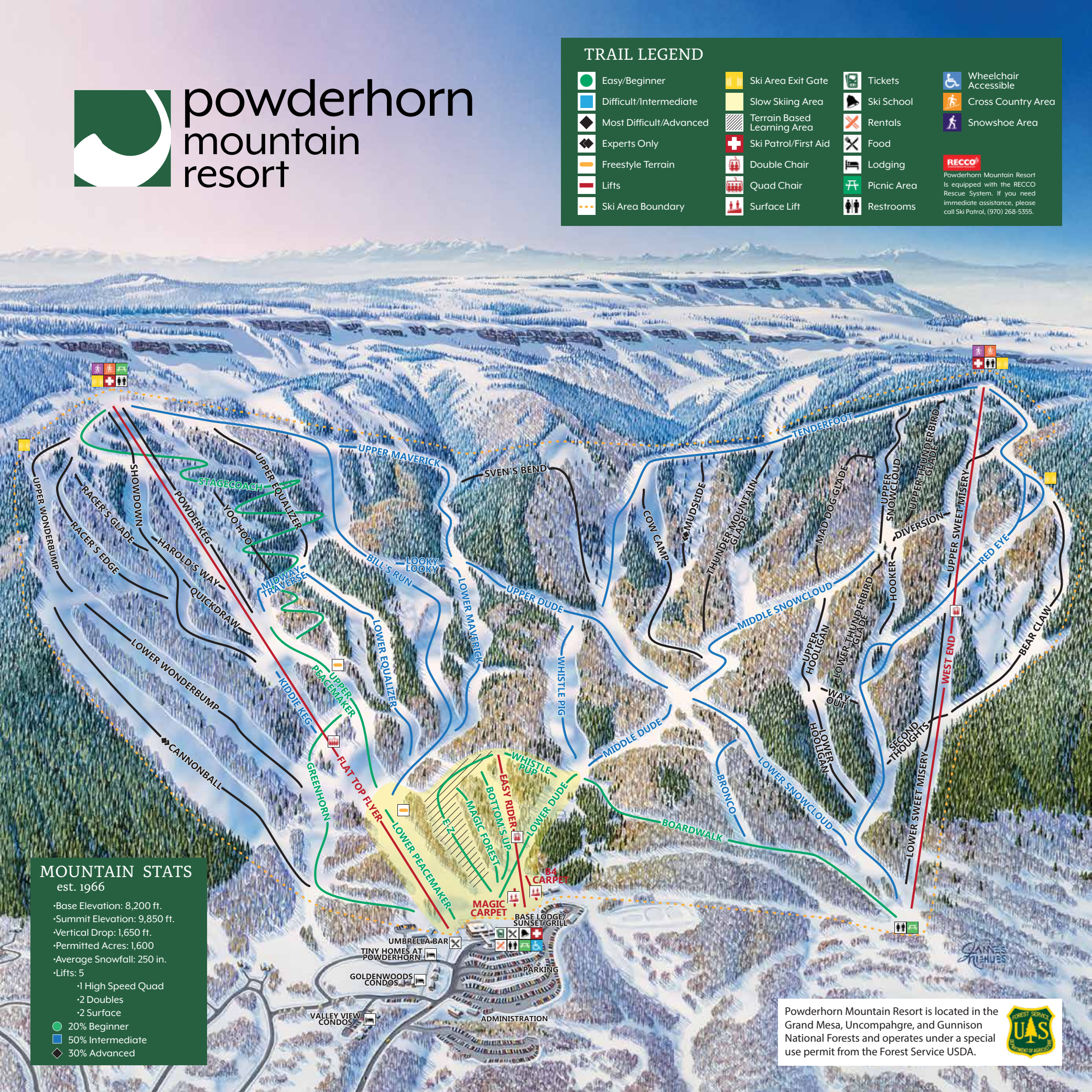
The resort has 54 marked trails served by five lifts, with a summit elevation of 3,002m and a vertical drop of 503m. What makes Powderhorn stand out is the ratio of skiable terrain to visitor numbers - 1,600 acres is a substantial footprint, and the mountain rarely feels busy. Over half the terrain is rated advanced or expert (black diamond and double black diamond in the North American system, where green circles are beginner runs, blue squares are intermediates covering a wider range than European blues, and double black diamonds are expert only). The season runs from late November through early April, and Grand Mesa's position catches consistent snowfall from storms tracking across the Colorado Plateau.
The setting is part of the appeal. Grand Mesa National Forest surrounds the resort, with vast aspen groves, frozen lakes, and high-altitude plateau scenery that feels almost other-worldly under winter snow. The nearby city of Grand Junction - Colorado's wine country hub and gateway to the region's red-rock canyon landscape - provides a surprisingly cosmopolitan base for dining, culture, and rest-day activities. Powderhorn is the kind of resort that rewards curiosity and a willingness to go beyond the obvious. Check out Powderhorn ski deals to start planning your trip.
Powderhorn sits on the northern flank of Grand Mesa - the largest flat-topped mountain in the world - near the town of Mesa in western Colorado. It's a place that feels genuinely removed from the well-trodden Colorado ski circuit. There are no designer boutiques, no celebrity sightings, and no queues snaking across the car park. What you get instead is 1,600 acres of uncrowded terrain, a base elevation above 2,499m, and a community-run mountain with the kind of relaxed, welcoming atmosphere that bigger resorts left behind decades ago. Powderhorn has been a local favourite on Colorado's Western Slope since the 1960s, and that small-mountain spirit still defines the experience.
The resort has 54 marked trails served by five lifts, with a summit elevation of 3,002m and a vertical drop of 503m. What makes Powderhorn stand out is the ratio of skiable terrain to visitor numbers - 1,600 acres is a substantial footprint, and the mountain rarely feels busy. Over half the terrain is rated advanced or expert (black diamond and double black diamond in the North American system, where green circles are beginner runs, blue squares are intermediates covering a wider range than European blues, and double black diamonds are expert only). The season runs from late November through early April, and Grand Mesa's position catches consistent snowfall from storms tracking across the Colorado Plateau.
The setting is part of the appeal. Grand Mesa National Forest surrounds the resort, with vast aspen groves, frozen lakes, and high-altitude plateau scenery that feels almost other-worldly under winter snow. The nearby city of Grand Junction - Colorado's wine country hub and gateway to the region's red-rock canyon landscape - provides a surprisingly cosmopolitan base for dining, culture, and rest-day activities. Powderhorn is the kind of resort that rewards curiosity and a willingness to go beyond the obvious. Check out Powderhorn ski deals to start planning your trip.
Skiing Powderhorn feels like having a private mountain. On a midweek day, you can lap the high-speed quad without seeing another soul on some trails, and even weekends stay manageable. The terrain rolls off Grand Mesa in a series of broad open pitches, forested glades, and steep gullies, with the upper mountain exposed to weather and the lower sections sheltered by dense aspen and spruce forest. There's a pleasing variety for a resort of this size, and the altitude - topping out above 3,000m - keeps snow quality high.
The lift system is compact: one high-speed quad handles the main summit access, supported by two double chairlifts and two surface lifts for the lower slopes. It's not a resort you'd describe as extensive, but the 1,600 acres of skiable terrain are spread generously across the mountain face, and many of the gladed areas between marked trails are open for skiing. The longest run stretches to 2.4km, and the mix of groomed runs, natural snow trails, and tree skiing gives you enough variety to fill several days without repetition.
Powderhorn's beginner terrain is concentrated around the base area, with green circle runs (the North American equivalent of European greens and easy blues) served by the lower chairlifts and surface lifts. The runs are gentle, wide, and set apart from faster traffic, making them comfortable for those finding their feet. The mountain's quiet nature is a real advantage here - there's none of the congestion that can make learning stressful at bigger resorts, and you'll have space to practise without feeling pressured.
As confidence builds, a few longer green runs extend further up the mountain, giving beginners their first taste of the views and the altitude. It's worth noting that Powderhorn's terrain skews heavily towards advanced and expert skiing, so the beginner selection is modest in scale. For a first-time skier spending a full week, it's ideal for a few days before potentially exploring other resorts in the region. But for the time you're here, the uncrowded slopes and friendly atmosphere make learning genuinely enjoyable.
WeSki insider tip: * The morning light on the lower runs is beautiful and the slopes are at their quietest before 10am. Book a first-tracks lesson and you'll have some of the gentlest terrain in Colorado almost entirely to yourself.
Intermediates will find a solid selection of blue square runs across the mid-mountain, accessed by the main high-speed quad. The groomed trails are wide and well-maintained, with enough pitch to keep things engaging without being intimidating. Remember that North American blue squares span a broader range than European blues, so some will feel like relaxed cruisers while others have sections that push your technique. The tree-lined runs through the aspen groves are a highlight - the forest setting adds character and the dappled light through the trees is something special.
For intermediates looking to progress, Powderhorn's layout encourages exploration. The boundary between blue squares and easier black diamonds is relatively gentle here, and the mountain's quiet nature means you can push yourself on steeper terrain without an audience. Some of the gladed areas between marked trails are accessible to confident intermediates, offering a taste of off-piste skiing in a low-pressure environment. It's the kind of mountain where you'll improve without realising it.
WeSki insider tip: * The aspen glades on the skier's right of the main face hold snow well and are beautiful to ski through. Ask the lift operators which glades have been skiing best - they'll steer you right.
This is where Powderhorn comes into its own. Over half the terrain is rated black diamond or double black diamond, and the mountain's 1,600 acres mean there's far more advanced skiing than the modest trail count suggests. The upper mountain features sustained steep pitches, natural mogul fields, and technical chutes that demand precise skiing. The gladed areas between marked trails are where many regulars spend their time - tight tree skiing through aspen and spruce, with natural features, drops, and variable snow that keep every run interesting.
The expert terrain on Grand Mesa's steeper aspects includes double black diamond runs with cliff bands, tight couloirs, and exposure that will test even accomplished skiers. After a storm, the powder stashes last far longer here than at Colorado's busier resorts - with so few people on the mountain, you can find untracked snow days after a snowfall. The combination of altitude, acreage, and absence of crowds makes Powderhorn one of Colorado's best-kept secrets for serious skiers who prioritise the skiing over everything else.
WeSki insider tip: * After a storm, head straight for the glades off the skier's left of the summit ridge. The tree spacing is perfect for powder turns, and with Powderhorn's low visitor numbers, you'll find fresh tracks long after the groomers have been skied out elsewhere in Colorado.
Powderhorn has three terrain parks with features ranging from beginner-friendly boxes and small jumps through to more advanced rails and kickers. The natural terrain is equally appealing for riders - the steep gladed areas, natural hits, and open powder fields reward freeriding, and the mountain's uncrowded nature means you'll have space to pick your lines. The lower-mountain green runs are flat enough that beginners on boards should be aware of a few sections that may require unstrapping, but overall the terrain flows well for snowboarders.
Powderhorn's 1,600 acres include extensive gladed terrain between marked runs, and much of it is open for skiing. The tree runs range from widely spaced aspens to tighter spruce forest, offering natural off-piste character within the resort boundary. Beyond the boundary, Grand Mesa National Forest provides backcountry touring terrain for those with appropriate experience, avalanche safety equipment, and local knowledge. The mountain's low visitor numbers mean fresh snow lingers in the trees and gullies, making Powderhorn a rewarding place for skiers who like to explore beyond the groomed trails.
The Powderhorn Ski and Ride School runs group lessons, private tuition, and children's programmes across all ability levels. The instructors know the mountain intimately and are particularly good at guiding intermediates into the more advanced terrain as confidence grows. English is the language of instruction. The school's small scale means lessons feel personal, and booking in advance is worthwhile during holiday periods to guarantee your preferred session.
Powderhorn maintains three terrain parks, progressing from an introductory setup with small features for beginners through to a more developed park with medium jumps, rails, and creative features. The parks are shaped regularly and the features evolve through the season. It's a solid freestyle offering for a mountain of this size, and the relaxed atmosphere means you can session features at your own pace without the intensity of a dedicated park resort.
Powderhorn's laid-back atmosphere and manageable scale make it a strong choice for families. The base area is easy to navigate, lift queues are minimal, and the mountain's friendly, community feel means children and teenagers are welcomed rather than tolerated. Younger children and first-timers have their own learning terrain at the base, with gentle runs and a dedicated area separated from the main mountain traffic. The ski school's children's programmes are well-run and small enough that kids get genuine attention from their instructors.
Older children and teenagers with some experience will love the freedom that comes with an uncrowded mountain. The blue runs are wide enough to build confidence, and the easier black diamonds provide a natural step up without the intimidation factor of a big-name resort. The terrain parks add a fun element for freestyle-minded teens. The mountain's relaxed approach means families can move at their own pace - there's no pressure to be first on the lift or race between runs.
For rest days and off-mountain time, Grand Junction is about 45 minutes' drive and has a surprising amount to explore - from the Colorado National Monument's dramatic canyon scenery to the town's growing restaurant and wine-tasting scene. Closer to the resort, Grand Mesa itself provides snowmobiling, ice fishing on the plateau's frozen lakes, and snowshoeing through the national forest. Dining on the mountain is simple - a base lodge with cafeteria-style food - but Grand Junction's restaurants are well worth the evening drive for families looking for variety.
Powderhorn's location on Grand Mesa and its proximity to Grand Junction give it an unusual combination of high-altitude wilderness and Western Slope culture. Rest days here can swing from snowshoeing through silent, snow-covered forest to wine tasting in Colorado's most productive vineyard region - it's a contrast you won't find at many ski resorts, and it makes time off the slopes feel like a genuinely different experience.
Grand Mesa is one of Colorado's finest winter playgrounds, with a vast plateau of frozen lakes, forests, and open meadows sitting above 3,000m. The area provides exceptional opportunities for snow-based activities beyond the ski slopes:
Grand Junction and the wider Western Slope region provide a rich mix of cultural, culinary, and scenic experiences that make rest days feel like a holiday within a holiday. The contrast between Grand Mesa's alpine environment and the red-rock desert landscape below is extraordinary:
On-mountain dining at Powderhorn is straightforward - the base lodge serves solid cafeteria-style food to fuel your day. The broader dining scene, however, is centred on Grand Junction, where a growing food culture has transformed the city into one of Colorado's more interesting places to eat. The wine country influence is clear, and the combination of agricultural abundance and independent restaurant operators makes for a surprisingly rewarding dining scene.
WeSki insider tip: * Grand Junction is the heart of Colorado wine country - the Palisade area has over 20 wineries within a short drive. Book an afternoon wine trail visit on a rest day and try the local Merlot and Riesling varieties, which thrive in the Western Slope's unique climate.
Après-ski at Powderhorn is about as low-key as it gets - and that's not a criticism. The base lodge bar is where the day winds down, with a beer and conversation among locals and regulars who come for the skiing and stay for the community. It's unpretentious, friendly, and entirely in keeping with the mountain's character. If you're expecting DJs and dancing on tables, you're at the wrong resort - but if you want to swap stories about the day's powder stashes over a craft beer, this is your spot.
For more variety, Grand Junction has a proper evening scene with craft breweries, wine bars, and restaurants that keep things going into the evening. The drive is about 45 minutes, so it's more of a planned evening out than a spontaneous stumble from the slopes. Many visitors combine an evening in Grand Junction with dinner, making a social night of it. The Palisade wine bars and downtown taprooms give you options that most ski resorts simply can't match.
Après-ski spots to know:
Accommodation options near Powderhorn are limited but practical. The closest lodging is in the small community of Mesa, about fifteen minutes from the resort, where you'll find a handful of cabins, lodges, and vacation rentals. For a wider selection, Grand Junction (approximately 45 minutes' drive) is the main base, with hotels, motels, and rental properties across all price ranges. The city's growing downtown area has some characterful boutique options alongside the usual chain hotels.
Some visitors choose to stay on Grand Mesa itself, where a few lodges and cabin rentals provide a more immersive mountain experience - waking up at altitude surrounded by snow-covered forest is hard to beat. The trade-off is remoteness and limited dining options. For families and groups wanting convenience, Grand Junction's combination of restaurants, shops, and services makes it the most practical base, even with the drive to the slopes each morning. A car is essential regardless of where you stay.
Powderhorn's lift tickets cover all five lifts and the full trail network, including the terrain parks. As an independent resort, prices are significantly lower than at Colorado's major destination mountains, making it one of the state's best-value ski areas. Powderhorn is included on the Indy Pass, which provides access to independent ski areas across North America. Multi-day passes are available. Check for family and multi-day pass options when booking your Powderhorn ski holiday through WeSki to find the best fit for your trip.
Powderhorn has an on-site rental shop at the base lodge offering ski and snowboard packages for all ages and ability levels. The equipment selection includes performance-level options for more experienced skiers. Booking ahead online is recommended during busier holiday periods, though midweek availability is rarely an issue. Grand Junction also has several independent ski shops that rent equipment, which can be convenient for fitting and adjustments the evening before your first day on the mountain.
Powderhorn's base area is compact and straightforward - the lodge, lifts, rental shop, and parking are all within a short walk of each other. On the mountain, everything connects from the main base, so there's no need for shuttle buses between ski areas. The layout means less time navigating logistics and more time skiing.
Off the mountain, a car is essential. There's no public transport to the resort from Grand Junction or the surrounding area. The drive from Grand Junction follows Interstate 70 east before turning south onto the Grand Mesa Scenic Byway (Highway 65), which climbs through increasingly dramatic scenery to the resort. Winter road conditions are generally well-managed, but carrying chains is advisable during storms. The drive itself is part of the experience - the transition from high desert to alpine forest as you climb the mesa is remarkable.
Powderhorn is located on Grand Mesa in western Colorado, approximately 55km (35 miles) from Grand Junction. The nearest airport is Grand Junction Regional Airport (Walker Field), which receives domestic flights from Denver, Dallas, and other US hubs. For UK visitors, Denver International Airport is the most practical transatlantic gateway, approximately 400km (250 miles) east. The drive from Denver follows Interstate 70 west through the Rocky Mountains - a spectacular route that passes through Glenwood Canyon and some of Colorado's finest mountain scenery.
WeSki offers car rentals from the airport as well as private transfers to Powderhorn. Add them to your Powderhorn ski holiday package for seamless door-to-door travel.
Powderhorn has a dedicated beginner area at the base with green circle runs (equivalent to European greens and easy blues) and surface lifts. It's a perfectly comfortable place to learn, and the quiet, uncrowded atmosphere is a real advantage for building confidence. However, the majority of the terrain is rated advanced or expert, so beginners looking for extensive progression terrain may find the green and blue trail selection limited. For a first-timer spending several days, it works well as part of a wider Colorado trip.
Powderhorn is a completely different experience from Vail, Aspen, or Breckenridge. It's smaller, quieter, and far more affordable - but that's the appeal. The 1,600 acres of terrain are rarely crowded, powder stashes last for days after a storm, and the mountain has an authentic community character that the mega-resorts have lost. The lift system is limited (five lifts), so it's not a place for skiers who prioritise high-speed coverage of vast trail networks. But for quality skiing in a genuine, unpretentious setting, it's hard to beat.
Powderhorn benefits from a summit elevation above 3,000m on Grand Mesa, which catches consistent snowfall from storms moving across the Colorado Plateau. The annual snowfall is solid for western Colorado, and the mountain's north-facing terrain helps preserve snow quality. Snowmaking supplements natural coverage on key trails. The high altitude means generally good snow quality through the season, which runs from late November to early April. After a storm, the powder stashes on this uncrowded mountain can last for days.
Grand Mesa is the largest flat-topped mountain in the world, rising to over 3,000m above the surrounding valleys of western Colorado. The mesa is a vast plateau covered in forests, meadows, and over 300 lakes, protected as Grand Mesa National Forest. In winter it transforms into a high-altitude winter recreation area, with Powderhorn ski resort on its northern face and extensive snowmobiling, cross-country skiing, and ice fishing across the plateau. The scenery is distinctive and unlike typical Colorado mountain landscapes.
North American resorts use a different system from Europe. Green circles are beginner runs (similar to European greens and easy blues). Blue squares denote intermediate terrain but span a wider range than European blues - some will feel comfortably familiar, others are significantly more challenging. Black diamonds indicate advanced skiing with steep, demanding terrain. Double black diamonds are expert only, featuring extreme steeps, moguls, or cliffs. There's no direct equivalent to European red runs, so confident intermediates should expect some blues to feel quite testing.
Powderhorn is about a four-hour drive from Denver, which makes it a longer journey than Colorado's Front Range resorts. However, the drive along Interstate 70 through the Rocky Mountains is spectacular, and the reward is skiing that's uncrowded, affordable, and different in character from the more commercial resorts closer to Denver. Many visitors combine Powderhorn with time in Grand Junction's wine country, making a broader trip of it. It's best suited to skiers who value the mountain experience itself over convenience.
Absolutely - it's one of the best reasons to visit. Grand Junction and the Palisade area form Colorado's largest wine-producing region, with over 20 wineries and tasting rooms. The contrast between morning skiing at 3,000m on Grand Mesa and an afternoon wine tasting among the orchards and vineyards of the Western Slope is unique in Colorado skiing. Many restaurants in Grand Junction feature local wines, and the food scene has grown significantly in recent years. It's a combination that makes a Powderhorn trip feel distinctive and well-rounded.
 4.9/5
4.9/5I usually book flights, ground transportation, hotel, ski rental and lift tickets myself but this year used WeSki for a trip to Morzine. It was so much easier. Everything worked perfectly - ground transportation arrived on time and there was plenty of feedback throughout the whole process giving you confidence the vacation would go smoothly.

A really useful service that is so much easier to use than other 'all-inclusive' sites. It nicely bridges the gap between a travel agent and booking the trip yourself online. I'll use WeSki every time I go skiing from now on.
We booked a late minute skiing trip to Morzine through we ski. We looked at booking the trip ourselves but could get anywhere near the price quoted by we ski. The company was excellent and we had no problems at all from start to finish. I would definitely use them to book another weekend skiing trip.
Seamless experience from start to finish. I was spending ages trying to sort out a weekend break and managed to do it with we ski in minutes and for the same price as booking it all up yourself. Flight, transfers and accommodation was all as expected and faultless.