EN
EN
 Hidden gem
 Stunning views
 Best amenitiesHidden gemStunning viewsBest amenitiesHidden gemStunning viewsBest amenitiesHidden gemStunning viewsBest amenities
Mission Ridge is a sunny, uncrowded mountain on the drier side of the Cascades in the United States, a proper local favourite that flies under the radar. Tucked into a wide bowl on the eastern flank of the range, it gets over three hundred days of sunshine a year, and the snow here is prized for being light and dry. It has a friendly, throwback feel, with a loyal following who come back for the relaxed pace, the space to breathe, and the long views out over the valley below. Open since 1966, it rises from dry, pine-clad hills high above the valley, open to the sun right through the winter.
The mountain covers around 2,000 acres, with about 686m of vertical from a summit of roughly 2,080m. Alongside the groomed, marked trails there's a lot of open terrain to explore, such as wide bowls, ridgelines, and chutes spilling down through the pines. It suits intermediates best, with rolling groomers and gentler bowls to open up on. Stronger skiers and boarders get the best of it, from steep bowls and rocky chutes to ungroomed, backcountry-style terrain that holds its snow well. Beginners have a dedicated learning area and a few easy runs to start on, and the steeper mountain around them makes it a good place to learn and then keep progressing. If you're after freestyle, there's a terrain park too. The season runs from around late November into April, helped by the most snowmaking of any resort in the state, which keeps the cover consistent through the winter.
There's plenty here to fill a holiday at Mission RIdge beyond the skiing itself, on the mountain and off it. Up top, you can carry on into the evening with floodlit night skiing, or head out on a guided twilight snowshoe walk. Its après scene centres on the Chair 5 Pub, with local beer nights and live music, and there are landmarks to seek out like the giant steel Yeti sculpture standing up by the lifts. Down the hill, Wenatchee is a friendly small city in Washington's apple-growing country, with good restaurants, breweries, and wineries to visit. It's also worth the short trip to Leavenworth, a Bavarian-themed village where you can add sledging, horse-drawn sleigh rides, and German bakeries to the mix. Between the mountain, the town, and the valley around it, Mission Ridge makes for a well-rounded winter trip.
Check out Mission Ridge ski deals to start planning your trip.
Mission Ridge is a sunny, uncrowded mountain on the drier side of the Cascades in the United States, a proper local favourite that flies under the radar. Tucked into a wide bowl on the eastern flank of the range, it gets over three hundred days of sunshine a year, and the snow here is prized for being light and dry. It has a friendly, throwback feel, with a loyal following who come back for the relaxed pace, the space to breathe, and the long views out over the valley below. Open since 1966, it rises from dry, pine-clad hills high above the valley, open to the sun right through the winter.
The mountain covers around 2,000 acres, with about 686m of vertical from a summit of roughly 2,080m. Alongside the groomed, marked trails there's a lot of open terrain to explore, such as wide bowls, ridgelines, and chutes spilling down through the pines. It suits intermediates best, with rolling groomers and gentler bowls to open up on. Stronger skiers and boarders get the best of it, from steep bowls and rocky chutes to ungroomed, backcountry-style terrain that holds its snow well. Beginners have a dedicated learning area and a few easy runs to start on, and the steeper mountain around them makes it a good place to learn and then keep progressing. If you're after freestyle, there's a terrain park too. The season runs from around late November into April, helped by the most snowmaking of any resort in the state, which keeps the cover consistent through the winter.
There's plenty here to fill a holiday at Mission RIdge beyond the skiing itself, on the mountain and off it. Up top, you can carry on into the evening with floodlit night skiing, or head out on a guided twilight snowshoe walk. Its après scene centres on the Chair 5 Pub, with local beer nights and live music, and there are landmarks to seek out like the giant steel Yeti sculpture standing up by the lifts. Down the hill, Wenatchee is a friendly small city in Washington's apple-growing country, with good restaurants, breweries, and wineries to visit. It's also worth the short trip to Leavenworth, a Bavarian-themed village where you can add sledging, horse-drawn sleigh rides, and German bakeries to the mix. Between the mountain, the town, and the valley around it, Mission Ridge makes for a well-rounded winter trip.
Check out Mission Ridge ski deals to start planning your trip.
The skiing at Mission Ridge has a wide-open, above-treeline character. Much of the upper mountain is exposed ridgeline, with broad and rolling terrain that spreads out in several directions and lets you pick your own line rather than follow a corridor through the trees. Lower down, groomed runs wind through the pines for cruising and beginner territory, while the upper bowls and ridges give the open, exploratory skiing that regulars come back for. Intermediates have rolling groomers and gentle bowls, and strong skiers and boarders get the steep bowls, rocky chutes, and ungroomed terrain up high. The snow here is dry and light because the mountain sits on the eastern side of the range, where storms arrive having dropped much of their moisture on the way over.
Getting around is straightforward. A fixed-grip chair carries you up from the base to a mid-mountain hub, and from there the Wenatchee Express, a modern high-speed quad takes you up to the top. The rest of the lifts are older, slower fixed-grip doubles, which is part of the mountain's pared-back, old-school feel, though with the crowds thin they rarely build much of a queue. There's a learning area with a carpet lift at the base, and a rope tow up at the mid-mountain hub.
Important for international visitors: One thing worth knowing if you're used to the European system. North American resorts grade their runs a little differently. Green circles are the easiest, for beginners. Blue squares are the intermediate runs, though they cover a wider range than a European blue. Black diamonds are the hardest, for advanced skiers, and double black diamonds are the expert-only runs. There's no direct equivalent to a European red, so expect the blue runs to vary quite a bit in difficulty.
Mission Ridge has a friendly setup for beginners on the lower mountain. There's a dedicated learning area at the base, the Pika Peak zone, with its own gentle lift to make your first turns on. From there, you can start on green runs which bring you down from higher up the hill. Mission Ridge’s greens are reached by the main base chair, and they’re wide, well groomed and sheltered by the trees. The light, dry snow helps as well, since it's softer to fall on and easier to turn in than heavier snow.
Once you're comfortable linking turns on greens, the easier blue runs should be your next step, and there are plenty to grow into. Something like Tumwater, a groomed run off the upper mountain, makes a good first blue. It’s wide enough to give you room and not too steep. You’ll have the space to try longer, faster runs at your own pace, which is how a lot of beginners here go from cautious greens to confident blues over the course of a trip.
WeSki insider tip: Most beginners end up on Mimi, the wide green that doubles as the main way down for the whole mountain, so it sees a fair bit of traffic. For a quieter run at the same easy gradient, cross to Summer Road on the other side of the creek. It's narrower but tends to be less busy, so you get more room to find your rhythm without stronger skiers flying past.
This is a mountain that plays to intermediates. The blue runs cover a lot of ground, running from groomed cruisers on the lower slopes to wider, rolling terrain up top where you can lengthen your turns and work on carving. For a proper leg-stretcher, take a top-to-bottom cruise off the Wenatchee Express, a long, satisfying run from the summit right back down to the base.
The best of it is the open terrain up top. Once you're steady on blues, the bowls and ridgeline above the treeline off the Wenatchee Express are a different sort of skiing. It's wider and more varied, with the freedom to pick your own way down rather than follow a marked trail. It isn't especially steep or technical, but the openness and scale of it make it feel like an adventure, and it's what keeps intermediates coming back.
WeSki insider tip: When you're ready to try your first black diamond, the ones off Chair 4 are ideal. They're short and steep rather than long and sustained, so you can drop into the bumps, test yourself, and be back on a groomer within a couple of minutes, without committing to a whole run of steep terrain. It's the easiest way to find out whether black runs are for you.
Mission Ridge's advanced terrain sits up on the top of the mountain, where the ridgeline drops away into steep bowls, rocky chutes, and open faces looking in several directions. Bomber Bowl is the heart of it, with a sustained pitch of steep, open snow that’s named after the wartime bomber whose wreckage still marks the top of it. The neighbouring Bomber Cliffs add rocky drops and tight lines for those who want them. Elsewhere off the Wenatchee Express you’ll have gladed runs through trees and chutes threading between the volcanic crags that give the mountain much of its character.
What makes it special is the snow and amount of space. Mission Ridge’s dry, light snow stays good for a long time up here, and because the bowls and faces look in different directions, you can follow the best conditions around the mountain as the day goes on. Expect wide-open skiing where you choose your own line down a face rather than follow a marked run, reading the slope and picking your route as you go. The marked black runs themselves are quite short, but the quality of open, ungroomed skiing up top is the real draw. As always, when you leave the groomed runs, it's worth carrying avalanche safety gear and heading out with someone who knows the terrain.
WeSki insider tip: The best advanced terrain takes a little effort to reach. From the top of the Wenatchee Express, a short hike out along Windy Ridge opens up steep, quiet lines that most people never bother with, so you’ll get the mountain's best steep skiing with far fewer tracks in it.
Snowboarding runs deep at Mission Ridge, and the freestyle scene is lively. The mountain hosts Rails & Ales, billed as the largest rail jam in the US, plus banked slalom and other rider-focused events through the winter. Up on the hill, the wide-open upper mountain is a natural playground for snowboarders, with dry powder, rolling bowls, and cliff bands and wind lips to launch off, while the groomed lower runs are made for carving. For freestyle, the B-24 terrain park has jumps and rails built and shaped through the season. One thing to watch is the flat traverses along the upper ridge, so plan your line and keep your speed up to avoid pushing through them.
Ungroomed terrain is a big part of what people love about Mission Ridge. Most of it is up on the top of the mountain, where open bowls, steep faces, and rocky chutes give you room to roam and pick your own way down. For those who want to push further out, the terrain just beyond the boundary opens into proper sidecountry, and the national forest all around offers a world of backcountry touring for skiers with the right skills and kit. Mission Ridge even runs an uphill-access pass if you'd like to earn your turns by skinning up. Wherever you go off the marked runs, though, this is serious mountain terrain, so carry avalanche gear, know how to use it, and ideally head out with someone who knows the lines.
Mission Ridge's ski and snowboard school runs group and private lessons for all ages and abilities, from complete first-timers to skiers wanting to sharpen up. There are also women's clinics and off-piste sessions for anyone keen to take on the steeper, ungroomed terrain up top. One lovely detail is that among the instructors is one who has taught here for over seventy years, a reminder of how deep the mountain's roots run.
Freestyle riding centres on the 100LAPS park, a two-acre park with a spread of features from small to large, so there's plenty whatever your level. Its real trick is the name: it has its own dedicated rope tow, which is rare, and it means you can lap it again and again without a long ride back up, racking up far more runs in a day than usual. New riders have their own gentle spaces to build up in, including a small park designed for getting comfortable sliding rails and boxes. Features are shaped and refreshed through the season, and on select evenings you can session the park under the lights.
Mission Ridge is an easy, comfortable mountain for a family. It's small and friendly, with a base that makes it simple to get your bearings in and to regroup at, and there's even a team of ambassadors who'll ferry your skis to the lodge for you. Everything you need sits close together, including lessons, rentals, and food, and the mountain works well for mixed-ability families, with gentle terrain low down and plenty to challenge stronger skiers up top. One real bonus is the childcare, where you can leave younger children in good hands, with a lesson and lunch if you like, while you get out on the snow yourselves.
For anyone learning, the gentle lower mountain is a reassuring place to start, with a dedicated beginner area and wide, tree-sheltered green runs to build up on. For family members with more experience, the open bowls and ridgeline up top are where it gets exciting for stronger skiers, with wide terrain where you can choose your own line down. Anyone keen to try something different can have a go in the terrain park, too. And because it's all one compact mountain, a mixed-ability family can split off for a few runs and meet back at the base without much fuss.
A family trip here is really based down in Wenatchee, about twenty minutes below the slopes, and that's part of the appeal. It's a warm, walkable small city with plenty to do off the snow. The Pybus Public Market is a fun place to browse and eat, there's ice skating at the local arena, and the riverside path along the Columbia makes for an easy stroll, with restaurants, a cinema, and bowling all close by. Up at the mountain itself, there's night skiing under the lights, snowshoe walks, and a giant Yeti sculpture and igloo up top that younger children love hunting down.
The eating is easy and family-friendly, with the base and mid-mountain lodges doing hot, simple food on the hill and Wenatchee offering everything from good Italian and Mexican to relaxed pub dinners. And for a day away from the snow, the Bavarian-themed village of Leavenworth, about thirty-five minutes away, makes a fun outing, with a reindeer farm that's a hit with younger children.
Most visitors to Mission Ridge base themselves down in Wenatchee, which makes a good spot to come back to after the slopes. It's a friendly small city in the heart of Washington's apple country, with markets, museums, breweries, and riverside walks, and the wider valley has plenty going on in winter, from snowshoeing and tubing to the Bavarian village of Leavenworth up the road. Here are some of the best things to do around Mission Ridge and Wenatchee, on the snow and off.
On the mountain, dining is centred on the base lodge, a good place to refuel between runs with hot, hearty food and drinks with a view over the valley. The real range is down in Wenatchee, where you're most likely to be staying. In the heart of apple and orchard country, the food here leans on local produce, farm ingredients, Washington wine, and apple-country cider, with plenty of variety, from Italian and Mexican to relaxed brewpubs and a lively market hall. If you fancy a change of scene one evening, the Bavarian village of Leavenworth up the road serves hearty German food and beer in a setting all of its own.
WeSki insider tip: You're in the Apple Capital of the World, so lean into it. Try a local hard cider pressed from the valley's own apples, then before you head home pick up a box of Aplets and Cotlets, the apple-and-walnut sweets that have been made just down the road in Cashmere for over a hundred years. They're a proper regional speciality, and a good one to take home.
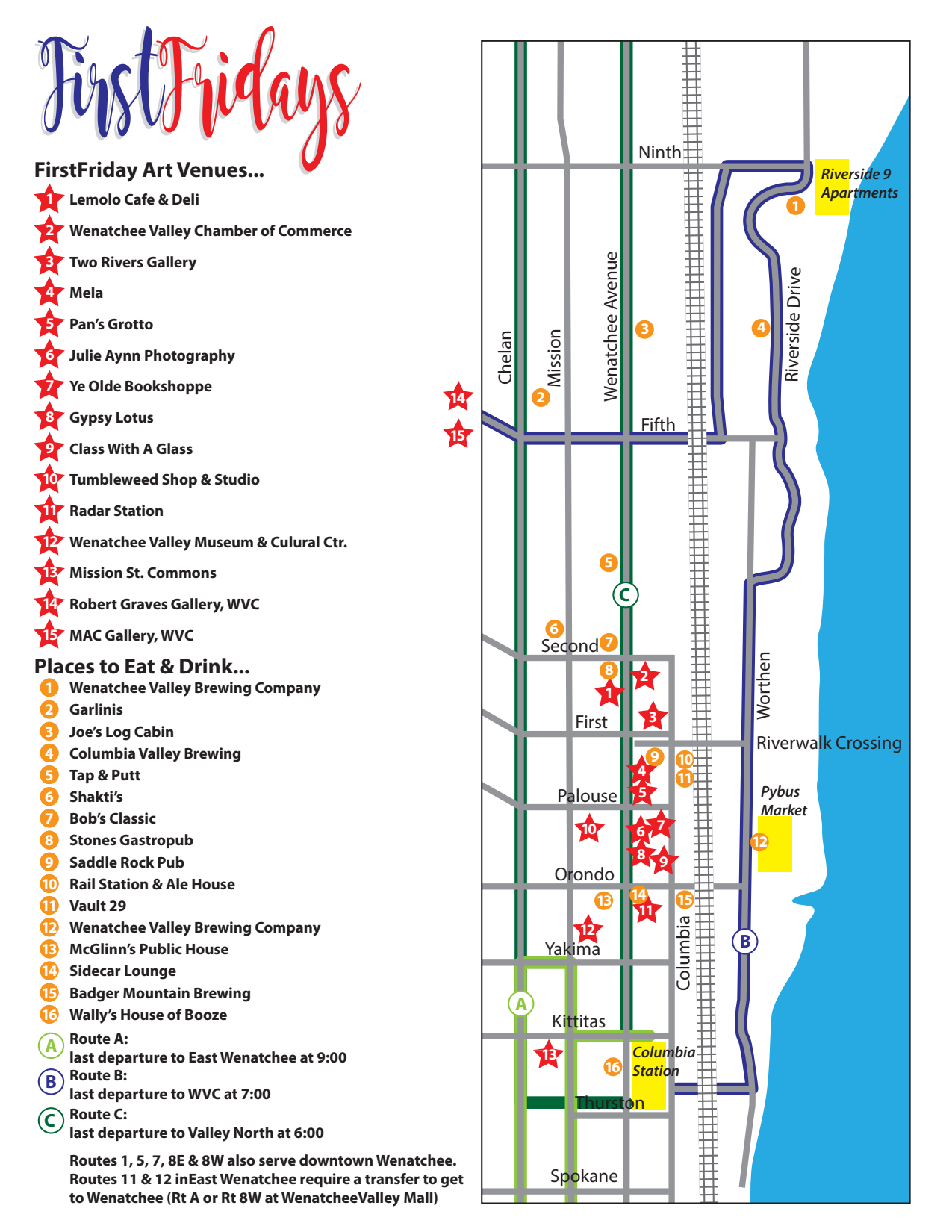
Après-ski at Mission Ridge is a low-key affair. As the lifts wind down, the day lodge bar is where people gather for a cold beer and some bar food among a friendly crowd of locals. For a livelier evening, though, the focus shifts down to Wenatchee. McGlinn's Public House is a popular spot for a post-ski pint, with its rotating local beers and easy-going feel, and the town has plenty more besides, craft breweries, cocktail bars, wine rooms, and restaurants of all kinds. And if you fancy something completely different, it's worth making the trip to Leavenworth, where the Bavarian-themed beer halls pour German lagers by the fire, an evening out unlike anywhere else in the area.
Après-ski spots to know:
Mission Ridge is a day-access ski area with no accommodation on the mountain itself, so you'll base yourself down in Wenatchee, about twenty minutes below the slopes. The choice there is broad, mostly hotels, along with apartments and self-catering rentals, and it's a good-value, unfussy sort of place to stay rather than a resort scene. You'll find comfortable, well-kept hotels of the reliable American kind, many with useful winter extras like a hot tub, a pool, and a proper breakfast to set you up before heading up the hill, plus roomier apartments and houses if you're travelling as a family or a group.
Staying in Wenatchee means you're in a real town rather than a purpose-built resort, which has its own appeal. It's a friendly, walkable small city, so you have restaurants, bars, breweries, shops, and everyday services all on your doorstep, and there's plenty to do off the snow. The drive up to Mission Ridge is short and straightforward on a well-maintained road, or you can take the resort's weekend shuttle from town, so you don't necessarily need a car to reach the slopes.
Mission Ridge sells its own lift tickets, with half-day, full-day, and multi-day options, all covering the whole mountain, its full 2,000 acres of terrain and every lift. Night skiing runs on selected evenings through the season, with its own tickets if you fancy a few runs under the lights. Mission Ridge is independent rather than part of the big corporate networks, so it isn't on the Ikon or Epic passes, but it does sit on the Indy Pass and the Powder Alliance, worth knowing if you happen to hold one of those.
Check for multi-day pass options when booking your Mission Ridge ski holiday through WeSki to find the best fit for your trip.
You can rent skis and snowboards at the Mission Ridge base lodge, where the shop has gear for all ages and sizes, from basic setups to performance packages and demo skis, plus a workshop for waxing and repairs. Booking online in advance is worth doing, both to save a little and to be sure of your kit on busy holiday weekends, especially for performance gear. If you'd rather sort it out before you reach the mountain, outdoor shops in Wenatchee also hire skis and snowboards, handy to collect the evening before.
Getting up to the slopes from Wenatchee is quick and easy, about twenty minutes by road. You don't have to drive it yourself, either. Mission Ridge runs a weekend shuttle from Wenatchee hotels, so you can leave the car behind if you'd rather. If you do drive, it's a well-kept mountain road that climbs from the dry valley up into the snow, so it's worth checking conditions and carrying chains after fresh snowfall.
Down in Wenatchee, you won't need to go far for much. The town is compact and walkable, with restaurants, bars, shops, and services close together, so if you're staying centrally you can leave the car parked and get around on foot most of the time. A car is handy for exploring the wider valley, but it's not essential for a comfortable stay.
Mission Ridge is reached through Wenatchee, in central Washington. The two main airport gateways are Seattle-Tacoma (SEA), about 240km to the west, and Spokane (GEG), about 270km to the east, each a scenic onward drive to Wenatchee. Wenatchee's own Pangborn Memorial Airport (EAT), about 20km from the resort, has limited flights from a few US cities and is handy if the connection works. From Wenatchee, it's a short hop of about 20km up to the slopes. If you're driving in winter, it's worth checking conditions and carrying chains, as the mountain passes can call for them after fresh snow.
WeSki offers car rental from the airport as well as private transfers to Mission Ridge. Add them to your Mission Ridge ski holiday package for seamless door-to-door travel.
It can be, though it's better for getting started than for spending a whole week as a beginner. There's a dedicated learning area at the base and a couple of gentle, tree-sheltered green runs to progress onto, and the dry, light snow is forgiving to learn on. The mountain is usually quiet too, which gives new skiers room to build confidence. The beginner terrain is fairly limited, though, so Mission Ridge suits beginners who want to learn the basics and then move onto blues fairly quickly, helped by a good ski school.
North America uses a different system from Europe. Green circles are the easiest runs, for beginners, roughly like a European green or an easy blue. Blue squares are the intermediate runs, but they cover a wider range than a European blue, so a confident intermediate may find some quite testing. Black diamonds are advanced, and double black diamonds are expert-only, often steep or with rocky drops. There's no direct equivalent to a European red run.
It comes down to which side of the mountains it's on. Mission Ridge sits on the eastern, drier side of the Cascades, in the rain shadow, so by the time Pacific storms reach it they've dropped most of their moisture on the western slopes. The snow that falls here is lighter and drier than the heavier, wetter snow on the busier western side of the range, and with over 300 days of sun a year, you're often skiing it in bright weather.
Mission Ridge is one of the smaller Washington resorts, with fewer and older lifts than the big names like Crystal Mountain and Stevens Pass. What it offers instead is its 2,000 acres of open, above-treeline terrain, drier and lighter snow, far more sunshine, and slopes that tend to be much quieter. The trade-offs are the smaller lift network and the lack of slope-side accommodation, but for the quality of the snow and the skiing, it more than holds its own.
Definitely. Leavenworth is a Bavarian-themed village about 35 minutes away, and there's nothing else quite like it in the area. The whole town centre is built in Bavarian alpine style, with German restaurants, beer halls, festive shopping, and events through the winter. It's a little surreal and a lot of fun, and the food and beer are good, so it makes a memorable day out from a Mission Ridge trip.
No, Mission Ridge is a day-access ski area with no lodging on the mountain itself. Most visitors, and WeSki's accommodation, are based in Wenatchee, about 20 minutes down the hill, which has the widest choice of hotels and apartments with everything you need close by. Some people choose the Bavarian village of Leavenworth, about 35 minutes away, for a more characterful base, but Wenatchee is the natural, convenient home for a Mission Ridge trip.
Not necessarily. A car is useful, especially for exploring the wider valley, but you can manage without one. Mission Ridge runs a free weekend shuttle from Wenatchee, WeSki can arrange a private transfer to the slopes, and Wenatchee itself is compact and walkable, so if you're staying centrally you can get around town on foot. If you do drive, the road up to the mountain is well-kept but can need chains after fresh snow.
 4.9/5
4.9/5I usually book flights, ground transportation, hotel, ski rental and lift tickets myself but this year used WeSki for a trip to Morzine. It was so much easier. Everything worked perfectly - ground transportation arrived on time and there was plenty of feedback throughout the whole process giving you confidence the vacation would go smoothly.

A really useful service that is so much easier to use than other 'all-inclusive' sites. It nicely bridges the gap between a travel agent and booking the trip yourself online. I'll use WeSki every time I go skiing from now on.
We booked a late minute skiing trip to Morzine through we ski. We looked at booking the trip ourselves but could get anywhere near the price quoted by we ski. The company was excellent and we had no problems at all from start to finish. I would definitely use them to book another weekend skiing trip.
Seamless experience from start to finish. I was spending ages trying to sort out a weekend break and managed to do it with we ski in minutes and for the same price as booking it all up yourself. Flight, transfers and accommodation was all as expected and faultless.