EN
EN
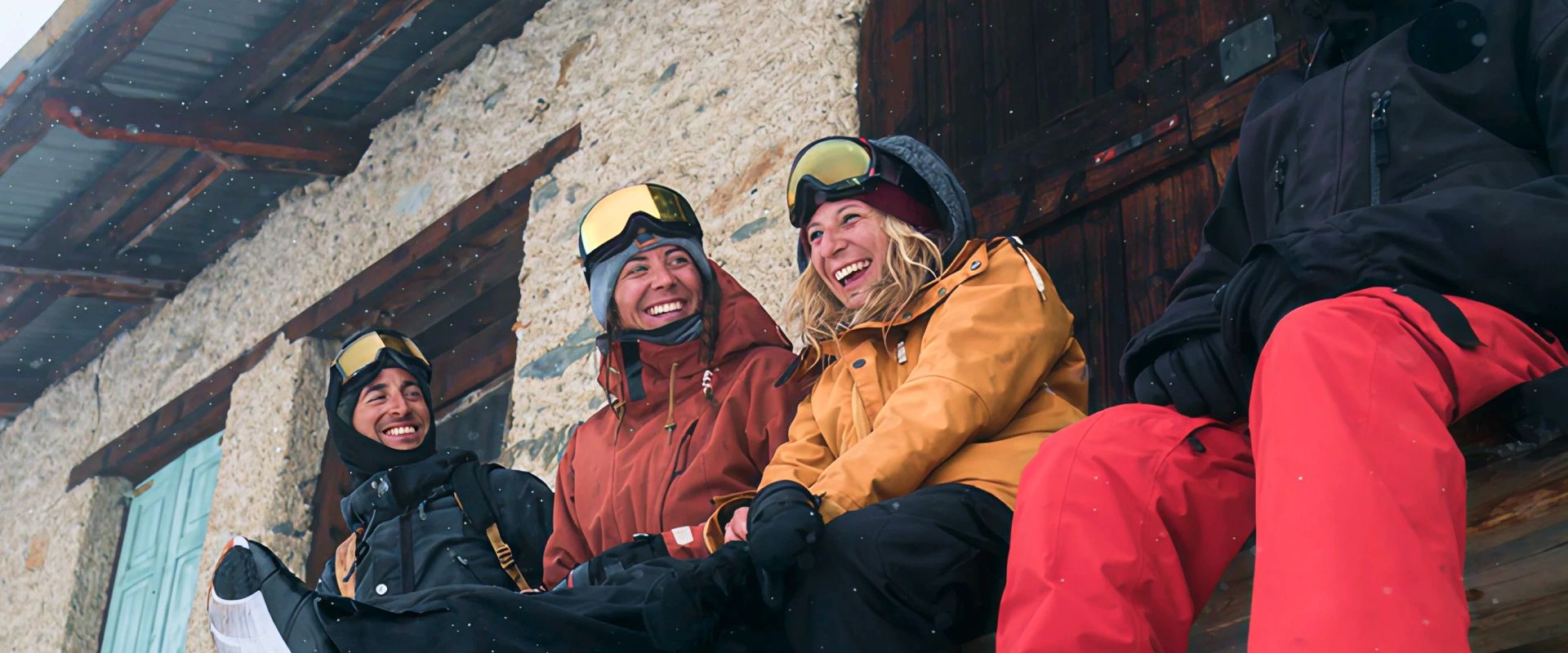
Organising a ski holiday for a group is one of the most rewarding trips you can plan - and one of the trickiest to get right. Whether you're heading out with old friends, planning a stag or hen weekend, or putting together a corporate away day, the logistics multiply with every person you add. This guide walks you through the key decisions: choosing a resort that works for mixed abilities, finding accommodation that keeps everyone together, handling bookings without losing your mind, and making sure the trip runs smoothly once you're there. If you're still weighing up whether a group trip is the right call, our guide to what a group ski holiday involves covers the basics. And if you want to compare resorts side by side, our best ski resorts for groups list is worth a look - or browse our group ski holidays to see what's available.
The biggest cause of group trip frustration isn't bad snow or a delayed transfer - it's mismatched expectations. Before you research a single resort, get clarity on three things: when people can travel, roughly how much they want to spend, and what kind of trip they're after. A stag do in Val Thorens looks nothing like a family reunion in Morzine, and the sooner everyone is on the same page, the fewer awkward conversations you'll have later.
Set up a shared document or group chat thread specifically for the trip. Ask everyone to confirm their available dates within a week, and be honest about non-negotiables. If two people can only do the second week of January and six others are flexible, the decision is made. The same applies to budget - a quick anonymous poll avoids the discomfort of people pretending they're happy with something they can't afford.
One person needs to take the lead. That doesn't mean doing everything themselves, but it does mean being the single point of contact for bookings and decisions. Too many cooks in the planning stage leads to circular group chat debates that go nowhere. Appoint an organiser, give them the mandate, and let them get on with it.
Resort choice is the decision that shapes the entire trip, and for groups it's rarely straightforward. The priority isn't finding the best resort in absolute terms - it's finding the one that has enough range to keep different types of skier happy without forcing anyone to compromise too much.
For groups with mixed abilities, look for resorts with a large, well-connected ski area where beginners and advanced skiers can head in different directions in the morning and meet at a mountain restaurant for lunch. Resorts like Les Arcs in the Paradiski area or Mayrhofen in the Zillertal Valley are strong examples - wide nursery slopes for those starting out, and enough steep terrain and off-piste to keep experienced skiers interested.
Think about the village as much as the skiing. Groups tend to spend more time together off the mountain than on it, so a resort with a compact centre, good restaurants, and walkable distances between accommodation and lifts makes the logistics much easier. A sprawling resort with accommodation spread across multiple hamlets means people drift apart - and reuniting a group of twelve for dinner becomes a military operation.
Accommodation is where group trips either come together or fall apart. The key question isn't just where you sleep - it's how much shared space you have. A ski chalet with a communal living area, shared meals, and enough bedrooms to keep everyone under one roof is the classic group option for a reason. You eat together, plan together, and the social side of the trip happens naturally rather than needing to be coordinated.
For larger groups - say twelve or more - look at chalets that sleep the full party, or apartments in the same building. Splitting across two hotels on opposite sides of the resort is a recipe for the group fragmenting by day two. If a single property isn't available, aim for accommodation within a five-minute walk of each other and agree on a daily meeting point.
Catered chalets remove a major coordination headache. Breakfast and dinner are handled, which means you're not trying to book a restaurant for fifteen people every evening in peak season. Self-catered works too, but someone needs to take charge of the shopping and cooking rota - and in a group setting, that person is rarely thanked as much as they deserve.
It's tempting for everyone to sort their own flights, transfers, and lift passes independently. Don't. Individual bookings mean different arrival times, incompatible transfer schedules, and at least one person turning up with the wrong lift pass. The whole point of a group trip is doing things together, and that starts with the booking.
A package booking through a ski holiday provider covers accommodation, lift passes, transfers, and equipment hire in a single reservation. That means one confirmation, one set of logistics, and one point of contact if something changes. For groups, this removes an extraordinary amount of friction - especially when you're coordinating across eight or fifteen different diaries.
WeSki's AI trip planner can help here. Tell it how many people you have, what ability levels you're working with, and when you want to travel, and it'll suggest resorts and packages that fit. It's a faster route to a shortlist than having everyone independently googling and feeding contradictory options into the group chat.
Mixed ability is the default state of almost every group ski trip. There's always someone who has skied since childhood, someone who went once a decade ago, and someone who has never seen snow. The trick isn't pretending everyone can ski together - it's planning a trip where different ability levels coexist comfortably.
Book lessons for the beginners and intermediates from day one. Group ski school sessions of a similar level are ideal - they learn together, progress together, and build their own shared experience. Advanced skiers can head off to explore the mountain and meet the rest of the group for lunch.
Lunchtime is the great equaliser. Pick a mountain restaurant at an altitude everyone can reach, and make it the daily meeting point. This way, the group has guaranteed time together without anyone being dragged onto terrain that's too easy or too intimidating. By mid-week, some of the improvers may be ready to ski a few runs with the more experienced members - and that's one of the best moments of any group trip.
The non-skiing side of a group trip is where memories tend to be made. Apres ski, group dinners, sledging evenings, spa visits - these are the moments people talk about afterwards. A good organiser builds a few of these into the schedule without over-planning.
For the first evening, keep it simple. Everyone will be tired from travelling, so a low-key dinner and early night works better than a big night out. Save the bigger plans for mid-week, when people have found their rhythm and the beginners have stopped aching quite so much.
Build in free time too. Not everyone wants to do everything together for seven straight days. Some people want a morning off to visit the spa. Others want to explore a neighbouring village. The best group trips have a shared framework - agreed meals, one or two planned activities - with enough flexibility for people to do their own thing when they need to recharge.
Money is the most common source of tension on group trips. Agree early on how shared costs will be handled - restaurant bills, taxis, group activities - and stick to one method. A shared expenses app works well. One person pays, logs it, and the app calculates who owes what at the end. This avoids the painful process of splitting every bill sixteen ways in real time.
For the core trip costs - accommodation, lift passes, transfers, equipment - a single group booking simplifies everything. The organiser pays the deposit, shares the per-person breakdown, and collects from everyone with a clear deadline. Anyone who hasn't paid by the date gets a polite reminder. This sounds obvious, but left unmanaged it becomes the organiser's biggest headache.
Be sensitive to different budgets within the group. Not everyone can afford the most expensive chalet or the premium restaurant. When there's a choice to be made, default to the option that works for the tightest budget - the people who can afford more won't mind, but the people who can't will remember being put in an uncomfortable position.
A short group message a week before departure saves a surprising number of in-resort misunderstandings. Cover the basics: meeting point and time at the airport, what's included in the package (meals, lift pass, transfers), the plan for the first evening, and any equipment collection details. If lessons have been booked, confirm who's in which session and where to meet.
For first-time skiers in the group, a quick heads-up about what to expect goes a long way. Point them towards a packing guide, let them know that the first day is the hardest, and reassure them that lessons are designed to get complete beginners moving confidently. The worst thing that can happen is someone arriving underprepared and feeling like they're holding the group back.
Finally, agree on a communication plan for the mountain. Phone signal can be patchy at altitude, so pick a daily meeting point and time rather than relying on WhatsApp to coordinate everyone in real time. The simplest system is usually the most reliable: lunch at the same restaurant, same time, every day.
Book lessons for the first three days, not just day one. Beginners who only book a single lesson often plateau after the first morning. Three consecutive days of instruction gives them the best chance of being ready to ski easy blue runs with the group by mid-week.
Choose a resort with a compact village centre. Scattered accommodation across multiple hamlets fragments the group quickly. Resorts where everything is within walking distance - lifts, restaurants, bars - keep the group naturally together without anyone needing to plan it.
Stagger arrival at the equipment hire shop. Fifteen people turning up at the rental shop at once on a Saturday afternoon is a recipe for a long, frustrating wait. If your package includes equipment hire, check whether you can split the collection into smaller groups or go at an off-peak time.
Use the first evening to set the week's rhythm. Go around the group over dinner and let everyone share what they're looking forward to. You'll quickly spot who wants a quiet week, who wants to ski hard, and who's mainly there for the social side - and you can plan accordingly.
There's no strict minimum, but group dynamics tend to work well from around six people upward. Below that, you're really just a small party of friends - which is great, but doesn't need the same level of coordination. Larger groups of twelve to twenty benefit most from the planning structure in this guide, especially around accommodation and mixed abilities.
For groups of eight or more, a catered chalet removes one of the biggest logistical headaches: feeding everyone. Breakfast and dinner are taken care of, which means no arguments about restaurant choices and no scramble to find a table for fifteen on a busy Saturday night. It also gives the group a natural gathering point each morning and evening.
Non-skiers are more common in groups than you might think, and most ski resorts have plenty to keep them occupied. Spas, winter walking trails, sledging, snowshoeing, and village exploring all work well. Choose a resort with a lively village so non-skiers aren't stuck in an empty apartment all day. Our guide to what a group ski holiday involves covers this in more detail.
For peak weeks - Christmas, New Year, half term - aim for six to nine months ahead. Large chalets and group-sized accommodation sell out early, and flight prices climb significantly closer to departure. For off-peak weeks, three to four months is usually enough, but earlier is always better when you're trying to get one property that fits the whole group.
Absolutely - and most groups do. The key is not forcing everyone onto the same runs. Book lessons for the beginners so they progress at a good pace, let the experienced skiers explore independently, and bring everyone together at a set meeting point for lunch. By mid-week, the improvers will often be ready to join the more experienced group for a few gentle runs.
Got a group trip to plan? WeSki’s AI trip planner can match your group's size, ability mix, and dates to the right resort in seconds