EN
EN
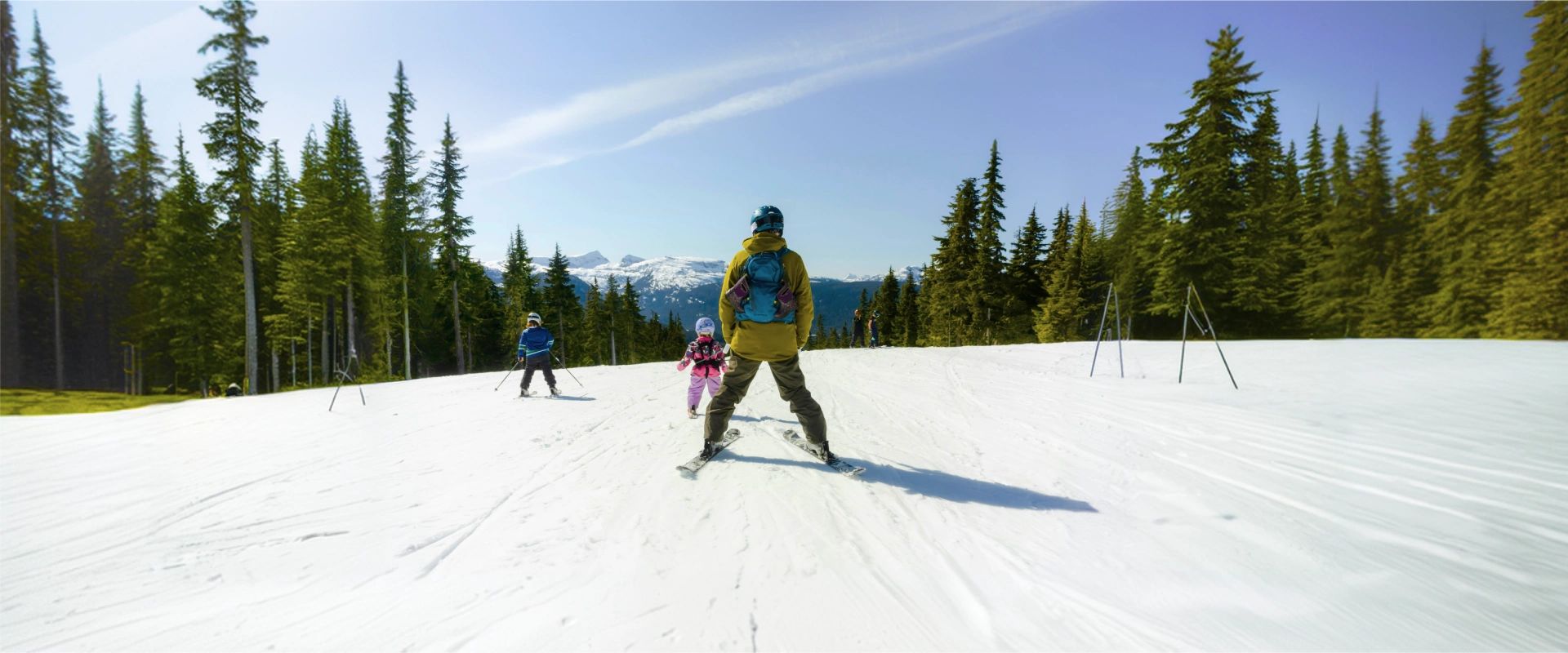
A family ski holiday has more moving parts than a trip for adults. You’re coordinating ski school times, hire equipment in multiple sizes, lift passes that match different ability levels, and accommodation that works for bedtimes as well as locations. It’s a lot to sort out - but it’s also very doable once you know what to plan for and what order to do it in. This guide takes you through the whole process step by step, from choosing a resort through to packing the car. If you’re still weighing up whether your children are old enough, our guide to what age children can start skiing covers the ages and stages. And if you’re comparing resorts, our best family ski resorts in Europe list narrows it down - or browse our family ski holidays to see what's available.
The resort choice shapes the entire holiday, and what makes a resort great for families is different from what makes it great for a group of adults. The things that matter most: a dedicated nursery area close to the main village, a well-established children’s ski school, short transfer times from the airport, and enough off-slope activities to fill an afternoon when little legs are tired.
Transfer time is worth paying attention to. A four-hour coach ride with a toddler is a very different proposition from the same journey with teenagers who have headphones. For families with young children, resorts within ninety minutes of the airport make the first and last day significantly less stressful.
Village layout matters too. A compact, pedestrian-friendly resort where accommodation, ski school, and restaurants are all within walking distance removes a lot of daily friction. Resorts that require a bus between the village and the slopes add a layer of logistics that’s manageable for adults but wears thin quickly with small children in ski boots.
Ski school is the single most important booking after the holiday itself. During school holiday weeks - half term, Christmas, Easter - popular family resorts fill their English-speaking group lessons fast. Leaving it until you arrive means you’re likely choosing from whatever slots remain, which may not match your preferred times or instructor language.
For children under four, check whether the resort’s ski school accepts their age group and what format the sessions take. Some run dedicated programmes with indoor warm-up time and shorter on-snow sessions. Others start group lessons at four and direct younger children to a snow garden or creche. Knowing this before you book the resort avoids an unpleasant surprise on arrival.
If you have a non-skiing baby or toddler, creche availability is worth checking early too. Resort creches in popular destinations fill up during peak weeks, and having reliable childcare means both parents can actually ski rather than taking turns. Some creches accept children from six months; others start at eighteen months or two years.
Hiring is the right call for children. They grow fast, their ability changes from trip to trip, and equipment that fits properly makes a measurable difference to how comfortable and confident they are on snow. Hire shops in resort will fit boots, skis, poles, and a helmet to your child’s current size and ability.
Boots are the most important part of the hire. A boot that’s too big lets the foot slide around and makes controlling skis much harder - especially for small children who have less strength to compensate. When the hire shop fits your child, check that there’s about a finger’s width of room at the toe when the boot is buckled up. Any more than that and the boot is too big.
Helmets are compulsory for children in several European countries, including Italy and parts of Austria. Even where they’re not legally required, they’re standard for children at every resort. Hire shops include them as part of children’s packages, so there’s no need to buy one before you go unless you want to.
The clothing challenge with children is that they get cold faster than adults but also overheat when they’re active. Layers are the answer. A thin thermal base layer (merino or synthetic, not cotton), a mid-layer fleece or thin insulated jacket, and a waterproof ski jacket and trousers as the outer shell. This combination lets you add or remove the mid-layer depending on the weather and how hard they’re working.
Hands and feet get cold first, and cold hands end a ski day faster than anything else. Ski-specific gloves or mittens with proper insulation and waterproofing are essential - fashion gloves and woolly mittens get wet within minutes and then make things worse. For very young children, mittens are easier to get on and off than fingered gloves.
The things families most often forget: spare gloves (one pair will get wet), thin ski socks (thick socks bunch up inside boots and cause blisters), lip balm with SPF, and high-factor sun cream. UV at altitude is stronger than at sea level, and snow reflects it back up, so faces burn quickly even on overcast days.
The biggest adjustment for parents who are keen skiers is accepting that a family ski holiday runs at a different pace. With children under eight, the realistic skiing window is about four to five hours a day - ski school in the morning, a long lunch, and maybe an hour of family skiing in the early afternoon before energy runs out.
Planning a mix of on-slope and off-slope activities for each day helps keep the week enjoyable for everyone. Most family-friendly resorts have swimming pools, ice rinks, sledging runs, or indoor play areas that make excellent afternoon alternatives. Having these in your back pocket means a tired or reluctant child doesn’t have to derail the whole day.
For families with mixed ages or abilities, the lunch meeting point becomes the anchor of the day. Older children and adults can ski all morning, younger children finish ski school, and everyone meets for lunch. After that, the family can split again - older kids back on the slopes, younger ones to an afternoon activity. It’s a rhythm that works well once you establish it on day one or two.
Travel insurance that covers skiing is essential for the whole family, not optional. Make sure the policy includes ski equipment hire (if a child’s hired skis are damaged or stolen, you’re liable), piste rescue, and medical treatment at altitude. Check the age limits on the policy too - some exclude children under a certain age from winter sports cover unless you add them specifically.
A basic first-aid kit adapted for children saves trips to the pharmacy. Include children’s pain relief, plasters, blister patches, lip balm, and any regular medications. Pharmacies in ski resorts stock the essentials, but they’re often small and may not carry specific brands or formulations you’re used to.
Build in a rest day. It might feel like a waste when you’ve paid for a week of skiing, but a mid-week day off the slopes - or even a late start - makes the second half of the week dramatically better for children. Fatigue accumulates fast at altitude, and a day exploring the village, swimming, or just having a slow morning resets everyone’s mood.
A bit of preparation at home can make a real difference to how children approach their first day on snow. For younger children, watching gentle ski videos together, trying on their ski socks and thermals, and talking through what ski school will be like all help reduce first-morning nerves. The more familiar it feels when they arrive, the smoother the transition.
Physical preparation helps too, particularly for children over six. Balance exercises, playing on scooters or bikes, and anything that builds leg strength gives them a head start. None of this needs to be formal - an active few weeks before the trip is enough. For teenagers, the fitness angle often lands better than the excitement angle.
If any adults in the family are also learning, that’s worth sharing with the children. Knowing that mum or dad is a beginner too removes the pressure of being the only one who doesn’t know what they’re doing, and comparing notes at dinner becomes part of the fun.
Label everything. Hire equipment, gloves, helmets, goggles - it all looks identical to every other child’s kit. Put a sticker or a strip of coloured tape on your child’s skis, poles, and helmet so they can spot their own gear quickly at ski school. It sounds small, but it saves a surprising amount of time and stress each morning.
Arrive at ski school ten minutes early on day one. The registration and grouping process takes longer than you expect, especially with young children who need help with boots and helmets. After day one, you’ll know the routine and can time it more tightly.
Carry snacks and a warm drink. A thermos of hot chocolate and some easy-to-eat snacks in a pocket make a bigger difference to a child’s afternoon on the slopes than any piece of technique. Cold and hungry is the fastest route to a meltdown at any age.
Pick your family skiing run carefully. When you ski together as a family, choose the widest, gentlest run available - not the shortest route back to the village. A long, quiet green or easy blue with room to weave and stop is where the best family skiing moments happen.
✓ Choose a resort with short transfers, a compact village, and a strong children’s ski school.
✓ Book ski school and childcare early - peak weeks fill fast.
✓ Hire all children’s equipment in resort. Boots are the most important fit.
✓ Layer clothing: thermal base, fleece mid-layer, waterproof outer shell. Pack spare gloves.
✓ Plan four to five hours on snow for younger children. Use afternoons for off-slope activities.
✓ Get travel insurance that specifically covers skiing for the whole family.
✓ Build in a rest day mid-week to reset energy levels.
✓ Label all equipment and arrive early at ski school on day one.
A week is the standard and works well for most families. It gives children enough time to settle into ski school, build confidence, and make real progress. Shorter breaks of three to five days can work for families with older children or teenagers, but with children under seven, the first two days are often spent adjusting - a full week means you get to enjoy the payoff once everyone hits their stride.
Separate lessons generally work better. Children learn differently from adults - the pace, the teaching style, and the terrain are all adapted to their age. Adults progress faster in adult-only groups too, because the instructor can move at a pace that suits grown-up learners. The family skiing time comes after lessons, when you can enjoy the slopes together at a relaxed pace.
School holidays are busier and resorts are at their fullest, but they’re also when children’s ski school programmes are at full capacity - meaning more groups, better age matching, and a wider choice of session times. January and early December tend to be quieter alternatives if your school calendar allows. February half term and Easter are the busiest family weeks across most European resorts.
Not necessarily. Many resorts have beginner-area passes that cover the nursery slopes and easy lifts, which is all a first-timer needs for the first few days. Adult skiers who want to explore the full mountain need a full-area pass. Checking what’s included with ski school for children is worthwhile - in some resorts, the beginner lift access comes as part of the lesson package.
This is one of the best parts of a family ski holiday. Even when ability levels are mixed, most resorts have long, gentle green or easy blue runs where everyone can ski together comfortably. The trick is choosing terrain that’s easy enough for the least experienced skier and scenic enough to keep the more advanced ones happy. Late afternoons, when the slopes are quieter, are often the best time for family runs together.
Got a clearer picture of what your family needs? WeSki’s AI trip planner turns it into a shortlist - tell it your children’s ages, your dates, and what matters most, and it’ll match you to the right resorts