EN
EN
Taking the family skiing for the first time raises a lot of questions - and the age one comes up first for most parents. The short answer is that children can start from around three years old, but there’s a lot more to it than that. This guide covers the ages and stages of children’s skiing, what a family ski holiday actually involves at different ages, and the practical things that make the biggest difference to how the week goes. If you’re already set on going and want to know how to plan it, our guide to planning a family ski holiday covers the logistics step by step. And if you’re comparing resorts, our best family ski resorts in Europe list is a good place to start - or browse our family ski holidays to see what's available.
Most ski schools accept children from age three, and some have programmes for two-and-a-half-year-olds. But acceptance age and readiness aren’t the same thing. A three-year-old who’s confident on their feet, happy to be away from parents for a couple of hours, and comfortable in cold weather will have a very different experience from one who isn’t quite there yet.
What matters more than the number on the birthday cake is a handful of practical things: can they follow simple instructions from someone who isn’t you? Are they comfortable wearing bulky clothing and stiff boots? Do they have enough stamina for a couple of hours outdoors? If the answer to most of those is yes, they’re probably ready. If not, waiting six months or a year usually makes a significant difference.
For very young children, plenty of resorts have snow gardens and play areas that introduce them to snow without the pressure of formal lessons. These are often the best starting point - your child gets time on snow, you get time on the slopes, and nobody has to commit to a full day of instruction before they’re ready for it.
Children’s skiing changes dramatically between ages three and twelve, and it helps to know what to expect at each stage so you can set realistic goals for the week.
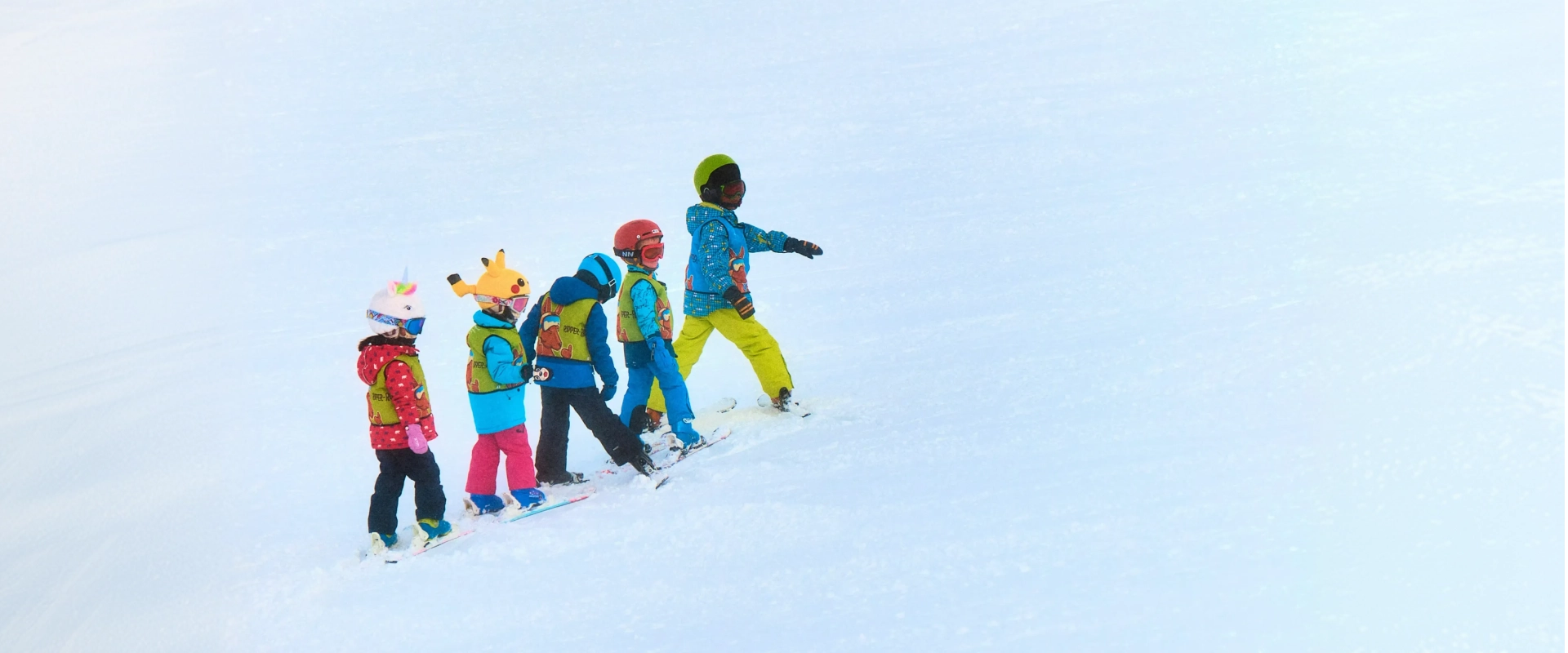
Ages 3 - 4: At this age, ski school is mostly about play. Sessions are short - typically ninety minutes to two hours - and the focus is on getting comfortable in boots, moving around on flat snow, and learning to stop. Progress is measured in smiles, not technique. Some children take to it immediately; others need a day or two to warm up. Both are completely normal.
Ages 5 - 7: This is when things start clicking. Children have more stamina, better coordination, and can follow instruction more easily. Most five-to-seven-year-olds will be using the magic carpet or button lift by mid-week and making their way down gentle green slopes by the end of it. Group lessons work well at this age - children learn faster when they’re with peers.
Ages 8 - 12: Older children often progress faster than adults. They’re lighter, more flexible, and less afraid of falling. A confident eight-year-old can realistically be skiing blue runs by the end of a first week. By their second or third trip, many children at this age are skiing terrain that their parents find challenging. It’s worth being prepared for that - the dynamic where your child waits for you at the bottom of a run arrives sooner than most parents expect.
Teenagers: Teens who start skiing for the first time progress similarly to adults, though usually a little faster. The bigger question with teenagers is often motivation and independence. Many prefer lessons with other teens rather than younger children, and most resorts have specific teen group options. By mid-week, a teenager who’s engaged will want to explore on their own or with friends - which is one of the things that makes skiing such an appealing holiday for that age group.
The logistics of getting small children into ski gear and to ski school on the first morning catch a lot of families off guard. Everything takes longer than you think. Boots need to go on over specific socks (not two pairs - one thin pair, pulled up straight with no wrinkles). Helmets need adjusting. Goggles fog up. Someone’s gloves are in the wrong pocket. Budget an extra forty-five minutes on day one, and you’ll arrive at ski school feeling much calmer.
At ski school drop-off, instructors will sort children into groups by age and ability. First-timers go to the nursery area - a roped-off section of gentle, flat terrain with magic carpets (conveyor-belt lifts that children stand on). The initial focus is on walking in boots, getting up after sitting down, and sliding very slowly in a straight line. It’s gentle, patient, and designed around the attention span of the age group.
What parents often don’t expect is how quickly the routine settles in. By day two, most children know the drill - boots, helmet, meet the instructor - and the morning drama drops significantly. By mid-week, many are running ahead to get to their group.
Children’s ski school in most European resorts runs for about five to six hours a day, including a lunch break. That gives parents a solid window for their own skiing - or for non-skiing activities if one parent doesn’t ski. Some resorts split the day into morning-only or afternoon-only sessions, which is worth knowing if your child is very young or tires easily.
Group lessons are the standard option, and they work well for children who are comfortable in a social setting. Groups are typically four to eight children of similar age and ability. Private lessons are available everywhere and make the most difference for very young children (under five), nervous first-timers, or children who want to progress faster than a group allows.
One practical thing that makes a real difference: book lessons before you go, not when you arrive. Ski schools in popular family resorts fill up quickly during school holiday weeks, and the best English-speaking instructors are often allocated first. Sorting this in advance is one less thing to coordinate in resort.
Tiredness is the thing that shapes a family ski week more than anything else. Children burn through energy fast at altitude, in cold air, doing something physically demanding. By early afternoon, many younger children are done - not just for lessons, but done for the day. Planning around this makes the week much more enjoyable. Late lunches, early dinners, and low-key afternoons are the rhythm that works best for most families with children under eight.
The cold is the other thing that catches families out. Children lose body heat faster than adults, and a cold, miserable child won’t learn anything. Layering properly matters more than any piece of ski technique. A thin thermal base layer, a mid-layer fleece, and a waterproof outer shell with sealed seams is the combination that works. Hands and feet get cold first - invest in proper ski gloves (not fashion gloves) and make sure boots fit well with room for warm socks.
Altitude affects children more noticeably than adults, particularly above 2,000 metres. Headaches, nosebleeds, and disrupted sleep in the first day or two are common and usually pass quickly. Resorts at lower altitudes tend to be easier on young children for this reason, and it’s one of the practical factors worth considering when choosing where to go.
It happens, and it’s more common than most ski holiday marketing suggests. Some children don’t enjoy the cold. Some find the boots uncomfortable. Some are simply not ready to be away from their parents for a full morning. None of this means the holiday is a failure or that they’ll never ski.
The best family resorts have plenty to do beyond skiing - swimming pools, ice skating, sledging, snow gardens, indoor play areas. A child who spends half the week skiing and half the week doing other snow activities has still had a proper mountain holiday. And plenty of children who were reluctant at three or four come back at six or seven and take to it immediately.
What helps is keeping the pressure low. If you’ve chosen a resort with good non-ski activities and your child doesn’t want to ski on day three, switching to something else and trying again on day four is almost always a better strategy than pushing through. The goal of a first family ski holiday is for everyone to enjoy it - the technique will follow in its own time.
A few ski schools accept children from two and a half, but at that age it’s closer to structured snow play than formal skiing. Sessions are very short, and the focus is entirely on having fun in the snow rather than learning technique. Many families find that a snow garden or creche with outdoor time is a better fit at two, with proper ski lessons starting at three or four when stamina and coordination have developed further.
It depends on the child’s age and temperament. For children under five, private lessons often work better - the instructor can adapt pace and breaks to one child’s needs. From five upwards, group lessons are usually the stronger option. Children learn well from watching peers, the social element keeps them motivated, and the friendly competition within the group often pushes progress faster than one-to-one instruction.
It can be, but it works best when expectations are adjusted. A baby or toddler won’t be skiing, so the holiday becomes a split between childcare and slope time for each parent. Resorts with good creche facilities make this much easier - some accept babies from six months. The mountain setting, the fresh air, and the change of scenery are still a holiday even if you’re skiing in shifts rather than as a family. It’s a different kind of trip, but plenty of families enjoy it.
Hiring is the way to go for children. They grow fast, and equipment that fits properly makes a real difference to how quickly they learn and how comfortable they are. Hire shops in resort will fit boots, skis, poles, and a helmet to your child’s size and ability level. Buying only makes sense once a child is skiing regularly and has stopped growing rapidly - for most families, that’s not until their early teens at the earliest.
There’s no single best age - it depends on your child and what you want from the trip. Many families find five or six to be the sweet spot: old enough for a full morning of group lessons, young enough to pick it up quickly, and at an age where the novelty of snow is truly exciting. That said, families with three-year-olds have brilliant weeks too, especially at resorts with strong snow garden programmes. Our guide to planning a family ski holiday covers how to choose the right setup for your children’s ages.
Thinking about giving it a go? Try WeSki’s AI trip planner - tell it your children’s ages and what matters to your family, and get a personalised shortlist of resorts in seconds