EN
EN
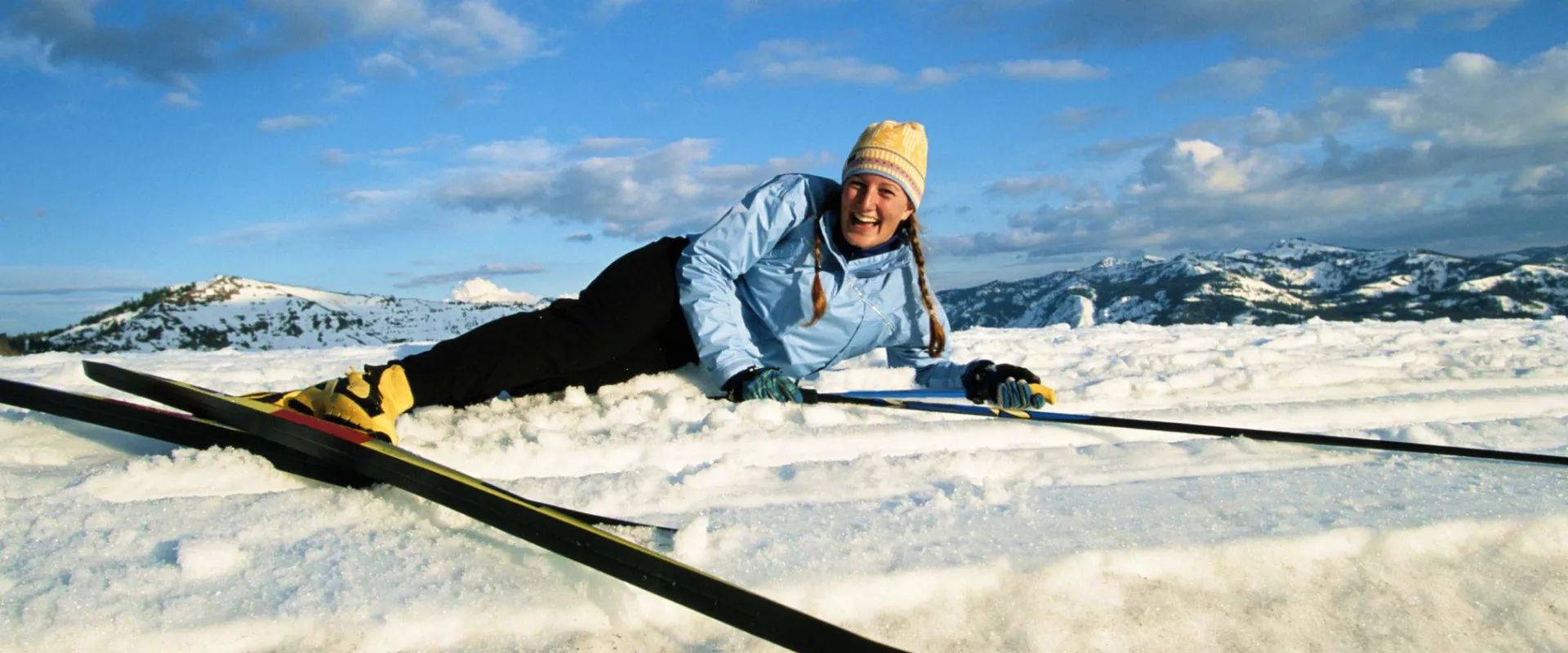
This is not a how-to guide. It is an honest look at what your first week on skis actually involves - the parts nobody warns you about, the parts that surprise people, and the parts that keep them coming back. If you’re already set on going and want to know how to prepare, our complete beginner’s guide to skiing covers the practical steps. And if you’re comparing resorts, our 10 best ski resorts for beginners 2026/27 is a good place to start - or browse WeSki's beginners ski holidays if you're ready to see what's available.
Most first-timers describe their first morning on skis as faintly absurd - and it helps to know that’s normal. You are standing in rigid plastic boots that force you to walk with a strange forward lean, holding poles you are not sure what to do with, surrounded by people who seem to glide effortlessly while you struggle to stay upright on flat ground. It feels like everyone is watching. They are not - they are thinking about their own skiing - but the self-consciousness is real and it passes quickly.
About an hour into your first lesson, most people notice a shift. Your brain stops overthinking and your body starts figuring out the movements. The first time you slide ten metres under your own control, there is a rush of achievement that feels completely disproportionate to what you have actually done. You have moved a short distance down a very gentle slope, but something about it feels like a breakthrough.
By the end of day one, most people can stop, make basic turns, and use the nursery lift. Your legs will feel it - skiing uses muscles you do not normally work this hard - and you will be more tired than you would expect from what looked like a gentle activity. But there is also a buzz that comes from doing something you thought you could not.
Group lessons typically run for three to four hours in the morning, and your instructor will pace the first day carefully. You start on a flat area, learning to slide, stop, and snowplough turn. The snowplough - skis in a V shape, tips together - is your main tool for the first two or three days. It looks ungainly and feels awkward, but it gives you reliable control over speed and direction, which is exactly what you need.
Progression varies from person to person and there is no single timeline that applies to everyone. Many beginners move from the nursery slope to green or easy blue runs by day three, riding a chairlift for the first time. Others take longer and that is completely fine - the nursery slopes are designed for exactly this. What matters is that the instruction is well paced and you build confidence before taking on steeper terrain.
By mid-week, lessons start to feel less like survival and more like skill-building. Instructors introduce longer runs, parallel turns, and more varied terrain. The afternoons are yours - some people practise what they have learned, some explore easy runs with friends, and some call it a day and head to the après-ski. All three are perfectly reasonable approaches.
Day one feels tiring. Day two feels worse - this is when the accumulated soreness peaks and your legs protest at every turn. Almost every beginner goes through this, and it does not mean you are unfit. Skiing works your quads, glutes, and core in a sustained way that most everyday activities do not, and the altitude adds another layer of effort you might not expect.
By day three, something shifts. Your body starts to adapt, the soreness fades, and you stop gripping the terrain so hard. If you did a few weeks of squats and lunges before the trip, you will notice the difference - not because they prevent soreness entirely, but because recovery comes faster and you have more energy in the afternoons.
Altitude catches some people out too, especially at higher resorts. Drink more water than you normally would, use high-SPF sun cream (UV at altitude is much stronger than at sea level, even on cloudy days), and take breaks when you need them. Falling at beginner level is part of learning, not a sign you are doing it wrong. At slow speeds on gentle slopes, falls are usually a soft sit-down into snow.
A ski holiday involves a lot more than skiing. There are long lunches on sun-drenched terraces, après-ski drinks in the village, hot tubs after a day on the mountain, and a communal rhythm to the day that is hard to replicate anywhere else. The shared experience of lessons, lift queues, and evenings out creates a social atmosphere that many first-timers find unexpected.
If that is not your thing, the mountain itself is reason enough. The scenery at altitude is extraordinary - even people who have seen photos are struck by the scale of it in person. And the physical rhythm of a ski day - cold mornings, hard exercise, big lunches, early evenings - is the kind of routine that makes you sleep ten hours a night and wake up feeling better than you have in months.
Plenty of first-timers leave already planning their next trip. If you do not, that is fine too - a first ski holiday is worth taking on its own merits.
✓ The first morning is awkward for everyone. By the afternoon, most people can stop, turn, and use the nursery lift.
✓ Day two is the hardest physically. The soreness peaks and then fades - push through it.
✓ Most beginners are on blue runs by the end of a five-day lesson block. Progress varies and that is normal.
✓ A ski holiday is more than skiing - the food, the scenery, and the social side are a big part of why people come back.
✓ Choose a resort with dedicated beginner areas and English-speaking instruction - it makes more difference than anything else.
For most people, the nervousness fades quickly once you are on the nursery slope and realise how gentle it is. The first moments feel unfamiliar rather than frightening - rigid boots, slippery surface, a lot of new information. But the nursery slopes are flat and slow, and your instructor controls the pace. By the end of the first lesson, the nervousness usually gives way to concentration and then, gradually, to enjoyment.
Age is rarely the barrier people expect. Adults learn differently from children - more methodically, with a better understanding of what the instructor is asking - and plenty of people learn to ski well into their fifties and sixties. Reasonable fitness helps, and a few weeks of leg-strengthening exercises before the trip will make the first days more comfortable, but you do not need to be an athlete.
This is one of the most common worries, and the reality is far better than you would expect. You spend mornings in lessons while they ski the wider mountain, then meet for lunch on a sun-drenched terrace. By mid-week you may be skiing some of the same blue runs together. The key is choosing a resort with enough terrain for both ability levels - our best ski resorts for beginners guide prioritises resorts that work well for mixed-ability groups.
A first ski holiday has plenty to enjoy even if skiing itself does not click for you. The mountain scenery, the food, the après-ski, and the change of pace are all worthwhile in their own right. Most people find that having a few lessons takes the pressure off - you are learning a skill, not committing to a lifestyle. If you find skiing is not for you, the holiday is still time well spent.
A ski holiday involves more upfront costs than a beach holiday - flights, accommodation, lift pass, lessons, and equipment hire all add up. Whether that feels worth it depends on what you value. Many first-timers say the combination of physical challenge, stunning scenery, and the social experience made it one of the most memorable holidays they have had. If you are unsure, a short break of three to five days is a good way to try it without committing to a full week.
You do not need to be particularly fit, but reasonable baseline fitness makes the first few days easier. Skiing is physically demanding in a way most people do not expect - your legs work hard, your core stabilises constantly, and the altitude adds effort on top. A few weeks of squats, lunges, and light cardio before the trip will help your legs cope with days two and three, which is when the muscle soreness peaks.
Ready to actually try it? WeSki’s AI trip planner can match you to the right resort in seconds