EN
EN
The word luxury gets used loosely in ski holiday marketing, and it can be hard to tell what you're actually getting until you arrive. This guide breaks down what separates a luxury ski holiday from a standard one - the accommodation, the dining, the service, and the smaller details that shape the week. If you already know luxury skiing is what you're after and want to compare resorts, our best luxury ski resorts in Europe list is a good starting point. And when you're ready to pull the details together, our guide to planning a luxury ski holiday walks through the practical steps.
In a ski resort, luxury accommodation broadly falls into two categories: private chalets and five-star hotels. The distinction matters because they create very different weeks.
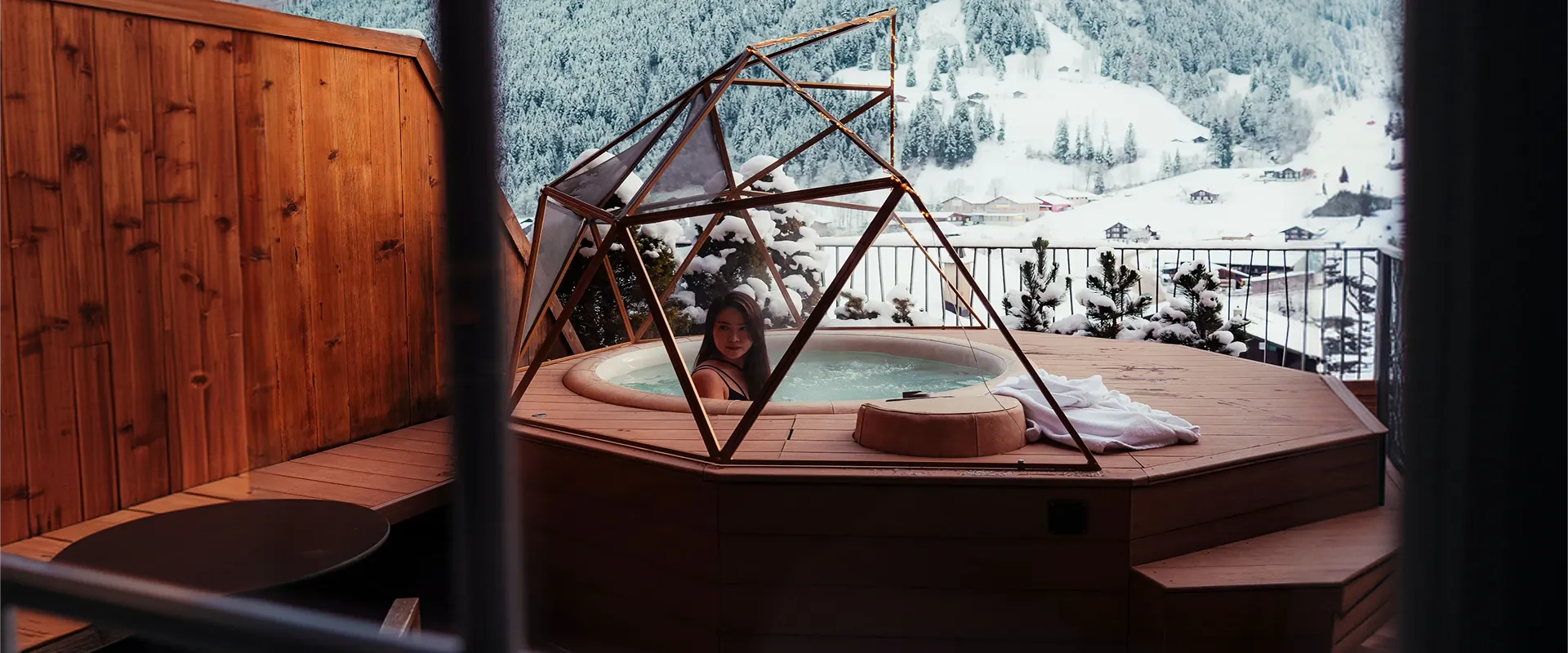
A catered chalet typically comes with a dedicated chef, a host, and a set daily routine - breakfast, afternoon tea, and a multi-course dinner with wine included. The best ones have hot tubs, boot rooms with heated racks, and direct slope access. The atmosphere is private and informal: you're in someone's (very well-appointed) home rather than a hotel lobby. Chalets work particularly well for groups and families who want to set their own pace.
Five-star hotels bring a different set of strengths. The service infrastructure is larger - concierge desks, spa facilities, multiple restaurants, ski valets who have your boots warmed and ready each morning. The trade-off is less privacy and a more structured environment. In resorts like Courchevel 1850 and Lech, the top hotels are ski-in ski-out, which removes the daily transfer to the lifts entirely.
What both share at the luxury tier is attention to the small things: the quality of the linen, the temperature of the boot room, how quickly a request gets handled. These details don't appear on booking pages, but they're often what people remember most about the week.
Food is one of the areas where the gap between a standard ski holiday and a luxury one is most noticeable. At the top end, dining isn't just fuel between ski sessions - it's a central part of the experience.
On the mountain, luxury resorts tend to have sit-down restaurants with table service, regional menus, and wine lists rather than canteen-style self-service. In the French Alps, mountain restaurants with Michelin stars are not unusual. In Italy's Dolomites, rifugios serve regional dishes that would hold their own in any city restaurant. The best on-mountain dining turns a lunch stop into a highlight of the day rather than a quick refuel.
In the village, luxury resorts typically have a depth of evening dining options that smaller resorts can't match. Courchevel, Megeve, and Zermatt all have multiple fine-dining restaurants alongside more relaxed options. In a catered chalet, the evening meal is handled for you - a multi-course dinner prepared by a private chef, often with paired wines.
The practical takeaway: if food matters to you on holiday, a resort's dining scene is worth researching alongside its ski area. The difference between a resort with three good restaurants and one with thirty is significant over a week.
Luxury ski holidays remove friction from the day. That sounds vague until you've experienced the alternative - carrying your own boots through a car park, queuing for a rental shop, working out the bus timetable to the lifts. At the top end, these logistical steps are handled for you.
A typical luxury service package might include private airport transfers, a ski concierge who arranges lessons and restaurant bookings, and a ski valet who stores and prepares your equipment overnight. In the best hotels, you walk from breakfast to the slopes without touching a boot bag. In the best chalets, a driver takes you to the lift if the property isn't slope-side.
The result is more time skiing and less time managing logistics. For a week-long trip, those saved minutes compound into hours - and the mental load of coordinating the practical side of the holiday drops to near zero. This is often the single biggest difference between a luxury ski holiday and a well-rated four-star one.
The snow and the terrain are the same regardless of where you're staying. A red run is a red run whether you're in a five-star hotel or a two-star apartment. But the skiing experience does shift at the luxury level in a few practical ways.
Piste grooming tends to be better in the resorts that attract high-spending visitors. Courchevel, Lech, and Zermatt are consistently praised for the quality of their grooming - wide, smooth runs that are maintained to a standard that less-funded resorts can't always match. Lift systems in luxury resorts are also typically newer and faster, which means less time in queues and more time skiing.
Private ski instruction is more common at this level. Rather than group lessons with eight or ten people, a private instructor for a half-day or full day shapes the skiing around your ability and preferences. Some luxury hotels have relationships with specific instructors and can pair you with someone suited to your level and style.
First tracks experiences - where you ski freshly groomed pistes before the lifts open to the public - are available in several luxury resorts and are one of those experiences that most skiers don't know exist until they try them.
A luxury ski holiday doesn't assume that everyone in the group skis all day, every day. The best luxury resorts have enough to do off the slopes that a non-skier can have an excellent week without feeling like they're missing out.
Spa facilities are a given at the five-star level - most top hotels have pools, treatment rooms, and thermal areas. Beyond that, luxury resorts tend to have a wider range of non-skiing activities: snowshoeing, cross-country skiing, winter hiking, horse-drawn sleigh rides, and in some cases ice driving or helicopter tours.
The village itself matters too. Resorts like St Moritz, Kitzbuhel, and Megeve function as real towns with galleries, boutiques, and cultural events that give the afternoons and evenings a life of their own. For groups where skiing ability or enthusiasm varies, having a resort with depth beyond the ski area makes the difference between a good holiday for one person and a good holiday for everyone.
This is a question that only you can answer, and it depends on what you value in a holiday. If your priority is maximum days on snow and the accommodation is just a place to sleep, then a well-located three-star hotel will do the job. The skiing itself doesn't change.
Where luxury earns its place is in the experience around the skiing. The quality of the food, the comfort of the accommodation, the smoothness of the logistics, the range of things to do when you're not on the slopes. For some people - and particularly for groups with mixed interests or abilities - those elements transform a ski trip from a sporting holiday into something more complete.
The honest assessment: if you've skied before and found yourself wishing the hotel was better, the restaurants were more interesting, or the daily logistics were less of a hassle, a luxury ski holiday addresses all three. Whether that's worth the additional investment is a personal call - but knowing what's included at this level helps you make it with your eyes open.
The gap is usually most noticeable in the service and the details rather than the room itself. Five-star properties tend to have ski valet services, dedicated concierge teams, higher staff-to-guest ratios, and more refined dining. The room will be larger and better appointed, but the real difference is how much of the daily logistics are handled for you.
It depends on what you're after. Chalets suit groups who want privacy, a personal chef, and a home-like atmosphere. Hotels suit couples or smaller parties who prefer the infrastructure of a larger property - spa, multiple restaurants, room service, and a wider social atmosphere. Both can be equally luxurious; the difference is the format rather than the quality.
This varies depending on how the holiday is packaged. Some luxury chalets include lift passes and equipment hire in the price; others treat them as extras. Five-star hotels almost never include them by default. When booking through a package provider like WeSki, you can build the pass, equipment, lessons, and transfers into a single booking so everything is confirmed before you arrive.
Peak weeks - Christmas, New Year, February half term - sell out earliest at the luxury end, so booking six to twelve months ahead is sensible for those periods. January and March are typically easier to book at shorter notice and can be a good option if your dates are flexible. Our guide to planning a luxury ski holiday covers timing in more detail.
Absolutely doable, and in some ways a luxury setting makes a first ski holiday easier. Private lessons (rather than group) mean you learn at your own pace. The accommodation and dining give you something to look forward to after a tiring day on the slopes. And the service element means you don't have to navigate logistics at the same time as learning a new sport.
Curious what a luxury ski holiday could look like for you? Try WeSki’s AI trip planner - tell it your priorities and it'll match you with the right resort and accommodation