
FR
FR
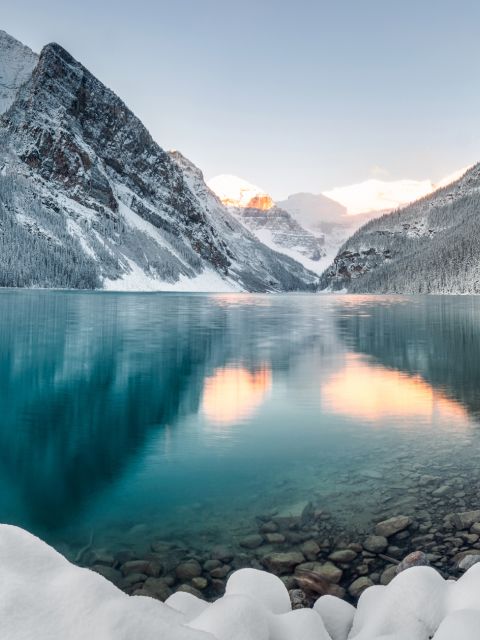
SkiBig3 is the collective name for the three ski resorts in Banff National Park in the Canadian Rockies: Lake Louise, Sunshine Village, and Mt Norquay. This is skiing on a different scale from the Alps - vast mountain terrain, cold, dry powder, wide-open bowls, and scenery that includes glacial peaks, frozen lakes, and wildlife. Banff National Park is a UNESCO World Heritage Site, and skiing here feels like being in genuine wilderness. The resorts are spread along the Trans-Canada Highway, with the town of Banff as the base for all three.
The three resorts cover a combined 8,000 acres (over 3,200 hectares) of skiable terrain served by 26 lifts, with 334 runs between them. The altitude ranges from 1,630 m in Banff to 2,730 m at the top of Lake Louise. The season runs from early November (Sunshine Village and Lake Louise) through to late May at Sunshine, making it one of the longest in North America. Canadian ski areas are measured in acres rather than kilometres of piste, and much of the terrain is ungroomed - bowls, glades, and chutes that open after snowfall.
Lake Louise is the largest, with dramatic terrain beneath the Continental Divide. Sunshine Village sits at 2,160 m on a high alpine plateau, getting more snow than almost anywhere in the Canadian Rockies. Mt Norquay is the smallest and closest to Banff - a local favourite for quick sessions and night skiing. All three are covered by a single SkiBig3 pass. Browse SkiBig3 ski deals on WeSki to start planning your trip.
| Country | Canada |
| Region | Alberta (Banff National Park, Canadian Rockies) |
| Total piste area | 8,000 acres (over 3,200 hectares) across three resorts |
| Altitude | 1,630 m (Banff town) - 2,730 m (Lake Louise summit) |
| Linked resorts | 2 on WeSki Banff Lake Louise 3 resorts total (Mt Norquay, Sunshine Village, Lake Louise) |
| Lifts | 26 (across all three resorts) |
| Runs | 334 (across all three resorts) |
| Season | Early November - late May (Sunshine Village); mid-November - early May (Lake Louise); early December - mid-April (Mt Norquay) |
| Ski pass name | SkiBig3 pass |
| Nearest airports | Calgary (~1 hr 30 min to Banff, ~2 hr to Lake Louise) |
| Glacier skiing | No (though surrounded by glacial peaks in the national park) |
| WeSki services | Lessons: Banff Transfers: Banff (private, shared, scheduled), Lake Louise (private, scheduled) No WeSki ski equipment hire currently available |
The town of Banff is the base for the SkiBig3 experience - a lively mountain town at 1,383 m with a wide range of hotels, restaurants, and bars along its main street, Banff Avenue. Two of the three SkiBig3 resorts are accessed from Banff: Mt Norquay is just a five-minute drive up the mountain, and Sunshine Village is about 20 minutes away via a gondola base on the highway. Mt Norquay is compact and local-feeling, with 60 acres of terrain including some surprisingly steep runs and night skiing under floodlights. Sunshine Village is the bigger draw - a high-altitude resort at 2,160 m spread across three mountains (Lookout, Standish, and Goat's Eye) with over 3,300 acres of terrain, enormous snowfall, and a season that regularly stretches into late May. The combination of Banff's town amenities with two mountains on the doorstep makes it a strong all-round base.
Lake Louise is one of the most spectacular ski resorts in the world. The ski area covers 4,200 acres across four mountain faces, with terrain ranging from gentle green runs at the base to the legendary Back Bowls - wide-open, above-treeline powder fields that feel genuinely wild. The front face looks directly out at the Victoria Glacier and the Continental Divide, and on a clear day the panorama is staggering. The resort sits about 45 minutes' drive from Banff, and the village of Lake Louise is tiny - a handful of hotels and the famous Fairmont Château Lake Louise on the lakeshore. Lake Louise hosts World Cup alpine races on its steep front face, and the terrain variety - from groomed cruisers to steep chutes to open bowls - is hard to match. The cold, dry Rocky Mountain climate produces light, fluffy powder that's a different experience entirely from Alpine snow.
All three resorts have dedicated beginners' terrain. Mt Norquay, closest to Banff, has a good nursery area and gentle green runs - its compact size makes it manageable for first-timers. Sunshine Village has a beginner zone on the Standish side, and the wide, sunny runs on the upper plateau are gentle and forgiving once you're ready to explore. Lake Louise has green runs at the base of the front face, with progression onto easy blues through the lower trees. The cold, dry snow can feel different from European conditions - it's lighter and faster underfoot - but the grooming at all three resorts is excellent.
Ski and snowboard lessons are available through WeSki in Banff, for adults and children.
WeSki tip: Start at Mt Norquay on your first day - it's five minutes from Banff, compact, and has a calm learning environment. It's also open for night skiing, so you can get extra runs in the evening under the floodlights. Once you're comfortable, move to Sunshine or Lake Louise for bigger terrain. The progression from Norquay to the bigger mountains feels natural.
Intermediates have thousands of acres to explore. Sunshine Village's three mountains are packed with well-groomed blue and red equivalent runs, and the Goat's Eye sector has longer, more varied descents through the trees. Lake Louise's front face has some of the best groomed runs in North America - long, consistent, with that extraordinary glacier backdrop. The Larch area at Lake Louise is quieter and has excellent intermediate terrain through the trees. A SkiBig3 pass lets you ski a different mountain every day for a week and still have fresh terrain to find.
WeSki tip: Lake Louise's Larch area is accessed by a long chairlift from the back of the resort and feels like a separate mountain. The runs through the larches are beautiful - particularly in late season when the light is golden - and it's noticeably quieter than the front face. Allow a full morning to explore it properly.
This is where the Canadian Rockies come into their own. Lake Louise's Back Bowls are vast, above-treeline powder fields that open after snowfall - genuinely wild terrain with no equivalent in the Alps. Goat's Eye at Sunshine has steep chutes and gladed runs through old-growth forest. The terrain at all three resorts includes ungroomed, naturally maintained runs that are part of the normal ski area (not backcountry) - a concept called 'extreme terrain' or 'double black diamond' that's standard in North American skiing. The cold, dry climate produces light, consistent powder that's some of the best in the world. For true backcountry, the surrounding Banff National Park has enormous touring potential, but you'll need a guide, avalanche equipment, and a Parks Canada permit.
WeSki tip: Lake Louise's Back Bowls open on a delayed schedule - they're patrol-controlled and only open after conditions are assessed each morning. Check the daily opening report and head straight there when they open. The Boomerang and Whitehorn 2 chairlifts access the best terrain. After fresh snow, you'll understand why people fly from the other side of the world to ski here.
The SkiBig3 pass covers all three resorts - Lake Louise, Sunshine Village, and Mt Norquay - on a single ticket. Passes are available from three days up to the full season, with discounted rates for children, teens, and seniors. The pass is flexible - you can ski any resort on any day, and the free shuttle bus from Banff to all three resorts is included. Multi-day passes are the standard format, as the resorts are designed for day-tripping from a Banff or Lake Louise base.
WeSki does not currently have ski equipment hire available in the SkiBig3 area, but rental shops are widely available in Banff town and at each resort base.
WeSki tip: The SkiBig3 pass includes the free Roam transit bus between Banff and all three resorts - no car needed. The Sunshine gondola base and Mt Norquay are both short rides from Banff. Lake Louise is about 45 minutes by bus. The service is reliable and well-timed to the lift schedules.
Calgary International Airport is the gateway, around 1 hour 30 minutes' drive to Banff and about 2 hours to Lake Louise via the Trans-Canada Highway. Calgary has direct flights from London and several other UK airports. The drive from the airport is straightforward - the highway is well-maintained, though winter tyres or chains are required in the mountain section. No rail service runs directly to Banff, but several shuttle bus operators run scheduled services from Calgary airport to Banff throughout the day.
WeSki has private, shared, and scheduled transfers to Banff, plus private and scheduled transfers to Lake Louise. Add them to your booking for a straightforward door-to-door trip.
Sunshine Village and Lake Louise typically open in early to mid-November, with Mt Norquay following in early December. Sunshine stays open until late May - one of the longest seasons in North America. The Rocky Mountain climate is cold and dry, producing consistent, light powder. December through to March sees the coldest temperatures (regularly below -15°C) and the most reliable powder conditions. January and February can be very cold - layering is essential, and face protection is a good idea.
The Christmas-New Year period and Canadian Family Day weekend in February are the busiest times. If you've got flexibility, January (cold but quiet) and March (longer days, still good snow) are excellent. Late season - April and May at Sunshine - brings spring conditions, warmer weather, and a relaxed atmosphere. The cold, dry climate means snow doesn't deteriorate the way it does in warmer, wetter European resorts, so conditions stay consistent for longer.
Yes. All three resorts have dedicated beginners' terrain with green runs and learning zones. Mt Norquay is the most manageable for first-timers. Ski and snowboard lessons for adults and children are available through WeSki in Banff. The dry, cold snow can feel faster than European conditions, so take your time on the first day.
The three resorts cover a combined 8,000 acres (over 3,200 hectares) of skiable terrain served by 26 lifts, with 334 runs. Lake Louise is the largest at 4,200 acres. Sunshine Village covers 3,300 acres. Mt Norquay is the smallest at around 190 acres. Canadian areas include ungroomed terrain in their run count, so the ski experience is quite different from a European piste-based model.
Lake Louise is the largest, with dramatic terrain, Back Bowls, and glacier views. Sunshine Village sits highest, gets the most snow, and has the longest season. Mt Norquay is small, close to Banff, and has night skiing. Lake Louise and Sunshine are full-day resorts; Norquay suits half-days and evening sessions. All three are covered by the SkiBig3 pass.
Sunshine Village and Lake Louise typically open in early to mid-November. Sunshine stays open until late May. Mt Norquay opens in early December and closes in mid-April. The Rocky Mountain climate keeps snow conditions reliable throughout the season.
Fly to Calgary International Airport, which has direct flights from London. Banff is about 1 hour 30 minutes' drive, and Lake Louise about 2 hours. WeSki has private, shared, and scheduled transfers to Banff, and private and scheduled transfers to Lake Louise. Shuttle buses also run from Calgary airport.
No. The free Roam transit bus, included in the SkiBig3 pass, runs between Banff and all three resorts. The service is reliable and timed to lift schedules. Many visitors manage the entire trip without a car. If you do drive, winter tyres or chains are required in the mountain section of the Trans-Canada Highway.
The Canadian Rockies are significantly colder than the Alps. January and February temperatures regularly drop below -15°C, and wind chill can push it lower. The cold produces light, dry powder, but proper layering is essential - a good base layer, insulated mid-layer, and windproof outer. Face protection and hand warmers are recommended. March is slightly warmer and a good compromise between cold-weather powder and more comfortable temperatures.
The Back Bowls are wide-open, above-treeline powder fields on the reverse side of Lake Louise's mountain. They're patrol-controlled and open after conditions are assessed each morning - not always available, but when they are, they provide some of the best open-bowl powder skiing in North America. The terrain is ungroomed and ranges from moderate to steep.
Yes. Ski and snowboard lessons are available through WeSki in Banff. WeSki does not currently have ski equipment hire available in the SkiBig3 area, but rental shops are widely available in Banff town and at each resort base. You can add lessons and transfers to your booking.
Start building your dream ski trip today with our one-stop ski shop - hundreds of resorts, unlimited combinations.


 4.9/5
4.9/5Je réserve habituellement moi-même les vols, les transferts, l'hôtel, la location du matériel de ski et les forfaits ski, mais cette année j'ai utilisé WeSki pour un séjour à Morzine. C'était tellement plus simple. Tout a parfaitement fonctionné - les transferts sont arrivés à l'heure et il y avait beaucoup de retours d'information tout au long du processus, ce qui vous donne confiance que les vacances se dérouleront sans problème.

Un service vraiment utile qui est beaucoup plus facile à utiliser que d'autres sites "tout compris". Il comble parfaitement le fossé entre une agence de voyage et la réservation du séjour par vous-même en ligne. J'utiliserai WeSki chaque fois que j'irai au ski à partir de maintenant.
Nous avons réservé un séjour au ski de dernière minute à Morzine via WeSki. Nous avions envisagé de réserver le séjour nous-mêmes, mais nous n'avons pas pu trouver un prix aussi avantageux que celui proposé par WeSki. L'entreprise a été super et nous n'avons rencontré aucun problème du début à la fin. Je passerai certainement de nouveau par eux pour réserver un autre week-end au ski.
Une expérience fluide du début à la fin. Je passais des heures à essayer d'organiser un week-end et j'ai réussi à le faire avec WeSki en quelques minutes et pour le même prix que si je l'avais réservé moi-même. Le vol, le transfert et l'hébergement étaient tous comme prévu et nous n'avons rencontré aucun problème.

Weski Europe BV (numéro d'enregistrement 87334100 à la chambre de commerce) est un membre enregistré de SGR. Vous pouvez vérifier cela sur www.sgr.nl/english. Les vacances répertoriées sur ce site web sont couvertes par la garantie de SGR, selon les termes du programme de garantie SGR. Sous la garantie SGR, les consommateurs verront la somme de leur voyage prépayée remboursée si leur contrepartie est incapable de remplir ses obligations contractuelles en raison d'une incapacité financière. Dans la mesure où l'accord comprend le transport et que la destination a déjà été atteinte, le voyage de retour sera organisé.