EN
EN
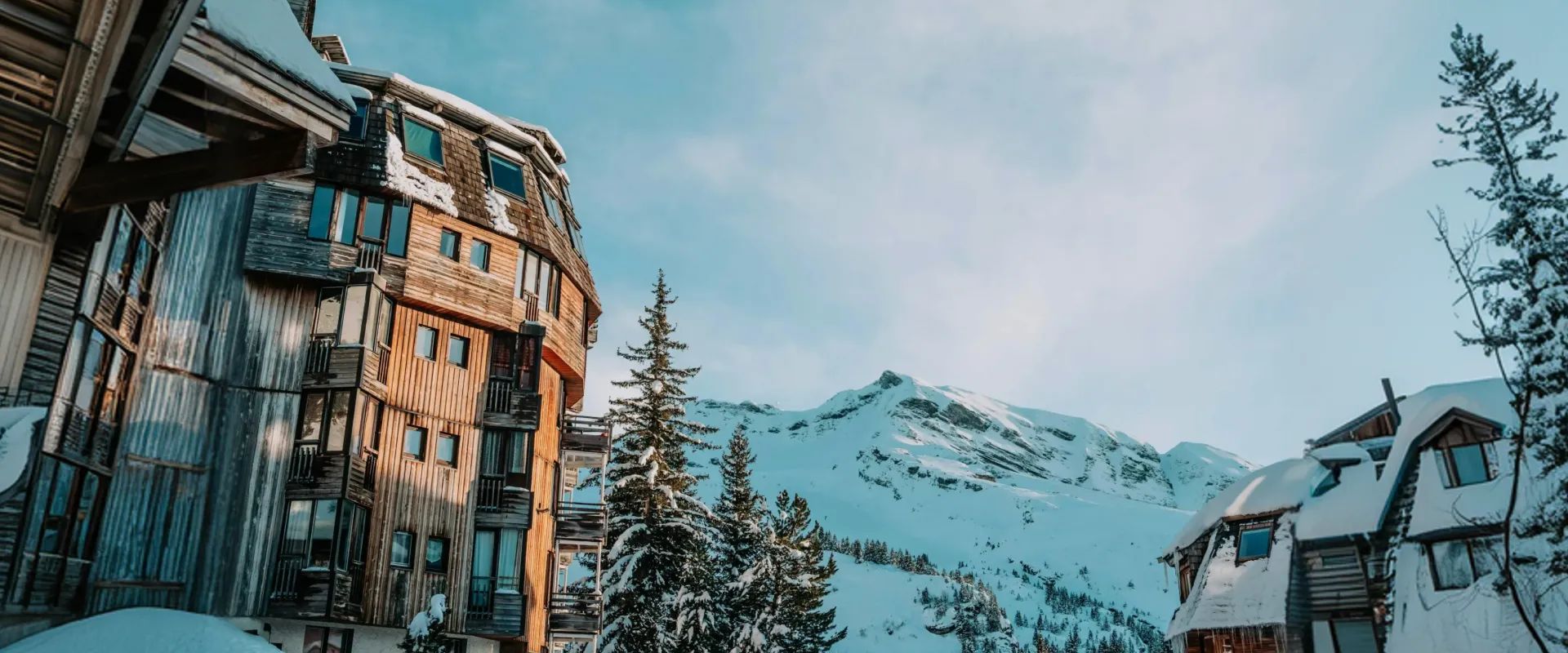
Finding accommodation where you can ski from your door sounds simple enough, but the gap between the marketing and the reality can be wide. 'Ski-in ski-out' appears on listings that range from true piste-side apartments to properties with a fifteen-minute walk to the nearest drag lift. This guide walks through how to find the real thing - from choosing the right type of resort to verifying a property's slope access before you book. If you're still weighing up whether ski-in ski-out is the right priority for your trip, our guide to what ski-in ski-out actually means covers the trade-offs. And if you'd like to see specific options, our list of the best ski-in ski-out resorts and hotels has you covered.
The single biggest factor in finding ski-in ski-out accommodation isn't the property itself - it's the resort. Some resorts were purpose-built so that most accommodation sits directly on or beside the slopes. Others are traditional mountain villages where only a handful of properties have true slope access.
Purpose-built resorts are the easiest place to start. Avoriaz in France was designed from the ground up as a car-free, slope-side village - almost every building has direct piste access. Val Thorens, the highest resort in Europe, is similar: compact, slope-surrounded, and built so that ski-in ski-out is the norm rather than the exception. Les Arcs, Flaine, and La Plagne follow the same model to varying degrees.
In traditional villages - Zermatt, Lech, St Anton, Chamonix - ski-in ski-out properties exist but they're scarcer and command a higher premium. The village was there before the ski area, so the relationship between buildings and pistes is less direct. If you're set on a traditional village experience with slope-side access, the search will take more research and the options will be narrower.
Before you start searching, it helps to be clear about what 'ski-in ski-out' means to you. The term covers a range, and your priorities should shape which end of that range you're targeting.
If your main goal is zero morning friction - boots on, step outside, ski - then you need true piste-side access. The building sits on or directly beside a run, and there's no walk, path, or transition between the door and the snow. This is what most people picture, and it's available in purpose-built resorts without stretching the budget as much as you might expect.
If you're happy with a short walk to a nearby lift - say, under five minutes in ski boots on a flat or gently sloping path - then your options open up significantly. Lift-adjacent properties in traditional villages often combine slope convenience with better village atmosphere than a piste-side apartment block.
Being clear about this distinction before you search saves time. It's the difference between filtering for properties with 'direct piste access' and accepting anything labelled 'ski-in ski-out' in a listing headline.
Ski-in ski-out accommodation comes in every format, from self-catered studio apartments to five-star hotels. The property type affects both the cost and the experience, so it's worth thinking about what suits your trip.
Apartments and residences. In purpose-built resorts, these are the most common slope-side option. They're typically self-catered or part-catered, offer more space than a hotel room, and represent the most accessible route to piste-side living. Residences in Val Thorens, Avoriaz, or Arc 1950 often have ski lockers at ground level, direct slope access from the building, and communal amenities like pools or spas.
Hotels. Slope-side hotels range from functional three-stars in purpose-built resorts to luxury five-stars in traditional villages. A hotel adds convenience on top of convenience - housekeeping, breakfast, a boot room managed by staff. In resorts like Lech, Oberlech, or Courchevel 1850, slope-side hotels are among the most sought-after properties in the Alps.
Chalets. Piste-side chalets are rare but not impossible. They're most commonly found in resorts where the village and the ski area overlap - Verbier, Meribel, parts of Val d'Isere. A slope-side catered chalet combines the privacy and hosted service of chalet life with the convenience of skiing from your door.
Property listings use 'ski-in ski-out' liberally, and the phrase isn't regulated. Two properties with the same label can have very different relationships to the slopes. Learning to read between the lines is one of the most useful skills in this search.
Strong signals. 'Ski-to-door', 'direct piste access', 'on the piste', or specific named runs mentioned alongside the property are all positive indicators. If a listing tells you which run passes the building, that's a sign of real slope access rather than marketing optimism.
Weaker signals. 'Ski-in ski-out area', 'close to the slopes', 'easy access to the lifts', or 'just steps from the gondola' all suggest proximity rather than direct access. These properties may be convenient, but they're unlikely to be true piste-side.
Red flags. If the listing mentions a shuttle, a navette, a 'short walk', or describes the route to the slopes in terms of minutes rather than metres, the ski-in ski-out claim is probably stretched. A property that's five minutes' walk from a lift is fine for many people, but it's not what most skiers mean when they search for slope-side access.
Once you've shortlisted properties, take a few minutes to verify the slope access independently. This step catches the listings where the marketing doesn't quite match the geography.
Check the piste map. Every major resort publishes an interactive piste map. Find the property's location and see which run or lift sits closest. If you can identify the building on the map, you can see exactly how the slopes relate to it. Any gap - a road, a car park, a steep path - is worth knowing about before you commit.
Use satellite imagery. A bird's-eye view shows the terrain between the building and the nearest piste more clearly than any listing description. Look for unbroken snow between the property and a marked run. If there's tarmac, buildings, or a noticeable hill between the two, the 'ski-in ski-out' claim may be a stretch.
Ask the provider directly. The clearest verification is a direct question: can you ski from the building to a piste without removing your skis, and can you ski from a piste back to the building? A confident yes to both is what you're looking for.
Ski-in ski-out is a strong convenience factor, but it's one element of a larger decision. Where you stay also affects your access to restaurants, shops, nightlife, childcare, and the overall feel of your holiday.
In some resorts, the best slope-side properties are also in the heart of the village - Avoriaz, Val Thorens, and Oberlech manage this well. In others, piste-side means edge-of-village or purpose-built zones with fewer amenities within walking distance. Knowing which pattern your resort follows helps you weigh the trade-off.
If you're travelling with children, ski-in ski-out is often worth prioritising over village atmosphere - the daily logistics are that much easier. For a group of adult skiers who plan to eat out every night, a central village location with a five-minute walk to the lifts might suit better than a piste-side apartment in a quieter zone.
Ski-in ski-out properties are in high demand, and the most popular ones book early - especially for peak weeks like Christmas, New Year, and February half term. If slope-side access is a firm requirement, booking well in advance gives you the widest choice.
That said, purpose-built resorts with a large stock of slope-side apartments tend to have availability throughout the season. The premium may rise during peak weeks, but properties don't disappear as quickly as they do in traditional villages where only a handful of options exist.
If you're flexible on dates, shoulder weeks - early December, January, March - often combine the best availability with the smallest premium. The snow is usually as good or better than in peak season, the slopes are quieter, and the competition for slope-side properties is lower.
France has the largest stock of purpose-built ski-in ski-out accommodation, thanks to resorts like Avoriaz, Val Thorens, Les Arcs, Flaine, and La Plagne. Austria and Switzerland also have strong options, though they tend to be in traditional villages where slope-side properties carry a higher premium. Andorra's Grandvalira ski area has a good selection of slope-side apartments at more accessible price points.
It often makes the biggest practical difference for beginners and families. The morning routine of getting kitted up and navigating a new resort is more demanding when you're still getting used to ski boots and carrying unfamiliar equipment. Experienced skiers who are comfortable navigating a resort on foot tend to find the convenience a nice-to-have rather than essential.
In purpose-built resorts, slope-side apartments can be very accessible. Self-catered studios in Avoriaz, Flaine, or Pas de la Casa have piste-side access as standard and are competitively priced, especially outside peak weeks. The premium for ski-in ski-out is much smaller in these resorts than in traditional villages where slope-side properties are scarce.
Most do, but it's worth confirming. Purpose-built residences almost always include a ground-level ski locker room where you can store and dry boots and skis overnight. Smaller chalets or older hotel conversions may not have dedicated storage. Ask before booking - carrying wet boots through a lobby or up stairs each day would undermine much of the convenience you're paying for.
In most cases, yes - the main piste network stays open through mechanical snowmaking long after natural cover thins. But the link between your building and the nearest run can be vulnerable. Some slope-side routes rely on a narrow strip of natural snow that may not survive a low-snow spell. Ask the provider or check recent guest reviews for early-season or late-season trips. For the most reliable access, our guide to what ski-in ski-out means explains the types of access and which hold up best.
Got a clearer picture of what you need? WeSki’s AI trip planner turns your priorities into a shortlist - tell it you want ski-in ski-out and it'll match you to the right resorts