EN
EN
La Plagne and Les Arcs are the two halves of Paradiski, 425 km of pistes joined across the Ponturin valley by the Vanoise Express cable car. Buy the right pass and you can ski both. What differs is the ground under your accommodation. La Plagne spreads its villages across a wide, sunny plateau, with rolling intermediate terrain and beginner slopes running through the middle of the resort. Les Arcs stacks four altitude villages down one steep hillside above the Isère valley, with the highest lift in the area and a funicular running up from the railway station below. This guide compares them side by side - terrain, snow, villages, après, families, experts, lift passes and getting there - so you can pick the base that fits how you want to ski.
Choose La Plagne for: wide, rolling intermediate terrain, beginner slopes that sit inside the villages rather than up a gondola, a choice of bases from high-altitude apartment village to old valley hamlet, and strong value for families.
Choose Les Arcs for: the biggest vertical in the area, steeper pistes and long tree-lined runs, ski-in/ski-out from almost every door, and the easiest arrival by train of any resort in the Tarentaise - useful for groups travelling without cars.


| Feature | La Plagne | Les Arcs |
|---|---|---|
| Country | France | France |
| Shared ski area | Paradiski - 425 km of pistes | Paradiski - 425 km of pistes |
| Local sector | La Plagne, around 225 km | Les Arcs - Peisey-Vallandry, around 200 km |
| Village altitude | 1,250 m to 2,100 m across the villages | 1,600 m to 2,100 m (Arc 1600 to Arc 2000) |
| Highest lift | 3,080 m (Live 3000, above Roche de Mio) | 3,226 m (Aiguille Rouge) |
| Season | Roughly mid-December to late April | Roughly mid-December to late April |
| Best for | Rolling intermediate cruising, beginners, families | Vertical, steeper pistes, tree skiing |
| Village character | Purpose-built plateau villages plus older valley ones | Four purpose-built altitude villages, largely pedestrianised |
| Nearest airport | Chambéry (~2 hr); Geneva (~2 hr 30 min) | Chambéry (~2 hr); Geneva (~2 hr 45 min) |
The two sides ski very differently, and the shape of the land explains most of it. La Plagne sits on a broad plateau, so its terrain fans out in gentle, open bowls - Grande Rochette, Les Verdons, Roche de Mio - with wide blues that let a mixed group stay together all day. The trade-off is flat sections, and snowboarders in particular learn which run-outs to avoid. Les Arcs runs the other way: one long hillside dropping from the Aiguille Rouge at 3,226 m to Villaroger at 1,200 m, which gives it the biggest continuous vertical in the area and a lot more pitch. Lower down, the Peisey-Vallandry sector adds tree-lined runs that stay skiable when the light goes flat up top.
Who it suits: for wide, forgiving cruising across open terrain, La Plagne; for sustained vertical and steeper pistes, Les Arcs.
Both hold snow well, and for the same reason: most of the skiing sits above 2,000 m. La Plagne's plateau is high but sunny, which can catch out the south-facing runs in spring, though the Bellecôte sector above Roche de Mio stays cold and reliable into late season. Worth knowing is that lift-served skiing on the Bellecôte glacier itself has been retired as the ice retreated, and the top lift now reaches 3,080 m - so La Plagne is high, but it is no longer a glacier resort. Les Arcs is steeper and largely north to north-west facing, which holds cover longer, and its upper slopes off the Aiguille Rouge stay in condition when lower runs soften. The villages themselves start higher too.
Who it suits: for a spring trip, or in a lean winter, Les Arcs has the aspect and the altitude; through the core of the season there is little between them.
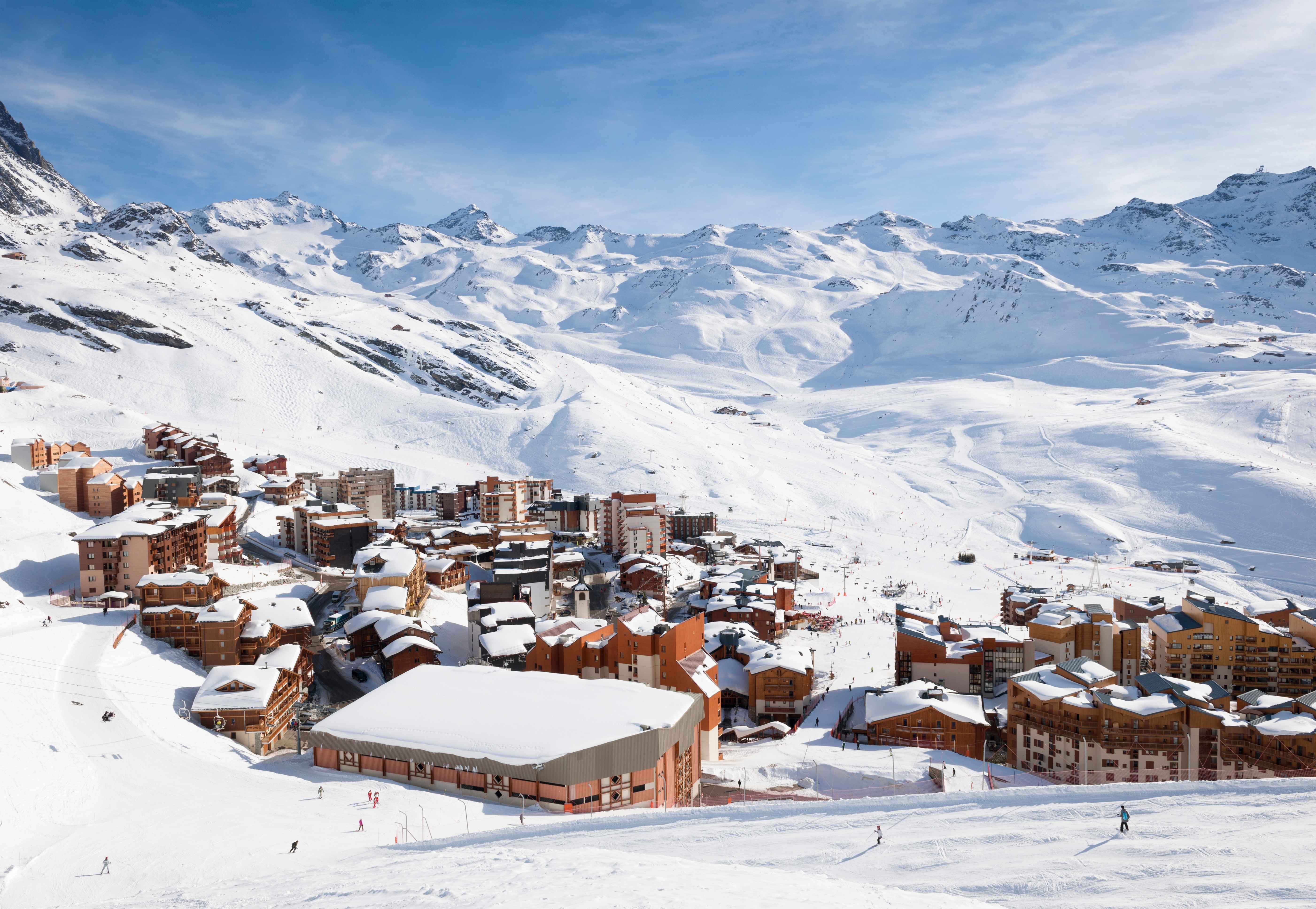
La Plagne is not one village but a set of them, and choosing badly is the main way to get this resort wrong. Six purpose-built villages sit on the plateau, from the functional 1960s blocks of Plagne Centre to the softer, more recent Belle Plagne and Plagne Soleil. Down in the valley, Montchavin, Les Coches, Montalbert and Champagny-en-Vanoise are older, smaller and prettier, with catered chalets among the stone and timber - but they sit at the edge of the ski area rather than the middle of it. Les Arcs is simpler to read: Arc 1600 quiet and tree-lined, Arc 1800 the largest and busiest, Arc 1950 pedestrianised and built in a warmer traditional style, Arc 2000 highest and closest to the steep skiing. Nearly all of it is slope-side, and most of what you can book is apartments.
Who it suits: for a village with some age to it, look to La Plagne's valley bases; for a single attractive address with skiing at the door, Arc 1950.
Neither resort is a nightlife destination, and it is worth saying so plainly. La Plagne's evenings are spread thinly across its villages, which is part of the point - each one has a few bars and restaurants, and the mood is families winding down rather than groups heading out. Belle Plagne and Plagne Centre have the most going on. Les Arcs has the edge, mostly because it concentrates people in fewer places: Arc 1800 has the busiest bars in the area and a long-standing British crowd, and the square at Arc 1950 gives the evening somewhere to gather. Mountain dining is good on both sides, and the valley villages on the La Plagne side have the more traditional Savoyard places to eat.
Who it suits: if an evening out matters, Les Arcs - and specifically Arc 1800; if you would rather eat well and turn in, either works.
La Plagne is built around this. Its beginner areas sit inside the villages rather than at the top of a gondola, and a run of beginner lifts across the resort can be used without a pass at all, which takes the pressure off a first day and off anyone who is not sure they will ski all week. The gentle plateau above means the step from nursery slope to first blue run is a short one. Les Arcs looks after beginners well too, with learning zones at each village and the Mille8 area above Arc 1800, but the mountain steepens faster, so progressing skiers meet a red run sooner. For older children and teenagers, that is an argument in its favour rather than against it.
Who it suits: for first-timers and young families, La Plagne; for families whose children are past the nursery slope, Les Arcs keeps them interested longer.
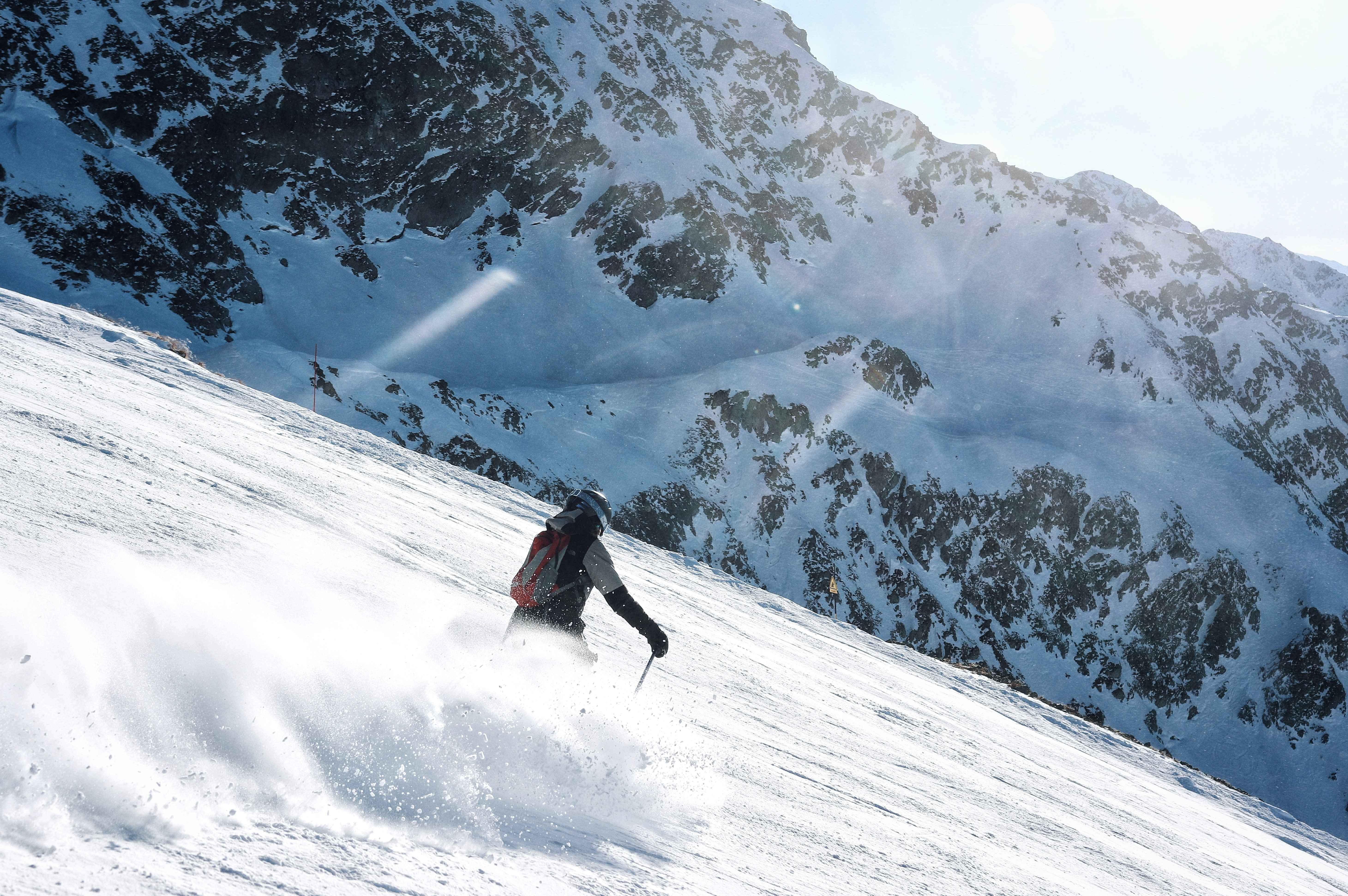
Les Arcs has the stronger hand on both counts. The Aiguille Rouge cable car serves the run down to Villaroger - around 7 km with over 2,000 m of vertical, one of the longest descents in the Alps - and the terrain around it is steep, open and largely north-facing, with plenty of lift-served off-piste for anyone skiing with a guide. The Mille8 and Apocalypse parks cover freestyle. La Plagne answers with the north face of Bellecôte, a serious guided off-piste itinerary that drops towards Champagny, and a scattering of black runs around Biolley and the Bellecôte sector that are tougher than the resort's gentle reputation suggests. Its park sits above Plagne Bellecôte.
Who it suits: for steep pistes and vertical from the door, Les Arcs; La Plagne's best hard skiing is off-piste, and needs a guide to reach it.
This is the detail most people assume and should not. The Vanoise Express is not covered by the local La Plagne pass or the local Les Arcs pass - crossing the valley needs the full Paradiski pass, or a day extension bought in resort on top of a local one. The second thing to know is where the cable car sits. It runs between Plan Peisey on the Les Arcs side and Les Coches on the La Plagne side, both at the far edge of their own sector, so the crossing is a planned day rather than a spontaneous one: reckon on the best part of an hour of lifts and pistes each way from Plagne Centre or Arc 2000. The ride itself takes about four minutes.
Who it suits: if you will ski both sides properly, buy the Paradiski pass from the start; if you expect one or two visits across, a local pass plus extensions may suit better.
By road the two are much of a muchness - the same run up the Tarentaise from Chambéry or Geneva, with Les Arcs turning off a little further along. By rail they are not. Bourg-Saint-Maurice station sits directly below Les Arcs, and a funicular climbs from beside the platforms to Arc 1600 in about seven minutes, with free shuttles on to the other villages; it is the simplest car-free arrival in the valley. La Plagne is reachable by train too, via Aime-La-Plagne or Landry, but the last stretch is a road transfer up to the plateau. Once you are there, La Plagne's villages are linked by free buses and lifts, and Les Arcs runs shuttles between its four.
Who it suits: if you are flying, this should not decide it; if you are travelling by train, Les Arcs is in a class of its own.
WeSki insider tip: if you are crossing to the other side for the day, go early and set a turnaround time before you leave. The Vanoise Express stops running before the rest of the lifts do, and the route home from either side climbs back up through two or three lifts. Skiers who leave it until the last cabin tend to finish the day in a taxi round the valley floor rather than on the snow.
Same lift pass, same domain - so this is really about which village you want to come home to. Three questions tend to settle it.
Are you travelling by train? If so, Les Arcs is hard to argue with: the funicular runs from beside the platforms at Bourg-Saint-Maurice to Arc 1600 in about seven minutes. La Plagne means a road transfer up from the valley whatever station you arrive at. By car, the difference all but disappears.
How wide is the ability spread? A first-timer has more room in La Plagne, where the nursery slopes sit in the villages and the plateau above stays gentle for a long time. A strong skier gets more out of Les Arcs, where the pitch starts close to the door.
Will you really ski both sides? If crossing is part of the plan, base near the cable car - Montchavin or Les Coches on one side, Peisey-Vallandry on the other - and buy the Paradiski pass from the start. If you expect to stay put, choose on village and terrain, and a local pass will do.
Either base opens the whole of Paradiski. The only question is how far you want to travel to reach it each morning.
Yes. The Vanoise Express cable car spans the Ponturin valley between Les Coches on the La Plagne side and Plan Peisey on the Les Arcs side, and the ride takes around four minutes. Getting to it is the longer part: both stations sit at the edge of their own sector, so from Plagne Centre or Arc 2000 you should allow the best part of an hour of lifts and blue runs each way. The route is well signed and within reach of a confident beginner.
You do. The local La Plagne pass and the local Les Arcs pass both stop at the edge of their own sector and do not include the cable car. To cross you need the full Paradiski pass, or a day extension bought in resort on top of a local pass. It is worth deciding before you book, because it changes the sums: if you plan to ski both sides more than once, the full pass is usually the simpler choice.
La Plagne has the edge. Its nursery areas sit within the villages rather than up a gondola, a set of beginner lifts across the resort can be used without a pass, and the plateau above gives wide, gentle blues to progress onto. Les Arcs has good learning zones at each village and the Mille8 area above Arc 1800, but its mountain steepens sooner. Both have strong ski schools - La Plagne simply gives a first-timer more room to move at their own pace.
They are closer than the altitude figures suggest, though Les Arcs holds cover slightly better late in the season. Its slopes are steeper and face mostly north to north-west, and the terrain off the Aiguille Rouge at 3,226 m stays cold. La Plagne has most of its skiing above 2,000 m, but the plateau catches more sun, so spring afternoons soften earlier on the south-facing runs. Skiing on the Bellecôte glacier has been retired, so neither resort now has true glacier skiing.
It depends on the ages in the group. La Plagne suits families with young or first-time skiers, thanks to village-level nursery slopes and gentle terrain that keeps everyone on the same runs. Les Arcs suits families whose children already ski, with more pitch to keep teenagers occupied and ski-in/ski-out access from almost every apartment. Away from the pistes, La Plagne has the Olympic bobsleigh track and swimming pools across its villages; Les Arcs has toboggan runs, an ice rink and a cinema at Arc 1800.
Les Arcs, and by a clear margin on piste. The Aiguille Rouge sector gives sustained steep terrain and a descent to Villaroger of around 7 km with over 2,000 m of vertical, plus lift-served off-piste for skiers with a guide. La Plagne's strongest skiing is off-piste rather than on it - the north face of Bellecôte is a serious itinerary and needs a guide - while its black runs are fewer and shorter. Strong skiers basing in La Plagne should plan on crossing regularly.