EN
EN
Serre Chevalier and Alpe d'Huez sit around an hour and a half apart in the Southern French Alps, each with roughly 250 km of pistes, and they end up on the same shortlist constantly. Two things are worth knowing before you book. There is no lift between them, and the road that joins them climbs over the Col du Lautaret, which shuts in bad weather. But both belong to the Grande Galaxie pass agreement, so a six-day pass at either one includes a day at the other. The difference that decides most bookings is which way the two mountains face. Alpe d'Huez is higher and far sunnier; Serre Chevalier is lower, shaded and half wrapped in larch forest. This guide compares them on terrain, snow, lift passes, villages, families, experts and transfers.
Choose Serre Chevalier for: north-facing slopes and two-thirds larch forest, which means something to ski when the cloud drops, long uncrowded intermediate runs across four linked sectors, four very different villages to come home to, and a train station in the middle of the ski area - useful for families who would rather not fly.
Choose Alpe d'Huez for: one of the largest beginner areas in the Alps, with free lifts at village level and greens that lead straight back to the door, which is why it works so well for first-timers, plus around 300 days of sunshine a year, the 16 km Sarenne, and five linked villages on one pass.


| Feature | Serre Chevalier | Alpe d'Huez |
|---|---|---|
| Country | France | France |
| Ski area | Serre Chevalier Vallée Briançon - around 250 km across four linked sectors | Alpe d'Huez Grand Domaine - around 250 km across five linked villages |
| Shared area | None - the two are not lift-linked | None - the two are not lift-linked |
| Village altitude | 1,326 m (Briançon) to 1,500 m (Le Monêtier) | 1,860 m |
| Highest lift | 2,800 m (Yret) | 3,330 m (Pic Blanc) |
| Slope aspect | Mostly north and north-east | Mostly south |
| Season | Roughly mid-December to mid-April | Roughly early December to late April |
| Lift pass | Serre Chevalier Vallée Briançon, with Grande Galaxie days at Alpe d'Huez | Alpe d'Huez Grand Domaine, with Grande Galaxie days at Serre Chevalier |
| Best for | Tree skiing, intermediates, quiet pistes | Beginners, sunshine, long cruising runs |
| Village character | Four villages along a valley, from a fortified town to a spa hamlet | Large resort spread across a sunny plateau |
| Nearest airport | Turin (~1 hr 45 min); Grenoble (~2 hr 15 min) | Grenoble (~1 hr 30 min); Lyon (~2 hr) |
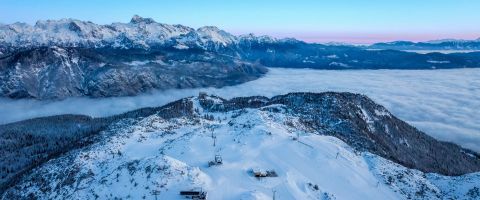
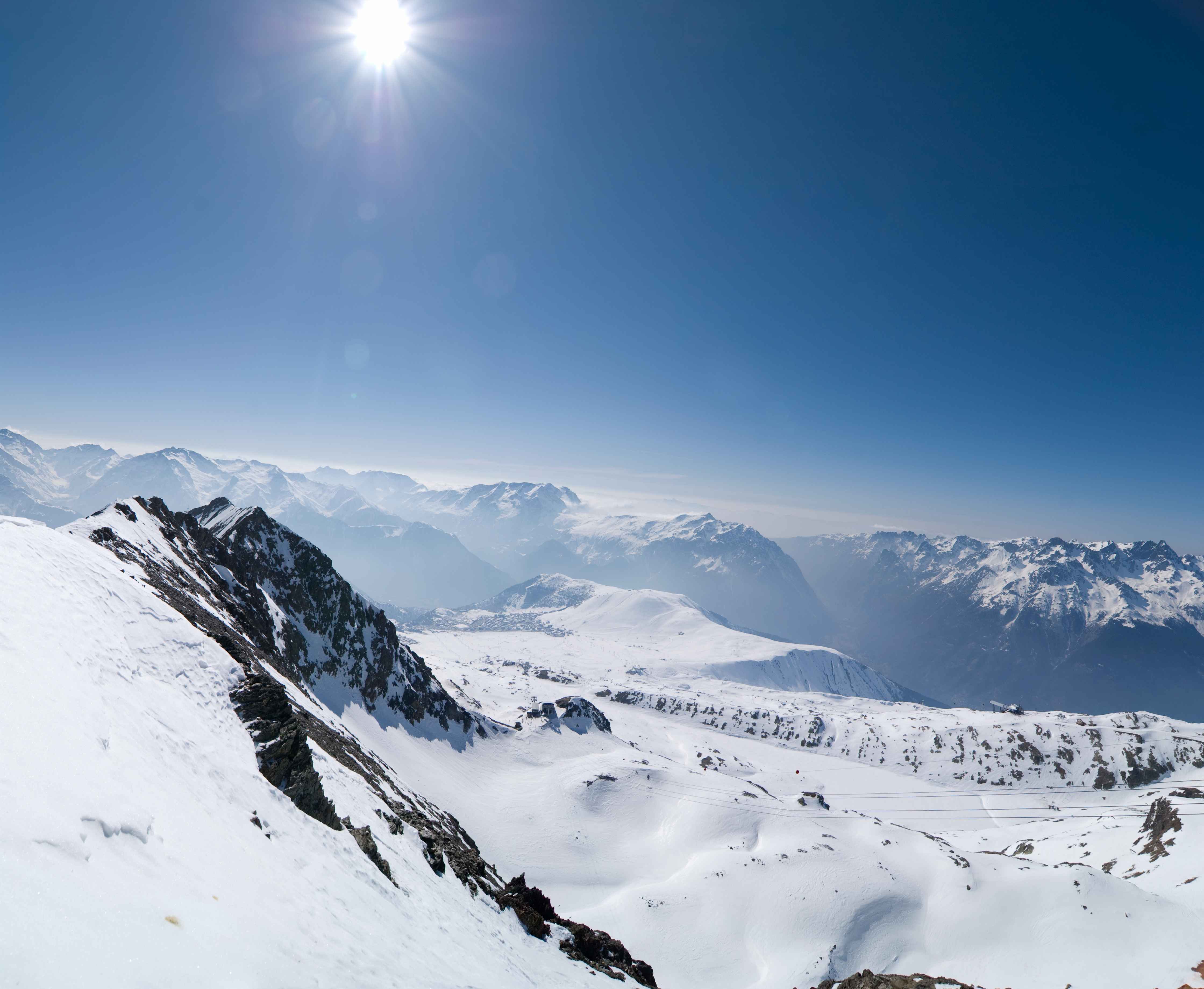
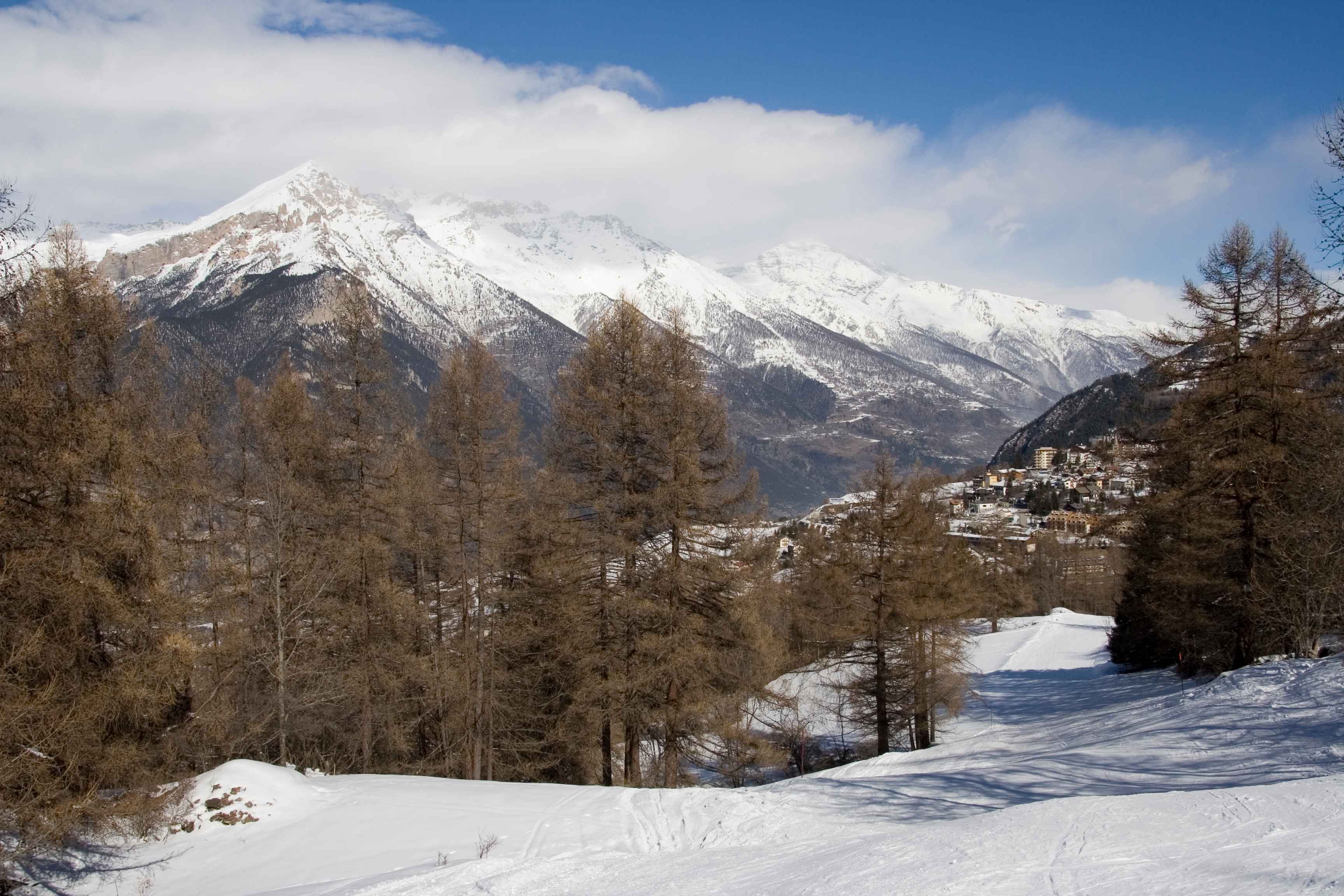
The piste totals are almost identical and tell you very little. What separates them is the treeline. Serre Chevalier runs for about 15 km along the Guisane valley, and roughly two-thirds of its 250 km sits in larch forest that climbs unusually high for the Alps. Larch drops its needles in winter, so the woods stay open and light rather than tight and dark, and the four sectors - Briançon, Chantemerle, Villeneuve and Le Monêtier - link along the ridge above them with long reds and blues that a fit intermediate can traverse end to end in a morning. Alpe d'Huez sits above the trees almost everywhere. Its 250 km fan out from a plateau at 1,860 m across five linked villages, climbing through the Grandes Rousses to Pic Blanc at 3,330 m, which gives wide open pistes, several descents of more than 1,500 m of vertical down to Oz, Vaujany and Auris, and the Sarenne dropping 16 km off the top. Only the first section of the Sarenne earns its black grading; the rest is a long cruise that a confident intermediate will enjoy.
Who it suits: for open, sunny, high-altitude pistes and big vertical, Alpe d'Huez; for forest skiing and a valley you explore end to end, Serre Chevalier.
This is where the obvious answer is the wrong one. Alpe d'Huez is the higher resort by some margin, and its upper mountain around Pic Blanc holds a base as well as anywhere in the region. But it is also the sunniest ski resort in France, with most of its slopes pointing south, and that cuts both ways: bright February skiing, and lower runs that soften fast from late March once the sun gets strong. Serre Chevalier starts far lower, yet almost all of its skiing faces north or north-east, and cold, shaded snow lasts. Add the larch canopy sheltering the lower runs and snowmaking across a good share of the valley pistes, and it holds condition better than its altitude suggests. The two also sit in different weather systems despite being neighbours: Serre Chevalier is first in line when storms track up from the south and east, while Alpe d'Huez picks up northern flows that often miss the Briançonnais entirely.
Who it suits: for a spring trip, Serre Chevalier's aspect does more for you than Alpe d'Huez's altitude; for early season and for sunshine through midwinter, Alpe d'Huez.
Most people choosing between these two never find out that they do not have to. Both resorts belong to the Grande Galaxie agreement, which means a lift pass of six days or longer at either one includes a free day at the other. The same pass also covers a day each at Les Deux Alpes, Puy Saint Vincent, Montgenèvre and Sestriere over in the Milky Way, and a Serre Chevalier pass adds a discount on a day at La Grave, half an hour up the road. The admin is small but real: you collect a voucher from the ticket office and bring proof of purchase, and passes bought online usually need activating at the resort that sold them. What is not included is the journey. The road runs over the Col du Lautaret and takes around an hour and a half each way, past La Grave and Les Deux Alpes, and the col closes in heavy snow - which is exactly the weather that makes people want to move.
Who it suits: book six days or more and the other resort is a day you have already paid for, so plan the transport and the forecast rather than the pass.
Serre Chevalier is not one village but four, and choosing between them is a real decision. Briançon at the eastern end is a working town of 10,000 people with a UNESCO-listed Vauban citadel above it, the highest town in France and the only one of the four with shops, bars and a station. Chantemerle and Villeneuve are the middle bases and sit closest to the main lifts, which makes them the easy choice for a first visit. Le Monêtier at the top is the quietest, with thermal baths that predate skiing by about two thousand years. Most of what you can book across the valley is apartments and small hotels. A free bus links the villages, though it stops early in the evening, so a car helps if you want to eat around the valley. Alpe d'Huez is a single large resort on an open plateau, divided into districts - Les Bergers, Rond-Point des Pistes, the older Vieil Alpe - with the broadest range of hotels of the two and a satellite option at Vaujany or Oz for anyone who wants it quieter.
Who it suits: for one base with everything on it, Alpe d'Huez; for a valley with four characters to pick from, Serre Chevalier - and Chantemerle or Villeneuve if it is your first time there.
Alpe d'Huez runs the bigger afternoon by a distance. La Folie Douce above the Marmottes lifts sets the tone from mid-afternoon, the village bars carry it on, and the dining spreads across the districts widely enough that a group with different tastes will find common ground. Serre Chevalier is quieter and more local in register. The bars at the foot of the Chantemerle and Villeneuve lifts fill up at four and thin out by seven, and the eating leans towards family-run places doing Hautes-Alpes cooking rather than the international spread you get further north. Briançon changes the maths, though: it has the restaurants and the late bars of a real town, which no other resort of this size in France can claim.
Who it suits: for a big slopeside afternoon and a busy village after it, Alpe d'Huez; for quiet evenings with the option of a town night out, Serre Chevalier from a Briançon base.
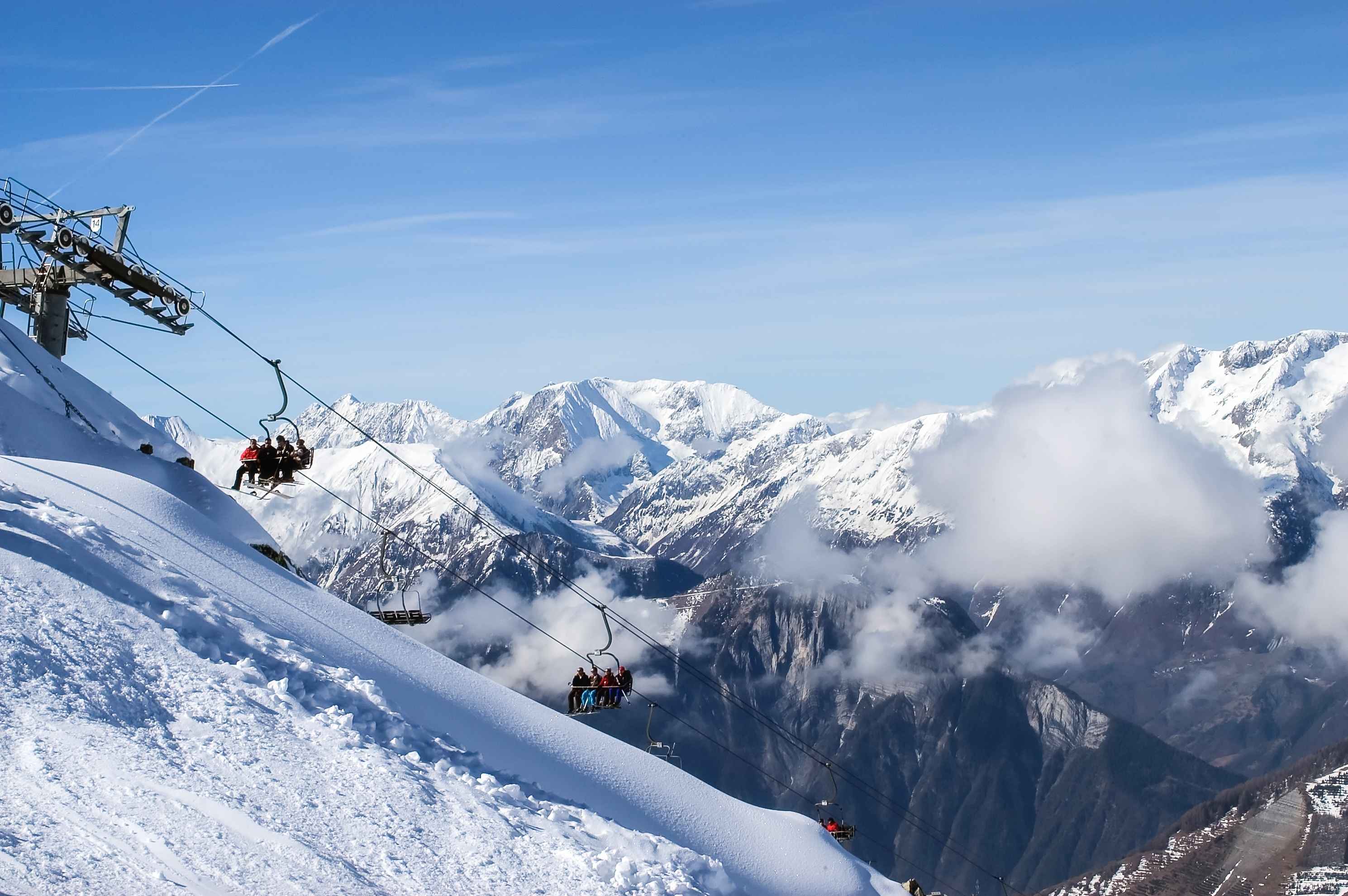
Alpe d'Huez has the stronger case for a first week, and it comes down to where the easy runs sit. Its beginner area is among the largest in the Alps, spread along the top of the village with free lifts, and the greens above it feed back to the same place, so someone on day one skis home rather than riding down. Serre Chevalier spreads its beginner terrain differently: each village has its own nursery slopes, with the gentlest at Villeneuve and Le Monêtier, plus separate easy runs higher up that stay quiet because most of the valley's traffic is heading elsewhere. That suits a family with one beginner and one improver, since nobody is stuck on the same slope all week. It also has the sledging, the ice rink and the Monêtier baths for a day off the snow, and the crowds at French half term are noticeably thinner than in the Tarentaise.
Who it suits: for an absolute first-timer, Alpe d'Huez; for a family with mixed abilities who want space and fewer queues, Serre Chevalier.
Serre Chevalier's reputation with strong skiers rests on the trees. The larch forests above Villeneuve and Le Monêtier hold soft snow for days after a storm and stay skiable when the light goes flat up top, which is the single most useful thing a ski area can do for a freerider. Above them, the bowls off Yret and Cucumelle open up steeper ground, the Luc Alphand black drops 9 km to Chantemerle, and La Grave is half an hour away for anyone who wants the real thing. Alpe d'Huez answers with lift-served steeps: the Tunnel, a mogul run reached through a passage cut under the ridge at Pic Blanc, the couloirs either side of it, and off-piste from the Sarenne glacier that repays a guide. Its two parks are decent without being a reason to book, and Serre Chevalier's freestyle setup at Villeneuve is graded by level and works well for progression.
Who it suits: for tree riding, storm days and access to La Grave, Serre Chevalier; for high-altitude couloirs and moguls straight off a lift, Alpe d'Huez.
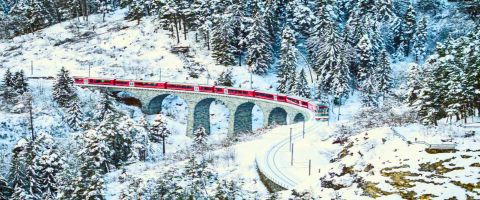
Alpe d'Huez is the easier arrival from the UK. Grenoble is about an hour and a half away and Lyon around two hours, both with a wide choice of flights, and the transfer finishes with the 21 hairpins made famous by the Tour de France - worth mentioning to anyone in the group who travels badly. Serre Chevalier is further from everything French: Grenoble is a little over two hours over the Lautaret, Lyon and Geneva closer to three and a half. Turin is much the nearest airport at around an hour and three-quarters, which is the route worth pricing if the flights work. The real advantage is the railway. Briançon has a station inside the ski area, with a direct sleeper from Paris in winter and daytime connections from Marseille and Valence, so you can reach the slopes without flying at all. Alpe d'Huez has no station; the nearest is Grenoble, then a bus.
Who it suits: for the shortest transfer and the most flights, Alpe d'Huez; for the train, or for anyone flying into Italy, Serre Chevalier.
WeSki insider tip: the two resorts sit in different weather systems, so check both forecasts even if you have only booked one. When a storm comes up from the south and east, Serre Chevalier fills in first and Alpe d'Huez can miss it altogether; a northern flow does the reverse. If your pass includes the Grande Galaxie day, that is what it is for - take it on the morning after the other side has had the snow, not on a fixed day you picked in advance.
Three questions tend to settle this one, and the size of the ski area is not among them.
When are you going? For late March or April, Serre Chevalier's north-facing slopes and forest cover hold snow longer than Alpe d'Huez's sunny south side, whatever the altitude figures suggest. Through December and January, Alpe d'Huez has the height and the brighter week.
Is anyone in the group on their first skis? Alpe d'Huez keeps its beginner area at village level with free lifts and green runs that come back to the same spot, so a first-timer skis home from day one. Serre Chevalier's beginner terrain is good but split across four villages, which asks more of you.
How are you getting there? If you want a short transfer and plenty of flight choice, Alpe d'Huez wins on logistics. If you would rather take the train, Briançon is one of the few French ski bases you can reach by rail and walk out of the station into the resort. That is the sort of thing that decides a week once the skiing comes out level, which here it largely does.
No, and it is worth being clear about it, because the two are often listed together as though they were connected. They sit in separate valleys with no lift or piste between them. Getting from one to the other means driving over the Col du Lautaret, past La Grave and Les Deux Alpes, which takes around an hour and a half each way in good conditions. The col closes in heavy snow, so it is not a journey to rely on at short notice in midwinter.
Partly, and this is the detail most visitors miss. Both resorts belong to the Grande Galaxie agreement, so a Serre Chevalier pass of six days or longer includes a free day at Alpe d'Huez, and an Alpe d'Huez pass of the same length works the same way in reverse. The agreement also covers a day each at Les Deux Alpes, Puy Saint Vincent, Montgenèvre and Sestriere, and a Serre Chevalier pass adds a discount at La Grave. You collect a voucher at the ticket office with proof of purchase, and travel between the resorts is at your own cost.
It depends on when you go, and the altitude figures are misleading. Alpe d'Huez is much higher and its upper mountain holds a base well, but most of its slopes face south and soften quickly under strong spring sun. Serre Chevalier starts lower, yet nearly all of its terrain faces north or north-east and two-thirds of it sits under larch forest, so cold snow lasts. Early season favours Alpe d'Huez on height; late season favours Serre Chevalier on aspect. In January and February there is little between them.
Alpe d'Huez, fairly clearly. Its beginner area is one of the largest in the Alps, sits at the top of the village with free lifts, and the green runs above it return to the same spot, so a first-timer can ski back to the door rather than take a lift down. Serre Chevalier has good nursery slopes and quiet, separate easy runs higher up, which suit a group with mixed abilities, but they are spread across four villages rather than concentrated in one place.
They are close to level at around 250 km of pistes each, so the useful question is what shape that size takes. Serre Chevalier runs long and narrow for about 15 km along one valley, so it skis as a traverse - you work your way from one end to the other and back. Alpe d'Huez fans out from a central plateau across five linked villages, so the size shows up as variety and as long descents to the valley bases. Neither is short of terrain for a week.
Broadly, yes, and it shows in the style of the week rather than any one line on the bill. Serre Chevalier is a working valley with apartments, small family-run hotels and restaurants that serve locals year-round, and it stays off the main international circuit. Alpe d'Huez has more of the resort infrastructure that goes with a large purpose-built station, including a wider range of hotels and a busier dining scene. Both cover the same ground on the mountain, so it comes down to which sort of week you want.