EN
EN
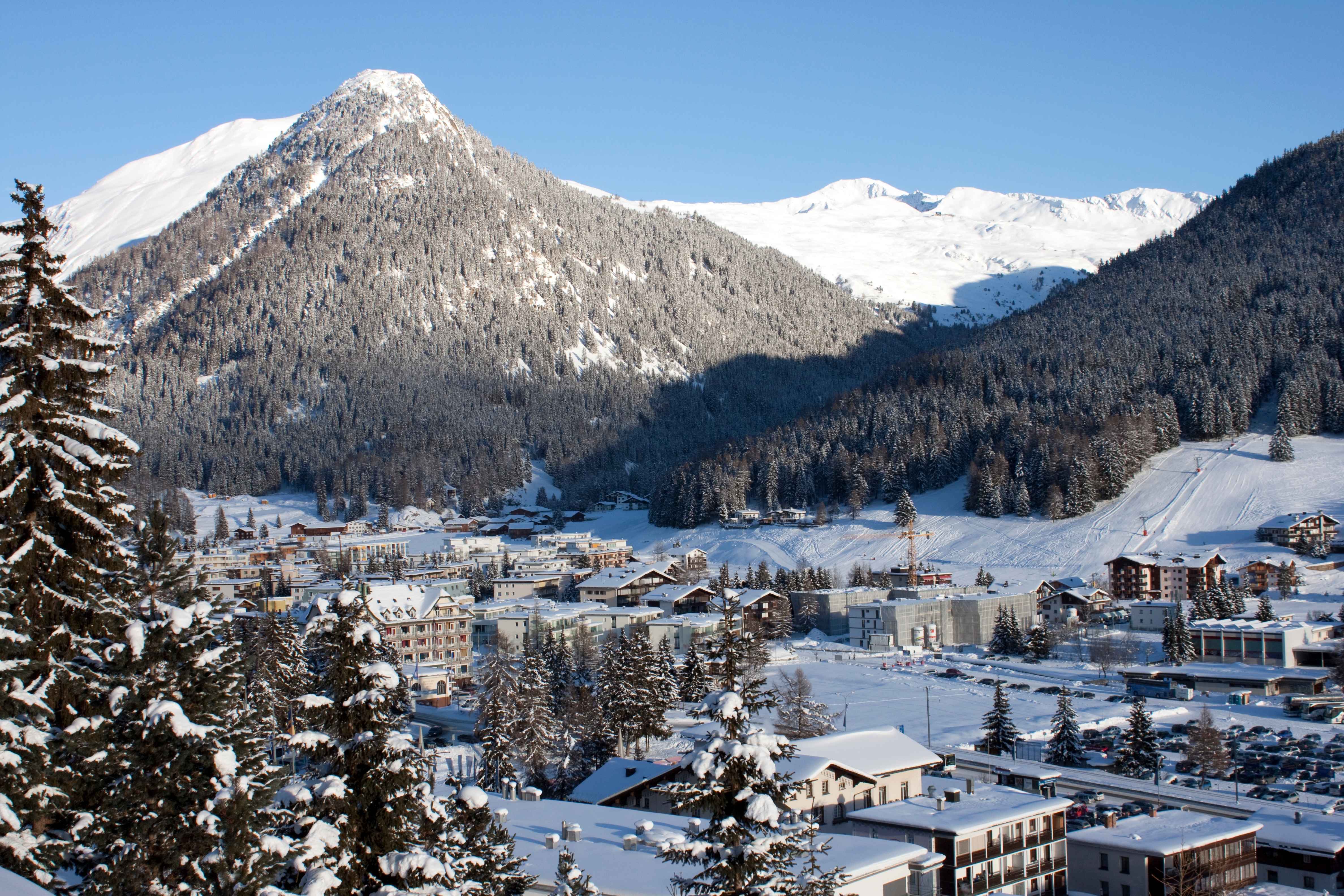
Davos and Klosters share one lift pass across the Davos Klosters ski area - five mountains and around 270 km of pistes, topping out at 2,844 m on the Weissfluhgipfel. Only one of those mountains, the Parsenn, actually joins the two on skis. The others are separate areas linked by bus and the valley railway, which the regional pass covers. So the choice comes down to which mountains you want at your door, and what kind of place you want to come back to. Davos is a town rather than a village: 1,560 m up, long main streets, big hotels, an ice-hockey crowd and the busier nights. Klosters, down the valley at around 1,200 m, is a small Walser village of timber chalets with a long British following and quiet evenings. This guide compares the pass, terrain, snow, villages, après, families, experts and getting there, so you can pick the base that fits your week.
Choose Davos for: four of the five mountains within a short bus ride, the terrain parks and freeride slopes of Jakobshorn and Pischa, a higher base with more snow in town, the liveliest après and nightlife in the area, and hotels of every size, which makes it easier to house mixed groups.
Choose Klosters for: a quiet chalet village, a cable car straight into the Parsenn and long descents that finish in the valley, Madrisa's gentle slopes on the other side of the village, and a slower rhythm that suits couples and families.


| Feature | Davos | Klosters |
|---|---|---|
| Country | Switzerland (Graubünden) | Switzerland (Graubünden) |
| Shared ski area | Davos Klosters - around 270 km of pistes | Davos Klosters - around 270 km of pistes |
| Village altitude | 1,560 m | Around 1,200 m (Platz); 1,120 m (Dorf) |
| Highest lift | 2,844 m (Weissfluhgipfel, Parsenn, shared) | 2,844 m (Weissfluhgipfel, shared); 2,602 m on Madrisa |
| Season | Roughly late November to mid-April on the Parsenn; smaller areas a shorter season | Roughly late November to mid-April on the Parsenn; Madrisa from mid-December |
| Best for | Choice of mountains, freestyle, après, town life | Long Parsenn descents, families, quiet evenings |
| Village character | Large high-altitude town in two halves, Dorf and Platz | Small Walser chalet village in two halves, Platz and Dorf |
| Nearest airport | Zurich (~2 hr) | Zurich (~1 hr 45 min) |
The Davos Klosters Mountains regional pass covers five areas: Parsenn, Jakobshorn, Rinerhorn, Pischa and Madrisa. Single-mountain tickets exist for short stays, but a week's pass covers the lot, whichever town you book. Schatzalp - Strela, the small, slow-paced area above Davos Platz, is sold separately. What changes between the two towns is how the mountains are laid out around you, because only the Parsenn joins them on skis. From Davos Dorf, the Parsennbahn funicular climbs to the Weissfluhjoch; from Klosters Platz, the Gotschna cable car rises to the Gotschnagrat on the other side of the same mountain, and the pistes meet up top. Everything else is a separate mountain with its own base. Jakobshorn rises straight out of Davos Platz, Rinerhorn sits a few stops down the valley at Glaris, and Pischa is a short bus ride up the Flüela road from Davos Dorf. Madrisa belongs to Klosters, reached by gondola from Klosters Dorf. Local buses and the Rhaetian Railway trains within the area are included while you ski, so moving between mountains costs time rather than money - but it is worth checking which stretch of the line the pass covers. In practice, Davos puts four mountains within a short bus ride. Klosters puts the Parsenn and Madrisa at the door and the other three half an hour or more away by train and bus.
Who it suits: for a different mountain every day without much travel, Davos; for skiing mostly the Parsenn with Madrisa on the side, Klosters.
The Parsenn is the heart of the area, close to a hundred kilometres of pistes on its own, and it is the mountain most people spend most of the week on. The upper slopes between the Weissfluhjoch and the Gotschnagrat are wide, open reds and blues above the treeline, and the long valley descents are its signature: from the Weissfluhgipfel it is around 12 km and 2,000 m of vertical down to Küblis, with other runs ending at Serneus, Saas and Klosters, and the train bringing you back. Klosters skiers reach all of it by one cable car. Davos adds three very different mountains. Jakobshorn, above Davos Platz, is compact and steeper in places, with the area's main parks. Rinerhorn is quiet and wooded, good on a snowy day when the light goes flat higher up. Pischa is left largely ungroomed and run as a freeride mountain. Klosters' second mountain, Madrisa, is sunny and gentle, with broad blues and reds above the village and a long run home. The home runs from the Gotschnagrat to Klosters are steep and often icy by late afternoon, and plenty of people ride the cable car down instead.
Who it suits: for variety and a change of mountain each day, Davos; for long Parsenn cruising and top-to-valley descents, Klosters.
Most of the skiing sits between roughly 2,000 and 2,800 m, which keeps the core of the area reliable through the winter, and snowmaking covers the main runs. The difference between the towns shows at the bottom. Davos sits at 1,560 m, high for a town, so there is usually snow in the streets and on the lower slopes even when the valley below is green. Klosters is 300 to 400 m lower, and the runs that end there, along with the long descents to Serneus and Küblis, are the first to suffer in a warm spell or late in the season. Aspect matters too. Pischa and Madrisa get a lot of sun, pleasant in midwinter and soft by the afternoon in spring, while the upper Jakobshorn and the high Parsenn tend to hold the best snow. The Parsenn usually opens in late November and runs to mid-April. The smaller areas start later and close earlier, Madrisa from mid-December and Rinerhorn and Pischa often from late December to late March, so an early or late trip mostly means the Parsenn and Jakobshorn.
Who it suits: through January and February there is little in it; for an early-season or spring trip, Davos's higher base gives it the edge.
Davos is a working town, strung out for several kilometres along the Landwasser valley in two halves. Davos Dorf, at the north end, is home to the Parsennbahn; Davos Platz, to the south, is the busier centre and the base for Jakobshorn and Schatzalp. Buses link the two. Much of the architecture dates from its sanatorium era - flat roofs and big balconies rather than timber chalets - and the town has a life of its own, with shops, galleries, a large natural ice rink and HC Davos, whose home games are an evening out in themselves. For a week each January, the World Economic Forum takes over. Most stays are in hotels, from large spa hotels to smaller family-run places. Klosters is the opposite in scale: a Walser village of dark timber chalets along the Landquart river, quiet streets and a reputation that rests on discretion, including a long association with the British royal family. It also comes in two parts - Klosters Platz around the Gotschna cable car, and the smaller Klosters Dorf at the foot of Madrisa. Accommodation leans towards chalets and traditional hotels. In both towns, which half you stay in decides your morning lift.
Who it suits: for town life and the widest choice of hotels, Davos; for a quiet chalet village, Klosters.
Davos has the bigger scene by some distance. At the foot of Jakobshorn, Bolgen Plaza is the area's best-known après spot, and the town carries on into the night with bars and clubs that run late at weekends, plus a dining range from pizza to hotel gourmet rooms. Hockey nights, and the Spengler Cup tournament between Christmas and New Year, add a crowd of their own. Klosters is quieter and more grown-up. The afternoon tends to end with a drink on a hotel terrace, and evenings revolve around dinner rather than dancing. The Chesa Grischuna, a timber hotel in the centre with a long-standing piano bar, sets the tone. For lunch the two towns are level, since the Parsenn's mountain restaurants and huts serve both. If one night out is enough, Davos is twenty minutes away by train.
Who it suits: for après and nightlife, Davos; for long dinners and early nights, Klosters.
Klosters has the more natural family set-up, mostly thanks to Madrisa. The gondola from Klosters Dorf leads to sunny, gentle slopes with a children's area and ski school at the top, away from the busier Parsenn traffic, and the village itself is small and easy to get round with children. Davos covers beginners well too: the Bolgen nursery area at the foot of Jakobshorn is right in Davos Platz, Rinerhorn has wide, quiet runs that suit a second-week skier, and the town has the most to do away from skiing - the long toboggan run at Schatzalp, the ice rink, a pool and indoor options for a bad-weather day. The catch in Davos is distance. The town is spread out, and a mixed-ability group can end up on different mountains with a bus between them, which takes more planning than it sounds.
Who it suits: for young children and first-timers who want an easy rhythm, Klosters; for families who want plenty to do off the snow, Davos.
Davos has a long freestyle history, and Jakobshorn still carries it, with the area's main terrain park and a superpipe. Pischa is kept for freeride, with marked ungroomed routes and open slopes that hold powder after a storm. The Parsenn's off-piste is the bigger prize for strong skiers: long, quiet descents into side valleys and down to the villages of the Prättigau, many finishing at a railway station rather than a lift - terrain to take with a guide. Klosters gives quicker access to the same Parsenn lines from the Gotschna side, plus its own steep home runs and the quieter terrain around Madrisa. The black pistes in the area are relatively few and tend to be on the lower, steeper valley runs, which can be icy, so the expert case here rests on off-piste rather than marked blacks.
Who it suits: for park riders and freeriders, Davos; for strong skiers who mainly want the Parsenn's valley descents, Klosters.
Both are straightforward by rail, and many visitors never use a car. Zurich is the gateway for UK flights. From the airport, trains run to Landquart, where you change onto the Rhaetian Railway up the Prättigau valley. Klosters comes first, and Davos is around 20 to 25 minutes further on, so Klosters is the slightly shorter trip - roughly two hours door to door by train against two and a half for Davos. By road the gap is similar: around 1 hour 45 minutes from Zurich to Klosters and around 2 hours to Davos, with the last stretch climbing up from Klosters. Davos can also be reached from Chur via the Albula line through Filisur, which suits anyone combining the trip with St Moritz or the Engadine.
Who it suits: for the shortest transfer, Klosters; by train either is easy, with Davos a little further up the same line.
WeSki insider tip: whichever town you stay in, save one clear morning for the long Parsenn run to Küblis. Ride up to the Weissfluhgipfel early, follow the valley descent down to around 800 m, and take the train back up the Prättigau - it stops in Klosters and Davos, so it brings you home either way. Go before the sun softens the lower half, and check the train times before you set off.
One pass covers both, so the choice is mostly about what you see from the front door. Three questions usually settle it.
Which mountains will you ski most? If the week is mostly the Parsenn, with Madrisa for the children or a quiet day, Klosters puts both at your door. If you want Jakobshorn's park, Pischa's freeride or a different mountain each day, Davos saves you a daily train.
What do you want the evening to look like? Bars, clubs, hockey and a choice of restaurants point to Davos. A quiet village, dinner and an early night point to Klosters. For most groups this is the question that decides it.
When are you going? For late November, December or April, Davos's higher base and the earlier-opening areas around it make it the safer booking. In late January, check the World Economic Forum dates: Davos rooms are scarce that week, and Klosters becomes the easier base for the same slopes.
If all three come out level, remember the two are twenty minutes apart by train - pick the town you want to wake up in and ski the other side whenever you like.
Yes, via the Parsenn. The Parsennbahn funicular from Davos Dorf and the Gotschna cable car from Klosters Platz both lead onto the same mountain, so you can ski from one town's lifts to the other's. The other mountains are not linked on skis - Jakobshorn, Rinerhorn and Pischa sit on the Davos side, Madrisa on the Klosters side - but the regional pass includes the local buses and trains that connect them while you ski.
It depends on which mountains you want close and how you like to spend the evening. Davos suits skiers who want the most mountains within a short bus ride, a higher base and a busy town with nightlife. Klosters suits those who will ski mostly the Parsenn and Madrisa and want a quiet chalet village. Within each town, check the half: Dorf or Platz decides which lift is closest.
Both work, but Klosters makes the first days simpler for most people. Madrisa's gentle, sunny slopes and children's area are a gondola ride from Klosters Dorf, and the village is small enough to stay easy. Davos has a good nursery area at Bolgen, right in Davos Platz, and wide runs on Rinerhorn, though its spread-out layout means more bus rides once a beginner moves on.
On the mountain there is little between them, since both ski the same upper Parsenn between roughly 2,000 and 2,844 m. The difference is at the bottom. Davos sits at 1,560 m, around 300 to 400 m higher than Klosters, so its lower slopes and streets hold snow better. Klosters' home runs and the long valley descents are the first to thin in a warm spell or late in the season.
It comes down to the style of stay rather than one town being dearer. Klosters has a reputation for discreet, upmarket chalets and traditional hotels, and fewer large hotels. Davos has a wider spread, from big spa hotels to simpler places, which suits more budgets and larger groups. The lift pass is the same for both, since the regional pass covers the whole Davos Klosters area.
It often is. For a week in late January the forum fills Davos's hotels and brings heavy security and traffic to the town, while the slopes tend to be quieter than usual. Klosters is far less affected, and the Gotschna cable car puts you straight onto the Parsenn without passing through Davos. If your dates overlap, check which ski areas are running that week, as some of the smaller ones have closed during the forum.