EN
EN
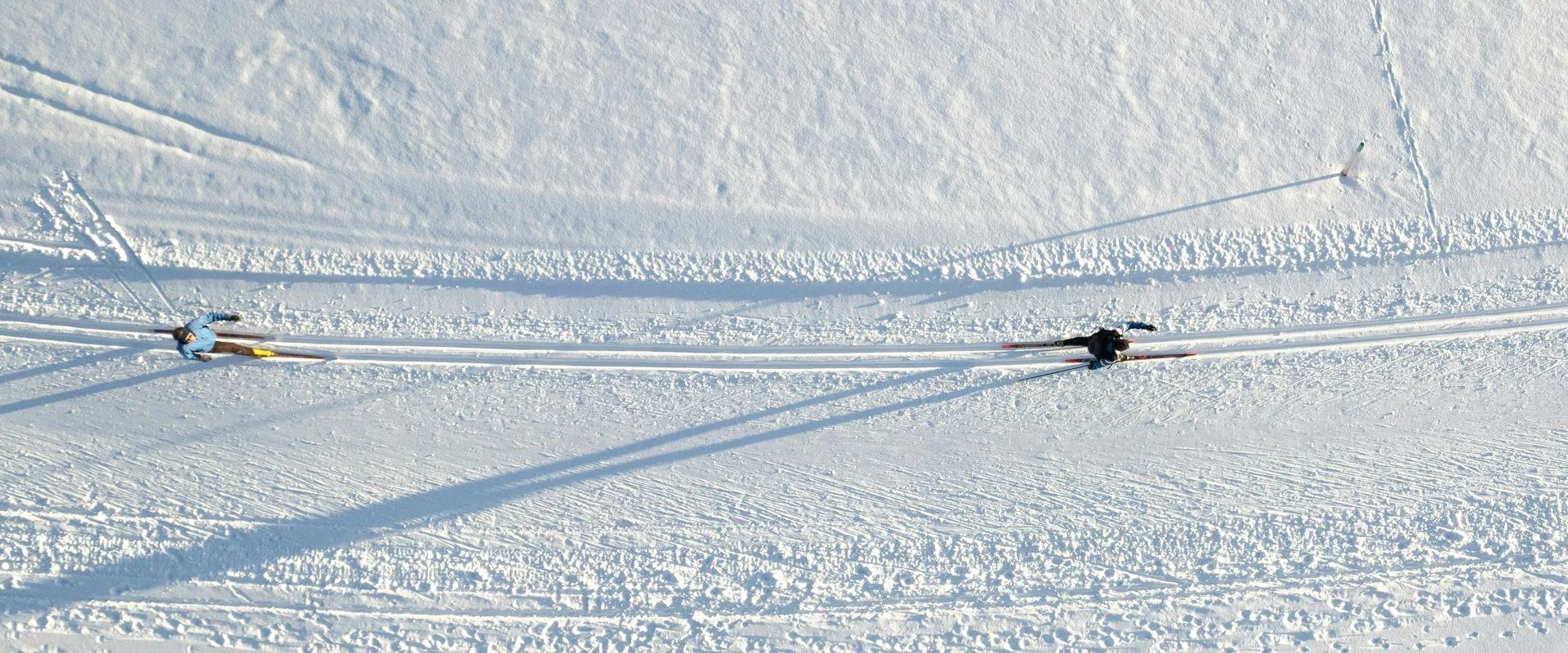
Cross-country skiing is one of the oldest ways to travel across snow - and one of the most rewarding ways to experience the mountains at a quieter pace. Unlike downhill skiing, it takes you along valleys, through forests, and across open plateaux under your own power. This guide explains how the discipline works, what the main styles are, and what a first session actually involves. If you're ready to try it, our guide to getting started with cross-country skiing covers the practical steps. And if you're already looking for somewhere to go, our best cross-country skiing resorts in Europe list is a good place to start.
The simplest way to understand cross-country skiing is to think about direction. Alpine (downhill) skiing uses gravity - you ride a lift up and ski down. Cross-country skiing moves you forward across flat or gently rolling terrain. Your heel lifts away from the ski with every stride, which is the fundamental mechanical difference: in Alpine skiing, your boot is locked to the ski at both toe and heel.
That free heel changes everything about the experience. Cross-country skiing is self-propelled, so the physical effort is closer to running or cycling than it is to downhill skiing. The terrain is gentler, the speeds are lower, and the emphasis shifts from turning technique to rhythm and endurance. Most cross-country routes follow groomed trails rather than open mountainsides, and you won't need a lift pass for the majority of Nordic trail networks.
The two disciplines can coexist comfortably on the same holiday. Many Alpine resorts maintain dedicated Nordic trail networks alongside their downhill piste maps, which means you can mix both into a single trip if the resort supports it.
Cross-country skiing splits into two main styles, and understanding the difference matters when you're choosing equipment or booking a lesson.
Classic technique is the older and more intuitive of the two. Your skis stay parallel in pre-cut tracks (two narrow grooves set into the trail surface), and you move with a striding motion - one foot forward, then the other - similar to walking with extra glide. Most beginners start here because the tracks keep your skis aligned and the movement pattern feels natural within a few minutes.
Skating technique looks more like ice skating. You push off at an angle with each stride, using the flat, firm surface beside the classic tracks. It's faster and more dynamic, but it requires better balance and considerably more cardiovascular effort. Skating also uses different boots and poles - stiffer boots that support the ankle laterally, and longer poles for a more powerful push.
Trails are typically groomed for both styles side by side: classic tracks on one or both edges, with a smooth skating lane in the middle. Some trails are designated classic-only, particularly narrower forest routes.
Cross-country equipment is lighter and narrower than its Alpine equivalent. The skis are thinner (roughly half the width of a downhill ski), the boots are low-cut and flexible, and the bindings clip at the toe only - leaving your heel free to lift. Poles are longer than Alpine poles and play a much bigger role in propulsion.
For classic skiing, the base of the ski has a textured grip zone underfoot that lets you push off without sliding backwards. Skating skis are smooth along their entire length and rely on the angled push for grip. You don't need to understand the wax systems to get started - rental equipment is set up ready to go, and most Nordic centres adjust the grip zone for the day's conditions.
Clothing is lighter too. Because you're generating constant body heat through movement, you'll overheat quickly in a standard Alpine ski jacket. Most cross-country skiers wear a breathable softshell layer on top, a light midlayer, and a moisture-wicking base layer underneath. The aim is to dress as you would for a winter run rather than a day on the chairlift.
The opening minutes of a cross-country lesson tend to surprise people. The skis feel impossibly narrow and the boots feel almost like trainers compared to the rigid plastic shells used in Alpine skiing. Standing still can feel slightly precarious, but once you start moving, the sensation settles quickly. The tracks guide your skis, and the basic stride - push, glide, push, glide - clicks into place sooner than most people expect.
Instructors usually start on flat terrain and introduce the diagonal stride (the core classic movement) before progressing to gentle inclines and basic downhill techniques. Going uphill is more manageable than you might expect thanks to the grip zone on classic skis - you simply shorten your stride and keep moving. Descending is the part that takes a little more practice, since your free heel means you can't use Alpine turning mechanics. A snowplough works, but the narrow skis make it feel different.
After an hour or so, many beginners find a comfortable rhythm and can cover a few kilometres of easy trail. The pace is yours to set, which is part of the appeal - there's no queue behind you, no run to complete, just the trail ahead.
Cross-country skiing is one of the most complete cardiovascular workouts in any sport. It engages your legs, core, and arms simultaneously, which is why competitive Nordic skiers consistently record some of the highest VO2 max values in professional athletics. That said, you control the intensity. A gentle classic session on flat trails can be as mellow as a brisk walk; a skating session on a hilly circuit will leave you properly breathless.
If you're already a runner, cyclist, or regular gym-goer, you'll adapt to the physical demands within a session or two. If you're less active, classic technique on flat terrain is a forgiving entry point - you can cover ground at a pace that suits you and build from there. Either way, expect to use muscles in your upper body and core that downhill skiing barely touches.
The recovery profile is also kinder than Alpine skiing. Without the jarring impact of downhill turns, your knees and joints get a much gentler ride. That makes cross-country a practical option for people who find a full day on the pistes physically demanding, or for anyone looking for an active rest day during an Alpine ski week.
For some people, cross-country skiing is the entire holiday. Dedicated Nordic resorts in Scandinavia and the Alps cater specifically to this, with extensive trail networks, biathlon ranges, and equipment hire centres geared toward the discipline. These destinations tend to be quieter, more affordable, and set in wide valley landscapes rather than high-altitude mountain bowls.
For others, it's a complement to an Alpine holiday. A morning on the Nordic trails followed by an afternoon on the pistes is a refreshingly varied way to fill a ski day - and several major resorts maintain both systems. It's also a good option for mixed-ability groups: one person can spend the morning cross-country skiing while another takes a lesson on the nursery slopes, and both meet for lunch at the same resort.
There's a growing contingent of people who come to cross-country skiing later in life, often after years of downhill skiing, looking for something less intense on the body but still firmly rooted in the mountains. The barrier to entry is low, the risk of injury is minimal, and the sense of covering ground under your own power is remarkably distinctive.
Your heel stays free. That's the fundamental difference from Alpine skiing - you stride forward rather than riding gravity downhill.
Classic is the natural starting point. The tracks guide your skis and the stride pattern feels intuitive within the first session.
Dress for a workout, not a chairlift. Cross-country generates far more body heat than downhill skiing, so lighter, breathable layers work best.
It fits alongside an Alpine holiday. Many resorts maintain Nordic trails alongside their downhill pistes, so you can mix both disciplines in a single trip.
Low barrier, high reward. The injury risk is minimal, the equipment is straightforward to hire, and most people find a comfortable rhythm within an hour.
The basics of classic technique are accessible to most people within a single session. The tracks keep your skis aligned, and the striding motion is close enough to walking that it clicks quickly. Skating technique takes longer to develop - the balance and coordination are more demanding. Either way, a lesson is worth it. An instructor will set up your rhythm and teach you how to handle gentle descents, which is the part that catches most beginners off guard.
You don't need to be an athlete, but a reasonable base level of fitness helps. Classic skiing on flat terrain is manageable for most people - the pace is entirely yours to control. Skating and hillier routes are more demanding. If you can walk briskly for an hour without difficulty, you'll handle an introductory session on easy trails comfortably.
Many Alpine resorts maintain dedicated Nordic trail networks alongside their downhill pistes. Resorts like Davos, Seefeld, and Chamonix are well known for combining both. Check the resort's trail map before you book - the quality and length of Nordic trails vary considerably. Our best cross-country skiing resorts in Europe list includes resorts that excel on the Nordic side.
Nordic skiing is the broader umbrella term. It covers cross-country skiing (both classic and skating), ski jumping, biathlon, and Nordic combined. In everyday conversation, most people use 'Nordic' and 'cross-country' interchangeably, and in the context of a ski holiday that's perfectly reasonable. If you see a resort advertising Nordic trails, it means cross-country trails.
The equipment is lighter and typically less expensive to hire. Many Nordic trail networks charge a modest trail fee rather than a full lift pass, so the daily cost of skiing itself tends to be lower. Accommodation costs depend on the destination rather than the discipline. Our guide to getting started with cross-country skiing covers what to budget for in more detail.
Thinking about giving it a go? Try WeSki’s AI trip planner - tell it what matters to you and get a personalised shortlist of resorts in seconds