EN
EN

December skiing splits neatly into two seasons. The first half of the month is one of the quietest periods in the Alps - lifts are open, snow is building, and the slopes feel spacious. The second half is peak season, with Christmas and New Year bringing crowds, festive markets, and a completely different atmosphere. This list covers both sides of the month, so whether you're after a calm early-season escape or a full festive holiday, you'll find the right resort here.
For more on the festive end of the month, our guide to Christmas ski holidays covers what to expect from a Christmas trip. And if you're thinking about staying through into the new year, our New Year ski holidays guide has you covered too.
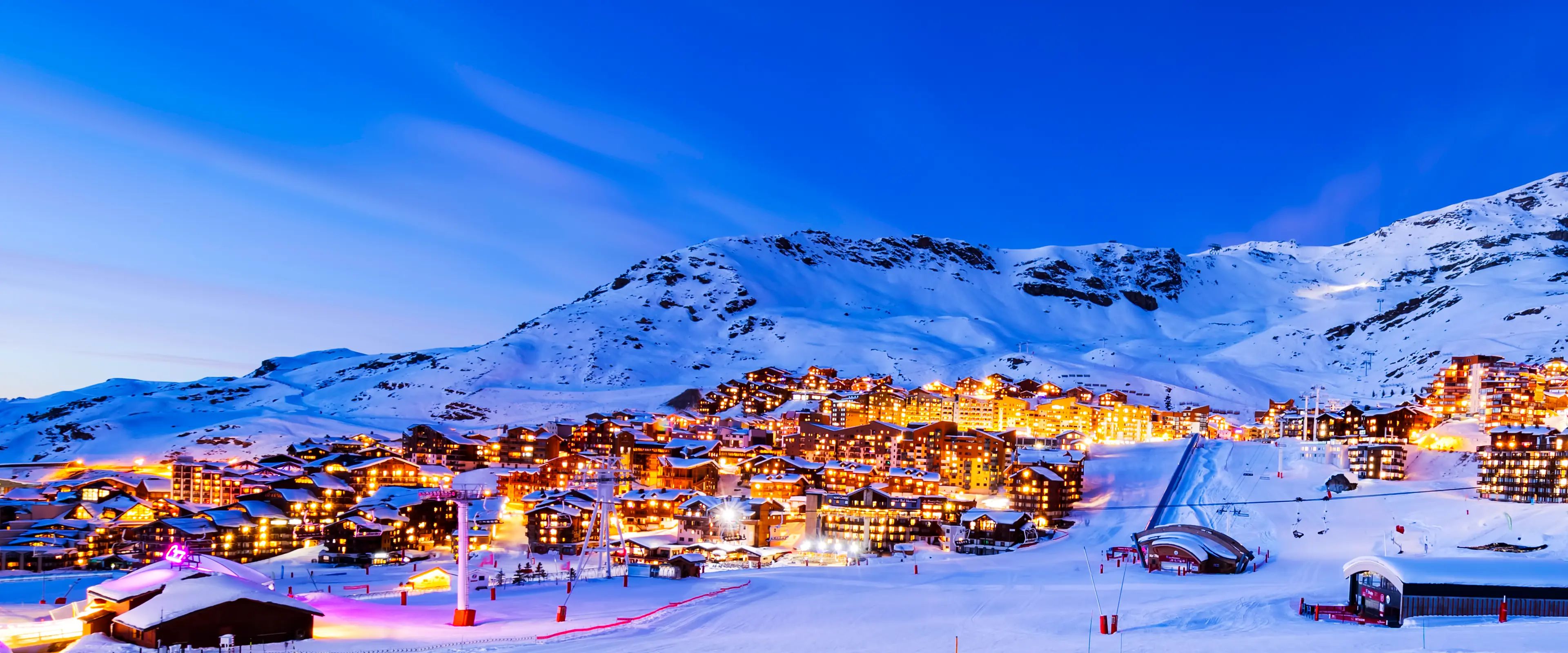
As Europe's highest ski resort at 2,300m, Val Thorens is one of the most reliable December destinations in the Alps. The resort typically opens in late November, and by early December there's usually enough natural and machine-made snow to cover a good portion of the Three Valleys ski area. The altitude means conditions hold well throughout the month, even in warmer early-season years.
Early December is particularly appealing here. The resort is fully operational but far quieter than it will be over Christmas, and the north-facing slopes above the village retain snow well. Later in the month, the atmosphere shifts as the festive season kicks in - Val Thorens' compact village comes alive with live music and seasonal events.
✓ Europe's highest resort, with strong snow reliability from late November onwards.
✓ Access to the full Three Valleys area - 600km of linked pistes - from early in the season.
✓ Quiet slopes in the first two weeks of December before the holiday rush.
| Country | France |
|---|---|
| Ski area | Three Valleys - 600km of pistes |
| Altitude | 2,300m - 3,230m |
| Runs | 49 green + 75 blue + 67 red + 32 black runs (Three Valleys total) |
| Ski school | ESF Val Thorens, Prosneige - English-speaking instructors |
| Transfer time | Geneva (3h 30m); Lyon (3h 15m); Chambery (2h) |
WeSki insider tip: The Peclet glacier run from 3,230m down into the resort is one of the first to open each season and usually has excellent early-December coverage. It's a long, flowing red that eases you into the altitude.
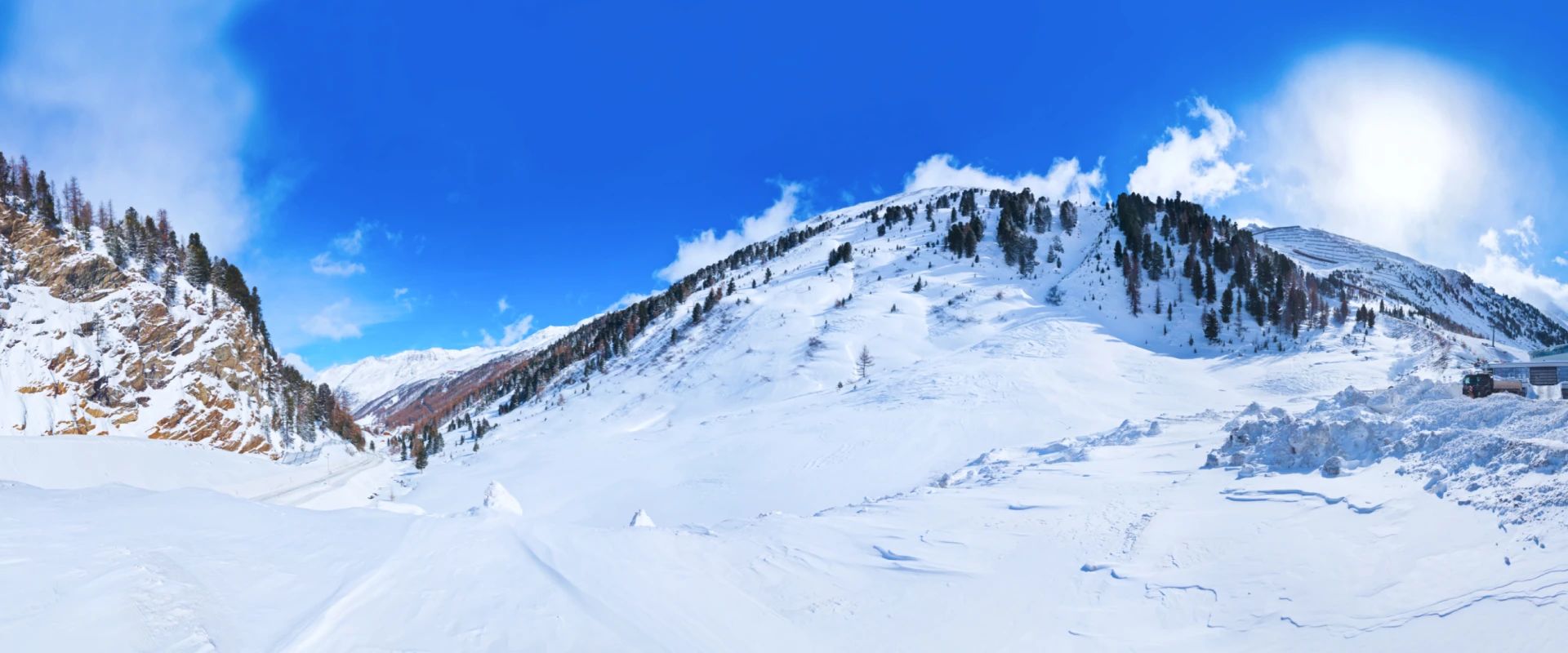
Obergurgl sits at 1,930m at the head of the Otztal valley, with skiing reaching up to 3,080m. It's one of Austria's most snow-sure resorts, and its season typically starts in mid-November. By December, the linked Obergurgl-Hochgurgl area is well covered, with most of the 112km of pistes open.
The village itself is small and traditional, with a handful of hotels clustered around the base lifts. That compactness is part of the appeal in December - everything is walkable, and the lack of through-traffic keeps it peaceful. For skiers who want a quiet early-season trip with dependable conditions, Obergurgl is one of the strongest options in Austria.
✓ One of Austria's highest villages, with reliable snow from mid-November.
✓ Compact, traffic-free village ideal for a relaxed early-December trip.
✓ Linked to Hochgurgl for additional high-altitude terrain above 2,000m.
| Country | Austria |
|---|---|
| Ski area | Obergurgl-Hochgurgl - 112km of pistes |
| Altitude | 1,930m - 3,080m |
| Runs | 14 blue + 21 red + 3 black runs |
| Ski school | Obergurgl Ski School - English-speaking instructors |
| Transfer time | Innsbruck (1h 30m); Munich (3h 30m) |
WeSki insider tip: The Top Express gondola from Hochgurgl reaches 3,080m and opens early in the season. The red runs back down to Hochgurgl face north-west and hold their snow long after the afternoon sun has softened lower slopes.
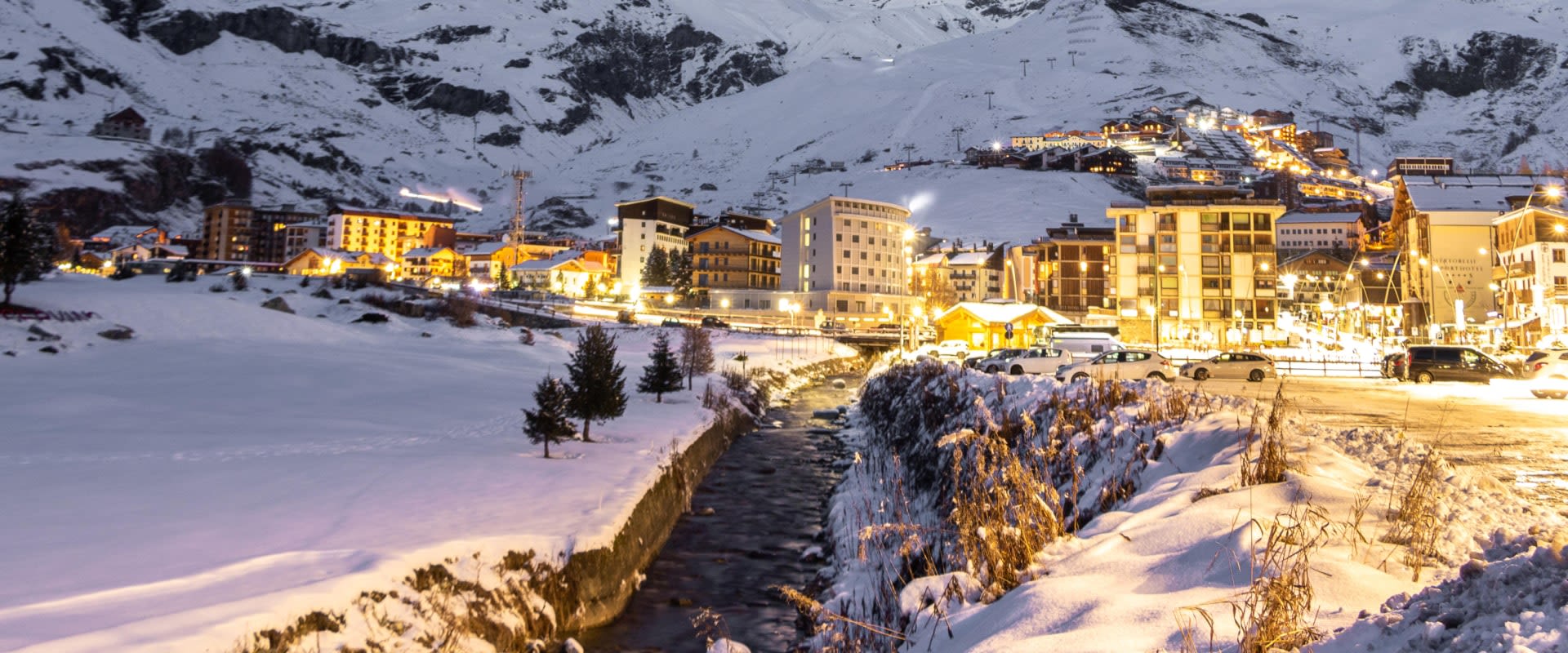
Cervinia's combination of high altitude and glacier access makes it one of Europe's earliest-opening resorts. The ski area links across the border into Zermatt, and the Italian side sits between 2,050m and 3,480m - high enough for strong early-season coverage. The wide, open pistes above the village suit intermediates and confident beginners, and they hold their snow well throughout December.
Early December in Cervinia is noticeably quieter than its Swiss neighbour, with shorter lift queues and a slower pace in the village. The Italian approach to mountain dining adds something too - long lunches on sunny terraces are part of the December appeal here, even when temperatures are low.
✓ Glacier skiing up to 3,480m with some of the Alps' most reliable early-season snow.
✓ Wide, confidence-building intermediate runs on the Italian side.
✓ Cross-border link to Zermatt for a combined ski area of over 360km.
| Country | Italy |
|---|---|
| Ski area | Cervinia-Zermatt (Matterhorn Ski Paradise) - 360km of pistes |
| Altitude | 2,050m - 3,480m |
| Runs | 21 blue + 26 red + 5 black runs (Cervinia side) |
| Ski school | Cervinia Ski School, Breuil Ski School - English-speaking instructors |
| Transfer time | Turin (2h); Milan Malpensa (2h 30m); Geneva (3h) |
WeSki insider tip: The Plan Maison plateau at 2,555m is where most of Cervinia's wide blue runs converge. In early December, this area gets full sun until mid-afternoon and has some of the most forgiving terrain in the whole Matterhorn ski area.
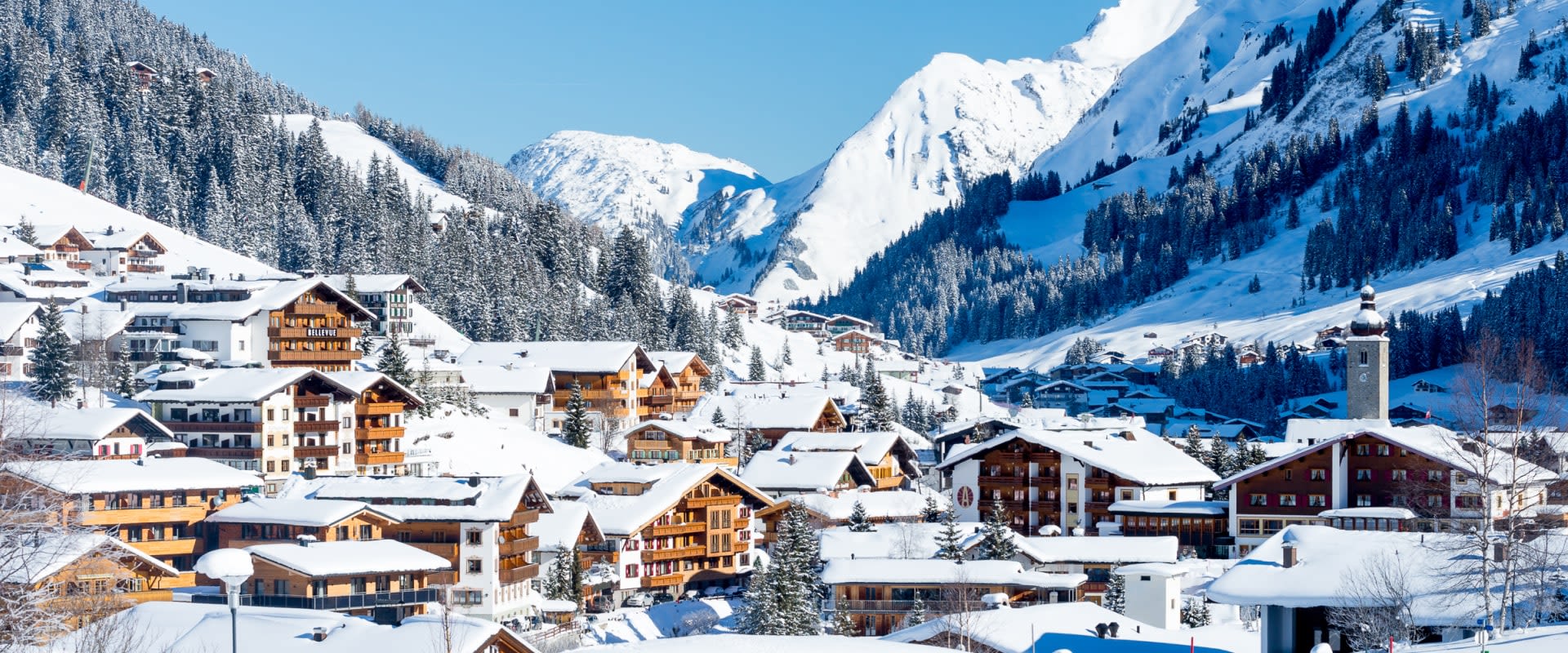
Lech is part of the Ski Arlberg region, the largest connected ski area in Austria with 305km of marked runs. The resort sits at 1,450m, but the skiing reaches up to 2,811m on the Valluga, and Lech consistently receives some of the heaviest snowfall in the Alps - an average of around 7m per season. By December, the base is usually well established.
The village has a distinctly upmarket feel without being exclusive. Traditional Vorarlberg architecture lines the main street, and the atmosphere in late December is properly festive - think candlelit restaurants, carol services, and beautifully lit streets. It's a strong pick for anyone who wants the Christmas-in-the-Alps experience with outstanding skiing to match.
✓ Part of the 305km Ski Arlberg area with some of the heaviest snowfall in the Alps.
✓ Traditional village with a particularly atmospheric Christmas period.
✓ Varied terrain from gentle blues to serious off-piste in the Arlberg backcountry.
| Country | Austria |
|---|---|
| Ski area | Ski Arlberg - 305km of pistes |
| Altitude | 1,450m - 2,811m |
| Runs | 47 blue + 61 red + 42 black runs (Ski Arlberg total) |
| Ski school | Ski School Lech, Ski School Oberlech - English-speaking instructors |
| Transfer time | Innsbruck (1h 45m); Zurich (2h 30m); Friedrichshafen (1h 30m) |
WeSki insider tip: The Schlegelkopf area above Lech village is typically one of the first sectors to open each season and faces north, so it holds early-December snow well. It's also quieter than the main Rufikopf link to St. Anton.
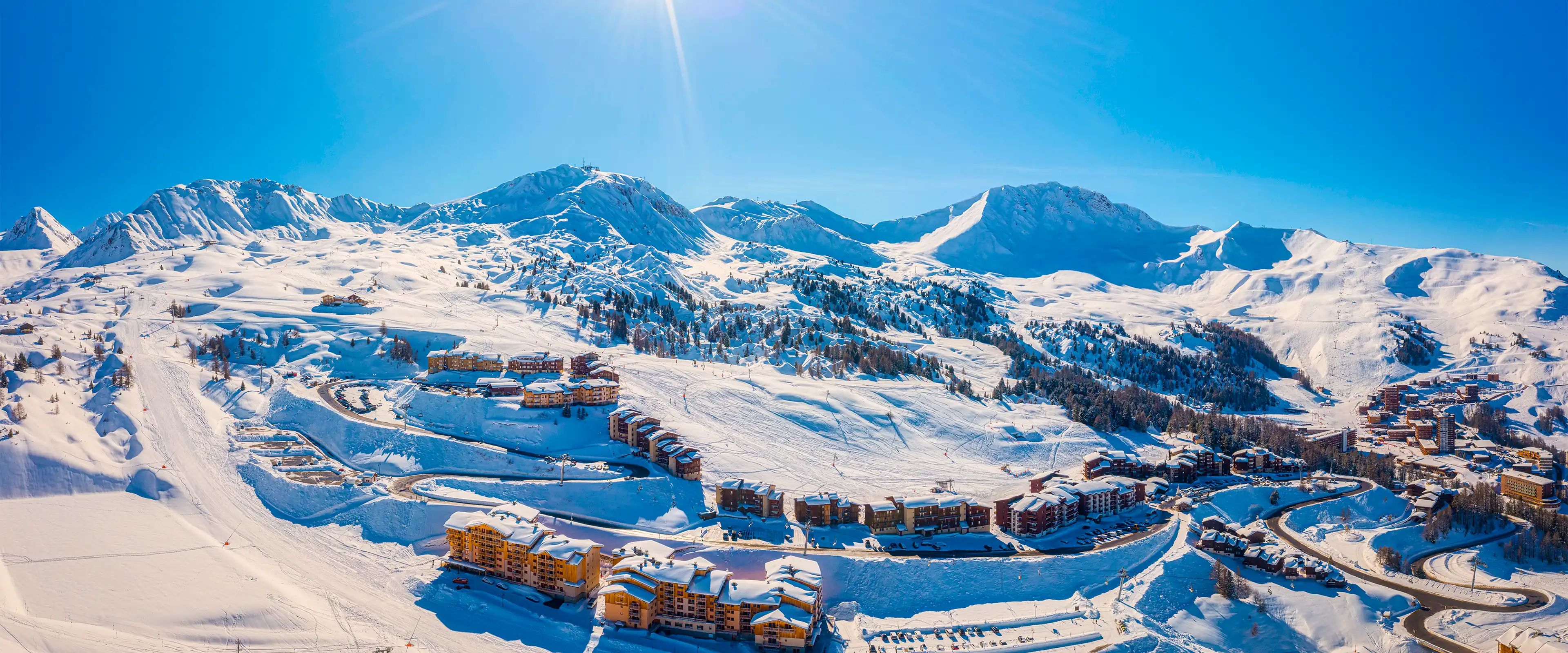
La Plagne is spread across ten villages at different altitudes, with the highest - Aime 2000 and Belle Plagne - sitting above 2,000m. The resort links with Les Arcs to form the Paradiski area, covering 425km of pistes. Its altitude spread means a good portion of the ski area is snow-sure by early December, and the extensive snowmaking system covers the connecting runs between villages.
December is a smart time to visit La Plagne. The higher villages are fully operational from late November, and the sheer size of the ski area means you can always find uncrowded runs, even as the month progresses towards the festive period. Families travelling with younger children will find the higher car-free villages particularly convenient - everything is ski-in, ski-out at altitude.
✓ Ten villages across multiple altitudes, with the highest above 2,000m for December reliability.
✓ Part of the 425km Paradiski area linked to Les Arcs.
✓ Car-free high-altitude villages with ski-in, ski-out convenience.
| Country | France |
|---|---|
| Ski area | Paradiski (La Plagne + Les Arcs) - 425km of pistes |
| Altitude | 1,250m - 3,250m |
| Runs | 68 green/blue + 64 red + 17 black runs (La Plagne side) |
| Ski school | ESF La Plagne, Oxygene, Evolution 2 - English-speaking instructors |
| Transfer time | Geneva (2h 30m); Lyon (3h); Chambery (1h 45m) |
WeSki insider tip: Belle Plagne at 2,050m tends to have the most reliable December snow of all ten villages. The runs directly above the village face north-east and often hold fresh snow for days after a storm.
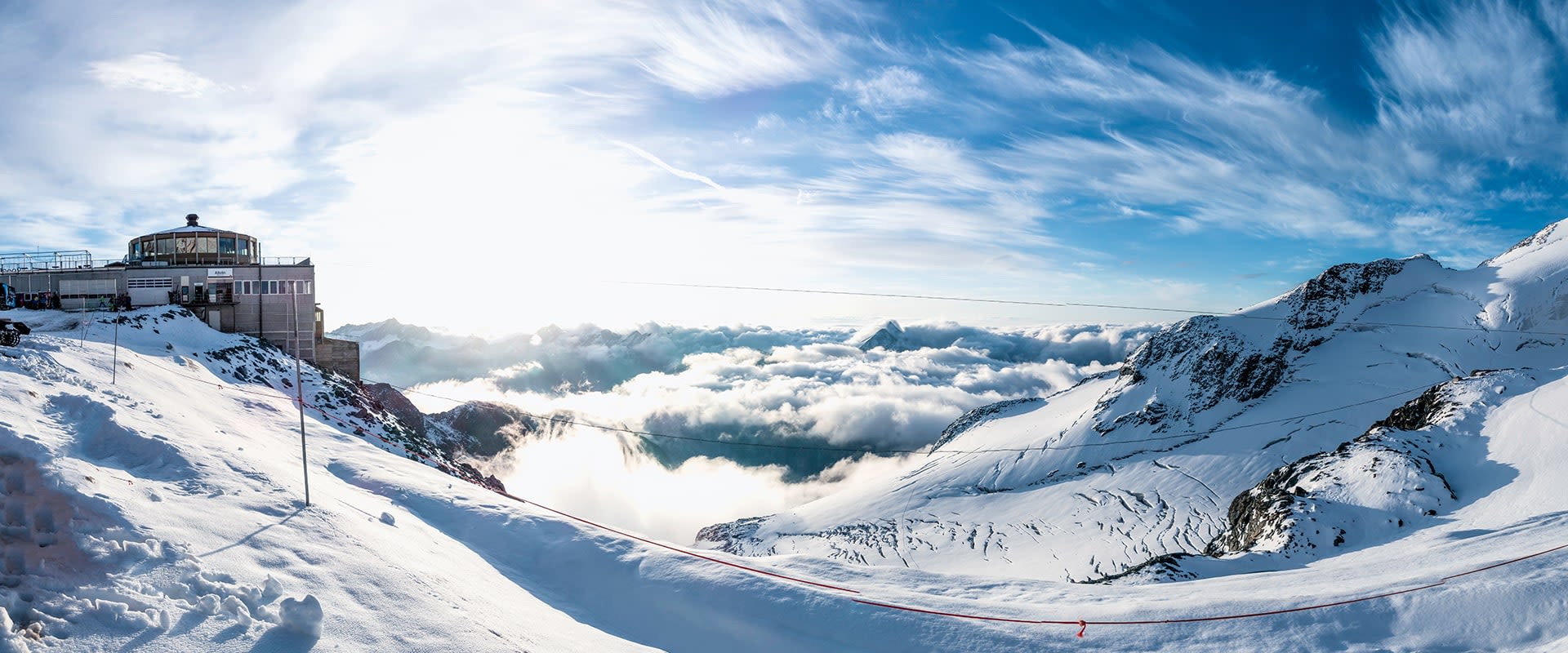
Saas-Fee is ringed by thirteen 4,000m peaks and has glacier skiing up to 3,600m, making it one of the most altitude-protected resorts in the Alps. The glacier area operates year-round, and by December the lower slopes are typically well covered too. The village sits at 1,800m and is entirely car-free - you park at the entrance and walk or take an electric bus.
For early December, Saas-Fee is particularly strong. The glacier is already in full operation, the mid-mountain runs are opening up, and the village has a quiet, local feel before the festive crowds arrive. The car-free streets, mountain backdrop, and evening lighting make it one of the more atmospheric places to be in the Alps as the days shorten.
✓ Glacier skiing to 3,600m with year-round snow reliability.
✓ Car-free village at 1,800m surrounded by thirteen 4,000m peaks.
✓ Quiet early-December atmosphere with the glacier already fully open.
| Country | Switzerland |
|---|---|
| Ski area | Saas-Fee - 100km of pistes |
| Altitude | 1,800m - 3,600m |
| Runs | 9 blue + 9 red + 4 black runs |
| Ski school | Swiss Ski School Saas-Fee - English-speaking instructors |
| Transfer time | Geneva (3h); Zurich (3h 30m); Milan Malpensa (2h 30m) |
WeSki insider tip: The Metro Alpin underground funicular takes you from 3,000m to 3,500m in just three minutes. The runs at the top are exposed and can be windy, but on a calm December morning the views across the Saas valley are extraordinary.
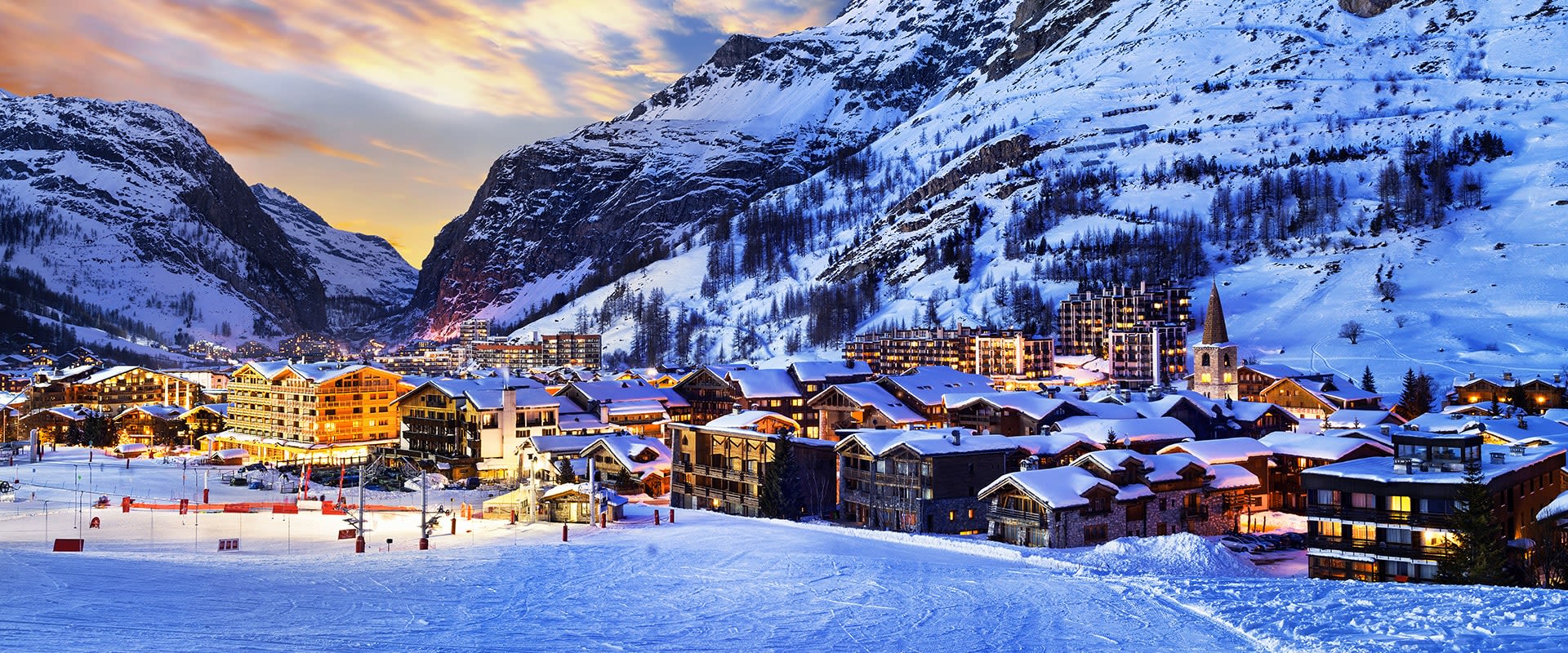
Val d'Isere sits at 1,850m and links with Tignes to form the Espace Killy area, covering 300km of pistes up to 3,456m on the Grande Motte glacier. The resort's high base altitude and north-facing terrain mean December conditions are typically excellent. Val d'Isere traditionally hosts one of the first World Cup races of the season in early December, which gives a good indication of how seriously the resort takes its early-season preparation.
Late December is where Val d'Isere comes into its own. The village has a lively festive atmosphere without being overwhelming, and the range of restaurants and bars means evening entertainment is never far away. The skiing is suited to intermediates and advanced skiers alike - long cruising runs connect the two resorts, while the Face de Bellevarde and the off-piste around the Col Pers provide serious challenges.
✓ Linked to Tignes for 300km of high-altitude skiing, with glacier access to 3,456m.
✓ Hosts early-December World Cup racing - a sign of excellent early-season preparation.
✓ Lively village with strong festive atmosphere in the second half of December.
| Country | France |
|---|---|
| Ski area | Espace Killy (Val d'Isere + Tignes) - 300km of pistes |
| Altitude | 1,550m - 3,456m |
| Runs | 43 green/blue + 42 red + 24 black runs |
| Ski school | ESF Val d'Isere, Snow Fun, Evolution 2 - English-speaking instructors |
| Transfer time | Geneva (3h 30m); Lyon (3h 15m); Chambery (2h 15m) |
WeSki insider tip: The Solaise sector on the village's south side catches morning sun and is usually one of the first areas fully open in December. The long blue run from the top of Solaise back to the village is a relaxed way to start the day before heading into the Tignes link.
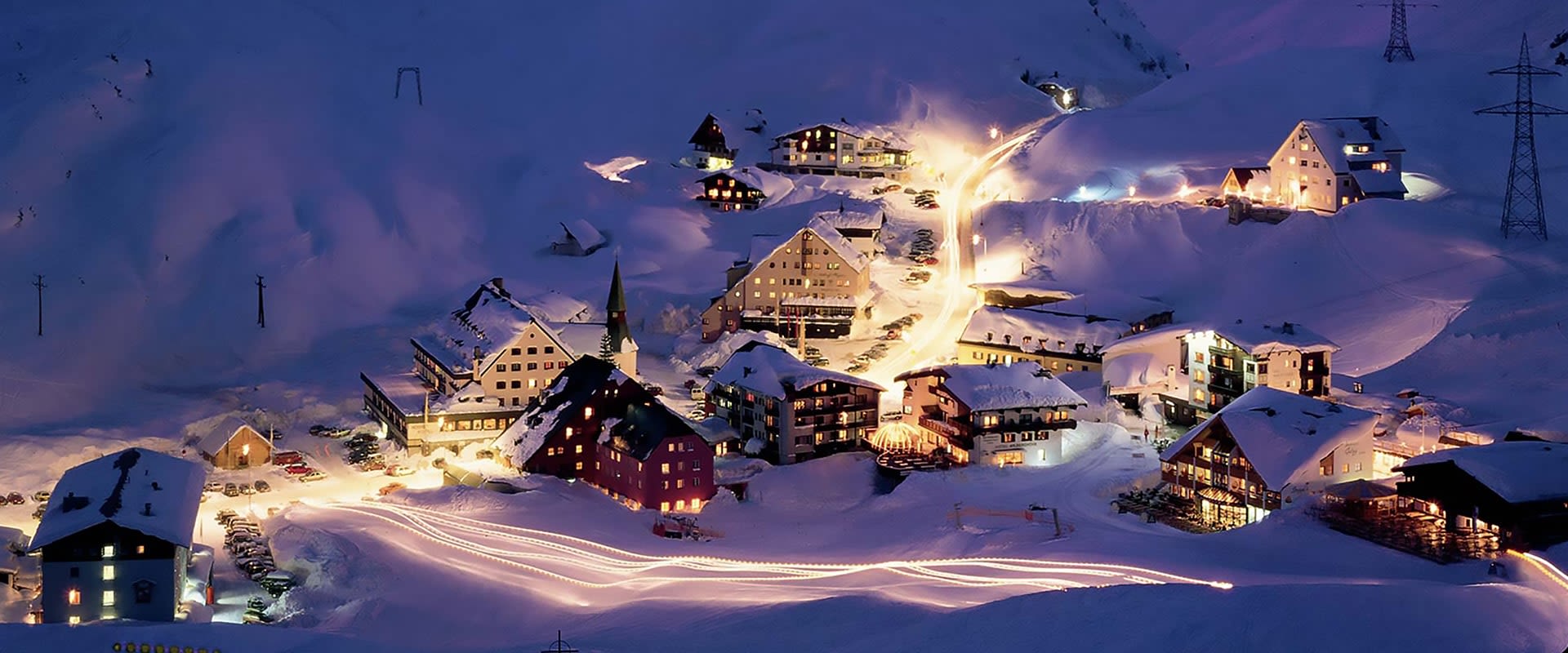
St. Anton is part of the same Ski Arlberg region as Lech and Zurs, but it has a different personality - more energetic, more geared towards strong skiers, and with a livelier apres-ski scene. The resort town sits at 1,300m, and the skiing reaches 2,811m. The Arlberg's reputation for heavy snowfall applies equally here, and December typically brings the first major dumps of the season.
The resort's late-December atmosphere is worth the trip in itself. St. Anton's pedestrianised centre fills with seasonal stalls and live music, and the apres-ski bars along the main street are some of the most famous in the Alps. For intermediate and advanced skiers who want festive energy alongside challenging terrain, it's hard to beat.
✓ Part of the 305km Ski Arlberg area with famously heavy December snowfall.
✓ Some of the Alps' best-known apres-ski, with a particularly strong festive atmosphere.
✓ Excellent advanced terrain including long off-piste descents from the Valluga.
| Country | Austria |
|---|---|
| Ski area | Ski Arlberg - 305km of pistes |
| Altitude | 1,300m - 2,811m |
| Runs | 47 blue + 61 red + 42 black runs (Ski Arlberg total) |
| Ski school | Ski School Arlberg, Piste to Powder - English-speaking instructors |
| Transfer time | Innsbruck (1h 15m); Zurich (2h 15m); Friedrichshafen (1h 30m) |
WeSki insider tip: The Galzig area directly above the village is the first to fill up on busy late-December mornings. Heading straight for the Rendl cable car on the opposite side of the valley gives you an hour of quiet skiing before the crowds find their way across.
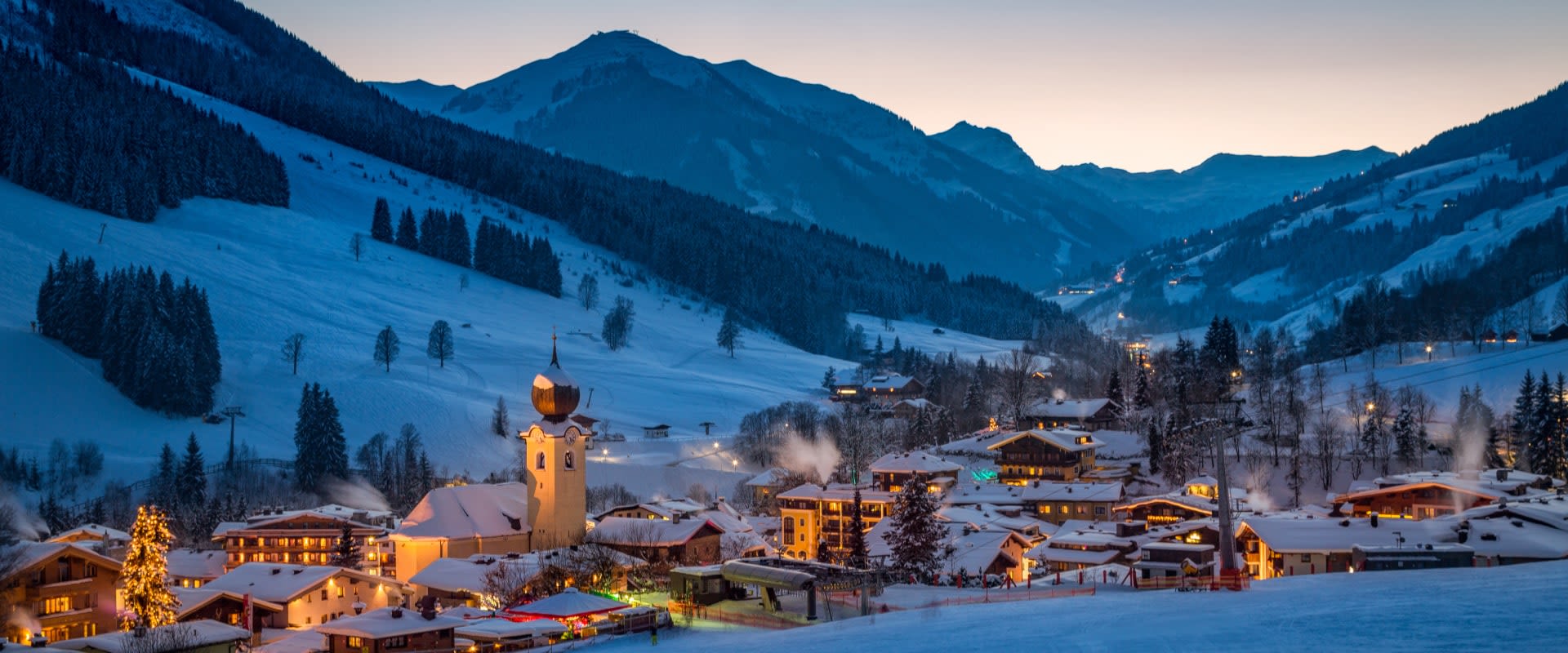
Saalbach-Hinterglemm sits in a wide, sunny valley in the Salzburger Land and is linked to Leogang and Fieberbrunn to form the Skicircus, one of Austria's largest ski areas with 270km of pistes. The village sits at around 1,000m, which is lower than some December picks on this list, but extensive snowmaking across the ski area means conditions are reliably good from early December.
The resort's strength in December is its range of intermediate terrain and its village atmosphere. Saalbach has a wide, pedestrian-friendly centre with plenty of restaurants, bars, and shops - it feels like a proper mountain town rather than a purpose-built station. Later in December, the Christmas market and torchlit events add a festive layer without the premium pricing of some more famous resort names.
✓ 270km Skicircus area with excellent snowmaking for reliable early-season cover.
✓ Large, lively village with a proper town atmosphere and festive December events.
✓ Predominantly intermediate terrain - ideal for groups with mixed ability levels.
| Country | Austria |
|---|---|
| Ski area | Skicircus Saalbach Hinterglemm Leogang Fieberbrunn - 270km of pistes |
| Altitude | 1,003m - 2,096m |
| Runs | 46 blue + 44 red + 10 black runs |
| Ski school | Ski School Saalbach, Snow Academy - English-speaking instructors |
| Transfer time | Salzburg (1h 30m); Munich (2h 30m); Innsbruck (2h) |
WeSki insider tip: The Skicircus round - a marked circuit linking Saalbach, Hinterglemm, Leogang, and Fieberbrunn - takes a full day and covers around 65km of skiing. In early December, before the crowds build, it's one of the best ways to experience the full area.
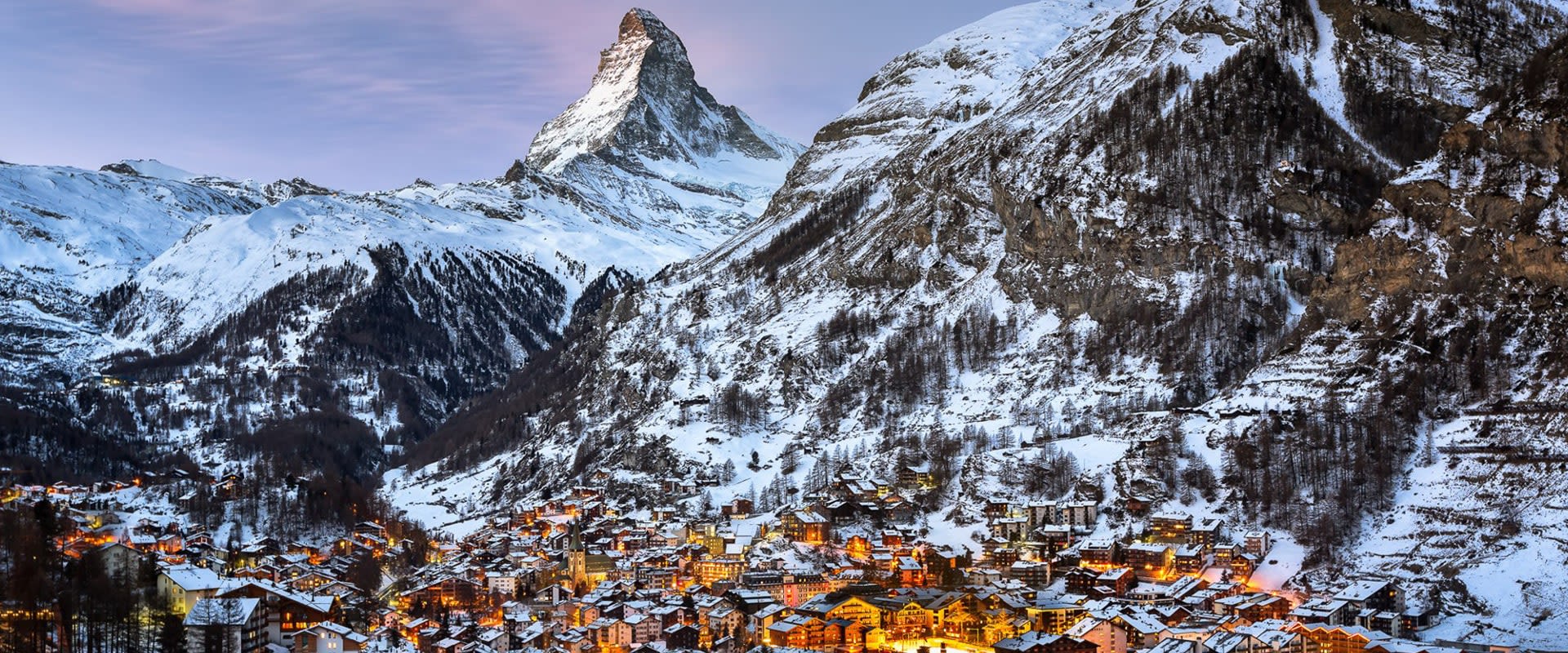
Zermatt's car-free village sits at 1,620m beneath the Matterhorn, with skiing reaching 3,883m on the Klein Matterhorn - the highest lift-served point in the Alps. The glacier area stays open year-round, and by December the lower runs are joining up to create one of Europe's largest connected ski areas. On the Swiss side alone there are 200km of pistes, and the cross-border link to Cervinia adds a further 160km.
Zermatt in late December has a particular atmosphere. The village's car-free streets, lined with traditional wooden chalets and upmarket shops, feel properly festive once the lights go up. The Matterhorn views are unavoidable - from the slopes, from the village, from restaurant terraces - and in the low December light they take on a different quality from their summer postcard appearance.
✓ The highest lift-served skiing in the Alps at 3,883m, with year-round glacier access.
✓ Car-free village with a distinctive festive atmosphere in late December.
✓ Cross-border link to Cervinia for a combined 360km ski area.
| Country | Switzerland |
|---|---|
| Ski area | Zermatt-Cervinia (Matterhorn Ski Paradise) - 360km of pistes |
| Altitude | 1,620m - 3,883m |
| Runs | 28 blue + 33 red + 11 black runs (Zermatt side) |
| Ski school | Swiss Ski School Zermatt, Stoked - English-speaking instructors |
| Transfer time | Geneva (3h 30m); Zurich (3h 30m); Milan Malpensa (3h) |
WeSki insider tip: The Matterhorn Glacier Ride cable car is one of the world's highest and crosses to Cervinia's Italian slopes. In early December, this route is often less busy than later in the season, and you can ski Italian pistes in the morning and be back in Zermatt for afternoon sun on the Sunnegga terraces.
It depends on the resort's altitude and snowmaking investment. High-altitude resorts like Val Thorens, Obergurgl, and Cervinia typically have strong coverage by early December thanks to their elevation and glacier access. Resorts below 1,500m may have thinner coverage on lower runs, though modern snowmaking systems have made early-season skiing much more reliable across the Alps. Choosing a resort above 1,800m is the simplest way to improve your chances.
They're two different experiences. Early December brings quieter slopes, shorter lift queues, and a calmer atmosphere - ideal if you want to focus on the skiing. Late December is peak season with festive markets, livelier villages, and more guaranteed snow cover, but also more people on the mountain. If crowds bother you and you're comfortable with slightly fewer open runs, the first two weeks of the month are well worth considering.
Not always, especially in the first half of the month. Most high-altitude resorts have the majority of their runs open by mid-December, but lower-altitude connectors and south-facing slopes may take longer to build enough base depth. By Christmas week, the large resorts on this list typically have 80 to 100 per cent of their terrain accessible. Check resort snow reports in the week before you travel for the most accurate picture.
Lech, St. Anton, and Zermatt all stand out for their festive character. Lech has a traditional, candlelit feel with a strong Austrian Christmas atmosphere. St. Anton adds lively apres-ski to the festive mix. Zermatt's car-free streets and Matterhorn backdrop give it a distinctive charm. For more detail on planning a trip around the festive period, our Christmas ski holidays guide covers what to expect.
December is one of the coldest months in the Alps. Temperatures at resort level typically range from around -5 to -10 degrees Celsius, and higher up it can be significantly colder. Wind chill makes exposed chairlifts feel particularly bracing. Layering is important - a good base layer, insulated mid-layer, and windproof outer shell make a noticeable difference. Daylight hours are shorter too, with lifts closing around 4pm and darkness falling soon after.
Thinking about a December trip? WeSki’s AI trip planner can match you to the right resort based on your dates, group, and what matters most to you