EN
EN
La Rosière and La Thuile sit on opposite sides of the Col du Petit Saint-Bernard, one in the French Tarentaise and one in the Italian Aosta valley, and they share the Espace San Bernardo ski area on a single pass. You can ski from one to the other and back inside a day. What you cannot do is drive between them in winter - the pass road closes from around November until May, and the way round runs about 170 km through the Mont Blanc tunnel. That makes the choice of base more binding here than in most linked pairings, and it makes the thing that joins them, a chain of exposed lifts over the col, worth understanding before you book. This guide compares them on terrain, snow, the crossing, villages, families, experts and transfers.
Choose La Rosière for: wide south-facing pistes almost entirely above the treeline, a snowfall record well ahead of what its height suggests, ski-in access from most of the village, and gentle nursery ground at village level that makes it straightforward for first-timers and families.
Choose La Thuile for: north-facing slopes that hold a firmer surface in sun and in spring, 1,200 m of tree-lined vertical for flat-light days, the Franco Berthod World Cup black, and heli-skiing on the Ruitor glacier - which nobody can do from the French half of the same ski area.


| Feature | La Rosière | La Thuile |
|---|---|---|
| Country | France | Italy |
| Shared ski area | Espace San Bernardo - around 150 km of pistes | Espace San Bernardo - around 150 km of pistes |
| Village altitude | 1,850 m | 1,441 m |
| Highest lift | 2,800 m (Mont Valaisan) | 2,641 m (Belvedere) |
| Slope aspect | Mainly south and south-west, above the treeline | Mainly north, much of it in trees |
| Lift pass | Espace San Bernardo covers both sides; local-only passes sold by the day or half-day | Espace San Bernardo covers both sides; local-only passes sold by the day or half-day |
| Season | Roughly mid-December to late April | Roughly early December to late April |
| Best for | Sunshine, cruising, beginners, families | Snow quality, trees, steep pistes, freeride |
| Village character | Compact chalet-style resort on an open balcony | Former mining village on the valley floor |
| Nearest airport | Chambéry (~2 hr); Geneva (~2 hr 30 min) | Turin (~1 hr 45 min); Geneva (~3 hr) |
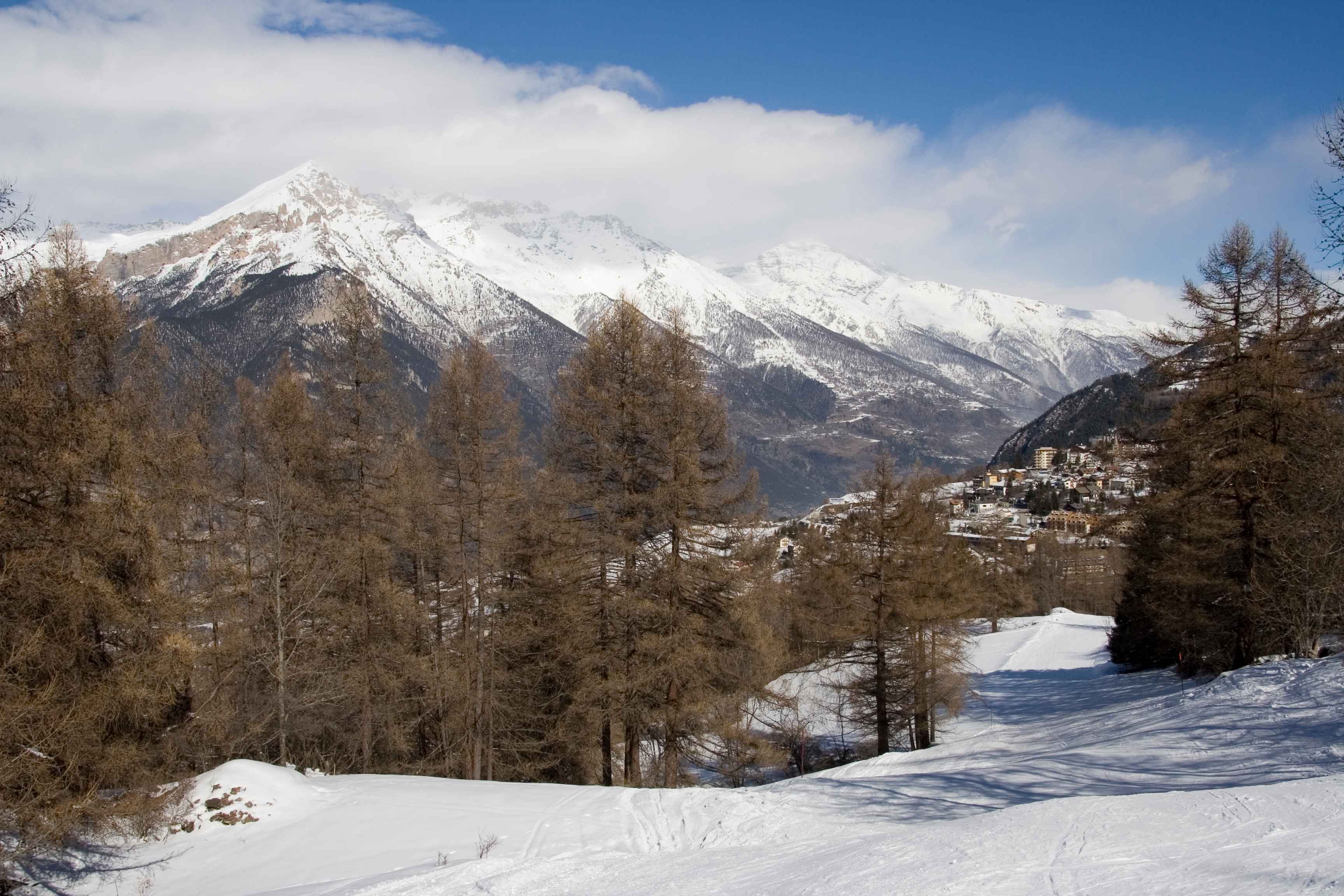
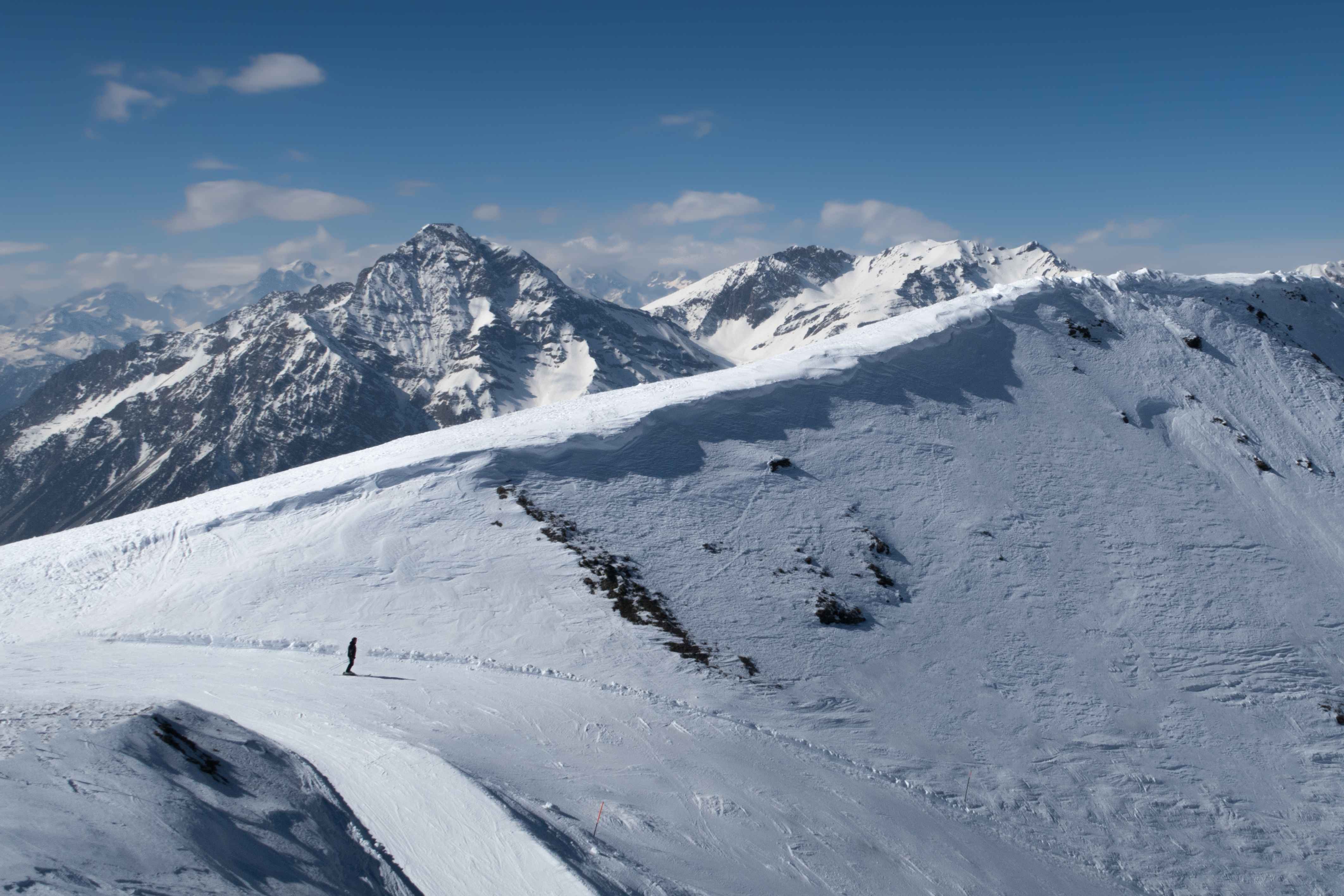
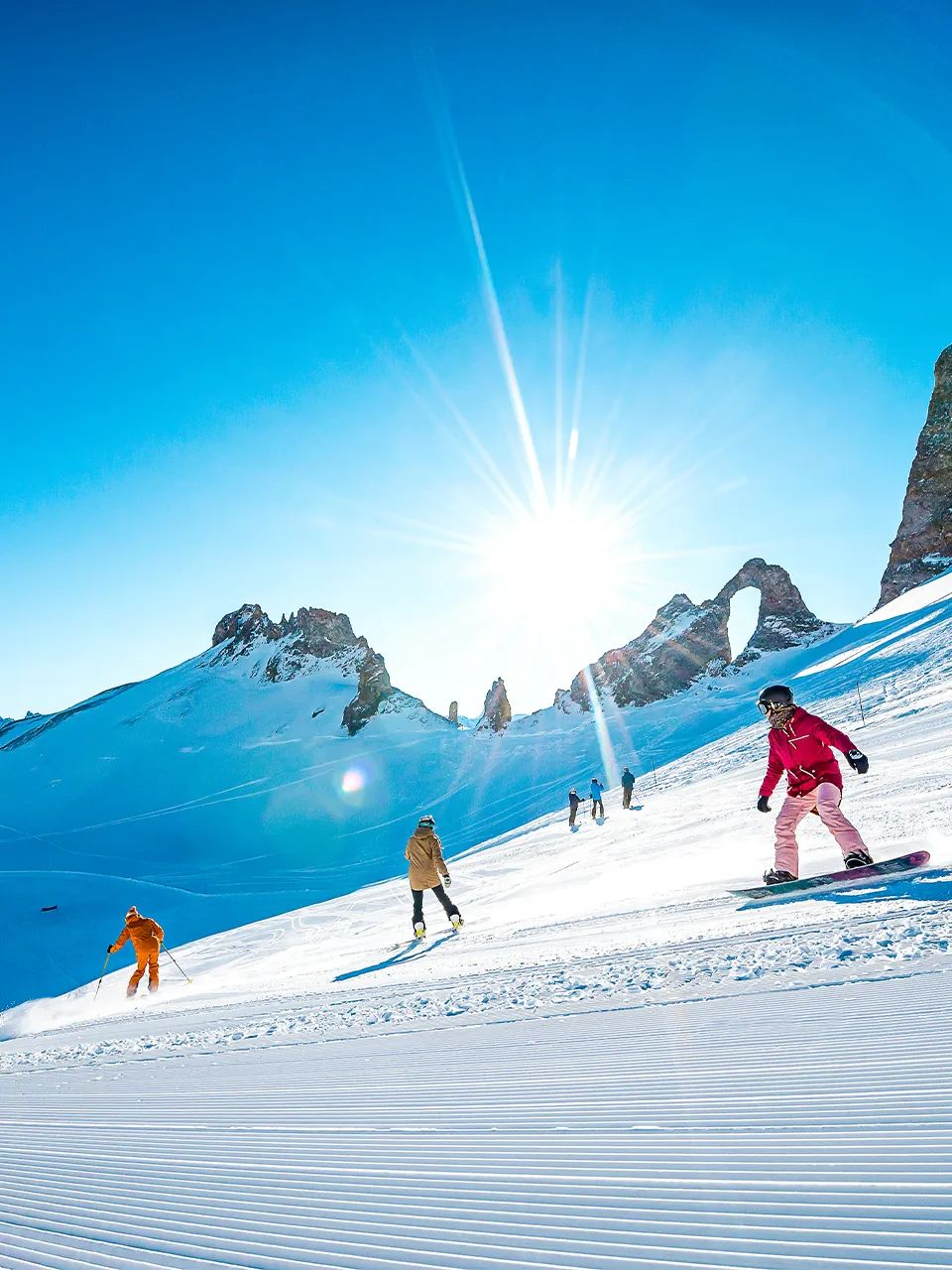
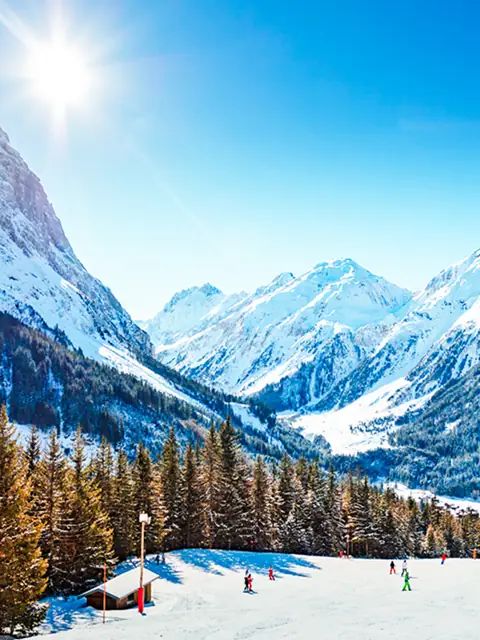
The two halves look nothing alike, and the col between them is the dividing line. La Rosière skis a high, open, south-facing balcony above the Tarentaise, nearly all of it above the trees: wide blues, mild reds, long sweeping descents towards Les Ecudets, and the Mont Valaisan sector topping the whole area out at 2,800 m. La Thuile falls the other way into a wooded basin, from Belvedere at 2,641 m down to the village at 1,441 m. Above Les Suches it is high plateau, ridges and cols; below that the runs cut through dense forest for a sustained 1,200 m of vertical, which is more descent in one go than anything on the French side. Grading is soft in both, so a red at La Rosière would read as a blue in Val d'Isère, and strong intermediates tend to find the Italian reds the more interesting of the two sets.
Who it suits: for open, sunny cruising above the treeline, La Rosière; for long vertical and skiing in trees, La Thuile.
Altitude and snow quality point in different directions here, which is what catches people out. La Rosière is the higher village by more than 400 m and sits in a recognised snow pocket, catching weather that funnels up the valley and recording more snowfall than Tarentaise neighbours of similar height. Its slopes face south and south-west in the open, though, so what falls softens quickly under spring sun and the same exposure brings wind. La Thuile starts a good deal lower, yet almost all its terrain faces north and much of it is sheltered by forest, so it keeps a firmer surface through sunny spells and later into the season. Through a cold January or February there is little between them. From March onwards the Italian side usually has the better snow and the French side the better weather. One timing detail worth knowing: the cross-border link tends to close for the season a few days before the local slopes do.
Who it suits: for a mid-winter week either works, and La Rosière will be the brighter of the two; for late March or April, La Thuile holds its surface better.
One pass covers both sides, and at La Rosière there is no week-long local alternative - the local-area pass is sold by the day or half-day only, so anyone booking a week is on the Espace San Bernardo pass whether they use Italy or not. The crossing runs over the Col du Petit Saint-Bernard at 2,188 m and takes roughly 45 minutes to an hour each way, on a chain of long drag lifts that get cold when the wind funnels through the gap. Two things to plan around. The first is exposure: those link lifts are the highest and most wind-prone in the area and they close independently of everything below, which can leave a group split across a border with no road between them, so agree a fallback before anyone sets off. The second is the route. The classic way across uses red pistes in both directions, though the Chardonnet chair runs uphill as well as down, which lets a cautious skier ride the steepest section rather than ski it. Carry ID - nobody checks it on the piste, but it is still a national border.
Who it suits: if the forecast is windy, base on the side you actually want to ski rather than counting on the crossing.
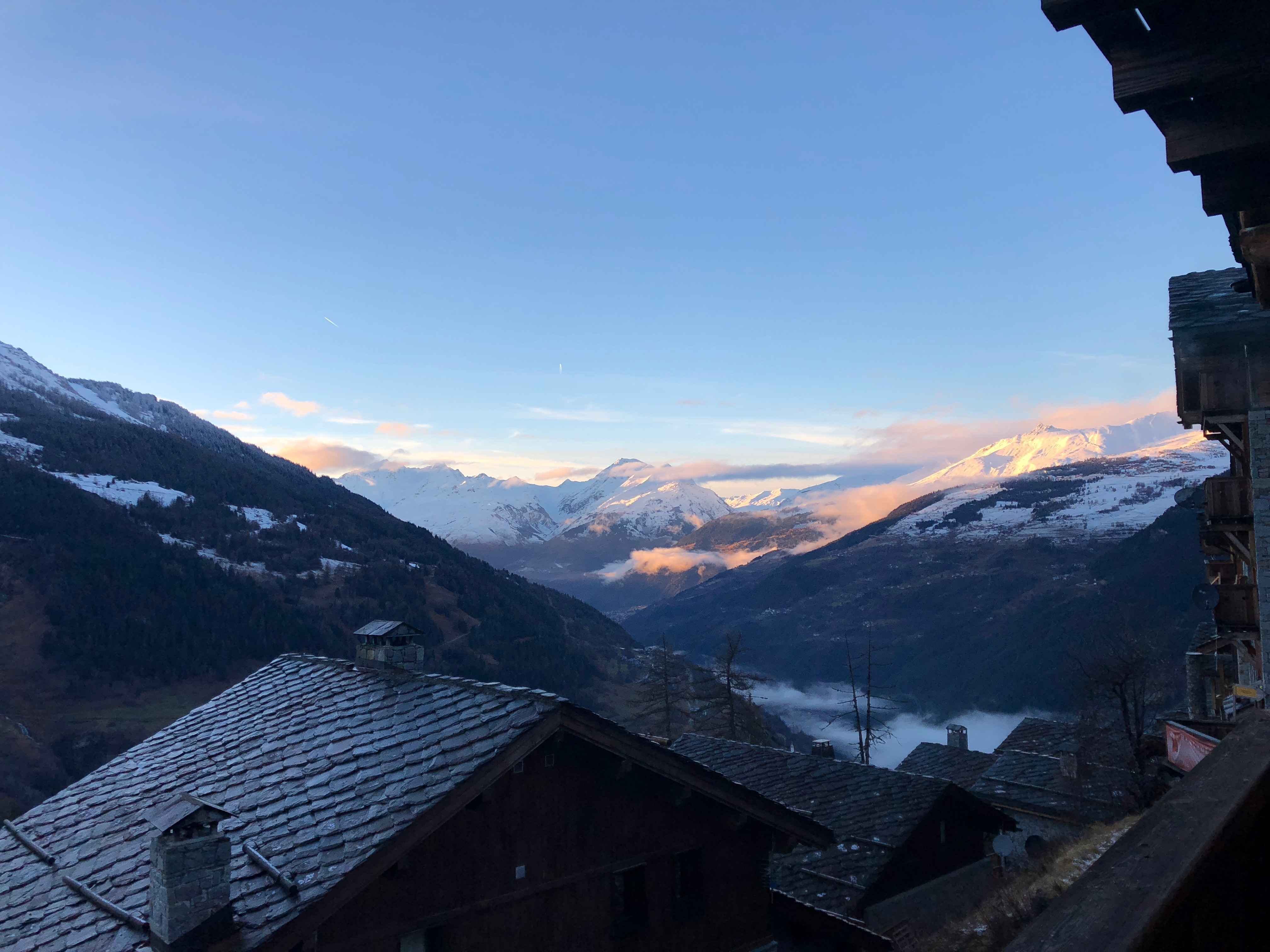
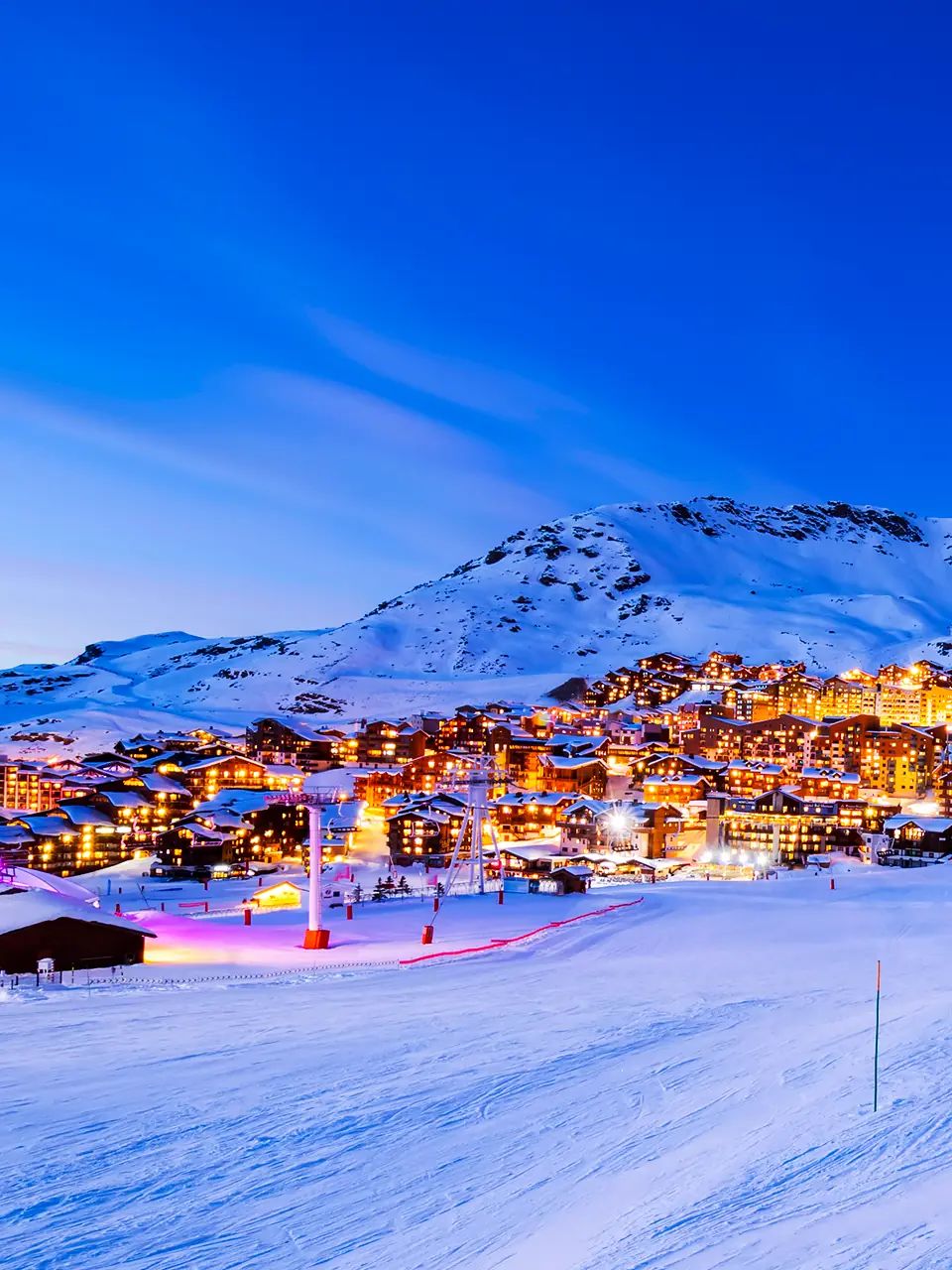
La Rosière is a compact, chalet-style resort strung along a balcony road at 1,850 m, split between the original centre and Les Eucherts about a kilometre away, joined by a floodlit forest path and a free bus. Most of what you can book sits on or beside the snow, so ski-in access is the norm rather than a premium, and the stock leans towards recent apartment residences and catered chalets. Evenings are quiet and the resort makes no attempt to be otherwise. La Thuile is a former mining village on the valley floor, with a stone-built old quarter, a river running through it and the large Planibel complex beside the gondola. Accommodation runs from small family-run hotels to apartments, and much less of it sits on the snow - most people ride the Les Suches gondola up each morning and back down at the end of the day.
Who it suits: for stepping straight onto a piste from the door, La Rosière; for a village with some history to it, La Thuile.
Neither is a late-night resort, so the difference shows up at lunch rather than midnight. La Thuile has the stronger mountain eating by a clear margin: Aosta valley cooking, table service, unhurried afternoons, and it is the reason a good number of people staying in France ski over the col at midday. In the village it runs to trattorias, a couple of bars near the gondola and an early finish. La Rosière keeps a handful of bars around the front de neige and in Les Eucherts, French mountain cooking in the village, and an après scene built around a drink on a sunny terrace rather than a long night out. Anyone who wants volume and noise is better served by the bigger Tarentaise resorts down the valley.
Who it suits: for long Italian lunches, La Thuile; for a quiet week with a sunny terrace at the end of it, La Rosière.
La Rosière makes the easier week for a first-timer, and it comes down to where the easy ground sits. The nursery areas are at village level on gentle, sunny slopes, the greens and blues above them feed back to the same place, and there is no bus or gondola at either end of the day. The resort carries the Famille Plus Montagne label, and both ESF and Evolution 2 run children's classes. La Thuile puts its learning area up at Les Suches instead of in the village, which means a gondola ride each morning with children and kit, though the plateau is wide and quiet once you are up there. The other thing to weigh is the crossing. Someone on their first skis will not be skiing to Italy, so if the rest of the family wants a day over the border, plan on splitting up for it.
Who it suits: for a first week or a young family, La Rosière; La Thuile suits families whose children already link turns on blues.
La Thuile has more to work with. The Franco Berthod, piste number 3, is a World Cup downhill that drops through the trees at a pitch few Italian resorts can match, the Fourclaz chair serves the most interesting off-piste in the area, and the Ruitor glacier above the village is among the better heli-skiing grounds in the Alps. That last point deserves its own line: heli-drops are banned in France, so La Rosière guests who want them ski over the border to reach the landing zones, which makes this one of the few French bases where heli-skiing is on the table at all. La Rosière's own case rests on the off-piste under Mont Valaisan and the open ground either side of the col, both of which want a guide and a look at the bulletin. Its pistes are mild by Tarentaise standards and the black runs are few.
Who it suits: for steep pistes, trees and heli-skiing, La Thuile; La Rosière works for strong skiers who want easy off-piste access without a lift queue.
The two have no airport in common, which makes this one of the rare comparisons where the transfer really can decide it. La Rosière sits about two hours from Chambéry and around two and a half from Geneva, up the Tarentaise through Bourg-Saint-Maurice and then a twenty-minute climb. Bourg-Saint-Maurice has a station on the direct line from Paris and London, so La Rosière is one of the easier resorts in the Alps to reach without a car. La Thuile is roughly an hour and three-quarters from Turin and closer to three hours from Geneva, because that route goes round through the Mont Blanc tunnel. Milan Malpensa is another option at around two and a half hours. Flying from the UK, La Rosière is usually the shorter travel day; flying from further afield, the Italian airports open up.
Who it suits: Geneva, Chambéry or the train point to La Rosière; Turin and Milan point to La Thuile.
WeSki insider tip: whichever side you book, make the crossing early in the week and early in the day. The return leg is the one that strands people - the last lifts back over the col run earlier than the local ones, and in spring the red runs home soften by mid-afternoon. Go on the first clear, still morning rather than saving it for the Friday, and you keep a second attempt in reserve if the wind shuts the link.
The pass covers both, so this is a question about which village you come home to - and, on this pairing more than most, which weather you would rather be stuck in when the link shuts.
Is anyone in the group learning? La Rosière keeps its nursery slopes at village level with easy runs that return to the same spot, so a first-timer skis from the door and finishes where everyone else does. At La Thuile the learning area is a gondola ride above the village, which is workable but adds a piece of admin to every morning.
When in the season are you going? Through January and February there is very little in it, and La Rosière will be the sunnier week. From March, La Thuile's north-facing trees hold their surface while the French side softens by early afternoon.
Which airport works for you? Geneva, Chambéry and the train all point to La Rosière. Turin and Milan point to La Thuile, and the gap is big enough that on a short trip it often settles the question by itself.
Yes, and it is the point of the area. The two resorts are lift-linked over the Col du Petit Saint-Bernard as the Espace San Bernardo, covered by one pass, and the crossing takes around 45 minutes to an hour each way on a chain of drag lifts. You need to be comfortable on red pistes to make the round trip, though the Chardonnet chair runs uphill as well as down, which takes the steepest section out of the outward leg. Set off in the morning and keep an eye on the time for the return.
On any pass of more than a day, yes. The Espace San Bernardo pass covers both resorts and every lift on both sides of the border, and it is the only option for a week - La Rosière sells its local-area pass by the half-day or day only. So if you are booking a week in France, Italy is already paid for, which is worth remembering when you are deciding whether the crossing is worth the effort.
No, and this surprises people who see how close they look on a map. The Col du Petit Saint-Bernard road over the top is closed from roughly November to May, so the only route by car goes the long way round through the Mont Blanc tunnel - about 170 km and three hours or more. In winter the lifts are the connection. It means your choice of base is a real one, and it is worth checking your sat nav before you set off, because some will happily route you over a closed pass.
It depends what you mean by better. La Rosière is the higher village and sits in a snow pocket that brings it more snowfall than its altitude alone would suggest, so it tends to win on quantity. La Thuile faces north and keeps much of its terrain under trees, so it holds a firmer, more consistent surface through sunshine and later into spring. In mid-winter the difference is small. From March onwards, most people find the Italian side skiing better.
La Rosière, fairly clearly. Its nursery areas sit at village level on gentle, south-facing ground, and the green and blue runs above them come back down to the same place, so a first-timer can ski to the door from the first day. La Thuile's learning terrain is wide and quiet but sits above the village at Les Suches, which means taking the gondola up and down each day. Both have English-speaking ski schools, so this is about the shape of the mountain rather than the teaching.
Nobody checks documents on the piste, but you are crossing an international border and it is sensible to carry ID. You will want it anyway if you stop for lunch or need to pay for anything on the other side. Both countries are in the Schengen area, so the crossing itself is informal. The thing to plan for is not paperwork but weather - if the link lifts close while you are over the border, there is no road home the same day.


WeSki is a trading name operated by WeTrip Ltd. All the flights and flight-inclusive holidays on this website are financially protected by the ATOL scheme. When you pay you will be supplied with an ATOL Certificate. Please ask for it and check to ensure that everything you booked (flights, hotels and other services) is listed on it. Please see our booking conditions for further information or for more information about financial protection and the ATOL Certificate go to: www.caa.co.uk.
Package holidays that do not include travel by air are financially protected via ABTOT.
For the latest travel advice from the Foreign & Commonwealth Office visit www.gov.uk/foreign-travel-advice.