
EN
EN
The Grand Massif puts two very different sides of French skiing on one network of 265km of pistes. At the top is Flaine, a ski resort designed by Bauhaus architect Marcel Breuer in the 1960s, set in a high limestone bowl. Below it are three traditional resorts, Les Carroz, Morillon, and Samoëns, which are all lived-in Savoyard villages with weekly markets and a local culture to enjoy. Visitors come to The Grand Massif for a combination of high-altitude skiing and year-round village life, with all four resorts linked by lifts and pistes so you can ski between them.
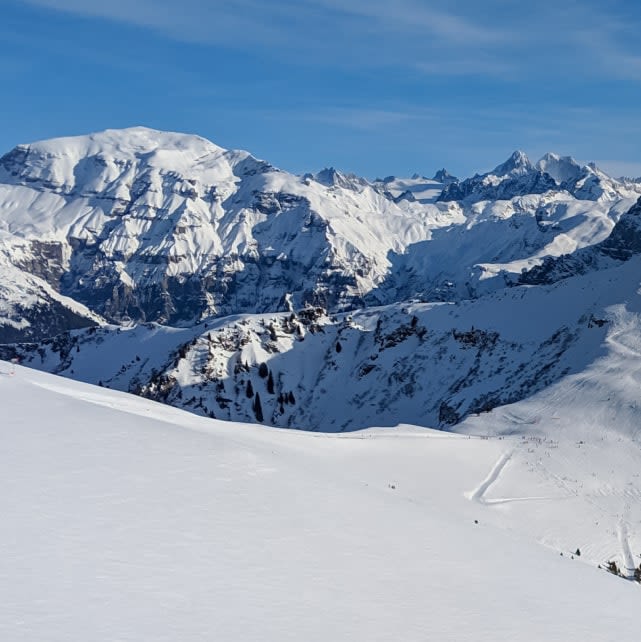
From the Grandes Platières, Flaine's highest point, the pistes drop from nearly 2,500m to around 700m in the valley, with terrain ranging from bare limestone to snowy forest. The Flaine bowl has wide, treeless pistes, and the top lift has views across to Mont Blanc. Lower down, the runs above Les Carroz, Morillon, and Samoëns are tree-lined. Most slopes face north, which helps maintain good snow quality from December into spring.
Thanks to its spread of altitude and terrain, the Grand Massif has pistes for every level. If you're new to skiing, you'll find learning areas in every resort and long, gentle runs through the trees to progress onto. Intermediates have open blues and reds in the Flaine bowl and tree-lined runs down towards the villages. Strong skiers and snowboarders can head for the steep blacks off the Grandes Platières and the off-piste bowls around Flaine, which are best skied with a guide after fresh snow.
Each resort has a different character off the slopes. Flaine is ski-in, ski-out, with a car-free centre lined with bars, restaurants, and outdoor sculptures by Picasso and Dubuffet. Les Carroz, Morillon, and Samoëns are year-round villages with restaurants serving Savoyard dishes such as fondue and tartiflette, and Samoëns has a market every Wednesday morning. Activities beyond skiing include dog sledding, snowshoeing on forest trails, and ice skating.
| Country | France |
| Region | Haute-Savoie, Northern Alps |
| Total piste km | 265 km |
| Altitude | 700 m (Morillon village) - 2,500 m (Tête des Lindars) |
| Linked resorts | 4 Flaine Les Carroz Morillon Samoëns |
| Lifts | 69 |
| Runs | 139 (17 green, 50 blue, 52 red, 20 black) |
| Season | Mid-December - mid-April |
| Ski pass name | Grand Massif ski pass |
| Nearest airports | Geneva (~1 hr 15 min) Lyon (~2 hr 30 min) Chambéry (~2 hr 30 min) |
| Glacier skiing | No |
| WeSki services | Lessons: Flaine Transfers: all 4 resorts (private to all; shared to Flaine) Ski equipment hire: Flaine, Les Carroz, Morillon, Samoëns |
Flaine is a car-free, ski-in, ski-out resort with steep terrain right above the village. The resort sits at 1,600m in a north-facing bowl, with lifts climbing to nearly 2,500m at the Grandes Platières. Most of its terrain is open and above the treeline, spread across the different faces of the bowl. Beginners have several learning areas at the foot of the slopes and wide blues across the bowl to progress onto, and intermediates have long reds and blues on every side. For advanced skiers, the terrain steepens quickly above the village, with marked blacks, open off-piste, and guided routes across the Désert de Platé, a vast limestone plateau facing Mont Blanc.
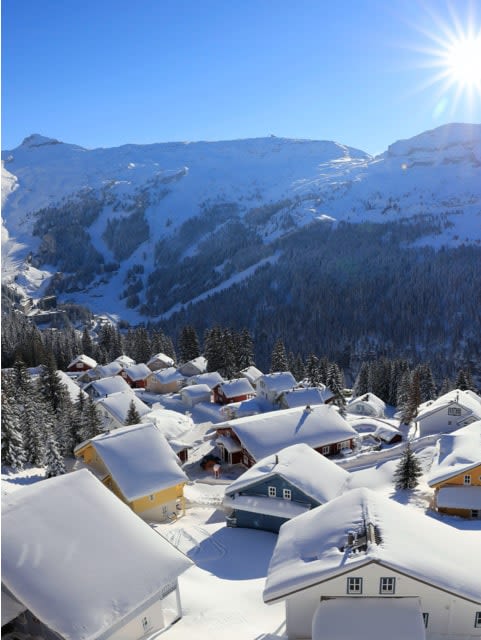
Designed in the 1960s by Bauhaus architect Marcel Breuer, the resort holds France's label for 20th-century architectural heritage. Most of the accommodation you'll find is self-catering, with apartments in the main village, many of them ski-in, ski-out, and newer residences with pools and spas. For a chalet stay, the Hameau de Flaine, a few kilometres from the main village, has Scandinavian-style wooden chalets with a shuttle bus to the slopes. The main village is built on several levels, linked by lifts that run around the clock. At its heart is Flaine Forum, a car-free central square lined with restaurants, bars, shops, and a contemporary art centre. For holiday activities that don't involve your skis, there's ice driving on a circuit in the forest, dog sledding, snowshoeing, and ice skating.
Les Carroz is a Grand Massif village sitting at 1,140m. Most of the local skiing here is centred on tree-lined runs through the forest above the village, with more open terrain as you go higher up. For beginners, Les Carroz has nursery slopes in the village and a learning area with gentle greens at the top of the Kédeuze gondola. Intermediates have plenty of long blue and red runs through the trees, and the open slopes above the forest have enough room for intermediate skiers and snowboarders to pick up speed. Advanced skiers have a handful of black runs off the Tête des Saix chairlift and the Corbalanche freeride area, which is marked but left ungroomed. For freestyle, the Oasis Cool Zone has a snowpark and boardercross.
With the Kédeuze gondola leaving from the village centre, Les Carroz suits skiers who want a traditional village base with quick access to the wider ski area. The centre is built around a square lined with pavement cafés and local shops. Après-ski is relaxed and centred on the bars around the square, many with outdoor terraces for a drink as the lifts close. It's also a good fit for a family ski holiday, holding the Famille Plus label, which is awarded to French resorts that meet set standards for childcare, activities, and services for children of every age. Beyond skiing, there's an alpine coaster, dog sledding, an ice rink, and an outdoor pool.
Morillon's skiing is centred on Les Esserts, the resort's car-free base that’s just above the village at 1,100m. Nursery slopes sit right beside the accommodation, giving beginners the easiest slopes on their doorstep. Most local runs are wide, and gently pitched, which makes them forgiving to learn on, with north-facing slopes that help the snow stay in good condition. Intermediates have long blues and reds through the trees, and in good snow, runs continue all the way down to Morillon village at 700m. Advanced skiers have the Coulouvrier bowl, a steep marked black reached by its own chairlift away from the main pistes.
Morillon village itself is a cluster of old wooden chalets down in the valley, where farming is still part of everyday life. It has a small selection of restaurants, shops, and bars, and evenings are quiet, suited to long Savoyard dinners more than late nights partying. Up at Les Esserts, mountain restaurants serve fondue and other hearty dishes right on the pistes. For a break from skiing, the valley has snowshoe trails along the Giffre river, ski joëring (where a horse pulls you along on skis), sledging runs in the village and at Les Esserts, and frozen waterfalls for ice climbing.
Samoëns' skiing is centred on Samoëns 1600 (the resort's high plateau), which is reached by the Grand Massif Express gondola from the edge of the village. The plateau has a large learning area for beginners, served by its own lifts, including a covered magic carpet. Below it, tree-lined blues and reds run down through the forest to the gondola's base, snow permitting. Higher up, intermediates have open slopes with long views over the Giffre valley, and advanced skiers will find steeper reds and blacks.
Down at 720m, the village has a pedestrianised centre of narrow streets and stone buildings, which are the legacy of the stonemasons who made Samoëns' name. Around the main square are Savoyard restaurants, bakeries, cheese shops, and craft shops, and the Wednesday morning market brings stalls of local cheese, charcuterie, and produce to the streets. Evenings at Samoëns revolve around its charming scene of bars and restaurants, which range from traditional huts and slopeside terraces, to late-night pubs and bistros in the village centre. For time off the slopes, there's an indoor ice rink a short walk from the centre, dog sledding, snowshoe trails, sledging runs, paragliding, and a cinema, plus spas for an afternoon of rest.
As a beginner, you're well looked after in the Grand Massif. Every resort has a dedicated learning area, with ski schools and easy terrain close to the lifts. Once you've found your feet, you have a choice of long green and blue runs through the forest across the ski area, particularly above Les Carroz, Morillon, and Samoëns. These runs are wide and gently pitched, making them ideal for beginners moving on to bigger runs, and the trees along each side mark out the piste clearly and shelter it from the wind.
In Flaine, the learning areas are at the foot of the slopes, right beside the accommodation. Because the resort is ski-in, ski-out, there's no bus or gondola ride to reach them, which makes it easier for beginners when carrying skis or getting to lessons. Samoëns 1600, the plateau above Samoëns, has a large beginner zone served by its own lifts, including a covered magic carpet, a moving walkway that carries you up the slope. Les Carroz has nursery slopes in the village itself and a second learning area at the top of the Kédeuze gondola. In Morillon, the Marvel run is a 5km beginner-friendly run through century-old forest, a good next step after the nursery slopes.
Blue and red runs make up much of the Grand Massif, giving confident skiers plenty of ground to cover. At the top of the area, the Flaine bowl has wide, open pistes above the treeline, and below it, long tree-lined descents run down towards the villages. The two are linked over the ridges above Les Carroz, Morillon, and Samoëns, so intermediates can move between the open bowl and the forest runs on blue and red pistes.
Flaine's pistes spread across every face of the bowl, and because they face in different directions, there's usually a side with good snow. The descents from the Grandes Platières back to the village are long and open, with plenty of room to carve. Les Carroz, Morillon, and Samoëns suit skiers who love tree-lined runs, with blues and reds through the forest right above each village. A highlight for many intermediates is Les Cascades, a 14km run that starts at the Grandes Platières, Flaine's highest point, and winds through a nature reserve past frozen waterfalls to the valley floor. Its length and scenery make it feel like a journey more than a single run, and it's well within reach of a confident intermediate.
Advanced skiers have steep marked runs spread across the Grand Massif, with the biggest choice in Flaine. Its black runs start at the Grandes Platières, the highest point in the resort, and drop steeply back towards the village. Flaine is also the way into the Combe de Gers, a wide, north-facing bowl with a long marked black and its own drag lift. It opens only when avalanche conditions allow. Above Les Carroz, the Tête des Saix chairlift serves a handful of blacks and the Corbalanche freeride area, which is marked but not groomed. Between Morillon and Samoëns, the Coulouvrier bowl has a steep marked black away from the main pistes.
Off-piste, wide bowls around Flaine fill with fresh snow after a storm, and the couloirs off the Tête des Saix and the Désert de Platé above Flaine offer longer routes. Much of this high ground is limestone pavement, with bare rock cut and deep cracks that fresh snow can cover over, so these routes are best skied with a local guide who knows where they are.
For snowboarders, the Grand Massif has a bit of everything, from wide groomed slopes to freeride terrain and parks for every level. The Flaine bowl is wide and open, with natural rolls to play on and off-piste bowls that fill up after fresh snow. Lower down, the tree-lined runs above Les Carroz, Morillon, and Samoëns are a good choice on stormy days, when the trees make it easier to see the shape of the slope. If you're trying snowboarding for the first time, Flaine's beginner areas sit right by the accommodation and are served by easy lifts, including a chairlift, so you can practise without having to master a drag lift first. Some links between sectors have flat stretches, including the start of Les Cascades, so it's worth checking the piste map before setting off.
Flaine is the Grand Massif’s freestyle hub. Its Jam Park stretches for more than a kilometre, with jumps, rails, boxes, a boardercross, and a chill zone with music, and it's known for snow parties with DJs and barbecues. For first features, Flaine has a separate mini-park for beginners, and Morillon has a small park at Les Esserts. Samoëns has a park pitched at intermediate riders, and in Les Carroz, the Oasis Cool Zone adds another snowpark and boardercross.
Most visitors settle into one base for their trip, so a local pass is often all you'll need. If you're staying in Flaine, a Flaine pass covers the whole Flaine bowl. In Les Carroz, Morillon, or Samoëns, a single pass covers the slopes of all three resorts, leaving out Flaine. For skiing across several resorts, the Grand Massif pass covers every lift on the linked network.
All passes are sold for anything from four hours to 14 days, plus a full season. A pass for the length of your stay usually works out cheaper per day than buying single days, while a day pass suits a one-off trip to explore the wider area.
Geneva is the closest airport, around 50 to 75km from the resorts, and Lyon is about 200 to 220km away. From either airport, you can book a shared or private transfer or hire a car. If you're driving, the resorts are reached from the A40 motorway, which runs from Geneva towards Chamonix, leaving at the Cluses exit.
By train, Cluses is the nearest station, 15 to 30km from the resorts, with direct trains from Geneva and seasonal weekend services from Paris. From the station, it's a short bus or taxi ride up to the resorts.
Once you're there, ski buses link Les Carroz, Morillon, and Samoëns with their gondolas, and lifts connect Flaine's different levels, so a car isn't essential during your stay. Flaine's centre is car-free, and the village centres of Les Carroz and Samoëns are easy to get around on foot.
The Grand Massif season usually runs from mid-December to mid-April, with Flaine often opening a little earlier and closing a little later. For the most reliable snow, January to mid-March is the best time to visit. February brings French and UK school holidays, when the slopes and lift queues are at their busiest, so if your dates are flexible, January and early March are worth a look for a chance at quieter slopes.
Come springtime, and you can expect longer, sunnier days and softer snow at the Grand Massif. Flaine's high, north-facing bowl holds its snow best into April, while the lower runs back to Les Carroz, Morillon, and Samoëns depend more on conditions late in the season. Morillon is usually the first resort to close, in early April, so for a late-season trip, Flaine is the safest base.
Yes. The lift network links all four resorts, so a confident intermediate can ski from Samoëns or Morillon over to Flaine and back in a day, with time for lunch on the way. Most visitors treat it as an occasional day out and spend the rest of their trip skiing locally. Check the closing times of the link lifts before you set out, as the return journey takes a while.
The whole area can be crossed on blue runs, so you can make the trip if you're comfortable on blues. Being happy on reds gives you more route options and makes a long crossing day less tiring. If you're still building confidence, there's plenty to enjoy in your own resort, and you can save the crossing for later in your trip.
You'll need a taxi or bus back, and the road journey between Flaine and the valley villages is long, since the road winds down to the valley and back up again. Check the closing times of your return lifts on the piste map or app before you set out, and leave a good margin on the way back.
No, not if you're staying in one resort. A local pass covers either Flaine or the slopes of Les Carroz, Morillon, and Samoëns, which is plenty for most stays. Go for the full pass if you want to ski between Flaine and the other resorts, or if you're based lower down and want to start Les Cascades from the top of Flaine.
Flaine is ski-in, ski-out, with accommodation right on the slopes, and Morillon's Les Esserts base sits directly on the pistes too. Les Carroz has runs back into the village. In good snow, you can also ski down to Morillon village and to the base of the Samoëns gondola, a short bus ride from the village centre.
Yes, occasionally. The highest lifts above Flaine, including the Grandes Platières cable car, can close in strong wind, and some links between resorts may close with them. When that happens, the tree-lined runs around Les Carroz, Morillon, and Samoëns usually stay open, so there's still plenty to ski. Check the live lift status each morning before you plan your route.
The Portes du Soleil, just over the ridge to the north, is larger and straddles the border between France and Switzerland, with many more resorts. The Grand Massif is more compact, built around a high, north-facing bowl with traditional villages below. If you want reliable snow at altitude and an area that's easy to get to know from one base, it's a strong choice.
Yes, especially if you stay in Samoëns or Les Carroz. Both have lived-in village centres with cafés, shops, and restaurants, plus an ice rink for an afternoon on skates. Around the area, you can also go snowshoeing, dog sledding, or ski joëring, and the Wednesday market in Samoëns makes a lively morning out.
Les Carroz is a strong pick, with the Famille Plus label for its childcare, ski school, and activities for every age. Morillon suits young families too, with a car-free base at Les Esserts and a children's ski area right beside the accommodation. Flaine suits families who want everything close by, with ski-in, ski-out apartments and learning areas right beside the accommodation.
Start building your dream ski trip today with our one-stop ski shop - hundreds of resorts, unlimited combinations.




 4.9/5
4.9/5I usually book flights, transfers, hotel, ski rental and lift passes myself but this year used WeSki for a trip to Morzine. It was so much easier. Everything worked perfectly - transfers arrived on time and there was plenty of feedback throughout the whole process giving you confidence the holiday would go smoothly.

A really useful service that is so much easier to use than other 'all-inclusive' sites. It nicely bridges the gap between a travel agent and booking the trip yourself online. I will use WeSki every time I go skiing from now on.
We booked a late minute skiing trip to Morzine through we ski. We looked at booking the trip ourselves but could get anywhere near the price quoted by we ski. The company was excellent and we had no problems at all from start to finish. I would definitely use them to book another weekend skiing trip.
Seamless experience from start to finish. I was spending ages trying to sort out a weekend break and managed to do it with we ski in minutes and for the same price as booking it all up yourself. Flight, transfer and accommodation was all as expected and faultless.

WeSki is a trading name operated by Wetrip Weski Ltd (BR021500). All the flights and flight-inclusive holidays on this website are financially protected by the ATOL scheme. When you pay you will be supplied with an ATOL Certificate. Please ask for it and check to ensure that everything you booked (flights, hotels and other services) is listed on it. Please see our booking conditions for further information or for more information about financial protection and the ATOL Certificate go to: www.caa.co.uk.
Package holidays that do not include travel by air are financially protected via ABTOT.
For the latest travel advice from the Foreign & Commonwealth Office visit www.gov.uk/foreign-travel-advice.