
EN
EN
 Stunning views
 Traditional charm
 Hidden gemStunning viewsTraditional charmHidden gemStunning viewsTraditional charmHidden gemStunning viewsTraditional charmHidden gem
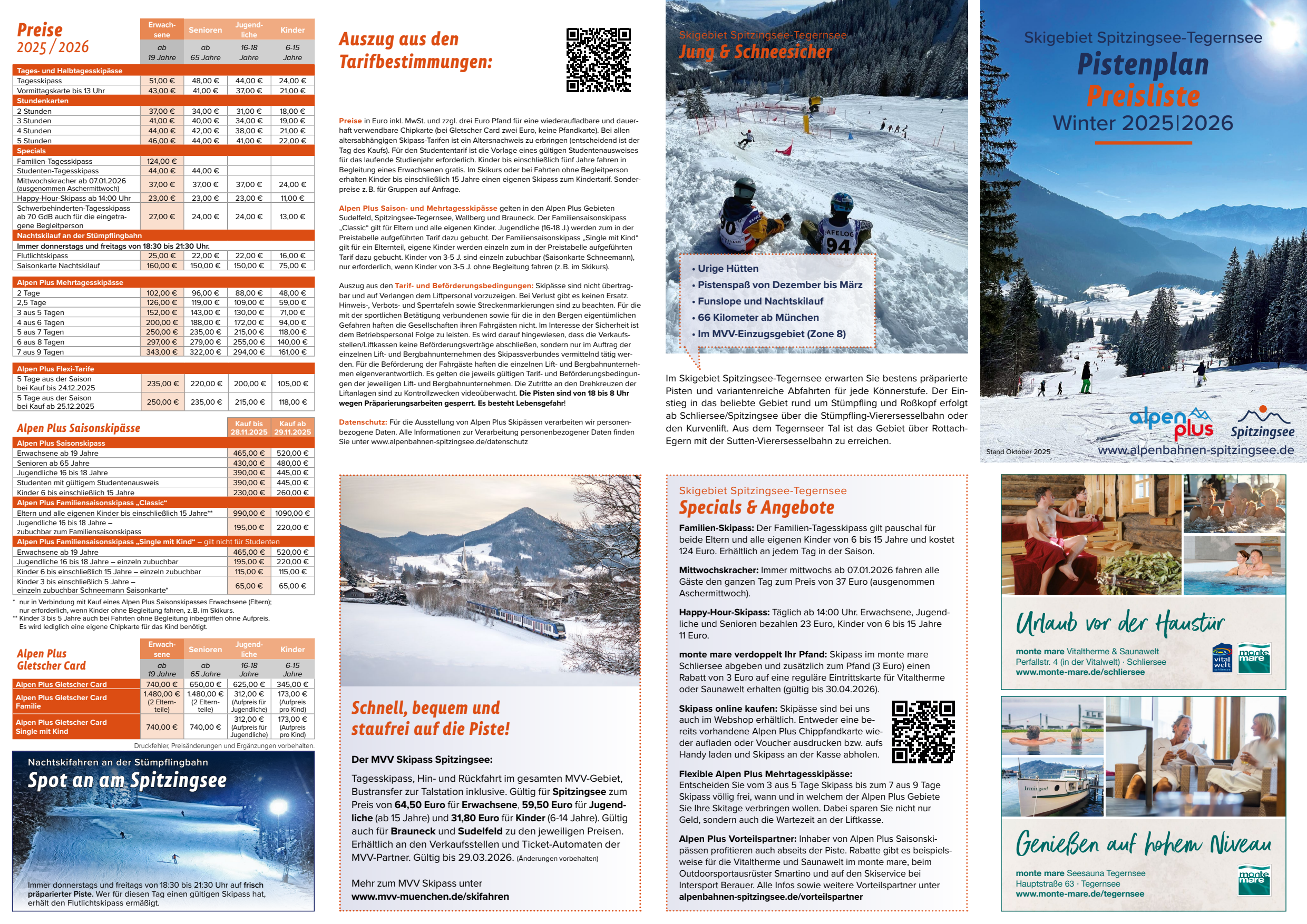
Spitzingsee takes its name from a dark alpine lake that sits at 1,084m in a forested basin of the Bavarian Prealps, about an hour south of Munich. The lake freezes in winter, the surrounding peaks fill with snow, and a small, purpose-built ski area spreads across the slopes above - making this one of the closest proper mountain skiing experiences to Germany's biggest city. The resort has been a fixture of the Munich ski scene for decades, drawing a loyal crowd of locals who treat it as their home mountain. The atmosphere is relaxed, unpretentious, and thoroughly Bavarian.
The Spitzingsee ski resort is compact - 14km of pistes across 9 runs, served by 10 lifts including two high-speed quads. The summit reaches 1,580m with a 600m vertical drop back to the base at 980m. Those numbers are modest, but the terrain punches harder than they suggest: the majority of the runs are graded red or black, with steep, often moguled descents through the trees. The longest run stretches 3.5km, and the 247-acre ski area has an expansive, open feel despite the limited piste count. The season typically runs from early December through late March.
The lake and its surrounding villages - Spitzingsee itself and nearby Schliersee down in the valley - give this area a character that most ski resorts of comparable size simply don't have. Schliersee is a traditional lakeside town with year-round life, good restaurants, and the kind of local identity that comes from being a real community. In winter, the frozen lake, 25km of cross-country trails, and extensive hiking paths provide plenty beyond the ski area. Check out Spitzingsee ski deals to start planning your trip.
Spitzingsee takes its name from a dark alpine lake that sits at 1,084m in a forested basin of the Bavarian Prealps, about an hour south of Munich. The lake freezes in winter, the surrounding peaks fill with snow, and a small, purpose-built ski area spreads across the slopes above - making this one of the closest proper mountain skiing experiences to Germany's biggest city. The resort has been a fixture of the Munich ski scene for decades, drawing a loyal crowd of locals who treat it as their home mountain. The atmosphere is relaxed, unpretentious, and thoroughly Bavarian.
The Spitzingsee ski resort is compact - 14km of pistes across 9 runs, served by 10 lifts including two high-speed quads. The summit reaches 1,580m with a 600m vertical drop back to the base at 980m. Those numbers are modest, but the terrain punches harder than they suggest: the majority of the runs are graded red or black, with steep, often moguled descents through the trees. The longest run stretches 3.5km, and the 247-acre ski area has an expansive, open feel despite the limited piste count. The season typically runs from early December through late March.
The lake and its surrounding villages - Spitzingsee itself and nearby Schliersee down in the valley - give this area a character that most ski resorts of comparable size simply don't have. Schliersee is a traditional lakeside town with year-round life, good restaurants, and the kind of local identity that comes from being a real community. In winter, the frozen lake, 25km of cross-country trails, and extensive hiking paths provide plenty beyond the ski area. Check out Spitzingsee ski deals to start planning your trip.
Skiing at Spitzingsee is concentrated on the Stumpfling and Rosskopf peaks above the lake. The terrain is steep for its altitude, with dense forest lining most of the runs and open bowls higher up. It's a mountain that feels bigger than 14km once you're on it - the varied terrain, natural features, and tree skiing give it more texture than the bare statistics imply.
The ski area is small enough to explore thoroughly in a single day, which makes it well suited to weekends and short breaks rather than full weeks. Keen skiers will likely want to combine it with day trips to nearby Sudelfeld or Brauneck for additional variety. On its own terrain, though, the quality of the skiing - particularly the steep, technical runs - is genuinely impressive for a resort this close to a major city.
Beginners should know upfront that Spitzingsee's terrain skews steep. There's no dedicated nursery slope in the traditional sense, and the gentler blue runs are limited. That said, the lower section near the Stumpfling lift has the most forgiving gradients, and the ski schools use this area to teach first-timers in a manageable, contained setting.
For a first-ever ski experience, a resort with more extensive beginner terrain - such as the Söllereck at Oberstdorf or the Sudelfeld's learning area - would be a more comfortable starting point. But for beginners who've already had a lesson or two and want to progress onto longer, steeper runs, Spitzingsee's compact layout and varied terrain provide a natural challenge without the intimidation of a massive resort.
WeSki insider tip: If you're a nervous beginner, try to visit midweek when the slopes are calm. At weekends the Munich crowd arrives and the steeper runs fill with confident local skiers, which can feel overwhelming on a quiet mountain.
Confident intermediates will find Spitzingsee satisfying despite the limited piste count. The red runs have genuine pitch and variety, winding through forest with natural rollers, compressions, and changes of gradient that keep you engaged. The Stumpfling side has the longer, more flowing descents, while the Rosskopf slopes are shorter but steeper.
The 3.5km longest run from the top of Stumpfling provides a proper sustained descent with enough variety to ski repeatedly without getting bored. On a good snow day, the tree-lined runs hold conditions well and offer a different feel from wide-open alpine skiing - you're constantly reading the terrain and adjusting your line. For intermediates ready to push into steeper territory, the easier black runs are a manageable next step.
WeSki insider tip: The Stumpfling runs catch morning sun and soften up nicely by mid-morning - ideal conditions for intermediates to build confidence on the steeper pitches before they get chopped up later in the day.
Spitzingsee's terrain bias is firmly towards advanced skiers. The black runs on Rosskopf are steep, sustained, and frequently moguled - proper test pieces that demand solid technique and fitness. When left ungroomed after snowfall, these pitches develop challenging bump lines that local skiers actively seek out. The gradient holds up across the whole descent rather than flattening out partway down.
The tree skiing between and beside the marked runs is where Spitzingsee really comes alive for experienced skiers. After fresh snow, the forest terrain holds powder well and provides natural glade skiing that feels much more adventurous than the piste map suggests. The 247-acre ski area boundary is generous relative to the piste count, meaning there's genuinely skiable terrain beyond the groomed runs for those with the confidence and awareness to explore it.
WeSki insider tip: After a snowfall, the trees between the Rosskopf runs hold untracked powder well into the afternoon. The north-facing aspect keeps it cold while the pistes get skied out - bring your fat skis if you've got them.
The steep, varied terrain and terrain park make Spitzingsee a popular spot with Munich's snowboarding community. The natural features - tree runs, rollers, and steep pitches - suit freeriding, while the park provides rails, kickers, and features for freestyle progression. The main drawback for boarders is the number of surface lifts, which can be awkward on a snowboard - the two high-speed quads service the best terrain.
For a small resort, Spitzingsee has a generous amount of accessible off-piste terrain. The forest between runs holds snow well and provides natural glade skiing after fresh snowfall. The open terrain above the treeline on both Stumpfling and Rosskopf gives additional options when conditions allow. Ski touring routes in the surrounding peaks are popular with the local community - the Rotwand (1,884m) is a well-known backcountry objective accessible from the ski area with a short climb.
The Skischule Spitzingsee-Tegernsee runs group and private lessons for adults and children across all ability levels. Given the terrain's advanced bias, instructors are experienced at guiding intermediate skiers onto steeper runs safely. English-speaking instruction can typically be arranged on request. Children's programmes are available, though the limited beginner terrain means younger children may progress to other resorts more comfortably.
The terrain park at Spitzingsee is well-maintained and draws a committed freestyle crowd from Munich at weekends. Features include a progression of kickers, rails, and boxes suited to different levels, with the park crew keeping things fresh through the season. The park's proximity to Munich means it has an active community feel, particularly on sunny weekends when local riders congregate.
Spitzingsee can work for families, but it's best suited to those with children who already have some skiing confidence. The limited beginner terrain means very young or first-time skiers may find the progression steeper than at a dedicated family resort. That said, the ski school runs children's programmes, and the lower Stumpfling slopes provide a manageable learning area for kids who've had a few lessons elsewhere.
Older children and teenagers are well served. The steep runs, tree skiing, and terrain park give progressing young skiers genuine challenges, and the resort's compact size means parents can keep tabs on independent teenagers without difficulty. The frozen lake itself is an attraction - ice skating, winter walks along the shore, and the novelty of the setting all add to the experience for the whole family.
Schliersee, the larger town in the valley below, has more family infrastructure - a swimming pool, restaurants with children's menus, and shops. The drive between Schliersee and the Spitzingsee ski area is about 15 minutes, so basing yourself there gives more options for non-skiing days while keeping the slopes within easy reach.
The Spitzingsee and Schliersee area has a particular appeal that goes beyond skiing - the frozen lake, the forested valleys, and the proximity to the Tegernsee region give rest days and non-skiers genuine options. It's a quieter, more contemplative kind of winter destination, with natural beauty at the centre of everything.
The lake, forest, and mountain setting around Spitzingsee provide a range of winter activities beyond the ski area:
The combination of the lakeside setting, the nearby Tegernsee and Schliersee towns, and Munich's proximity gives non-skiers and rest days more depth than the small ski area alone might suggest.
Dining around Spitzingsee splits between the mountain huts above the lake and the restaurants in Schliersee below. The food is heartily Bavarian - this is a region that takes its Käsespätzle, Schweinebraten, and fresh beer seriously. The mountain huts are a highlight, combining altitude views with the kind of simple, warming food that tastes perfect after a morning on the slopes.
WeSki insider tip: The Obere Firstalm's Kaiserschmarrn - a fluffy, shredded pancake dusted with sugar and served with plum compote - is legendary locally. Get there before 1pm on weekends or you'll be waiting for a table.
Après-ski at Spitzingsee has the character of a local mountain rather than a resort. The mountain huts fill up with skiers as the afternoon wears on, the mood is warm and sociable, and the atmosphere comes from the people rather than the entertainment. On sunny days, the hut terraces above the lake are genuinely special - cold beer, mountain views, and the frozen Spitzingsee glinting below.
The evening scene is quiet. Spitzingsee itself has very few bars, so most visitors head down to Schliersee for dinner and drinks. The pace suits a holiday where you're skiing hard during the day and winding down in the evening rather than looking for a second act after dark. At weekends, the Munich crowd brings more energy, and the mountain huts stay lively longer.
Après-ski spots to know:
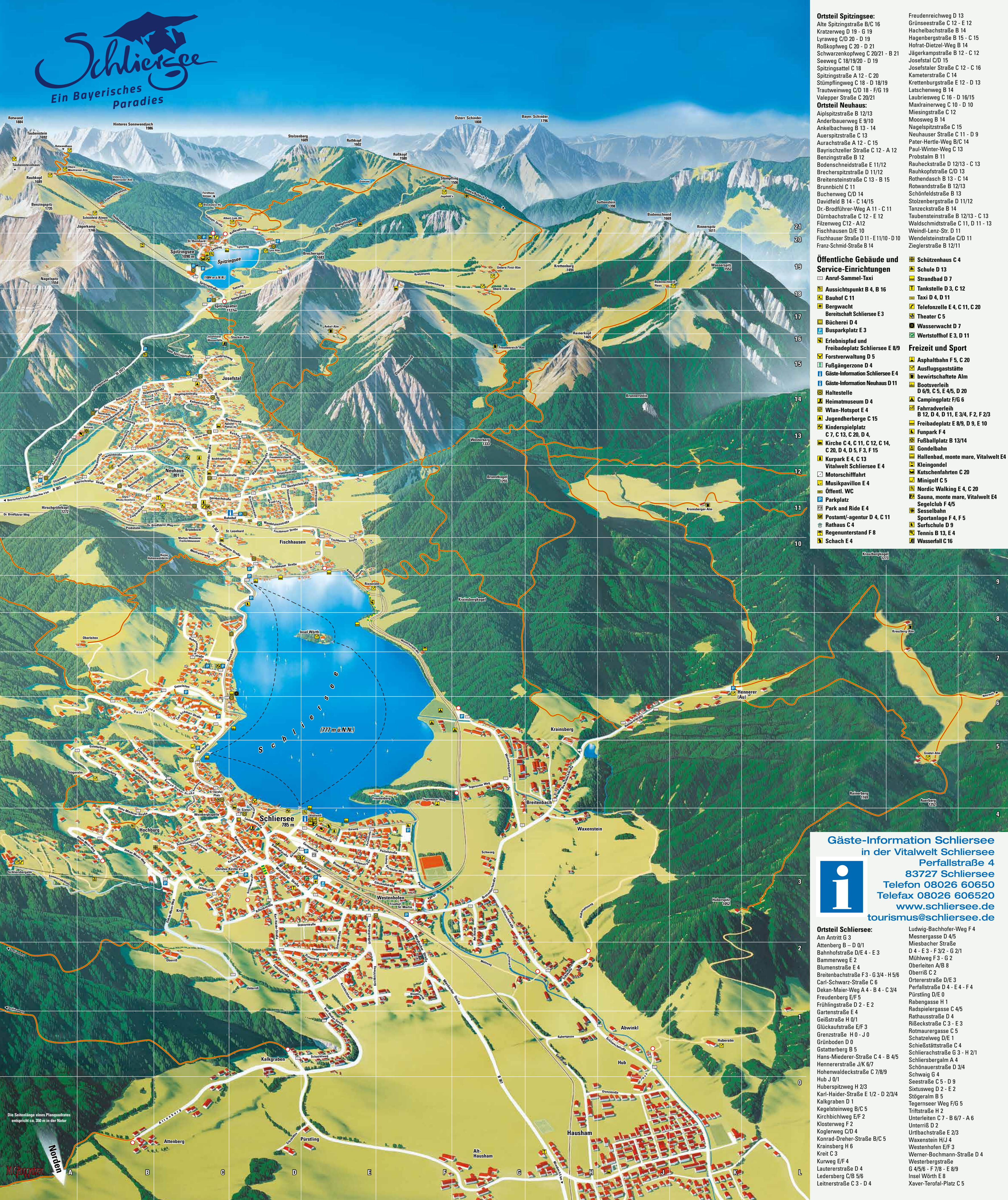
Accommodation splits between the small lakeside settlement at Spitzingsee itself and the larger town of Schliersee in the valley below. At the lake, the Arabella Alpenhotel is the main property - a large spa hotel with direct slope access. A handful of smaller guesthouses and holiday apartments sit nearby. The lakeside location is the most convenient for skiing but has limited dining and evening options.
Schliersee, about 15 minutes down the road, has a wider range of hotels, Pensionen, and apartments at generally lower prices. You'll also find more restaurants, shops, and the Monte Mare spa complex. The trade-off is the daily drive up to the ski area, though the road is well-maintained and the journey is short. For families or non-skiers who want more to do in the evenings, Schliersee is often the better base.
The Spitzingsee ski pass covers all 10 lifts and the terrain park. Combined passes linking Spitzingsee with other nearby Bavarian resorts are sometimes available, extending your options for day trips. Check for family and multi-day pass options when booking your Spitzingsee ski holiday package through WeSki to find the best fit for your trip.
Rental shops operate at the base of the ski area and in Schliersee. The resort's popularity with Munich day-trippers means shops are well-equipped and experienced at fast turnarounds, though booking ahead for weekends is sensible. A full range of ski and snowboard equipment is available, from basic packages to performance gear. Some shops also rent touring equipment for backcountry excursions.
The ski area at Spitzingsee is compact and the base facilities are concentrated in one area, so getting around on the mountain is straightforward. A car is the most practical way to travel between Spitzingsee and Schliersee, and useful for day trips to the Tegernsee, Munich, or neighbouring ski areas. Parking is available at the base of the lifts.
Public transport links exist but are less frequent than at some Bavarian resorts. A bus connects Schliersee station to Spitzingsee, though the timetable is limited. For flexibility, having a car - or arranging a rental through your booking - is the most convenient option. The road up to the lake from Schliersee includes some steep switchbacks, but is well-maintained and gritted in winter.
Spitzingsee is in the Bavarian Prealps, about 80km south of Munich. Munich airport is around 100km away, roughly 90 minutes by car. Schliersee, the nearest town, has a train station with connections from Munich on the Bayerische Oberlandbahn (BOB), taking about an hour. From Schliersee station, a bus or short drive covers the final 10km up to the lake and ski area. Innsbruck airport (around 120km) is an alternative from the south.
WeSki has car rentals from the airport as well as private transfers to Spitzingsee. Add them to your Spitzingsee ski holiday package for seamless door-to-door travel.
It's one of the best options. The ski area is about an hour from Munich by car, the terrain is steep and varied enough to fill two days, and the lakeside setting gives it more atmosphere than a typical day-trip mountain. Midweek visits are noticeably quieter than weekends.
Only partly. The terrain is heavily weighted towards advanced skiing, with most runs graded red or black. There is limited beginner terrain at the base, and the ski school can teach first-timers, but a resort with dedicated nursery slopes and more gentle blue runs would be a more comfortable starting point for complete beginners. Returning beginners who've had a few days on snow will cope better.
Both are Munich's go-to local mountains with steep, advanced-leaning terrain. Brauneck is larger (31km vs 14km), has more lifts, and Lenggries is a bigger base town. Spitzingsee is smaller but has a more dramatic setting around the frozen lake, and its tree skiing is a real strength. Keen skiers often visit both in a single trip - they're about 30 minutes apart by car.
The summit at 1,580m and predominantly north-facing terrain help, but at this altitude in the Bavarian Prealps, natural snow can be variable. Snowmaking covers key runs, and the season typically runs from early December to late March. January and February are the most reliable months. The forested slopes hold snow better than open terrain at similar altitudes.
When conditions allow, the frozen Spitzingsee becomes a natural ice rink and it's a wonderful experience. However, this depends entirely on sustained cold temperatures and sufficient ice thickness - it's not guaranteed every winter and is subject to safety assessments. Check locally on arrival for current conditions.
The frozen lake, 25km of cross-country trails, winter hiking, tobogganing, and the Monte Mare spa in Schliersee provide plenty of off-slope activity. The Tegernsee - one of Bavaria's most beautiful lakes - is just 20 minutes away, and Munich is an hour by car or train. The Markus Wasmeier open-air museum near Schliersee is also worth a visit.
It can work for families with children who already have some skiing experience, but the limited beginner terrain means it's not ideal for first-timers. The lake setting, tobogganing, and Schliersee's swimming pool add family-friendly options beyond skiing. For families with very young or beginner skiers, a resort with more dedicated gentle terrain would be more comfortable.
 4.9/5
4.9/5I usually book flights, transfers, hotel, ski rental and lift passes myself but this year used WeSki for a trip to Morzine. It was so much easier. Everything worked perfectly - transfers arrived on time and there was plenty of feedback throughout the whole process giving you confidence the holiday would go smoothly.

A really useful service that is so much easier to use than other 'all-inclusive' sites. It nicely bridges the gap between a travel agent and booking the trip yourself online. I will use WeSki every time I go skiing from now on.
We booked a late minute skiing trip to Morzine through we ski. We looked at booking the trip ourselves but could get anywhere near the price quoted by we ski. The company was excellent and we had no problems at all from start to finish. I would definitely use them to book another weekend skiing trip.
Seamless experience from start to finish. I was spending ages trying to sort out a weekend break and managed to do it with we ski in minutes and for the same price as booking it all up yourself. Flight, transfer and accommodation was all as expected and faultless.

WeSki is a trading name operated by WeTrip Ltd. All the flights and flight-inclusive holidays on this website are financially protected by the ATOL scheme. When you pay you will be supplied with an ATOL Certificate. Please ask for it and check to ensure that everything you booked (flights, hotels and other services) is listed on it. Please see our booking conditions for further information or for more information about financial protection and the ATOL Certificate go to: www.caa.co.uk.
Package holidays that do not include travel by air are financially protected via ABTOT.
For the latest travel advice from the Foreign & Commonwealth Office visit www.gov.uk/foreign-travel-advice.