
EN
EN
 Great après-ski
 Snow-sure resort
 Off-slope activities
 Foodie paradise
 Luxury resortsGreat après-skiSnow-sure resortOff-slope activitiesFoodie paradiseLuxury resortsGreat après-skiSnow-sure resortOff-slope activitiesFoodie paradiseLuxury resortsGreat après-skiSnow-sure resortOff-slope activitiesFoodie paradiseLuxury resorts
Perched in the Engadin Valley at 1,856m, St. Moritz is where alpine skiing as we know it began. This iconic Swiss resort invented winter tourism in the late 1800s and has hosted two Winter Olympics since. But this isn't a place resting on its history - St. Moritz remains one of the most glamorous and well-equipped ski destinations in the Alps, combining world-class terrain with a cosmopolitan atmosphere that feels genuinely unlike anywhere else.
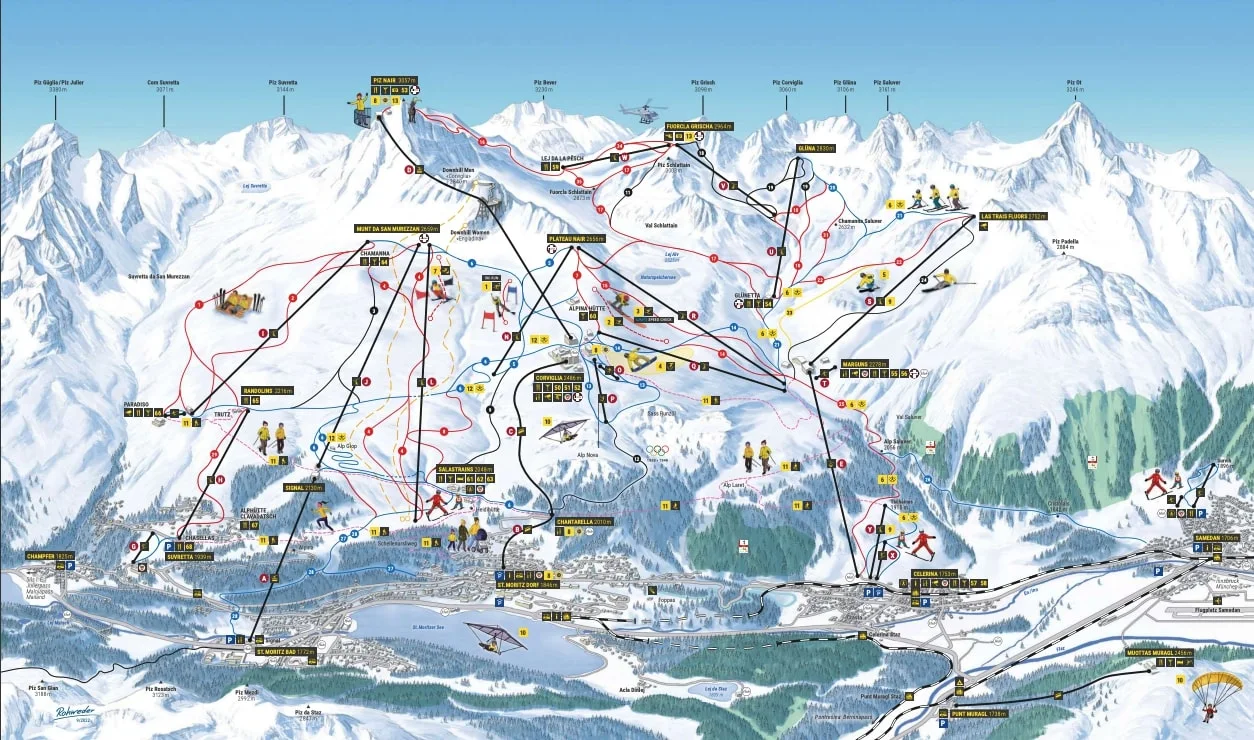
The skiing here spans 350km of pistes across the Engadin St. Moritz ski area, reaching up to 3,303m on the Corvatsch glacier. With 58 lifts connecting multiple ski zones - including Corviglia directly above the town, the glacier terrain of Corvatsch, and the quieter slopes of Diavolezza - there's genuine variety in both terrain and character. The high altitude typically means reliable snow from November through early May, with the glacier offering some of the most consistent conditions in Switzerland.
Beyond the pistes, St. Moritz delivers an experience that matches its reputation. The town itself sits beside a frozen lake that becomes a venue for polo matches, horse racing, and cricket on ice during winter. Designer boutiques line the Via Serlas, Michelin-starred restaurants draw serious foodies, and the après-ski scene ranges from refined champagne bars to more relaxed local haunts. Whether you're here for serious skiing, luxury indulgence, or a bit of both, St. Moritz has the infrastructure and atmosphere to deliver.
Check out St. Moritz ski deals to start planning your trip.
Perched in the Engadin Valley at 1,856m, St. Moritz is where alpine skiing as we know it began. This iconic Swiss resort invented winter tourism in the late 1800s and has hosted two Winter Olympics since. But this isn't a place resting on its history - St. Moritz remains one of the most glamorous and well-equipped ski destinations in the Alps, combining world-class terrain with a cosmopolitan atmosphere that feels genuinely unlike anywhere else.
The skiing here spans 350km of pistes across the Engadin St. Moritz ski area, reaching up to 3,303m on the Corvatsch glacier. With 58 lifts connecting multiple ski zones - including Corviglia directly above the town, the glacier terrain of Corvatsch, and the quieter slopes of Diavolezza - there's genuine variety in both terrain and character. The high altitude typically means reliable snow from November through early May, with the glacier offering some of the most consistent conditions in Switzerland.
Beyond the pistes, St. Moritz delivers an experience that matches its reputation. The town itself sits beside a frozen lake that becomes a venue for polo matches, horse racing, and cricket on ice during winter. Designer boutiques line the Via Serlas, Michelin-starred restaurants draw serious foodies, and the après-ski scene ranges from refined champagne bars to more relaxed local haunts. Whether you're here for serious skiing, luxury indulgence, or a bit of both, St. Moritz has the infrastructure and atmosphere to deliver.
Check out St. Moritz ski deals to start planning your trip.
Skiing in St. Moritz feels expansive and varied. Expect sun-drenched slopes, crisp mountain air, and that unmistakable Engadin light make every run feel special. Three distinct ski areas - Corviglia, Corvatsch, and Diavolezza-Lagalb - each bring their own character, connected by bus rather than lifts but covered on a single pass.
Corviglia, rising directly from town, delivers perfectly groomed runs with panoramic Engadin views. Corvatsch offers glacier skiing up to 3,303m with longer, more challenging descents. Diavolezza is the wild card - smaller but home to the famous glacier descent to Morteratsch, one of the most memorable runs in the Alps.
Beginners will find gentle nursery slopes at Salastrains on the lower Corviglia area, with dedicated learning zones away from faster traffic. The wide, well-groomed blue runs above the treeline provide confidence-building terrain once you've found your feet. Celerina, just down the valley, also has excellent beginner facilities with a relaxed atmosphere. The high altitude means snow quality stays consistent, and the sunny aspects make for pleasant learning conditions.
WeSki insider tip: The Marguns sector above Celerina has some of the gentlest progression terrain - quieter than the main Corviglia area and perfect for building confidence on wider runs.
Intermediates have the run of St. Moritz. Long, sweeping reds and blues cascade down from Corviglia's high points, while the Corvatsch sector delivers some of the best cruising in the region - the 9km descent from Corvatsch middle station to St. Moritz Bad is a highlight. Over on Diavolezza, intermediate-friendly runs combine with stunning glacier scenery. The variety across the three areas means you can spend a week here without repeating yourself, and the high altitude keeps conditions excellent throughout the season.
WeSki insider tip: Take the Hahnensee run from Corvatsch down to St. Moritz Bad - it's a scenic, meandering red that feels like a proper mountain journey rather than just a ski run.
Advanced skiers should head straight for Corvatsch and Diavolezza. Corvatsch's upper slopes deliver consistent steeps and access to serious off-piste terrain, while Diavolezza's legendary glacier descent - the 10km run down to Morteratsch - combines technical skiing with one of the most spectacular settings in the Alps.
Lagalb, the smaller neighbour, packs in steep blacks and untouched powder fields. For those seeking guidance into the backcountry, local guides open up extensive off-piste routes across glaciated terrain that demands respect and proper preparation.
WeSki insider tip: The Diavolezza-Morteratsch glacier descent is a must-do, but book a guide for your first time - the route isn't marked and glacier safety knowledge is essential.
St. Moritz works well for snowboarders, with wide open runs that suit carving and natural features throughout the terrain. The snow parks on Corviglia include rails, boxes, and jumps for different ability levels. Freeriders will appreciate the off-piste access from Corvatsch and the natural terrain variations across the three areas. The modern lift system keeps flat traverses to a minimum.
The off-piste around St. Moritz is world-class but demanding. Corvatsch opens up extensive glaciated terrain, while Diavolezza and Lagalb provide access to powder fields and couloirs that attract serious freeriders. The Morteratsch glacier descent is the signature route, but there's far more to explore with a guide. Avalanche equipment and local knowledge are essential - this is high alpine terrain that rewards preparation and punishes complacency.
Several ski schools operate in St. Moritz, including the well-established Schweizer Skischule St. Moritz. Private and group lessons are available for all ages and abilities, with English-speaking instructors widely available. The resort's international clientele means language is rarely a barrier to quality instruction.
Corviglia hosts St. Moritz's main terrain parks, with features ranging from beginner-friendly boxes to more challenging rails and jumps for experienced freestylers. The park setup changes through the season based on conditions. Corvatsch occasionally offers additional freestyle features on its higher slopes.
St. Moritz caters well to families, though it's worth noting this is a resort that leans upmarket. Young children benefit from dedicated learning areas at Salastrains and Celerina, with ski schools offering structured kids' programmes that keep things fun. Snow kindergartens provide childcare for non-skiing little ones. Older children and teenagers will find enough terrain variety to stay challenged, plus the terrain parks on Corviglia and activities like the Cresta toboggan run offer excitement beyond standard skiing.
Parents can take advantage of the excellent restaurants both on and off the mountain, with many offering family-friendly menus alongside more refined options. The frozen lake activities - from watching the White Turf horse races to simply exploring the ice - provide memorable experiences the whole family can share. Hotels in the area often have pools and wellness facilities, giving everyone options for rest days.
St. Moritz is a complete alpine destination where time away from skiing feels equally rewarding. The frozen lake, designer shopping, world-class dining, and extraordinary range of winter activities mean rest days and non-skiers have just as much to experience. A combination of natural beauty, sporting heritage, and cosmopolitan atmosphere makes St. Moritz genuinely unique among ski resorts.
Beyond skiing and snowboarding, St. Moritz delivers an exceptional range of winter activities that make the most of its legendary setting:
For days when you want to give your legs a rest, St. Moritz excels with off-slope diversions that match its sophisticated reputation:
St. Moritz punches well above its weight for dining, with more Michelin stars per capita than almost anywhere in the Alps. The restaurant scene spans cosy mountain huts to refined gastronomy, with Swiss classics sitting alongside international cuisine. Whether you're after a slope-side lunch or a special evening out, the quality is consistently impressive.
WeSki insider tip: Try Engadin walnut tart (Engadiner Nusstorte) at Hauser - this local specialty combines caramelised walnuts in a buttery pastry that's become synonymous with the region.
St. Moritz après-ski is more refined than raucous. This isn't a resort for table-dancing in ski boots - instead, you'll find champagne bars, stylish lounges, and venues where the crowd is as polished as the drinks list. That said, things do warm up as the evening progresses, and there are livelier spots for those who want them. The international crowd brings a cosmopolitan energy that sets the tone.
On the mountain, the terraces at Corviglia fill up in the late afternoon sun, while in town, the bars along Via Maistra and around the palace hotels draw an elegant crowd. Later in the evening, a handful of clubs keep things going for those with stamina. It's understated but unmistakably special.
Après-ski spots to know:
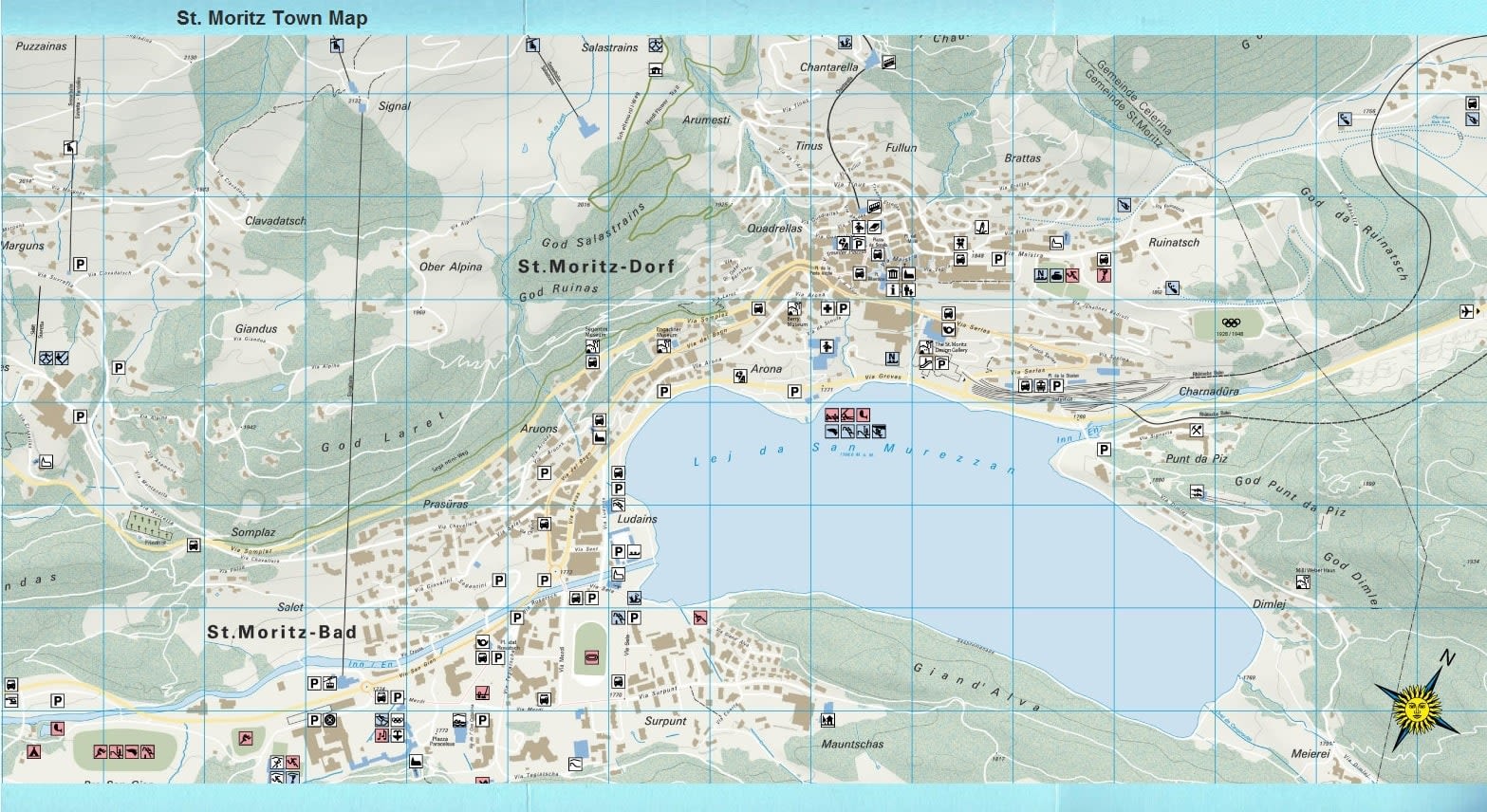
Accommodation in St. Moritz reflects the resort's upmarket positioning, with grand palace hotels, boutique properties, and comfortable mid-range options. St. Moritz Dorf (the upper village) puts you closest to the Corviglia funicular and the smartest addresses, while St. Moritz Bad (the lower village) sits nearer to the Corvatsch bus connections and the Signal cable car. The two areas are connected by local bus and a pleasant 15-minute walk. Celerina and Pontresina offer quieter alternatives with excellent lift access of their own.
The Engadin St. Moritz ski pass covers all three ski areas - Corviglia, Corvatsch, and Diavolezza-Lagalb - plus the free ski buses connecting them. This single pass gives you access to the full 350km of pistes and 59 lifts.
Check for family and multi-day pass options when booking your St. Moritz ski holiday through WeSki to find the best fit for your trip.
Several equipment rental shops operate throughout St. Moritz Dorf, St. Moritz Bad, and at the base of the main lifts. You'll find everything from standard rental packages to high-performance demo skis and specialist touring equipment. Booking in advance during peak weeks is advisable. Most shops offer overnight storage, and some provide delivery to your accommodation.
Getting around St. Moritz is straightforward thanks to the free ski bus network. Regular services connect St. Moritz Dorf and Bad with the Corviglia, Corvatsch, and Diavolezza lift stations, running throughout the day and into the evening. The buses also link to Celerina, Pontresina, and other Engadin villages. Within the main town areas, most hotels, restaurants, and shops are within walking distance. Taxis are available but rarely necessary unless you're heading somewhere off the beaten track.
St. Moritz is accessible from several airports. Zurich (around 200km) is the most common choice for UK travellers, with good road and rail connections through the mountains. Milan Malpensa (around 180km) offers a scenic alternative, particularly if you want to travel via the Bernina Express railway. Innsbruck and Friedrichshafen are also options. The Engadin Valley's location means transfers take longer than some resorts, but the journey through the Swiss Alps is spectacular.
WeSki offers car rentals from the airport as well as private and shared transfers to St. Moritz. Add them to your St. Moritz ski holiday package for seamless door-to-door travel.
St. Moritz has decent beginner facilities, particularly at Salastrains on Corviglia and at nearby Celerina. The dedicated learning areas keep novices away from faster traffic, and there are gentle blues to progress onto. However, this isn't a resort designed primarily around beginners - the terrain and atmosphere lean more towards intermediate and advanced skiers. First-timers can learn here, but resorts like Zermatt or Grindelwald might be more beginner-focused choices in Switzerland.
Both are world-famous Swiss resorts, but they offer different experiences. Zermatt has more extensive lift-linked terrain and the iconic Matterhorn views, while St. Moritz spreads across separate ski areas connected by bus. St. Moritz has a more cosmopolitan town atmosphere with frozen lake activities and a stronger luxury shopping scene. Zermatt is car-free with a village feel. Both have excellent snow reliability and high-altitude terrain - it comes down to whether you prefer concentrated ski convenience or variety and sophistication.
St. Moritz sits at the premium end of ski resort pricing. Accommodation, dining, and après-ski tend to cost more than in many Alpine resorts. That said, you can find mid-range options if you look, and the quality across the board is very high. If budget is a primary concern, St. Moritz may not be the best fit, but for those willing to invest, the experience justifies the cost.
The season runs from late November to early May, with the high altitude (base at 1,856m, summit at 3,303m) ensuring reliable snow throughout. January and February typically offer the deepest snow cover, while March and April bring longer days and spring skiing conditions on the glaciers. The Corvatsch and Diavolezza glaciers hold snow well even when lower resorts struggle.
The Cresta Run is a natural ice skeleton track built in 1884, running from St. Moritz to Celerina. It's the birthplace of skeleton racing and remains the most famous toboggan run in the world. Experienced riders descend headfirst at speeds approaching 130km/h. Guest rides are available for those who want to try it - genuinely one of the most unique winter sport experiences anywhere in the Alps.
Corviglia, Corvatsch, and Diavolezza-Lagalb are separate ski areas not connected by lifts. Free ski buses run regularly between them, typically taking 15-30 minutes depending on the route. A single ski pass covers all three areas. Most visitors base themselves in St. Moritz and ski a different area each day, though many find enough terrain on Corviglia and Corvatsch alone for a week's skiing.


 4.9/5
4.9/5I usually book flights, transfers, hotel, ski rental and lift passes myself but this year used WeSki for a trip to Morzine. It was so much easier. Everything worked perfectly - transfers arrived on time and there was plenty of feedback throughout the whole process giving you confidence the holiday would go smoothly.

A really useful service that is so much easier to use than other 'all-inclusive' sites. It nicely bridges the gap between a travel agent and booking the trip yourself online. I will use WeSki every time I go skiing from now on.
We booked a late minute skiing trip to Morzine through we ski. We looked at booking the trip ourselves but could get anywhere near the price quoted by we ski. The company was excellent and we had no problems at all from start to finish. I would definitely use them to book another weekend skiing trip.
Seamless experience from start to finish. I was spending ages trying to sort out a weekend break and managed to do it with we ski in minutes and for the same price as booking it all up yourself. Flight, transfer and accommodation was all as expected and faultless.

WeSki is a trading name operated by WeTrip Ltd. All the flights and flight-inclusive holidays on this website are financially protected by the ATOL scheme. When you pay you will be supplied with an ATOL Certificate. Please ask for it and check to ensure that everything you booked (flights, hotels and other services) is listed on it. Please see our booking conditions for further information or for more information about financial protection and the ATOL Certificate go to: www.caa.co.uk.
Package holidays that do not include travel by air are financially protected via ABTOT.
For the latest travel advice from the Foreign & Commonwealth Office visit www.gov.uk/foreign-travel-advice.