
EN
EN
 Snow-sure resort
 Hidden gem
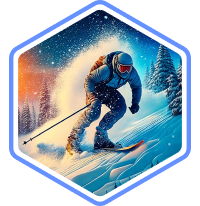 Off-piste skiingSnow-sure resortHidden gemOff-piste skiingSnow-sure resortHidden gemOff-piste skiingSnow-sure resortHidden gemOff-piste skiing
Brighton is one of Utah's oldest ski resorts, operating since 1936 at the top of Big Cottonwood Canyon in the Wasatch Range of the United States. It was the first resort in Utah to welcome snowboarders, and that open-minded, laid-back character has stayed with it. The mountain has a strong local following from Salt Lake City, and the atmosphere on the hill is friendly, unpretentious, and centred on the skiing itself. Accommodation sits close to the slopes: private chalets and holiday homes range from cosy cabins to spacious, well-appointed properties with full kitchens, fireplaces, and hot tubs, and several offer ski-in/ski-out access right by the lifts.
The resort covers 1,050 acres across two distinct sides. Majestic is the larger, tree-lined half, with gentle greens and flowing blues for beginners and intermediates, plus well-spaced glades for more confident skiers working the trees. Millicent is steeper and more open, with wide powder bowls, short chutes, and exposed ridgeline terrain that draws advanced and expert riders. Five terrain parks add a strong freestyle dimension, and night skiing on over 200 acres runs four nights a week. Brighton averages around 12.5m of the famously dry, light Wasatch powder each season, and the north-facing terrain keeps it in good shape. The season typically runs from mid-November through to mid-April.
Beyond the pistes, Brighton has an open boundary policy giving backcountry access directly from the lifts, and the Nordic Center just past the resort entrance offers snowshoeing and cross-country trails through the canyon. On the mountain itself, three base lodges handle dining and après, from a mid-mountain stop for smash burgers and beers between runs to a slopeside A-frame with a sit-down restaurant and upstairs bar. Salt Lake City is under 40 minutes down the canyon, with UTA ski buses running through the season, so you don't need a car to reach the slopes. Serious Wasatch snow, a straightforward mountain, and a major city close by make Brighton a ski holiday that covers a lot of ground.
Check out Brighton ski deals to start planning your trip.
Brighton is one of Utah's oldest ski resorts, operating since 1936 at the top of Big Cottonwood Canyon in the Wasatch Range of the United States. It was the first resort in Utah to welcome snowboarders, and that open-minded, laid-back character has stayed with it. The mountain has a strong local following from Salt Lake City, and the atmosphere on the hill is friendly, unpretentious, and centred on the skiing itself. Accommodation sits close to the slopes: private chalets and holiday homes range from cosy cabins to spacious, well-appointed properties with full kitchens, fireplaces, and hot tubs, and several offer ski-in/ski-out access right by the lifts.
The resort covers 1,050 acres across two distinct sides. Majestic is the larger, tree-lined half, with gentle greens and flowing blues for beginners and intermediates, plus well-spaced glades for more confident skiers working the trees. Millicent is steeper and more open, with wide powder bowls, short chutes, and exposed ridgeline terrain that draws advanced and expert riders. Five terrain parks add a strong freestyle dimension, and night skiing on over 200 acres runs four nights a week. Brighton averages around 12.5m of the famously dry, light Wasatch powder each season, and the north-facing terrain keeps it in good shape. The season typically runs from mid-November through to mid-April.
Beyond the pistes, Brighton has an open boundary policy giving backcountry access directly from the lifts, and the Nordic Center just past the resort entrance offers snowshoeing and cross-country trails through the canyon. On the mountain itself, three base lodges handle dining and après, from a mid-mountain stop for smash burgers and beers between runs to a slopeside A-frame with a sit-down restaurant and upstairs bar. Salt Lake City is under 40 minutes down the canyon, with UTA ski buses running through the season, so you don't need a car to reach the slopes. Serious Wasatch snow, a straightforward mountain, and a major city close by make Brighton a ski holiday that covers a lot of ground.
Check out Brighton ski deals to start planning your trip.
Brighton's skiing spreads across two sides of the mountain, each with a distinct feel. Majestic is the tree-lined half, with wide, groomed runs winding through evergreen forest and well-spaced glades opening up between the trails. It's where most beginners and intermediates spend their time, with long, flowing blues off the Great Western Express and gentle greens near the Explorer lift at the base. The terrain shifts when you cross to the Millicent side, with steeper pistes and wide powder bowls up top, short chutes, and exposed alpine terrain above the treeline. Across both sides, the Wasatch powder is the constant. Brighton sits at the head of Big Cottonwood Canyon, where storms pick up extra moisture off the Great Salt Lake before they reach the mountains, and the resort averages around 12.5m of snowfall a season. The north-facing terrain holds its quality well between storms.
Seven lifts serve the mountain, including the Crest 6 Express (Utah's fastest chairlift) and three high-speed quads, so the main routes move efficiently. The layout is straightforward: all lifts feed back to a central base area, and the traverses between the Majestic and Millicent sides are marked. Night skiing covers over 200 acres across four to five lifts, running four evenings a week, one of the largest night-skiing setups in the western US.
Important for international visitors: the North American trail rating system differs from European colour codes. Green circles mark beginner runs, similar to European greens and easy blues. Blue squares cover intermediate terrain, though they span a wider range than European blues and some can feel more demanding than expected. Black diamonds indicate advanced runs, and double black diamonds are expert only, often featuring steeps, trees, and chutes. There's no direct equivalent to the European red, so a blue square can occasionally catch you out.
Brighton has a strong reputation as a learning mountain, and the beginner terrain reflects that. The base area around the Explorer lift and magic carpet serves a cluster of gentle green runs with wide, forgiving gradients and a relaxed pace. A dedicated learning zone makes those very first turns feel manageable, and the slopes are separated from the main mountain traffic.
As skills develop, Brighton's green runs extend further across the mountain, giving beginners a real sense of exploration rather than being confined to one small area. The Majestic lift opens up winding, tree-lined groomers like Hawkeye, Mary Back, and Lost Maid, and the Great Western Express accesses longer green and blue terrain higher up with views across the canyon. Brighton is also one of the few resorts where top-to-bottom green runs are available, so you can ski from the upper mountain back to the base without hitting anything steep.
WeSki insider tip: Every chairlift at Brighton has a green or blue run accessible from the top, so you can ride any lift on the mountain without worrying about getting stranded on something too difficult. It's worth knowing early on, because it opens up the whole mountain sooner than you might expect.
Intermediates have plenty of ground to cover at Brighton, with blue runs accessible off every lift on the mountain. The Crest Express opens up the widest selection, including Pacific Highway, a long, wide groomer that runs smooth from top to base and is one of the most popular runs on the mountain. Off the Snake Creek Express, Sunshine is a standout: around 1,400m long with rolling terrain, open views across to Heber Valley, and a gentle gradient that suits confident intermediates building up to longer descents. The Great Western Express offers the most vertical on the mountain, with Elk Park, Golden Needle, and Thunderhead giving variety through a mix of open faces and tree-lined sections.
Confident intermediates can push into the steeper blues on the Millicent side, where the pitch steps up and the terrain feels more exposed. Between the groomed runs, intermediate-friendly glades border the trails off most lifts, and the dry Wasatch snow makes Brighton a forgiving place to start experimenting in the trees.
WeSki insider tip: The mellow glades off Hawkeye and Scout on the Majestic side are a great first step into tree skiing. The gradient is gentle, the trees are well spaced, and you can dip in and out of the forest alongside the groomed run without committing to a full tree line.
Brighton's advanced terrain is concentrated on the Millicent side, where the Milly Express reaches steep, north-facing bowls, chutes, and open alpine terrain above the treeline. Milly Bowl is the centrepiece, a wide powder field with short chutes and drop-offs that you can lap all day. Below it, the Spaghetti area and Captain Hook trees offer tight, technical tree skiing where precise line choice matters. Snow-covered boulders are scattered throughout, creating natural launch points for anyone looking to catch air between the trees. Over on the Great Western Express, steeper chutes and tree runs extend the options on the far side of the mountain.
For those willing to hike, Pioneer Ridge is reached from the top of the Crest Express via a short bootpack of around 90m vertical. It's in-bounds terrain with plenty of choice: drop into the tree sections partway up, or carry on along the ridge to pick from a spread of chutes and open lines. Brighton's open boundary also puts lift-accessed backcountry within reach beyond the ridge, though that terrain is unpatrolled and uncontrolled, so proper equipment and avalanche knowledge are essential.
WeSki insider tip: Pioneer Ridge is a short enough hike that you can fit two or three laps into a morning. The bootpack from the top of Crest Express is usually well-trodden, and once you're on the ridge you can pick a different line each time, from open chutes to sheltered tree sections, all feeding back into the resort.
Brighton has one of the deepest snowboard cultures in the US. It was among the first in Utah to welcome riders in the late 1980s, and that early embrace shaped the mountain's identity. Pro riders like JP Walker, Bryan Iguchi, and Jeremy Jones have all called Brighton home terrain, and USA Today's readers voted it the best snowboarding destination in the country in 2025.
The mountain’s natural terrain is a big part of the draw. Millicent is loaded with snow-covered boulders, pillows, cliffs, and natural drops that you can hit between and alongside marked runs. Tree riding is available across both sides, from mellow glades on Majestic to tighter, steep lines on Milly. The dry Wasatch powder suits boarding particularly well: it floats under a board, holds speed through trees, and makes landing natural features forgiving.
For freestyle sessions, five terrain parks span beginner to advanced. Majestic hosts the longest array of features, rotated regularly through the season, Candyland is a more playful, flow-focused setup, and My-Oh-My is the advanced option. A 4.5m-deep, 107m-long superpipe sits alongside the Majestic parks.
Brighton's in-bounds off-piste is strong. Gladed areas between marked trails hold pockets of untracked snow, and the steep bowl terrain off the Milly Express provides backcountry-feel descents within the resort boundary. The dry Wasatch powder sits well in the trees, and open alpine terrain on the upper Millicent side gives you wide, ungroomed faces to work with after a storm.
Beyond the boundary, Brighton has six backcountry access gates at the top of the Milly, Crest, and Great Western lifts, operating an open-gate policy that doesn't restrict access based on avalanche conditions. Transceiver check stations at each gate are provided by the Utah Avalanche Center, and gates close at 3pm, an hour before the lifts. All backcountry terrain is unpatrolled and not avalanche-controlled, so proper equipment, avalanche awareness, and ideally a local guide are essential.
Brighton's Snowsports School runs group and private lessons for all ages and abilities, with programmes for both skiing and snowboarding. Group lessons cover beginner through advanced levels, and private sessions can be tailored to specific goals, whether that's building confidence on groomers, working on technique in the trees, or getting comfortable in the terrain parks.
Beyond standard lessons, Brighton runs a Women's Workshop with all-female instructors in a supportive group setting, focused on exploring more challenging terrain and conditions. Adaptive private lessons are available for skiers and snowboarders with disabilities. Night skiing lessons are also available for ages eight and up, a useful option if you want extra slope time outside peak hours.
Brighton runs five terrain parks across the mountain, with features rotating weekly to keep the setup fresh. Majestic hosts the main lineup and the longest array of features, with jumps, rails, boxes, transitions, and wall rides spread across a full progression from beginner to advanced. My-Oh-My off the Crest Express is for experienced riders, with large kickers and a more technical rail garden. Candyland, also off the Crest, takes a more playful approach, with mellow transitions and flowy features that suit intermediates. Last but not least, Pee-Wee Park near the base gives first-timers a low-pressure introduction to freestyle. A 4.5m-deep, 107m-long superpipe sits alongside the Majestic parks, and all park areas are lit for night sessions.
Brighton has been Salt Lake City's go-to family mountain for generations, and it shows in the way the resort is set up. The layout is compact and easy to navigate: all lifts feed back to a central base, so regrouping is simple, and every chairlift on the mountain has a green or blue run from the top, which lets families of different abilities ride the same lift and meet at the bottom. Accommodation close to the slopes includes slopeside chalets and holiday homes with kitchens, fireplaces, and hot tubs, so you can stay on the mountain and keep mornings straightforward.
Private lessons start from age three, and the Little Rippers programme (ages four to six) introduces younger children to skiing in a dedicated learning area with magic carpets and gentle terrain, separated from faster traffic. From age seven, Young Shredders group lessons build progression through the mountain, and the Cruisers multi-week programme suits families staying for longer. As children grow more confident, the Majestic groomers like Hawkeye, Mary Back, and Lost Maid give experienced young skiers room to explore through the trees, and the Pee-Wee terrain park near the base is a natural draw for anyone wanting to try their first jumps and boxes. Night skiing runs four evenings a week across 24 runs and is well worth doing as a family: the parks and groomers are all lit, and it adds a different energy to the day.
On the mountain, several base lodges serve casual, family-friendly food through the day, from the Alpine Rose cafeteria to Blind Miner Coffee for hot chocolates and snacks between runs. Most accommodation at Brighton comes with a full kitchen, so self-catering is a practical option for families. The nearest supermarkets are about 30 minutes down the road, and it's worth stocking up on the way in. Grocery delivery services also run to canyon properties if you'd rather not make the trip. For a day off the slopes, Salt Lake City is under 40 minutes away by car or UTA ski bus, with museums, restaurants, and attractions like the Natural History Museum and Temple Square that work well as a family outing. Back on the mountain, ski-in/ski-out accommodation, on-mountain dining, and night skiing running until 9pm give most families more than enough to fill the week.
Brighton itself is a mountain first and foremost, so while there's no resort village to explore, it's low-key vibe tends to be part of the honest appeal. That said, Brighton sits at the top of Big Cottonwood Canyon with Salt Lake City under 40 minutes away, and off-slope options nearby range from on-mountain winter activities to a full city's worth of restaurants, museums, and nightlife down the canyon. Here's what's worth building into your week.
On-mountain dining at Brighton covers the essentials across several base and mid-mountain stops, and Salt Lake City's restaurant scene is under 40 minutes down the canyon for evenings out. The city's food culture has grown significantly in recent years, with some excellent restaurants worth booking ahead for, particularly at weekends.
WeSki insider tip: Try a pastrami burger while you're in Utah. It's a regional speciality you won't find in many other states: a beef burger stacked with shaved pastrami, and it's become something of a signature dish across Salt Lake City. Most burger spots and diners in the area serve their own version, and it's the kind of local food discovery that sticks with you.
Après-ski at Brighton centres on Molly Green's, the slopeside A-frame at the base that fills up as the lifts wind down. Cold beers, pub food, a fireplace, and a friendly end-of-day atmosphere set the tone. Silver Fork Lodge, three miles down the canyon, adds a more relaxed option for a post-ski drink or early dinner in a rustic mountain setting.
For a proper evening out, Salt Lake City's bar and brewery scene is under 40 minutes down Big Cottonwood Canyon. The UTA ski bus (Route 972) runs from Brighton to Midvale Fort Union Station, where you can connect to the TRAX light rail into downtown SLC, so an evening in the city is doable without a car. The last bus down from Brighton departs around 8:20pm to accommodate night skiers.
Accommodation at Brighton is small-scale and well-curated, with everything sitting close to the slopes. The Brighton Lodge at the base of the Crest lift offers straightforward, slopeside rooms with ski-in/ski-out access, an outdoor pool, and a hot tub. Beyond the lodge, private chalets and holiday homes range from intimate cabins to spacious, well-appointed properties sleeping larger groups, many with full kitchens, fireplaces, and hot tubs. Several sit mountainside with ski-in/ski-out access just steps from the lifts.
Self-catering works well here, and having a kitchen takes the pressure off relying on on-mountain dining for every meal. The nearest supermarkets are at the mouth of Big Cottonwood Canyon in Cottonwood Heights, about 30 minutes down the road, so it's worth stocking up on the way in.
The Brighton mountain pass covers all seven lifts across both the Majestic and Millicent sides of the resort, including night skiing sessions. With 1,050 acres and 66 runs across beginner, intermediate, advanced, and expert terrain, a single pass gives you access to the full mountain. Multi-day options are available for longer stays.
Check for multi-day pass options when booking your Brighton ski holiday through WeSki. WeSki also offers the Ikon Pass for those looking to add other resorts to their trip.
Brighton's rental shop at the base area carries a full range of ski and snowboard equipment for adults and children, including helmets. Standard and performance packages are available, along with demo skis and boards for anyone wanting to test higher-end gear. Pre-booking is recommended during holiday periods and weekends. Rental shops at the mouth of Big Cottonwood Canyon and in the Salt Lake Valley offer additional options and can be a convenient pickup point on the way up if you'd prefer to arrive ready to go.
Brighton sits at the top of Big Cottonwood Canyon, and most visitors will need a vehicle or transfer to get up and down the canyon road. On the mountain itself, everything is walkable from the base area. The UTA ski bus (Route 972) runs from Midvale Fort Union Station up the canyon to Brighton throughout the ski season, with buses departing every 30 minutes.
From Midvale Fort Union, the TRAX light rail connects directly to downtown Salt Lake City and the airport, so you can reach the city without a car. The last bus down from Brighton departs around 8:20pm to accommodate night skiers. Uber and Lyft operate in the Salt Lake area but drivers are scarce in the canyon and unreliable in winter conditions, so pre-booked private transfers are the better option if you'd rather not drive or take the bus. The canyon road requires snow tyres or chains in winter, and parking at Brighton requires advance reservations on Fridays, Saturdays, Sundays, and holidays.
Salt Lake City International Airport (SLC) is 56km from Brighton, making the transfer one of the shortest airport-to-slopes journeys in the western US. Delta operates nonstop flights from London Heathrow to Salt Lake City, and connections are available from most major international hubs. The drive from the airport takes around 45 minutes, heading south-east through the city and up Big Cottonwood Canyon.
WeSki offers car hire from the airport as well as private transfers to Brighton. Add them to your Brighton ski holiday package for door-to-door travel.
Yes. Brighton is one of Utah's best mountains for learning. The beginner area is well designed and separated from faster traffic, and the ski school has a strong local reputation. Green runs extend across the mountain rather than being confined to one small zone, giving beginners room to progress, and every chairlift has a green or blue run from the top, so you can explore without worrying about getting stuck on something steep. Night skiing adds extra slope time in a relaxed setting. Brighton is where generations of Salt Lake City families have learned to ski.
Brighton, Snowbird, and Alta are all in the Wasatch Range and share the same legendary snow, but they serve different audiences. Snowbird and Alta are larger, steeper, and more challenging, with bigger vertical and more extreme terrain suited to strong intermediates and experts. Brighton is a smaller, more welcoming mountain with a strong freestyle scene and a good spread of terrain across all abilities. For mixed-ability groups, Brighton's balance makes it the more versatile choice.
Brighton averages around 12.7m of snowfall per season, the famously dry, light Wasatch powder. The resort sits at the head of Big Cottonwood Canyon where Pacific storms pick up moisture off the Great Salt Lake before hitting the mountains, producing snow with a remarkably low water content. North-facing terrain holds quality well between storms, and regular storm cycles keep things refreshed from November through to April.
Brighton and Solitude sit side by side at the top of Big Cottonwood Canyon and are connected at the ridgeline by a ski gate. The Ikon Pass, which WeSki offers alongside the Brighton mountain pass, grants access to both resorts. If you're booking through WeSki, the Brighton mountain pass covers Brighton only, so check whether the Ikon Pass suits your plans if you'd like to explore Solitude too.
International visitors familiar with the European colour system should note that North America uses different markers. Green circles are beginner runs (similar to European greens and easy blues). Blue squares cover intermediates but span a wider range than European blues, and some can be quite challenging. Black diamonds are advanced, and double black diamonds are expert only. There's no red-run equivalent, so take care with blue squares until you've gauged the local standard.
Yes. The Brighton Lodge at the base of the Crest lift offers slopeside rooms with ski-in/ski-out access. Beyond the lodge, private chalets and holiday homes of various sizes are available close to the slopes, many with full kitchens, fireplaces, and hot tubs, and several with ski-in/ski-out access. It's a small, well-curated selection that keeps you on the mountain and makes mornings straightforward.
Yes. Brighton is one of Utah's top night skiing destinations, with over 200 illuminated acres across 24 runs and four to five lifts running until 9pm on select evenings throughout the season. The terrain parks are lit as well. It's a popular option with locals and adds a different dimension to the ski day. Check the resort's schedule for current night skiing days and hours.
 4.9/5
4.9/5I usually book flights, transfers, hotel, ski rental and lift passes myself but this year used WeSki for a trip to Morzine. It was so much easier. Everything worked perfectly - transfers arrived on time and there was plenty of feedback throughout the whole process giving you confidence the holiday would go smoothly.

A really useful service that is so much easier to use than other 'all-inclusive' sites. It nicely bridges the gap between a travel agent and booking the trip yourself online. I will use WeSki every time I go skiing from now on.
We booked a late minute skiing trip to Morzine through we ski. We looked at booking the trip ourselves but could get anywhere near the price quoted by we ski. The company was excellent and we had no problems at all from start to finish. I would definitely use them to book another weekend skiing trip.
Seamless experience from start to finish. I was spending ages trying to sort out a weekend break and managed to do it with we ski in minutes and for the same price as booking it all up yourself. Flight, transfer and accommodation was all as expected and faultless.

WeSki is a trading name operated by WeTrip Ltd. All the flights and flight-inclusive holidays on this website are financially protected by the ATOL scheme. When you pay you will be supplied with an ATOL Certificate. Please ask for it and check to ensure that everything you booked (flights, hotels and other services) is listed on it. Please see our booking conditions for further information or for more information about financial protection and the ATOL Certificate go to: www.caa.co.uk.
Package holidays that do not include travel by air are financially protected via ABTOT.
For the latest travel advice from the Foreign & Commonwealth Office visit www.gov.uk/foreign-travel-advice.