
EN
EN
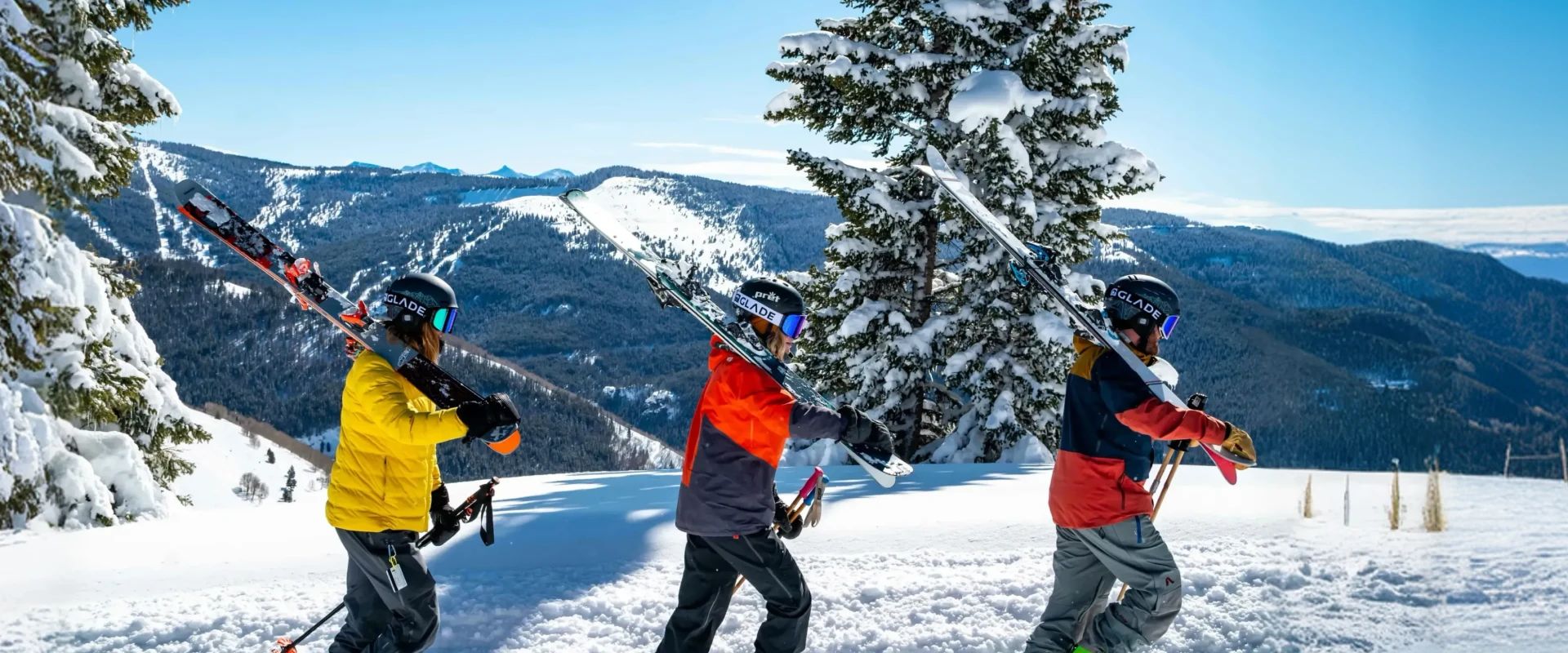
Ski lessons are the single most useful thing you can book for a ski holiday - whether it’s your first time on snow or your tenth season. But if you’ve never had one, you might not know what actually happens during a lesson, how levels work, or when to switch from group to private. This guide walks through the structure of a typical lesson, the progression system most ski schools use, and the things that make the biggest difference to how quickly you improve. If you’re comparing resorts with strong ski schools, our best ski schools and resorts for lessons list is a good starting point. And if you’re ready to book, our guide to booking ski lessons covers the practical steps.
Most ski schools across the Alps use a level system that groups skiers by ability rather than age or experience. The specifics vary between schools, but the broad structure is consistent: beginners start at level one, intermediates sit around levels three to five, and advanced skiers progress beyond that into off-piste and technical terrain.
At the start of each lesson block - usually on a Monday or the first morning of your booking - instructors run a short assessment. This is informal: you’ll ski a short section of slope and the instructor will watch your turns, balance, and speed control. Based on that, they’ll place you in the right group. If the group doesn’t feel right after the first session, most schools will move you up or down without fuss.
The level system exists to make sure everyone in a group is working on similar skills. A lesson where half the group is learning to snowplough and the other half wants to carve parallel turns doesn’t work for anyone. Getting placed correctly matters more than getting placed high.
A first-ever ski lesson starts on flat ground or a very gentle nursery slope. You’ll spend the first twenty to thirty minutes getting used to your boots and skis - how to clip in, how to stand, how to move around without poles. It feels awkward at first, and that’s entirely normal.
From there, the instructor will introduce the snowplough - a wedge shape with your skis that gives you control over speed and direction. Most of the first session focuses on this one skill, because it’s the foundation for everything else. By the end of a morning lesson, many first-timers can make linked snowplough turns on a gentle slope, though the pace varies and there’s no fixed benchmark to hit.
The afternoon is often free, which is useful. Ski muscles tire quickly when they’re new, and resting between sessions helps your body absorb what you’ve learnt. Some ski schools run optional afternoon sessions for beginners who want more time on snow, and these tend to be smaller and more relaxed than the morning block. If you've not booked the trip itself yet, our beginners ski holidays are a good place to start.
A typical group lesson runs for about two to three hours, usually in the morning. Group sizes vary by ski school and resort, but six to ten people is standard. The instructor sets the exercises, demonstrates each one, then watches as the group practises. There’s usually a mix of demonstration, drills, and free skiing within each session.
What makes a good group lesson isn’t just the instructor - it’s the group itself. When everyone is at a similar level, the session moves at a pace that works for all. The instructor can introduce new skills progressively rather than spending time bridging a gap between the strongest and weakest skiers in the group.
Group lessons are social by nature. You’ll spend a week skiing with the same people, and for many skiers this becomes one of the unexpected highlights. If you prefer a more focused, individual approach, private lessons are worth considering - but groups have a rhythm of their own that works well for most people.
A private lesson is one instructor working with you alone, or with a small group you’ve chosen - a partner, family, or group of friends. Sessions typically last one to two hours and can be booked at flexible times, including afternoons when the slopes tend to be quieter.
The main advantage is pace. The instructor tailors every exercise to what you need, and you spend the entire session actively skiing rather than waiting for others to take their turns. For a nervous first-timer, this can mean less pressure. For an intermediate skier stuck on a plateau, it means targeted drills that address specific habits.
Private lessons also let you choose where you ski. An instructor who knows the mountain well can take you to slopes that suit your level and goals, away from crowded beginner areas. This is especially useful later in the week when your confidence has grown and you want to explore terrain beyond the nursery slopes.
Good ski instruction is mostly about observation. Instructors watch how you move, identify the one or two things that will make the biggest difference, and give you drills to work on them. Early on, that might be stance and balance. Later, it could be the timing of your weight transfer or how you initiate a turn.
The best instructors break complex movements into small, repeatable steps. Carving a parallel turn, for example, involves shifting weight, rolling your edges, and managing speed simultaneously. Rather than explaining all of that at once, a good instructor isolates one element at a time and builds the full movement gradually.
Video feedback is increasingly common in ski schools. Some instructors film short clips during the lesson and review them with you at the end. Seeing yourself ski - even briefly - is remarkably effective. What feels like a dramatic lean is often a subtle shift, and video closes the gap between what you think you’re doing and what’s actually happening.
Children’s ski lessons follow a different structure from adult sessions. Most ski schools take children from age three or four, though some have dedicated snow gardens for toddlers that focus on play rather than technique. Young children learn through games, obstacle courses, and short runs rather than drills.
Groups are smaller for younger children - often four to six per instructor - and sessions are shorter, typically around two hours. Children tend to progress quickly because they have a low centre of gravity and less fear of falling, but attention spans are short, so the teaching style is designed to keep energy and engagement high.
For older children and teenagers, lessons look more like adult group sessions but with age-appropriate terrain and a faster pace. Many ski schools run end-of-week races or presentations, which gives children a goal to work toward and a sense of achievement to take home.
Even experienced skiers benefit from lessons, particularly when they’ve reached a plateau or want to tackle new terrain. A fresh pair of instructor’s eyes can spot habits you’ve built over years of self-taught skiing. Many intermediate and advanced skiers book a few private sessions to work on specific skills - carving, moguls, or off-piste technique - rather than full-week group lessons. It’s one of the quickest ways to see a noticeable improvement.
This varies by person, but most skiers who take a full week of lessons feel confident enough to ski gentle blue runs independently by the end of that week. Some get there sooner, others take a little longer, and both are fine. The purpose of lessons isn’t to reach a fixed endpoint - it’s to build the skills and confidence to enjoy the mountain safely. Many skiers continue booking lessons on subsequent holidays simply because they enjoy the structure and the progression. If you’re curious about what the learning curve looks like, our guide to what it’s like to learn to ski covers the broader picture.
Ski schools are one of the best investments in a family ski holiday. Children learn technique, safety, and mountain awareness from trained instructors, and they’re with peers their own age, which keeps motivation high. It also frees parents to ski at their own level rather than spending the week on the nursery slope. Most families find that a morning lesson block gives children enough structured time on snow, with the afternoon free for family skiing or rest.
The same kit you’d wear for a regular day on the slopes: base layers, a mid-layer, and a waterproof ski jacket and trousers. Gloves, a helmet, and goggles or sunglasses are essential. Avoid jeans or cotton layers, which get cold and wet quickly. Your instructor will be moving between demonstrations and watching, so you’ll be active enough to stay warm in standard ski clothing. Thin, warm socks work better than thick ones - your boot fit matters more than insulation.
Most ski schools let you book by the day, though full-week packages are common and tend to work out better value. If time is limited, a private lesson gives you the most focused attention in a short window. For first-timers, even a single lesson makes a real difference to confidence and technique. If you’re planning a short trip, our guide to booking ski lessons covers the different options.
Thinking about booking lessons on your next trip? Use WeSki’s AI trip planner to find resorts with the ski schools and lesson options that match what you’re looking for.



WeSki is a trading name operated by Wetrip Weski Ltd (BR021500). All the flights and flight-inclusive holidays on this website are financially protected by the ATOL scheme. When you pay you will be supplied with an ATOL Certificate. Please ask for it and check to ensure that everything you booked (flights, hotels and other services) is listed on it. Please see our booking conditions for further information or for more information about financial protection and the ATOL Certificate go to: www.caa.co.uk.
Package holidays that do not include travel by air are financially protected via ABTOT.
For the latest travel advice from the Foreign & Commonwealth Office visit www.gov.uk/foreign-travel-advice.