
EN
EN
Ski accommodation comes in more shapes than you might expect, and the differences aren't always obvious from a booking page. A catered chalet is one of the most popular options for ski holidays in the Alps, but it works quite differently from a hotel or a self-catered apartment - and the experience varies a lot depending on the property, the host and the resort. This guide explains what a catered chalet actually involves, how it compares to other accommodation types, and what to look for when deciding where to stay. If you're already clear on the types and ready to compare options, our best ski accommodation in Europe guide is a good next step. For practical advice on choosing between them, our guide to how to choose ski accommodation covers the key decision points - or browse our chalet ski holidays to see what's available.
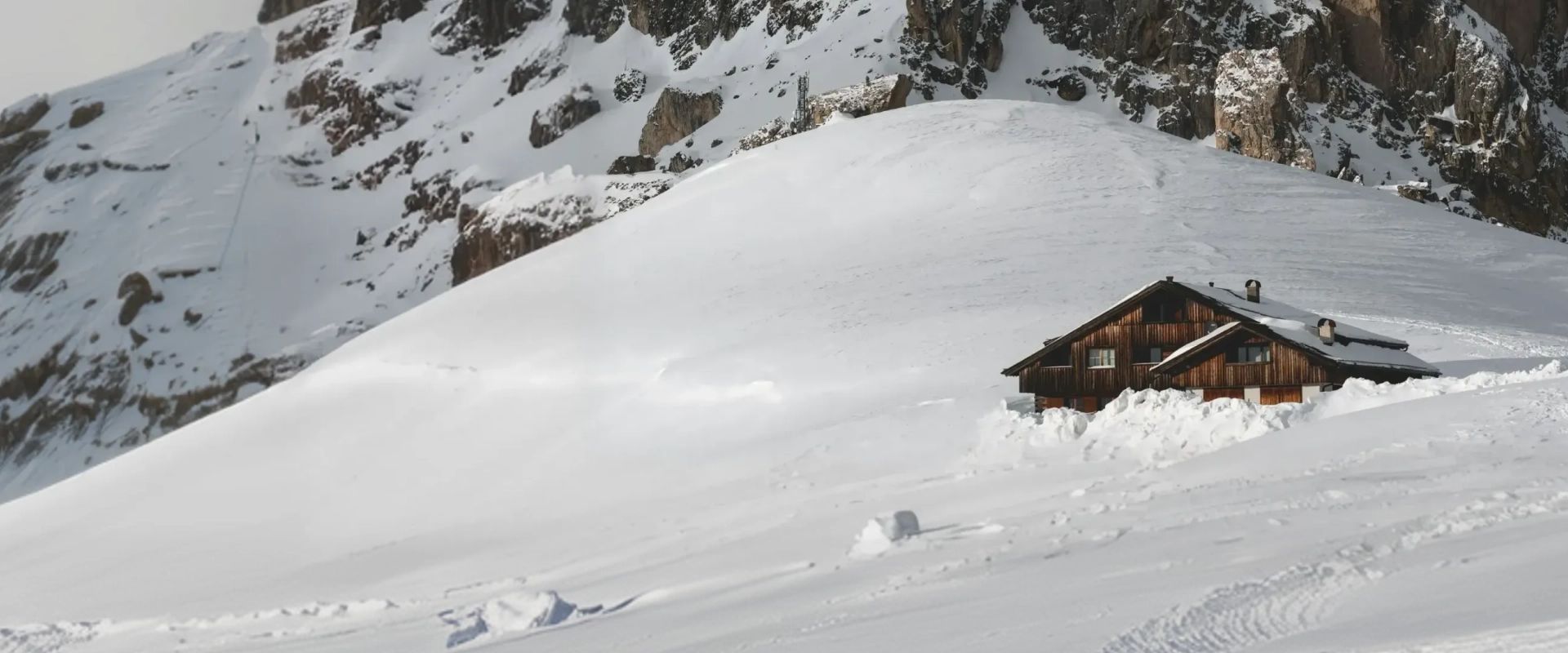
A catered ski chalet is a private or shared property - usually a detached house or large apartment - where a host or small team lives in and takes care of meals, cleaning and general hospitality during your stay. The word 'chalet' in ski terms doesn't just mean a building style; it describes a specific type of hosting arrangement that sits somewhere between a hotel and a self-catered rental.
Most catered chalets accommodate between six and twenty guests, though you'll find smaller four-person properties and larger ones that sleep thirty or more. Some are traditional Alpine buildings with wooden balconies and stone foundations. Others are modern architect-designed properties with floor-to-ceiling glass and open-plan living. What they share is the hosting model: someone is there to cook, clean and look after you, but the atmosphere is more like staying in someone's home than checking into a hotel.
The distinction between a 'whole-chalet' booking (your group has the property to yourselves) and a 'by-the-room' chalet (you share with other guests) is worth understanding early. Whole-chalet bookings are more common for groups of eight or more. By-the-room chalets work well for smaller groups or couples who want the chalet experience without needing to fill every bed.
The standard catered chalet package includes breakfast and dinner six evenings a week, with one 'night off' when the host takes a break. Breakfast is usually continental - cereals, pastries, toast, fruit, yoghurt, coffee and tea - laid out each morning for you to help yourself. Some higher-end chalets cook a full breakfast to order.
Dinner is the centrepiece. A typical chalet dinner runs to three or four courses: a starter, a main, a dessert and a cheese course. Wine is almost always included, sometimes in unlimited quantities, sometimes as a set allocation per person. The quality varies with the chalet's level - budget chalets serve hearty home cooking; premium chalets employ trained chefs who can compete with good restaurants. Afternoon tea with cakes and snacks is common in mid-range and premium chalets, timed for when you come off the mountain.
What catering doesn't typically include is lunch. Most skiers eat on the mountain at a piste-side restaurant, so chalets don't cover midday meals. Some hosts will make packed lunches on request, and it's worth asking in advance if this matters to you. Dietary requirements are handled well by most chalet companies if you flag them at the time of booking - vegetarian, vegan, gluten-free and common allergies are standard, though more niche requirements may need a conversation.
Hotels and chalets solve different problems. A hotel gives you independence, anonymity, facilities and flexibility. You can eat when you want, come and go without coordinating with anyone, and lean on reception for practical help. A chalet gives you a shared social space, meals cooked for your group, and an atmosphere that's more personal and less transactional.
The trade-offs are real. Hotels have gyms, spas, pools and concierge services. Chalets have lounges, open fires and shared dining tables - but rarely a pool, and a hot tub is a premium feature. Hotels let you eat independently; in a chalet, dinner is served at a set time for the whole group. Hotels have round-the-clock reception; chalet hosts keep sociable hours and aren't there at 3 a.m. if you need something.
For groups, the economics often favour chalets. A ten-person group splitting a whole chalet including meals can pay less per head than the same group in mid-range hotel rooms with half board. For couples, the maths tips toward hotels unless you're happy sharing a chalet by the room with other guests. Neither format is inherently better - it depends on what you want from your evenings and how you like to travel.
Self-catered apartments are the most common accommodation type in many French ski resorts, where purpose-built residences dominate the landscape. An apartment gives you a kitchen, a living space and one or more bedrooms. No one cooks for you, no one cleans daily, and there's no host - you manage your own routine entirely.
The advantage is flexibility. You eat what you want, when you want, and you have space to spread out. Families with young children benefit from having a kitchen for snacks and early meals. The disadvantage is that mountain supermarkets aren't always well stocked, resort restaurants can be expensive for every evening, and coming back to a cold apartment after a long day on the slopes feels very different from walking into a warm chalet with dinner on the table.
Residences and aparthotels sit between apartments and hotels. They typically add communal facilities - a pool, a sauna, a reception desk - and sometimes an optional breakfast. They won't cook you dinner, but they take the edge off the self-sufficiency that a standalone apartment requires. For families or longer stays, a residence with a pool is a strong option, especially if your trip includes non-skiing days.
Beyond chalets, hotels and apartments, a few other formats are worth knowing about. Ski-in ski-out properties - where you can ski directly to and from the door - exist across all accommodation types but are most common in purpose-built French resorts like Avoriaz, Les Arcs and Flaine. The convenience factor is significant: no morning walk in ski boots, no evening trudge back with tired legs.
Club hotels, run by operators like Club Med, package accommodation, meals, ski passes, lessons and childcare into one rate. They work well for families who want everything handled, though the atmosphere is more structured than a chalet or independent hotel. Bed and breakfasts are common in Austrian and Swiss resorts, typically run by local families. You get a room and breakfast, with no commitment for dinner. They're often the most affordable way to stay centrally and the most immersive way to experience local hospitality.
Holiday homes - detached houses booked as a whole - are essentially self-catered chalets without the host. You get the space and privacy of a chalet, with full freedom over meals and schedule, but without the cooking and cleaning taken care of.
Start with three questions: how many people are in your group, how do you want to eat, and how important is proximity to the lifts? A group of eight friends who want a sociable trip with meals included will get the most from a catered chalet. A couple looking for independence and a spa will lean toward a hotel. A family of four on a ten-day trip may find an apartment or residence most practical.
After those three questions, the secondary factors come into play. Some people care most about views, others about being walking distance from bars and restaurants. Some want a hot tub; others want a swimming pool for the children. Some need ski storage; others need parking. The good news is that ski resort accommodation has enough variety to match almost any combination of priorities - it's just a matter of knowing what to look for and comparing total costs rather than headline rates.
WeSki's search lets you filter by accommodation type, board basis and resort, and shows what's included in each property's package. That's the quickest way to move from 'what kind of place do I want?' to 'which specific property?'
Not at all. While whole-chalet bookings are most common for groups of eight or more, many chalet operators sell rooms individually. This means couples, solo travellers and small groups can experience the chalet atmosphere without needing to fill every bed. You'll share communal spaces and mealtimes with other guests, which some people enjoy and others prefer to avoid - it's worth considering what suits your travel style.
A catered chalet comes with a host who cooks breakfast and dinner, cleans the property, and generally looks after the running of the house. A self-catered chalet gives you the same kind of property - a standalone Alpine house with shared living spaces - but without the host or meals. You manage your own cooking and cleaning, which gives you more freedom but also more responsibility.
Most chalet companies handle standard dietary requirements - vegetarian, vegan, gluten-free, dairy-free and common allergies - comfortably, provided you flag them when booking. More specific or complex dietary needs may require a conversation with the chalet host or company before you book, to make sure they can accommodate them across a week of dinners. The earlier you mention it, the better the outcome.
Wi-Fi is standard in almost all catered chalets now, though speeds vary by resort and altitude. Most mid-range and premium chalets have a sauna or hot tub, and some have games rooms, cinema rooms or gyms. What you won't typically find is a swimming pool or spa on the scale of a hotel. If those facilities matter to you, a hotel or a high-end residence may be a better fit.
Catered chalets can work very well for families. Having meals cooked for you removes a major daily task, and the communal living space gives children room to play. Some chalet companies specialise in family-friendly properties with early children's suppers, travel cots and highchairs. The main consideration is whether your children's mealtimes align with the chalet dinner schedule - most serve dinner at a fixed time, usually around 7:30 or 8 p.m. For more on choosing accommodation that works for families, our guide to how to choose ski accommodation covers the practical details.
Thinking about giving it a go? Try WeSki’s AI trip planner - tell it what matters to you and get a personalised shortlist of accommodation options in seconds.



WeSki is a trading name operated by Wetrip Weski Ltd (BR021500). All the flights and flight-inclusive holidays on this website are financially protected by the ATOL scheme. When you pay you will be supplied with an ATOL Certificate. Please ask for it and check to ensure that everything you booked (flights, hotels and other services) is listed on it. Please see our booking conditions for further information or for more information about financial protection and the ATOL Certificate go to: www.caa.co.uk.
Package holidays that do not include travel by air are financially protected via ABTOT.
For the latest travel advice from the Foreign & Commonwealth Office visit www.gov.uk/foreign-travel-advice.