
EN
EN
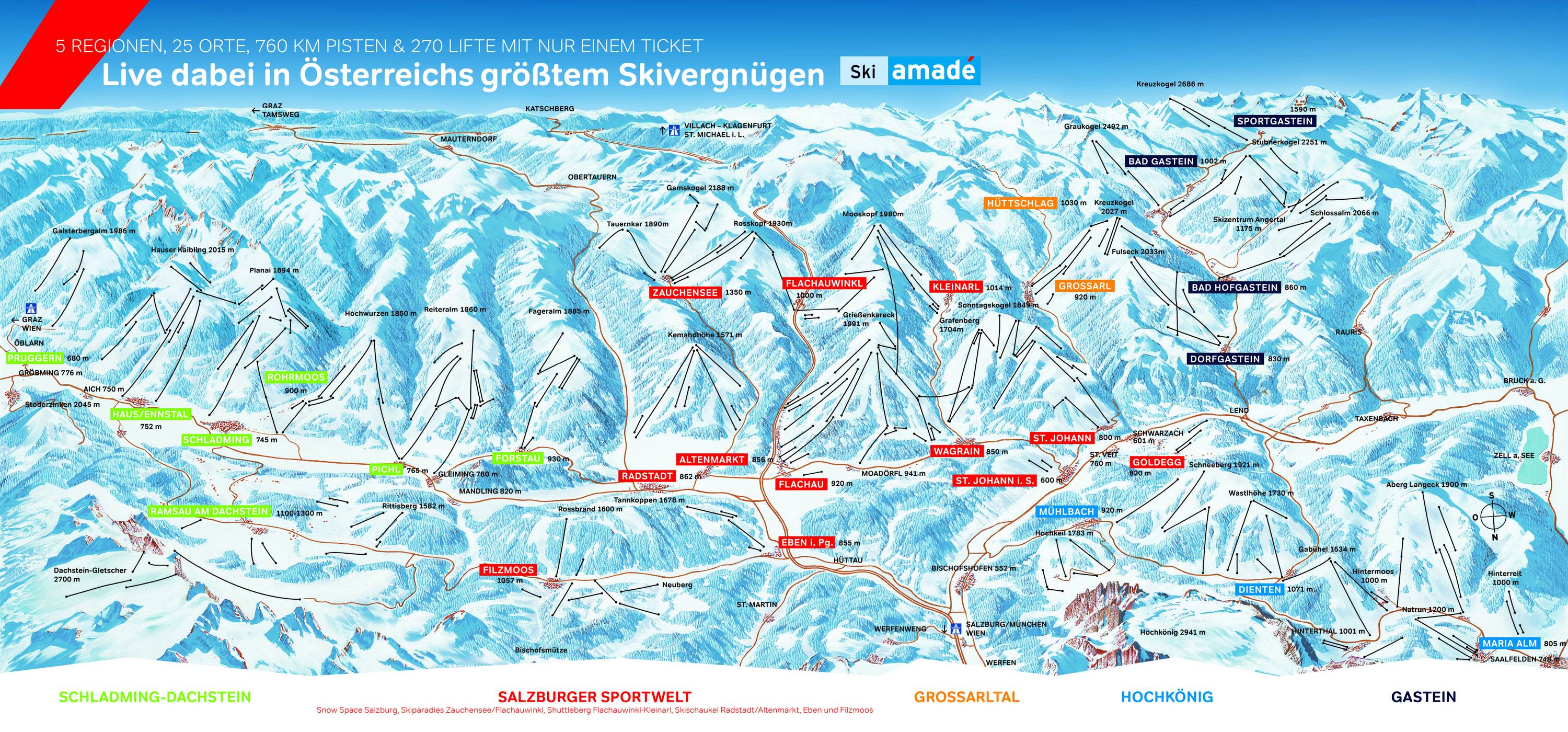
Ski Amadé is one of the largest ski pass networks in the Austrian Alps, connecting 25 individual ski areas across the provinces of Salzburg and Styria under a single pass. It's a network of traditional Austrian villages and mid-sized resorts rather than one continuous linked domain - think of it as a collection of excellent ski areas that you can dip into throughout a week, all on one ticket. The character is distinctly Austrian: friendly villages, well-groomed slopes, lively hut culture, and some of the best après-ski food in the Alps.
The network covers 760 km of marked piste served by around 270 lifts. The terrain sits between 730 m and just over 2,000 m across 25 ski areas. The season typically runs from early December through to mid-April. Eleven resorts are linked through WeSki, spread across five main valleys: the Gastein Valley, the Hochkönig area, the Salzburg Sportwelt (Flachau-Wagrain-Zauchensee corridor), Schladming-Dachstein, and the smaller areas of Grossarl, Filzmoos, and Werfenweng.
The resorts range from the grand spa towns of the Gastein Valley to the compact family villages of Filzmoos and Werfenweng. Schladming is the most internationally known, with World Cup heritage and a lively town centre. The beauty of the Ski Amadé pass is flexibility - you can ski a different area every day without committing to a single base. Browse Ski Amadé ski deals on WeSki to start planning your trip.
| Country | Austria |
| Region | Salzburg and Styria |
| Total piste km | 760 km |
| Altitude | 730 m (Schladming) - 2,188 m (Kitzsteinhorn access point near Zauchensee) |
| Linked resorts | 11 Schladming Bad Gastein Bad Hofgastein Flachauwinkl Zauchensee Maria Alm Grossarl Kleinarl Filzmoos Hinterthal Werfenweng |
| Lifts | 270 |
| Runs | 760 km across 25 ski areas within the network |
| Season | Early December - mid-April |
| Ski pass name | Ski Amadé pass |
| Nearest airports | Salzburg (~1 hr) Munich (~2 hr 30 min) Innsbruck (~2 hr 30 min) |
| Glacier skiing | No (though the nearby Kitzsteinhorn glacier is accessible with a pass extension) |
| WeSki services | Transfers: all 11 resorts (private to all; shared to Bad Gastein, Bad Hofgastein, Filzmoos, Flachauwinkl, Grossarl, Maria Alm, Schladming) Ski equipment hire: Bad Gastein, Bad Hofgastein, Flachau, Kleinarl, Maria Alm, Schladming No WeSki lessons currently available |
Schladming is the flagship resort of the Ski Amadé network - a lively town at 730 m with a genuine year-round community, a pedestrianised centre, and a strong skiing heritage. It hosts the annual Planai Night Slalom on the World Cup circuit, and the atmosphere on race night is electric. The skiing is spread across four linked mountains - Planai, Hochwurzen, Hauser Kaibling, and Reiteralm - collectively known as the Schladming 4-Mountain Ski Area. The terrain is predominantly intermediate, with long reds and well-groomed blues. The town has good restaurants, a solid après-ski scene, and a friendly, welcoming feel.
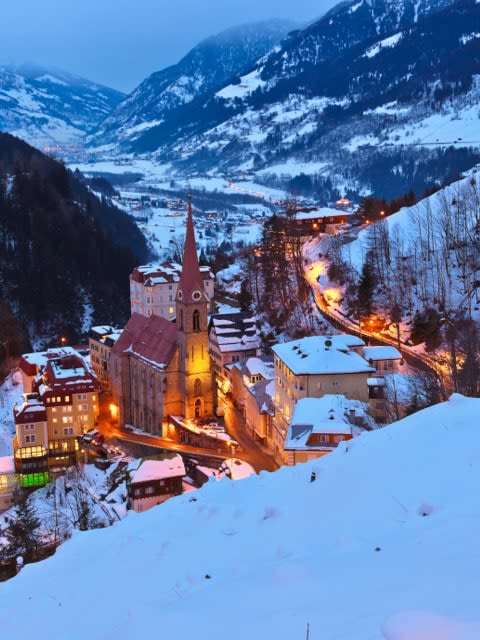
Bad Gastein is one of the most distinctive resorts in Austria - a historic spa town built into a steep valley with grand Belle Époque hotels and a waterfall cascading through the centre. The skiing above links to Graukogel (a quiet, north-facing mountain) and, via Stubnerkogel, across to Bad Hofgastein and the broader Gastein ski area. The terrain is varied, with some of the steepest runs in Ski Amadé on the Graukogel side. The town has a faded glamour and a growing creative scene, plus the famous Felsentherme thermal baths carved into the mountainside.
Bad Hofgastein sits lower in the Gastein Valley at 860 m and has a broader, more family-friendly feel than its neighbour Bad Gastein. The Schlossalm-Angertal ski area above has wide, well-groomed runs that are ideal for intermediates, plus a modern gondola and recently upgraded infrastructure. The village has thermal baths, a good range of hotels, and a relaxed atmosphere. It connects to Bad Gastein's skiing via the Schlossalm-Stubnerkogel link, giving you access to the full Gastein ski area from one base.
Flachauwinkl is part of the Salzburg Sportwelt corridor, sitting between Flachau and Zauchensee. It's a small, quiet village with direct ski-in ski-out access to the Zauchensee-Flachauwinkl ski area - one of the most snow-sure sectors in Ski Amadé thanks to its north-facing slopes and altitude. The terrain is well-balanced with a good mix of blues and reds. It's a practical base for anyone who wants reliable conditions and easy access to the wider Sportwelt link towards Flachau and Wagrain.
Zauchensee is a tiny resort at 1,350 m - one of the highest villages in the Salzburg Sportwelt - with just a handful of hotels and a car-free feel. The skiing above is excellent: north-facing, snow-sure, and with some genuinely steep terrain including a World Cup ladies' downhill course. It's compact but punchy, with a good selection of reds and blacks. It connects to Flachauwinkl and from there to the broader Sportwelt network. If snow conditions matter to you more than nightlife, Zauchensee is a strong choice.
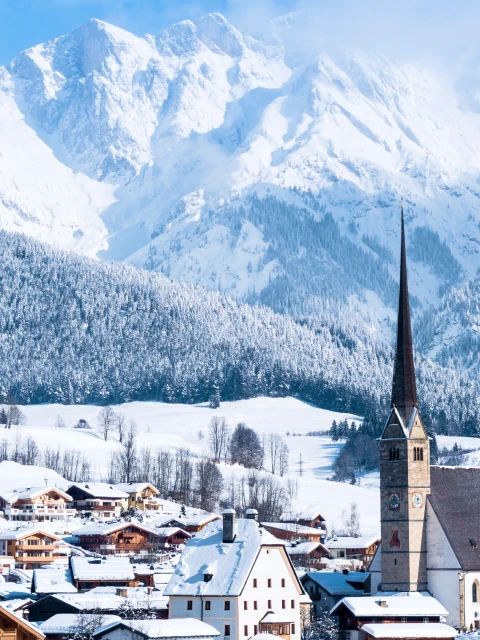
Maria Alm is a pretty village at 802 m beneath the dramatic Hochkönig mountain (2,941 m), linked into the Hochkönig ski area along with Dienten and Mühlbach. The skiing covers long, varied terrain with some impressive vertical - the run from the top back to the village is one of the longest descents in Ski Amadé. The village has a photogenic church spire, a handful of good Gasthöfe, and a traditional Salzburg character. It's quieter than Schladming or the Gastein towns and suits families and intermediates well.
Grossarl is a traditional valley village known as the 'Valley of Alpine Pastures' - a name that gives you a good idea of the character. The Grossarl-Dorfgastein ski area links across to the Gastein Valley, providing access to one of the larger connected ski domains in Ski Amadé. The local slopes are predominantly blue and red, with good tree skiing and a relaxed atmosphere. The village itself is quiet and family-friendly, with genuine Austrian hospitality.
Kleinarl is a small village at the end of a quiet valley, connected to the Flachau-Wagrain ski area. It's about as low-key as Austrian skiing gets - a handful of guesthouses, a local feel, and direct lift access into the Salzburg Sportwelt. The skiing above is well-groomed and predominantly intermediate. It's the sort of place where you recognise faces by day two and the local Gasthof remembers your order. A good option for families and anyone who wants a peaceful Austrian base.
Filzmoos is a pretty, traditional village at 1,057 m with a compact local ski area that's ideal for families and beginners. The slopes are gentle, well-groomed, and uncrowded, with views across to the Dachstein glacier. It's not connected to any other ski area by lifts, but the Ski Amadé pass covers it, and the Schladming 4-Mountain area is a short drive away. The village has a peaceful, storybook Austrian quality - horse-drawn sleighs, candlelit restaurants, and a pace that's deliberately unhurried.
Hinterthal is a tiny hamlet in the Hochkönig area, connected to the Maria Alm ski system. It's one of the smallest resort bases in Ski Amadé - just a few guesthouses and a lift station - but the position gives you direct access to the Hochkönig skiing and its long descents. It suits anyone who wants the quietest possible base with good terrain on the doorstep.
Werfenweng is a quiet, family-oriented village at 902 m with a small, gentle ski area that's well-suited to beginners and young families. The slopes are uncrowded and well-maintained, though compact. The village is known for its 'gentle mobility' ethos - car-free breaks are encouraged, with electric shuttles and horse-drawn taxis. It's covered by the Ski Amadé pass, so you can day-trip to Schladming or Flachau for more terrain. A good pick for a relaxed family week in a traditional Austrian setting.
Austria excels at welcoming beginners, and Ski Amadé is no exception. Filzmoos, Werfenweng, and Bad Hofgastein all have dedicated, gentle nursery areas separated from faster traffic. The Salzburg Sportwelt resorts (Flachau, Wagrain, Kleinarl) have good learning zones with magic carpets and easy greens. Austrian ski schools are well-established and widely available with English-speaking instructors. The grooming standards across the network are consistently high, and the wide, well-maintained blues make progression from nursery slopes to proper runs feel natural.
WeSki does not currently have lessons available in the Ski Amadé area, but all resorts have well-regarded local ski schools.
WeSki tip: Austrian ski areas often have free or heavily discounted beginner lifts at the base of the mountain - check at the ticket office before buying a full pass. Many resorts in Ski Amadé have valley-floor nursery areas that don't require a lift pass at all for the first day or two.
With 760 km of mostly blue and red terrain, intermediates are the best-served group in the network. Schladming's 4-Mountain ski area has long, sweeping runs with consistent pitch and excellent grooming. The Gastein Valley has satisfying reds from the Schlossalm and Stubnerkogel. The Hochkönig area (Maria Alm) has some of the longest continuous descents, and the Salzburg Sportwelt corridor from Zauchensee through to Wagrain covers a huge variety of terrain. The beauty of the Ski Amadé pass is that you can ski a different area every day and never run out of fresh runs.
WeSki tip: Schladming's Planai mountain gets busy on race weekends and during holidays. When that happens, drive 15 minutes to Hauser Kaibling or Reiteralm (both on the same 4-Mountain pass) - they're linked on the mountain but far quieter, with equally good runs.
The steepest marked terrain is found at Zauchensee (including the World Cup ladies' downhill), Bad Gastein's Graukogel, and the upper runs at Schladming's Planai. The Schladming 4-Mountain area has some demanding blacks and the famous Planai World Cup slalom course. Off-piste opportunities are more limited than in higher-altitude French or Swiss areas, though the tree skiing in the Gastein Valley and the north-facing bowls above Zauchensee hold powder well after storms. The Dachstein glacier, while not included in the standard Ski Amadé pass, is accessible from the Schladming area with an extension.
WeSki tip: Bad Gastein's Graukogel is the area's hidden gem for advanced skiers - a quiet, north-facing mountain with steep runs through old-growth forest. It rarely gets crowded because most visitors head to the Stubnerkogel side. After fresh snow, the tree skiing here is some of the best in the Salzburg region.
The Ski Amadé pass covers all 760 km of piste and around 270 lifts across the entire network on a single ticket. Passes are available from one day up to the full season, with discounted rates for children, teens, and seniors. Family discounts are also available. For shorter stays focused on one area, local valley passes (Gastein Valley, Schladming 4-Mountain, Salzburg Sportwelt, Hochkönig) are sold at lower rates with upgrade options. The Ski Amadé pass is particularly good for visitors who want to explore - one pass, many valleys, no additional charges.
You can add the lift pass directly to your WeSki booking, along with ski equipment hire at Bad Gastein, Bad Hofgastein, Flachau, Kleinarl, Maria Alm, and Schladming - so everything's sorted before you arrive.
WeSki tip: The Ski Amadé pass includes free entry to several thermal baths across the network, including the Felsentherme in Bad Gastein and the Alpentherme in Bad Hofgastein. After a long day on the slopes, these are well worth a visit - and they're already covered by your pass.
Salzburg is the closest airport to most resorts, around 1 hour's drive to the nearest Ski Amadé areas and about 1 hour 30 minutes to Schladming. Munich is roughly 2 hours 30 minutes from the western resorts. Innsbruck is a similar distance for the Salzburg Sportwelt areas. By train, Schladming is on the main Salzburg-Graz railway line, and Bad Gastein and Bad Hofgastein are served by regular trains from Salzburg. The Austrian rail network connects well with most of the Ski Amadé valleys, and local bus services run during the season.
WeSki has private transfers to all 11 resorts, with shared transfers available to Bad Gastein, Bad Hofgastein, Filzmoos, Flachauwinkl, Grossarl, Maria Alm, and Schladming. Add them to your booking for a straightforward door-to-door trip.
The season runs from early December to mid-April. The higher areas - Zauchensee (1,350 m), the upper slopes of the Gastein Valley, and the Planai summit - hold snow best throughout the winter. Snowmaking coverage across the network is extensive, and Austrian grooming standards keep runs in good condition even during drier spells. January to mid-March typically sees the most consistent natural snow.
Austrian school holidays in February and the Christmas-New Year period are the busiest times. If you've got flexibility, January and the first half of March are noticeably quieter. The Schladming Night Slalom (usually late January) is worth timing a visit around - the atmosphere in town is exceptional, with tens of thousands of spectators lining the Planai course. Late season brings longer days and spring conditions, particularly enjoyable on the south-facing runs.
Yes. Filzmoos, Werfenweng, and Bad Hofgastein are particularly well-suited to beginners, with gentle nursery areas and well-groomed easy blues. Many resorts have free beginner lifts at the base. WeSki does not currently have lessons available, but all resorts have well-established local ski schools with English-speaking instructors.
Ski Amadé covers 760 km of marked piste served by around 270 lifts across 25 individual ski areas. Eleven resorts are linked through the WeSki platform. The terrain ranges from valley floors at 730 m to peaks above 2,000 m. A single Ski Amadé pass covers the entire network.
No. Ski Amadé is a pass network rather than a single connected ski area. Some areas are linked on the mountain (Schladming's 4-Mountain area, the Gastein Valley, the Salzburg Sportwelt corridor), but getting between the main valleys requires driving or using the bus. Most visitors base themselves in one area and day-trip to others with the pass. Distances between valleys are typically 20 to 40 minutes by car.
Schladming is the most complete resort - good skiing, a lively town, and World Cup heritage. Bad Gastein has atmosphere and character. Bad Hofgastein is family-friendly with thermal baths. Zauchensee and Flachauwinkl are the picks for snow reliability. Maria Alm is traditional and quiet beneath the Hochkönig. Filzmoos and Werfenweng are the calmest, best-suited to families and beginners.
The season typically runs from early December to mid-April. There is no glacier skiing within the standard Ski Amadé pass (the Dachstein glacier is available as an extension). Snowmaking coverage is extensive, and grooming standards are high. January to mid-March sees the best natural snow conditions.
Fly to Salzburg, which is about 1 hour to the nearest resorts and 1 hour 30 minutes to Schladming. Munich and Innsbruck are around 2 hours 30 minutes. By train, Schladming is on the Salzburg-Graz line, and the Gastein Valley has regular train services from Salzburg. WeSki has private and shared transfers to all 11 resorts.
The Schladming Night Slalom is an annual World Cup alpine skiing race held on the Planai in late January, under floodlights. It's one of the most atmospheric events on the ski racing calendar, drawing tens of thousands of spectators to the finish area in Schladming's town centre. The course is open to the public on other days.
Yes. Ski equipment hire is available through WeSki at Bad Gastein, Bad Hofgastein, Flachau, Kleinarl, Maria Alm, and Schladming. WeSki does not currently have lessons available in the Ski Amadé area. You can add equipment hire to your booking along with your lift pass and transfers.
Start building your dream ski trip today with our one-stop ski shop - hundreds of resorts, unlimited combinations.



 4.9/5
4.9/5I usually book flights, transfers, hotel, ski rental and lift passes myself but this year used WeSki for a trip to Morzine. It was so much easier. Everything worked perfectly - transfers arrived on time and there was plenty of feedback throughout the whole process giving you confidence the holiday would go smoothly.

A really useful service that is so much easier to use than other 'all-inclusive' sites. It nicely bridges the gap between a travel agent and booking the trip yourself online. I will use WeSki every time I go skiing from now on.
We booked a late minute skiing trip to Morzine through we ski. We looked at booking the trip ourselves but could get anywhere near the price quoted by we ski. The company was excellent and we had no problems at all from start to finish. I would definitely use them to book another weekend skiing trip.
Seamless experience from start to finish. I was spending ages trying to sort out a weekend break and managed to do it with we ski in minutes and for the same price as booking it all up yourself. Flight, transfer and accommodation was all as expected and faultless.

WeSki is a trading name operated by WeTrip Ltd. All the flights and flight-inclusive holidays on this website are financially protected by the ATOL scheme. When you pay you will be supplied with an ATOL Certificate. Please ask for it and check to ensure that everything you booked (flights, hotels and other services) is listed on it. Please see our booking conditions for further information or for more information about financial protection and the ATOL Certificate go to: www.caa.co.uk.
Package holidays that do not include travel by air are financially protected via ABTOT.
For the latest travel advice from the Foreign & Commonwealth Office visit www.gov.uk/foreign-travel-advice.