
EN
EN
You’ve picked a resort, booked accommodation, and sorted your flights. Now you need to get from the airport to the mountain - and the options are wider than most people realise. This guide covers every way to make that journey, from shared coach transfers to self-driving over Alpine passes, so you can choose the one that fits your group, your budget, and your schedule. If you’re still exploring what a transfer actually involves, our guide to what ski transfers are and what to expect covers the basics. And if you want to compare resorts by how quickly you can reach them, our list of the best ski resorts with short transfers is worth a look.
Shared transfers are the most popular way to get from the airport to a ski resort. You travel with other guests heading to the same area, the service is coordinated around flight arrival times, and someone else handles the mountain roads. For most first-time skiers, this is the simplest option.
Coaches typically depart from a meeting point outside the arrivals hall. Waiting times vary depending on how many flights the operator is grouping together - during peak weeks, you might wait 30 to 60 minutes for the coach to fill. Off-peak, the wait tends to be shorter. The journey itself depends on the resort: some are 90 minutes from Geneva, others closer to three hours. Stops along the way are common when a coach serves multiple resorts on the same route.
If you’re booking a package through a tour operator, shared transfers are often included or available as an add-on. That means your transfer timing is matched to your flight, and someone on the ground knows when you’re arriving - one less thing to organise yourself.
A private transfer gives you a dedicated vehicle - usually a minibus or large people carrier - that goes directly from the airport to your resort without stopping for other passengers. You set the pickup time, and the driver meets you in arrivals.
The main advantage is speed and flexibility. There’s no waiting around for other flights to land, no stops at intermediate resorts, and you can schedule the pickup to suit your arrival time exactly. For families with young children, groups, or anyone arriving late in the evening, this makes a real difference. A three-hour shared transfer can become two hours door to door when there’s no routing via other villages.
Private transfers cost more per person than shared options, but the gap narrows as group size increases. A minibus for six or eight people can work out at a similar cost per head to individual shared seats, with significantly less time on the road. Many package providers can arrange these alongside your booking, keeping everything coordinated.
Self-driving gives you freedom during the week that no transfer service can match. You can explore neighbouring villages, visit different ski areas, stock up at a valley supermarket, and leave on your own schedule. For groups or families who want a car in resort, driving from the UK or hiring from the airport can be practical.
The reality check: mountain roads in winter require preparation. Snow chains or winter tyres are mandatory in most Alpine countries, and conditions can change quickly. France, Switzerland, Austria, and Italy all have toll tunnels and motorway vignettes - costs that add up. Parking at resort-level accommodation is often limited and sometimes charged separately. If you’re driving from the UK, factor in the Channel crossing, motorway tolls, fuel, and roughly 8 to 12 hours of driving depending on the destination.
Hiring a car at the airport is a middle ground. You get the in-resort flexibility without the long drive from home. Just confirm the car comes with winter tyres fitted and check whether snow chains are included or need to be added. Sat nav is essential - phone signal drops out on many mountain approach roads.
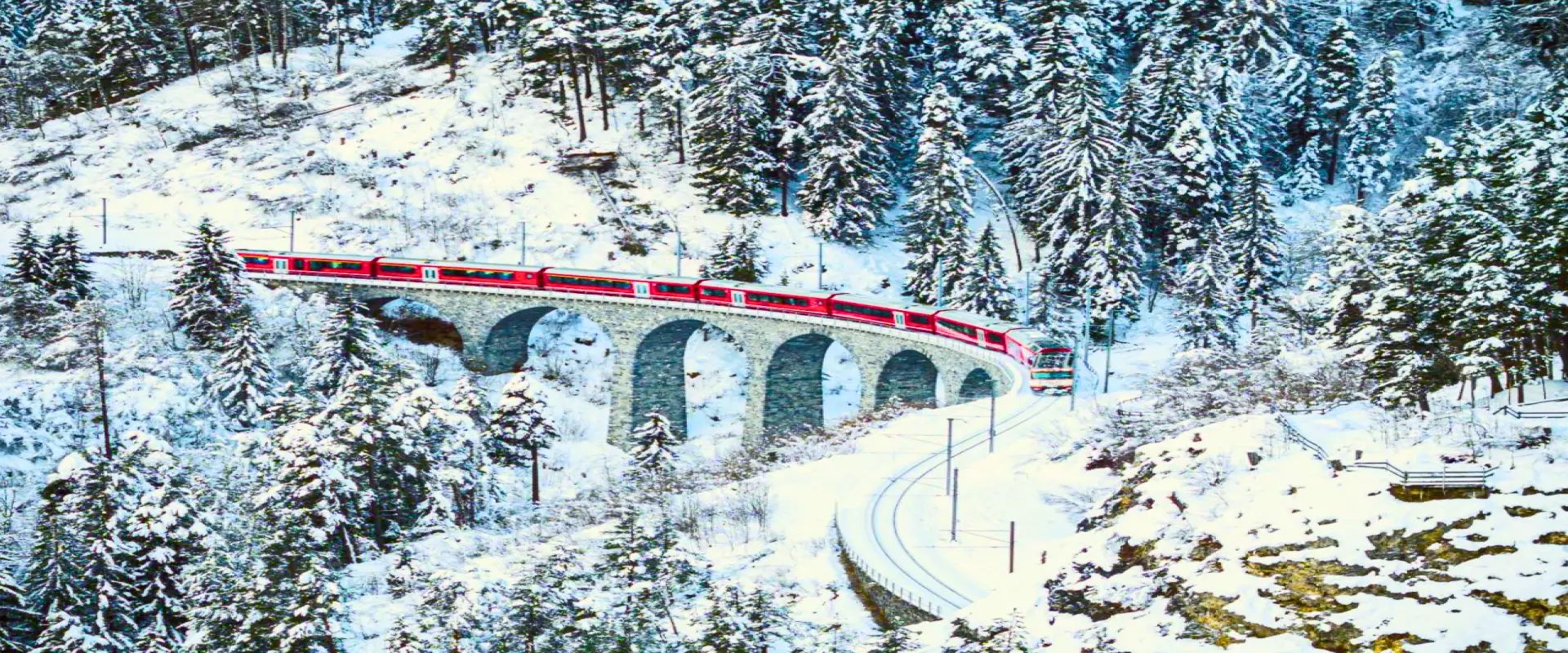
Rail travel to the Alps is a realistic option for a handful of resorts with good rail connections. The Eurostar runs from London St Pancras to Paris, from where TGV services reach stations in the French Alps - Bourg-Saint-Maurice (for Les Arcs, La Rosiere, and Tignes/Val d’Isere), Moutiers (for the Three Valleys), and Grenoble. In Switzerland, the rail network is famously efficient, with direct services to Zermatt, Wengen, and other car-free resorts.
The Eurostar ski train, when it runs, goes direct from London to the Tarentaise valley overnight - you board in the evening and wake up in the mountains. Availability is limited, and seats sell out early in the season, but for resorts on that line it’s hard to beat for convenience.
For Austrian resorts, the OBB Nightjet sleeper services from various European cities are worth considering if you’re already on the continent. The last leg from a valley station to the resort itself usually involves a local bus or short taxi ride - something to factor into your planning.
Which airport you fly into shapes everything about your transfer. Geneva is the default gateway to the French and Swiss Alps, with the widest range of UK flights and transfer times from 90 minutes to three hours depending on the resort. Our guide to ski resorts near Geneva breaks down each option by transfer time. Grenoble and Lyon Saint-Exupery serve the southern French Alps and can cut transfer times for resorts like Alpe d’Huez or Les Deux Alpes. Chambery is closer still to the Three Valleys and Paradiski but has fewer scheduled flights.
For Austria, Innsbruck puts you within an hour of most Tyrolean resorts. Salzburg and Munich serve the eastern Austrian Alps and are particularly useful for the Salzburger Sportwelt and Ski Amade areas. Turin and Milan Bergamo are the entry points for Italian resorts in the Dolomites and the Milky Way. Zurich is the gateway to eastern Switzerland, Austria and the Arlberg, covered in our guide to ski resorts near Zurich.
Early morning flights from the UK get you to the resort with enough time to collect hire equipment, settle in, and even grab an afternoon on the slopes. Late evening arrivals mean you lose a half-day and may miss ski school registration the following morning. When weighing flight options, the transfer time from each airport matters as much as the fare - a cheaper flight into an airport three hours from the resort is rarely cheaper once you factor in the longer transfer.
If you’re hiring equipment in resort - which most first-timers and many regulars do - your luggage requirements are the same as any other holiday. Standard hold luggage plus a carry-on is usually enough. The bulky items (skis, boots, poles) will be waiting for you at the rental shop.
Bringing your own equipment is a different calculation. Ski bags are oversized and most airlines charge a sports equipment fee on top of standard baggage. Ski boots alone weigh 3 to 5 kg, and a bag with skis and poles adds another 8 to 12 kg. Check your airline’s policy before booking - some include ski carriage in the hold allowance, others treat it as a separate item. Boot bags that double as hand luggage are useful: if the airline loses your hold bag, you can still ski on day one with hired skis and your own boots.
On transfers, luggage goes in the undercarriage of coaches or the boot of private vehicles. Ski bags are standard cargo for any transfer company operating in the Alps, so there’s no need to book separately for them.
The return transfer deserves as much thought as the outbound one, partly because it’s the leg most people underestimate. Checkout is typically before 10am, your flight might not be until late afternoon, and that leaves hours to fill in ski boots with nowhere to store luggage.
Some accommodations have a luggage room where you can leave bags after checkout and ski the morning. Others don’t. If your transfer is a shared coach, the departure time is fixed - usually mid-morning - and you’ll need to return hire equipment before you leave. That means your last morning is a logistics exercise: pack, return gear, check out, get to the coach point.
Private transfers give you more control over timing. You can ski until lunchtime, return equipment at your own pace, and schedule the pickup to match. If you’re self-driving, the same flexibility applies, but remember that Saturday changeover days mean heavy traffic on the valley roads. Leaving early in the morning or waiting until mid-afternoon avoids the worst of it.
Download offline maps before you travel. Phone signal drops out on many mountain approach roads, and if you’re driving or need to navigate from a train station, a downloaded map is essential. Google Maps and Apple Maps both support offline areas.
Saturday is the busiest changeover day. Transfer roads are most congested on Saturdays, particularly around Geneva and in the Tarentaise valley. If you have the flexibility, Sunday arrivals and departures are noticeably quieter.
Layer up for the transfer. Coaches and minibuses are warm, but you’ll step out at altitude where the temperature can be 10 to 15 degrees colder than the airport. Keep a jacket and warm layer in your hand luggage rather than buried in the hold bag.
Ask about resort shuttles once you arrive. Most ski resorts run free local bus services connecting villages, lifts, and accommodation areas. These are useful throughout the week, not just for the initial transfer, and can save you taxi fares if your accommodation is a few stops from the main lift station.
| Shared coach | Most common. Coordinated with flights. Possible wait at airport. Multiple stops. |
|---|---|
| Private transfer | Direct, faster. Set your own pickup time. Better for groups and families. |
| Self-drive | In-resort freedom. Requires winter tyres/chains. Tolls and parking to factor in. |
| Train | Good for selected French and Swiss resorts. Eurostar ski train for Tarentaise valley. |
| Airport choice | Shorter transfer often outweighs a cheaper flight. Geneva widest UK range. |
| Return journey | Plan luggage storage and equipment return before your last morning. |
It depends entirely on the resort and which airport you’re flying into. Some resorts are 60 to 90 minutes from the nearest airport - Innsbruck to the Stubai Valley, for example. Others are closer to three hours, like Geneva to Val d’Isere. Shared transfers take longer than private ones because of intermediate stops. Our guide to the best ski resorts with short transfers covers the quickest options.
In most Alpine countries, carrying snow chains is either legally required or strongly advised between November and April. Even if your hire car has winter tyres fitted, chains are needed for steep access roads when conditions deteriorate. They’re straightforward to fit with a bit of practice - watching a tutorial video before you travel is time well spent.
For a number of French and Swiss resorts, absolutely. The Eurostar to Paris connects with TGV services to the French Alps, and the direct Eurostar ski train to the Tarentaise valley runs during the winter season. Swiss resorts like Zermatt and Wengen are well connected by rail from Geneva or Zurich. Austrian resorts are harder to reach by train from the UK but manageable via overnight sleeper services if you’re already on the continent.
Booking transfers as part of a package keeps everything coordinated - your transfer timing matches your flight, and if your flight is delayed, the transfer company knows about it. Booking separately gives you more choice of provider and vehicle type, but the coordination is on you. For a first ski holiday, having transfers bundled into the booking removes a layer of logistics you probably don’t want to deal with.
If you’ve booked a shared transfer, the operator usually monitors flight arrivals and adjusts coach departures accordingly - though there’s a limit to how long they’ll wait. Private transfers are more flexible because the driver is waiting specifically for you. If your transfer is part of a package, the operator handles the rebooking or delay management. Flying independently with a separate transfer booking means you’ll need to contact the transfer company yourself if things run late.
Got a clearer picture of how you want to reach the slopes? WeSki’s AI trip planner can match you to the right resort and sort out the logistics - tell it what matters to you and get a personalised shortlist in seconds


WeSki is a trading name operated by WeTrip Ltd. All the flights and flight-inclusive holidays on this website are financially protected by the ATOL scheme. When you pay you will be supplied with an ATOL Certificate. Please ask for it and check to ensure that everything you booked (flights, hotels and other services) is listed on it. Please see our booking conditions for further information or for more information about financial protection and the ATOL Certificate go to: www.caa.co.uk.
Package holidays that do not include travel by air are financially protected via ABTOT.
For the latest travel advice from the Foreign & Commonwealth Office visit www.gov.uk/foreign-travel-advice.