
EN
EN
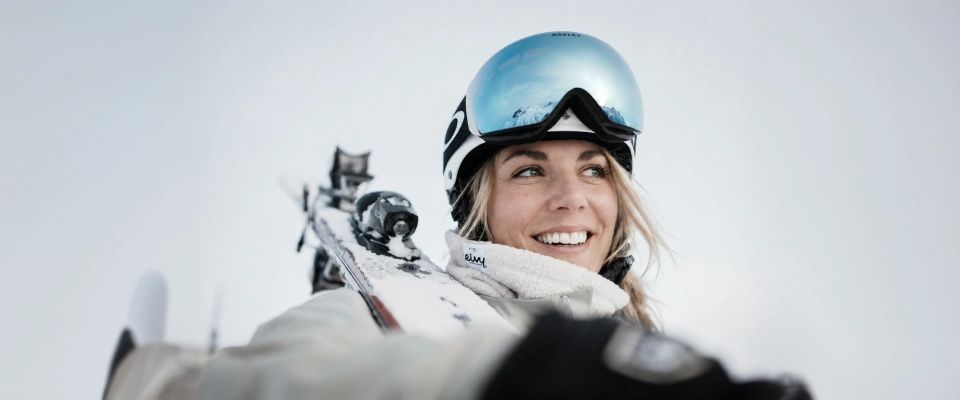
This guide covers what to expect from your first week on skis - choosing a resort, booking lessons, getting the right gear, and the technique basics that make the biggest difference early on. It follows a natural order: the decisions you make before you go, what happens when you get there, and how to make the most of each day on the mountain. If you're still weighing up whether skiing is for you, our guide to what it's actually like to learn to ski covers the emotional side honestly. Already sold and looking for the right place to go? Here are our 10 best ski resorts for beginners 2026/27 - or if you'd rather jump straight to what's bookable, browse our beginners ski holidays.
Your resort choice matters more than almost any other decision. A beginner-friendly resort has wide, gentle nursery slopes separated from faster skiers, a highly rated ski school with English-speaking instructors, and enough easy blue runs to progress to as the week goes on. It also needs to work for your whole group - if your partner or friends already ski, they'll want enough terrain to keep them busy while you're in lessons.
Resorts like La Plagne, Obergurgl, and Soldeu consistently top the list for first-timers because they get all of this right. Transfer time matters too - after a flight you don't want a four-hour bus ride before you've even seen snow. Our full breakdown of the 10 best ski resorts for beginners ranks every option by nursery terrain, ski school quality, and transfer time.
Lessons make the biggest difference to your first week. A good instructor teaches you the fundamentals in a structured way that self-teaching simply cannot match, and having someone to correct small habits early on saves weeks of frustration later. Group lessons (typically six to eight people) run for three to four hours each morning and are the standard route for adult beginners.
Pre-book before you travel, especially during school holiday weeks when group lessons fill up fast. Most beginner groups start on Sunday or Monday, so timing your arrival matters. If you want extra confidence on day one, a private lesson for the first morning can help you get comfortable with the basics before joining the group. Booking through a package that includes lessons means the logistics are handled for you.
Boots matter more than anything else you hire. Badly fitted boots will make your feet ache, limit your control, and ruin your enjoyment before lunch. Spend the time getting them fitted properly - a good hire shop will adjust the buckles and check the fit with your ski socks on. If they are uncomfortable after your first day, go back and ask for a swap. Most hire shops will do this without fuss.
Everything else - skis, poles, and a helmet - comes as a standard hire package. As a beginner, you do not need premium equipment. The standard package will be more than adequate, and the hire shop will set the binding release to your weight and ability level. Pre-booking equipment hire as part of your trip package means it is waiting for you when you arrive.
Layering is the principle that matters. You need a thermal base layer (top and bottom), a mid layer for warmth (fleece or lightweight down), and a waterproof outer layer (jacket and trousers). Ski-specific socks are worth buying before you go - they are thin, padded in the right places, and much better than thick walking socks, which bunch up inside boots.
Gloves, a helmet (usually included in your hire package), and goggles or sunglasses complete the essentials. High-SPF sun cream is not optional - UV at altitude is significantly stronger than at sea level, and cloud cover does not reduce it as much as you would expect. Lip balm with SPF is easy to forget and worth packing.
Your lift pass is included in a WeSki package, so the logistics are handled. For context, a lift pass gives you access to the resort's lifts and pistes. As a beginner, you will spend the first day or two on the nursery slope, which in some resorts has its own dedicated beginner lifts. By mid-week you will be using the main lifts to access longer blue runs.
Some resorts, like Les Arcs and Obergurgl, have particularly well-designed beginner lift access that makes the first days straightforward. Your instructor will guide you through which lifts to use and when.
You do not need to study ski technique in detail before your first lesson - that is what the instructor is for. But understanding three concepts will help you make sense of what they are teaching. The snowplough (skis in a V shape, tips together) is how you control speed in the first days. Edging means tipping your skis slightly onto their edges to grip the snow rather than sliding sideways. Weight transfer - shifting your weight from one ski to the other - is what makes turns happen.
Your instructor will build these up step by step, starting with simple sliding and stopping, then adding turns. The snowplough feels awkward at first but gives you reliable speed control, which is the foundation everything else builds on. By mid-week, most beginners start transitioning to parallel turns - skis pointing the same direction rather than in a wedge - which feel smoother and more natural.
Day 1: Your instructor starts on flat ground with basic balance, sliding, and stopping. By the afternoon you will be making snowplough turns on the nursery slope and using the carpet lift or button lift to get back up. It is tiring - your legs work hard and the mental concentration adds to the fatigue.
Day 2: Your legs will ache badly first thing - this is the peak of the muscle soreness and it is universal. By the end of day two, you will feel noticeably more confident in your turns and stopping.
Day 3: The breakthrough day for most beginners. Many people move off the nursery slope onto their first green or easy blue run, riding a chairlift for the first time. The soreness starts to fade. This is typically when the shift from concentration to enjoyment happens.
Days 4-5: Consolidating your turns, increasing confidence on blue runs, and starting to ski with more rhythm and less rigid effort. By day five, most beginners are skiing top-to-bottom blue runs and beginning to experiment with parallel turns.
Days 6-7 (if you have a full week): Building speed, refining turns, and exploring more of the mountain. By the end of the week, many people are comfortable on all blue runs in the resort and may have attempted an easy red. Not everyone gets to this point, and that is fine - progress varies and five days of solid blue-run skiing is a great result.
You do not need to be an athlete, but a few weeks of leg-strengthening exercises before the trip will make the first days noticeably more comfortable. Squats, lunges, and wall sits are the most useful - they target the same muscles skiing demands. Even three sessions a week for a month makes a meaningful difference to how your legs feel on days two and three.
Core strength matters too. A strong core helps you balance on your skis and recover from wobbles without falling. Planks, dead bugs, and any exercise that works your lower abs will pay off on the mountain. If you only have two weeks, focus on squats and lunges - they give the biggest return for the time invested.
Boots are everything. If one piece of equipment matters, it is your boots. Spend the time getting them fitted properly in the hire shop, and go back if they are uncomfortable after day one. Most hire shops will swap them without fuss.
Arrive the day before your first lesson. Travel days are tiring, and you do not want to spend your first morning jet-lagged and rushing to collect hire equipment. Arriving the afternoon or evening before gives you time to settle in, find the hire shop, and get everything sorted.
Eat a proper lunch. Skiing burns more energy than most people expect. A decent mountain lunch is not optional - you need the fuel for the afternoon. Skipping lunch to save time almost always leads to a tired, cold, miserable last run of the day.
Take the afternoons gently. After morning lessons, spend the afternoon practising what you have learned on the nursery slope or easy blue runs - or stop altogether and enjoy the après-ski. Pushing too hard in the afternoon when you are tired is when most avoidable falls happen.
Sunscreen goes on before you leave the hotel. UV at altitude is stronger than you expect and reflected snow doubles the exposure. Apply high-SPF cream to your face and any exposed skin before heading out, and reapply at lunch.
Most people can make basic turns and use the nursery lift by the end of day one. By day three, many beginners are on their first blue run. A five-day lesson block is enough for most people to be skiing confidently on blue runs and beginning to experiment with parallel turns. Some people progress faster, some slower - both are completely normal. The quality of instruction and the resort you choose matter more than the number of days.
Group lessons are the standard route for adult beginners and work well for most people. You learn alongside others at your level, which is motivating and social. Private lessons give you one-to-one attention and can accelerate the early stages. A popular approach is to book a private lesson for the first morning to build basic confidence, then join the group from day two onwards.
You can, but most people find it much slower and more frustrating than learning with an instructor. An instructor teaches you the right habits from the start, which saves time later. Self-taught skiers often develop habits that are harder to correct once they are ingrained. If you are investing in a ski holiday, lessons are the single thing most likely to make it a good experience.
This is one of the most common worries. In practice it works well - you spend mornings in lessons while they ski the wider mountain, then meet for lunch. By mid-week you may be skiing some of the same blue runs together. The key is choosing a resort with enough terrain for both ability levels. Our best ski resorts for beginners guide prioritises resorts that work for mixed-ability groups.
Almost nothing. Skis, boots, poles, and a helmet are all hired at the resort. The only things worth buying before you go are ski socks (thin, padded, purpose-made), thermal base layers if you do not already own them, and high-SPF sun cream. Everything else is either hired or already in your wardrobe.
Got a clearer picture of what you need? WeSki's AI trip planner turns it into a shortlist.



WeSki is a trading name operated by WeTrip Ltd. All the flights and flight-inclusive holidays on this website are financially protected by the ATOL scheme. When you pay you will be supplied with an ATOL Certificate. Please ask for it and check to ensure that everything you booked (flights, hotels and other services) is listed on it. Please see our booking conditions for further information or for more information about financial protection and the ATOL Certificate go to: www.caa.co.uk.
Package holidays that do not include travel by air are financially protected via ABTOT.
For the latest travel advice from the Foreign & Commonwealth Office visit www.gov.uk/foreign-travel-advice.