
EN
EN
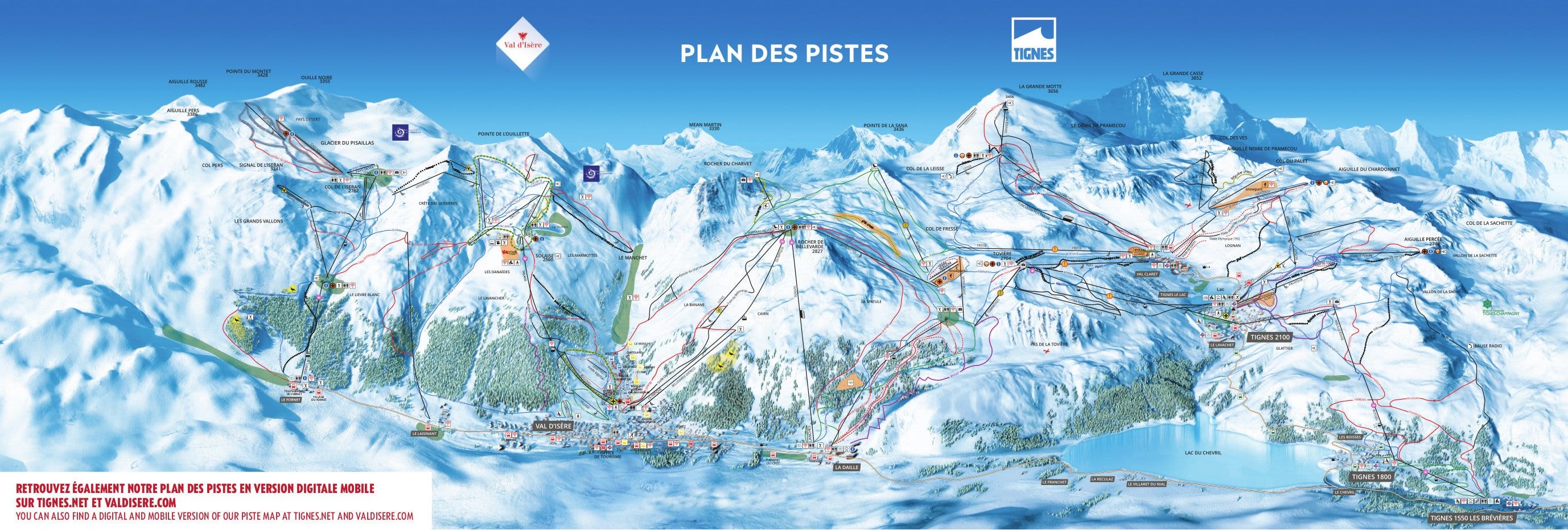
Tignes - Val d'Isère is a high-altitude, snow-sure ski area in the upper Tarentaise Valley of the French Alps. Formerly known as Espace Killy (after triple Olympic champion Jean-Claude Killy, who grew up in Val d'Isère), it links two very different resorts across a shared mountain. The area is built for serious skiing - high altitude, long seasons, reliable snow, and terrain that ranges from gentle glacier blues to some of the most demanding off-piste in Europe.
The area covers 300 km of marked piste served by 78 lifts, sitting between 1,550 m and 3,456 m. There are 154 runs in total: 22 green, 61 blue, 46 red, and 25 black. The Grande Motte glacier above Tignes reaches 3,456 m and opens for skiing as early as October. The main season runs from late November to early May, making it one of the longest in the Alps. Both resorts share a single lift pass.
Tignes is purpose-built, practical, and high - its main village sits at 2,100 m with guaranteed snow at the door. Val d'Isère has more character and charm, with a traditional village centre, better restaurants, and a stronger après-ski scene. The skiing on both sides is excellent, and the resorts link seamlessly across the Col de Fresse and Tovière. Browse Tignes - Val d'Isère ski deals on WeSki to start planning your trip.
| Country | France |
| Region | Savoie / Tarentaise Valley, Northern Alps |
| Total piste km | 300 km |
| Altitude | 1,550 m (Tignes Les Brévières) - 3,456 m (Grande Motte glacier) |
| Linked resorts | 2 Tignes Val d'Isère |
| Lifts | 78 |
| Runs | 154 (22 green, 61 blue, 46 red, 25 black) |
| Season | Late November - early May (glacier skiing from October and into summer) |
| Ski pass name | Tignes - Val d'Isère ski pass (formerly Espace Killy) |
| Nearest airports | Chambéry (~1 hr 45 min) Lyon (~2 hr 30 min) Geneva (~3 hr) Grenoble (~2 hr 45 min) |
| Glacier skiing | Yes - Grande Motte glacier (3,456 m) above Tignes, open from October |
| WeSki services | Lessons: Tignes, Val d'Isère Transfers: both resorts (private and shared to both; scheduled to Tignes) Ski equipment hire: Tignes (main village, Les Boisses/1800, Les Brévières), Val d'Isère |
Tignes is made up of several distinct villages at different altitudes. Tignes Le Lac (2,100 m) is the main hub - purpose-built, compact, and right on the slopes. Tignes Val Claret (2,150 m) sits slightly higher and is the departure point for the Grande Motte glacier funicular. Tignes Les Boisses (1,800 m) and Tignes Les Brévières (1,550 m) are lower, quieter, and more affordable, each with their own lifts feeding into the main area. The architecture across the upper villages is functional rather than charming, but the skiing is the point - you're guaranteed snow, guaranteed piste access from your door, and the Grande Motte glacier adds terrain well above 3,000 m. Tignes also has a strong freestyle scene, with a well-maintained snowpark and half-pipe.
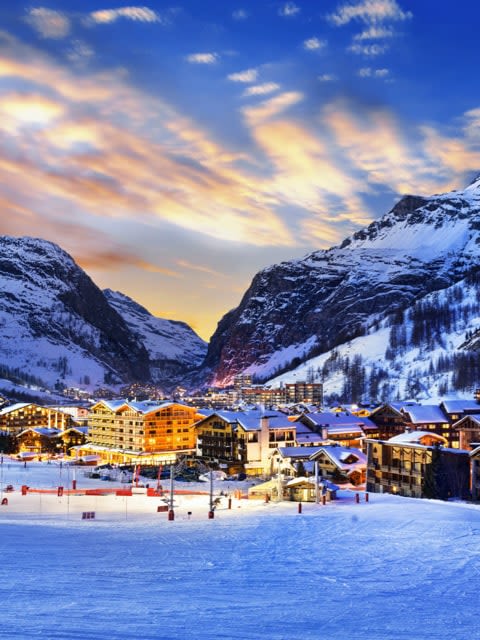
Val d'Isère has a traditional village centre with stone and wood buildings, a church, and a main street lined with restaurants, bars, and ski shops. It sits at 1,850 m and feels like a proper mountain town rather than a purpose-built resort. The skiing above is varied and demanding - the Face de Bellevarde, host to the 1992 Olympic men's downhill and the annual Critérium de la Première Neige, is one of the most famous runs in alpine skiing. The Solaise and Fornet sectors are also excellent, with long reds, quiet blues in the back bowls, and access to some exceptional off-piste terrain. The après-ski is lively, with La Folie Douce on the mountain and a strong bar scene in the village.
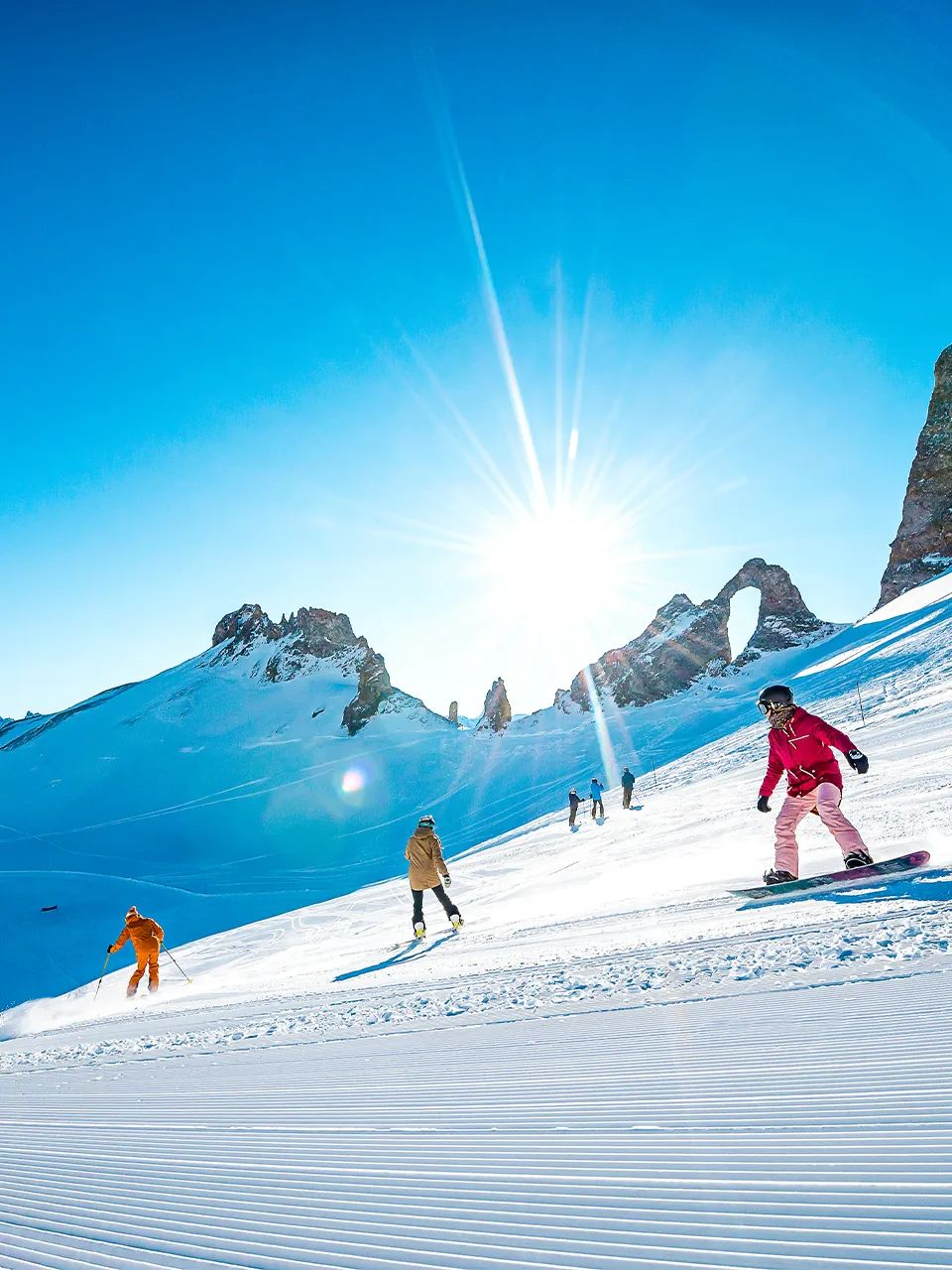
Both resorts have dedicated learning areas. Tignes Le Lac has a free nursery zone right in the village, and the wide green runs across the plateau above are ideal for building confidence in a high-altitude setting. Val d'Isère's Solaise sector has a good beginners' area at the top of the gondola, with gentle slopes separated from faster traffic and panoramic views that make learning feel less like hard work. The glacier blues on the Grande Motte are also wide and well-groomed, though the altitude can tire beginners out faster than expected.
Ski and snowboard lessons are available through WeSki in both Tignes and Val d'Isère, for adults and children.
WeSki tip: Val d'Isère's beginner area on Solaise is at 2,551 m - the snow is excellent, but the altitude can catch people out. Drink plenty of water, take breaks, and don't push through fatigue on the first day. By day two, you'll have acclimatised and everything feels easier.
With 61 blues and 46 reds, intermediates have a huge playground. The blues on the Grande Motte glacier are some of the widest and best-groomed in the Alps - sweeping runs above the treeline with views across the Vanoise National Park. The reds from Tovière down into Val d'Isère are long and satisfying, and the Fornet sector at the far end of Val d'Isère has quieter blues through a beautiful back valley. The link between the two resorts via the Col de Fresse is an enjoyable red run in itself, and crossing back and forth in a day is easy.
WeSki tip: The Fornet sector in Val d'Isère is the quietest part of the ski area - most visitors stick to the Bellevarde and Solaise sides. Take the Fornet cable car after lunch for uncrowded reds and some of the best views in the area, looking out towards the Vanoise glaciers.
This is one of the top ski areas in the world for advanced and off-piste skiing. The Face de Bellevarde is a steep, sustained black with World Cup pedigree. The Couloir Naturiste and Grand Couloir on Tignes' side are challenging marked itineraries that require good conditions and nerve. Off-piste, the area is exceptional: the Vallée Perdue between Tignes and Val d'Isère, the north-facing runs off the Col Pers, and the long descents from the Grande Motte glacier into the Leisse valley are all classic routes. The terrain is big, committing, and rewarding. A guide is essential for any backcountry skiing.
WeSki tip: The Chardonnet sector off the back of the Grande Motte is an avalanche-controlled off-piste area that's marked but not groomed. It's a good introduction to off-piste in a relatively managed setting. Check the morning security report at the top of the funicular for conditions.
The Tignes - Val d'Isère ski pass covers all 300 km of piste and 78 lifts across both resorts on a single ticket, including the Grande Motte glacier. Passes are available from one day up to the full season, with discounted rates for children, teens, and seniors. There's no single-resort pass option here - the shared pass covers everything, which keeps it simple. The pass also includes access to the Tignes snowpark, half-pipe, and the Lagon swimming complex.
You can add the lift pass directly to your WeSki booking, along with ski equipment hire at Tignes (main village, Les Boisses, and Les Brévières) and Val d'Isère - so everything's sorted before you arrive.
WeSki tip: The glacier opens as early as October for pre-season skiing on a limited number of runs. If you're an early-season skier, check whether the glacier pass is available before the main area opens - it's a cost-effective way to get some turns in before the winter crowds arrive.
Chambéry is the closest airport, around 1 hour 45 minutes' drive up the Tarentaise Valley. Lyon is roughly 2 hours 30 minutes away, and Grenoble about 2 hours 45 minutes. Geneva is around 3 hours. By train, the Eurostar and TGV run to Bourg-Saint-Maurice, which is 30 minutes from Tignes and 35 minutes from Val d'Isère by road. Regular shuttle buses connect the station to both resorts during the season, and a free ski bus runs between Tignes and Val d'Isère throughout the day.
WeSki has private and shared transfers to both Tignes and Val d'Isère, plus scheduled transfers to Tignes. Add them to your booking for a straightforward door-to-door trip.
The main season runs from late November to early May - one of the longest in the Alps. The Grande Motte glacier above Tignes opens from October and stays open into summer, though the rest of the area relies on the regular season. With most of the terrain above 2,000 m, snow conditions are reliable from December onwards. January to mid-March typically sees the deepest snowpack and the best powder days.
School holiday weeks in February and the Christmas-New Year period are the busiest. The Critérium de la Première Neige race in December brings a buzz to Val d'Isère. If you've got flexibility, early December (once the full area opens) and the first half of March are excellent - the slopes are quieter, the days are getting longer, and conditions at altitude are usually strong. Late April skiing is a real possibility here, with spring snow and sunshine on the upper runs.
Yes. Both resorts have dedicated nursery areas separated from faster traffic. Tignes Le Lac has a free learning zone in the village, and Val d'Isère's Solaise area has gentle slopes at altitude with excellent snow. The glacier blues on the Grande Motte are also wide and manageable. Ski and snowboard lessons for adults and children are available through WeSki in both Tignes and Val d'Isère.
The area covers 300 km of marked piste served by 78 lifts, ranging from 1,550 m to 3,456 m. There are 154 runs in total: 22 green, 61 blue, 46 red, and 25 black. Two resorts share a single lift pass. It was formerly known as Espace Killy.
Tignes is purpose-built, higher (main village at 2,100 m), and focused on convenience - everything is ski-in ski-out, and the Grande Motte glacier is accessed from here. Val d'Isère has a traditional village centre with more character, better restaurants, a stronger après-ski scene, and some of the area's most demanding terrain on the Bellevarde face. Tignes suits skiers who prioritise snow and slope access; Val d'Isère suits those who want atmosphere alongside their skiing.
The main season runs from late November to early May. The Grande Motte glacier above Tignes opens from October and is also open for summer skiing. The high altitude means snow conditions are reliable throughout the winter, and the area is one of the last to close each spring.
Fly to Chambéry (1 hr 45 min drive), Lyon (2 hr 30 min), Grenoble (2 hr 45 min), or Geneva (3 hr). Alternatively, take the Eurostar and TGV to Bourg-Saint-Maurice, which is 30 to 35 minutes from both resorts by road. WeSki has private, shared, and scheduled transfers available.
The Grande Motte is a glacier above Tignes reaching 3,456 m - the highest point in the ski area. It's accessed by a funicular from Val Claret and provides wide, groomed blue and red runs at altitude. The glacier opens from October for pre-season skiing and also operates in summer. It's the reason the area has one of the longest seasons in the Alps.
No. The two resorts are fully linked by the lift system during ski hours - you can ski between them freely. A free bus also runs between the villages throughout the day and into the evening, so getting around without a car is straightforward.
Yes. Ski and snowboard lessons are available through WeSki in both Tignes and Val d'Isère. Ski equipment hire is available at Tignes (main village, Les Boisses, Les Brévières) and Val d'Isère. You can add both to your booking along with your lift pass and transfers.
Yes - this is one of the top off-piste areas in the Alps. Classic routes include the Vallée Perdue, the north-facing descents off the Col Pers, and the long glacier runs from the Grande Motte into the Leisse valley. Marked but ungroomed itineraries like the Chardonnet sector provide a managed introduction to off-piste. A mountain guide is essential for backcountry skiing.
Start building your dream ski trip today with our one-stop ski shop - hundreds of resorts, unlimited combinations.

 4.9/5
4.9/5I usually book flights, transfers, hotel, ski rental and lift passes myself but this year used WeSki for a trip to Morzine. It was so much easier. Everything worked perfectly - transfers arrived on time and there was plenty of feedback throughout the whole process giving you confidence the holiday would go smoothly.

A really useful service that is so much easier to use than other 'all-inclusive' sites. It nicely bridges the gap between a travel agent and booking the trip yourself online. I will use WeSki every time I go skiing from now on.
We booked a late minute skiing trip to Morzine through we ski. We looked at booking the trip ourselves but could get anywhere near the price quoted by we ski. The company was excellent and we had no problems at all from start to finish. I would definitely use them to book another weekend skiing trip.
Seamless experience from start to finish. I was spending ages trying to sort out a weekend break and managed to do it with we ski in minutes and for the same price as booking it all up yourself. Flight, transfer and accommodation was all as expected and faultless.

WeSki is a trading name operated by WeTrip Ltd. All the flights and flight-inclusive holidays on this website are financially protected by the ATOL scheme. When you pay you will be supplied with an ATOL Certificate. Please ask for it and check to ensure that everything you booked (flights, hotels and other services) is listed on it. Please see our booking conditions for further information or for more information about financial protection and the ATOL Certificate go to: www.caa.co.uk.
Package holidays that do not include travel by air are financially protected via ABTOT.
For the latest travel advice from the Foreign & Commonwealth Office visit www.gov.uk/foreign-travel-advice.