
EN
EN
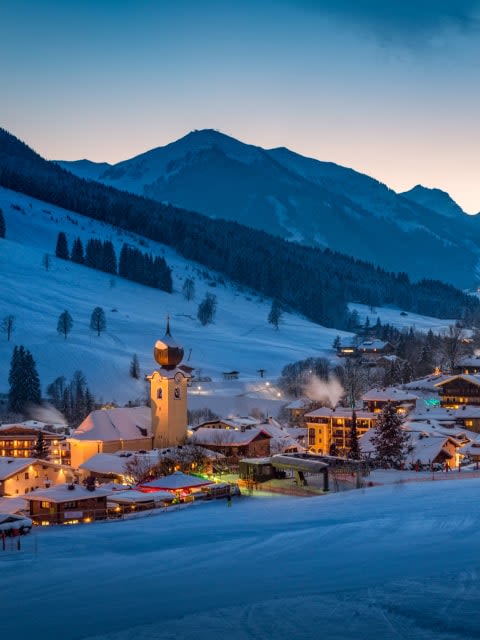
The Skicircus is one of the largest linked ski areas in Austria, with 270km of pistes in a loop that crosses from Salzburg into Tyrol. It’s known for its wide, well-groomed slopes and has a real racing pedigree too, having hosted the FIS Alpine World Ski Championships twice, most recently in 2025. You can stay in one of its four resorts, Saalbach, Hinterglemm, Leogang, and Fieberbrunn, which are all linked by lift and covered by the same pass. Saalbach is famous for its après-ski, with a car-free village where the pistes come right down into the centre. Hinterglemm is a lively village, with lifts leaving from its centre and the World Championship slopes rising right above it. Leogang is a quiet village with some of the area’s longest runs leading down to it, and Fieberbrunn, across the border in Tyrol, is a freeride base that hosts the Freeride World Tour each winter. The Ski ALPIN CARD also covers Zell am See-Kaprun next door, for 408km in all.
Blue and red runs make up nearly all of the pisted terrain in the Skicircus, with 140km of blues and 112km of reds, so if you’re a beginner or intermediate skier, you can cover long stretches of the circuit. Beginners have practice areas close to the villages, with wide blue runs above them to progress on to. Intermediates will appreciate the long, flowing runs on both sides of the valley, with sunny, south-facing slopes on one side and steep reds on the other, plus ready-made circuits that link them into a full day out. There are fewer black runs for advanced skiers, with 18km across the area, but strong skiers come for the endurance, with circuits like the 65km Challenge loop, which takes in the whole Skicircus in a single day. You can also ski on the World Championship downhill pistes above Hinterglemm, and freeriders can head for the open slopes above Fieberbrunn. Freestylers also have snowparks in Hinterglemm, where the park is floodlit on set evenings, and in Leogang, known for its giant airbag for landing big jumps.
Among the many highlights in the Skicircus, lunch is a big part of the experience, with more than 60 mountain huts along the pistes. They serve hearty Austrian cooking, from crispy schnitzel to apple strudel and other homemade cakes, often made with produce from local farms. Saalbach Hinterglemm is also known for its après-ski, which starts right on the slopes at hut terraces, where live bands and DJs get people dancing in their ski boots, and carries on in the village bars and clubs late into the night. There’s plenty to do when you’re not on the pistes too, which makes the Skicircus a great winter holiday for any non-skiers in your group. You can race down floodlit toboggan runs, ride an alpine coaster, go snowtubing, or explore the forests on winter walking and snowshoe trails.
| Country | Austria |
| Region | Salzburg / Tyrol border |
| Total piste km | 270 km |
| Altitude | 830 m (Leogang) - 2,096 m (Schattberg summit) |
| Linked resorts | 3 Saalbach-Hinterglemm Leogang Fieberbrunn |
| Lifts | 70 |
| Runs | 140 (22 green, 44 blue, 52 red, 22 black) |
| Season | Early December - mid-April |
| Ski pass name | Skicircus Saalbach Hinterglemm Leogang Fieberbrunn pass |
| Nearest airports | Salzburg (~1 hr 15 min) Munich (~2 hr 15 min) Innsbruck (~2 hr) |
| Glacier skiing | No |
| WeSki services | Transfers: all resorts (private and shared to Saalbach, Hinterglemm, Leogang, Fieberbrunn) Ski equipment hire: Saalbach, Hinterglemm, Fieberbrunn No WeSki lessons currently available |
Saalbach’s skiing is split between the two sides of the valley, and there are gondolas from the village centre that take you up to both. Complete beginners are well set up and can start on a nursery slope in the village. Once they’re comfortable, the Saalbach Circuit links a series of blue runs into a 19km loop of the local slopes, which are a great next step up. The sunny, south-facing side of the circuit has wide blue and red runs for intermediates to cruise, while on the opposite side, the Schattberg has the steeper runs. Advanced skiers can take on the Nordabfahrt, a long black that drops from the Schattberg’s eastern summit back into the village, and the Schattberg also has mogul runs and off-piste lines to explore.
Saalbach’s centre is car-free, and its pedestrian main street is lined with hotels, shops, cafés, and bars. Much of the accommodation is right in the village centre, within walking distance of the lifts, and a few hotels on the edge of the slopes have direct access to the pistes. There are also family-run guesthouses and apartments further out, which are linked to the lifts by ski bus, so getting around is still straightforward.
Off the slopes, there’s plenty to fill your time in Saalbach. For memorable holiday activities, you can take on fun winter classics, like riding a snowcat up to a mountain inn, tobogganing, taking a horse-drawn sleigh ride, or heading out on winter walking and snowshoe trails above the valley. The pedestrian centre has a wide choice of restaurants, with traditional Austrian cooking alongside international menus. Saalbach is best known for its après-ski, thanks to the slope-side huts just above the village, where skiers stop on their way down for live bands and DJs on the terraces. The party then carries on in the bars and clubs of the pedestrian centre late into the night.
Hinterglemm has slopes on two sides of the valley, with lifts from the middle of the village that take you up to both. On the Zwölferkogel, you’ll find the race pistes where the 2025 FIS Alpine World Ski Championships were held, which are open to everyone and finish right in the village. Complete beginners at Hinterglemm can learn on a nursery slope in the village centre. Once they’re comfortable, an easy family run on the mountain makes a good next step, with a fun slope of banked turns, small jumps, and a giant snow spiral designed for kids and adults alike. Intermediates can focus their time on the sunny side of the valley, where short, linked reds and blues make it easy to mix up your laps and ski back into the village. Strong skiers will want to head across to the other side of the valley, where longer reds and blacks have sustained pitches and the snow holds up well. For a full day out, experienced skiers can also try the 30km Hinterglemm Circuit, which strings together long descents with lots of vertical.
Tucked into the far end of the valley, Hinterglemm has a largely car-free centre, with a pedestrian main street of hotels, cafés, and bars that’s easy to explore on foot. Lifts leave from the middle of the village, so most hotels are a short walk from the slopes, and a few sit right beside the pistes. Guesthouses and apartments further out are linked to the lifts by ski bus, so getting around is easy wherever you stay.
Hinterglemm is a cosy village with so much to enjoy beyond skiing and snowboarding. When you’re not on the slopes, you can race down a 3km toboggan run that’s also floodlit in the evenings, go ice skating, glide along a 10km cross-country trail, or follow snowshoe and winter walking trails. As for food, the village has traditional Austrian dining rooms and taverns alongside more contemporary restaurants, where you can fill up on classic dishes and Austrian desserts or choose from international menus. You’re also close to the ski area’s mountain hut culture, where you can sit down for a classic Alpine lunch on the slopes. In fact, the huts just above Hinterglemm are particularly known for their après-ski, with live bands and dancing on the terraces, and plenty of bars along the main street keep going until late.
The runs back down to Leogang are among the longest in the Skicircus, and two gondolas from the village will take you up to the Asitz, Leogang’s own mountain, to start them. Beginners can start on nursery slopes during their first days before progressing onto the area’s calm blue runs, and there’s also a fun slope with waves and curves that’s suitable for all ages. Intermediates will enjoy the mountain’s long home runs, with flowing reds that wind through the forest and keep good snow on their north-facing slopes. One of the standouts for intermediates is also the Leogang Circuit, a 26km loop of blue runs towards Saalbach and back that makes a good half-day outing. Advanced skiers have a couple of black runs lower down the mountain, and a marked ski touring route climbs around 1,000m from the Steinberg gondola to the Asitz. Up on the Asitz, freestylers can land jumps on a giant airbag in the snowpark, and the freeride park sets features into ungroomed snow for anyone who wants to try powder.
Leogang sits beneath the Leoganger Steinberge, a dramatic wall of limestone peaks, and it’s a peaceful, authentic place to stay. The village is spread across a string of small hamlets, where traditional farmhouses sit alongside modern hotels, and its calm centre has a bakery café, a supermarket, a sports shop, and a handful of restaurants and bars. Accommodation in Leogang includes family-run guesthouses, self-catering apartments, award-winning five-star spa hotels, and a historic inn that has welcomed guests for around 700 years. The main gondola starts in Hütten, an old mining hamlet about 2km from the centre, and ski buses link both gondolas with the rest of the village.
Leogang has a quiet, traditional character, and while the focus of a trip here may be on the pistes, it’s a great place for a winter holiday beyond skiing and snowboarding. You can try exciting winter activities, like tobogganing down a 4km run from the Asitz, taking a horse-drawn sleigh ride, or following cross-country trails through the valley, including one that’s floodlit in the evenings. For relaxation, the area is known for its spa culture, with many hotels built around large wellness areas. Food is a real highlight here, with award-winning restaurants, including two recognised by the Michelin Guide, and a strong focus on local produce such as meat, cheese, and schnapps. Dining can also mean charming mountain hut stops for regional dishes, and on set evenings the gondola takes guests up the Asitz for dinner and live music at a hut. Après-ski is relaxed and traditional, perfect for calm evenings, with drinks on the hut terraces and at the bars by the gondola stations.
Fieberbrunn’s slopes are known for reliable snow, with open terrain up high and forest runs lower down, and the Streuböden gondola is the main way up from the village. Beginners can start on the gentle blue runs around the gondola, and there’s also a small park for first jumps and a fun line with features to ski through at the mid-station. Reds make up about half of Fieberbrunn’s own slopes, so intermediates have lots to explore, and they’ll want to spend time following the Tyrol Circuit, a 22km loop of mostly red runs that crosses back and forth between Tyrol and Salzburg. Strong skiers can tackle a steep black of around 1km and take repeat laps on the Reckmoos north face, and the lifts link straight into the rest of the Skicircus for more steep terrain. Freeriders come for the deep snow on the Wildseeloder, the mountain above the village, which became Austria’s first stop on the Freeride World Tour.
Across the border in Tyrol, Fieberbrunn is a quiet, traditional village in the Pillersee valley, an area known for its snowy winters. Its centre has cafés and bakeries, some serving local specialities, along with shops, traditional inns, and an indoor pool with a sauna area. Accommodation in Fieberbrunn is mostly family-run inns, guesthouses, and apartments, many with cosy Tyrolean dining rooms, and there are even farm stays right in the village. The gondola station sits just outside the village centre, and ski buses link the two, so it’s easy to get to the slopes.
Fieberbrunn’s fun doesn’t end on the slopes, and there’s plenty here to enjoy during a holiday. You can ride Timok’s Alpine Coaster, a 1.2km toboggan run on rails, down from the gondola’s mid-station, try the 2km natural toboggan run, or enjoy winter walking trails that lead from the village past the Lauchsee lake. Mountain huts are a big part of the dining, serving regional Tyrolean food, and in the village, traditional inns serve Austrian classics alongside local specialities, such as dumplings filled with potato and cheese. Après-ski is relaxed and traditional, centred on the huts and the village bars, with live music at some of the local inns on certain evenings.
Nearly half of the pistes in the Skicircus are blue, so beginners have plenty of gentle, well-groomed terrain to learn on, and every resort has nursery slopes close to the village. In Saalbach and Hinterglemm, the nursery slopes are right in the village centres, within easy reach of most hotels. Leogang has several small learning areas near the village, and in Fieberbrunn, first-timers can start on the gentle blues around the Streuböden gondola.
Once you’re comfortable, the area’s ready-made circuits make it easy to keep progressing. The Saalbach and Leogang circuits are made up entirely of blue runs, and from Leogang you can ski over to Saalbach and back without leaving the blues. Ski schools in every resort offer lessons for adults and children, with English-speaking instructors. Younger skiers will love the fun slopes spread across the area, with waves, banked turns, and giant snow spirals to ski through, and small parks in Saalbach and Fieberbrunn are set up for first jumps.
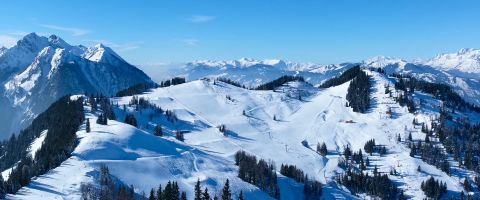
Intermediates have the run of the Skicircus, with 112km of reds and 140km of blues to explore. Most runs are wide and well groomed, with open slopes along the ridges giving way to tree-lined runs lower down, and long descents of up to 7km carry you all the way back to the valley floor.
In Saalbach, the Kohlmais side of the valley has wide, gentle blues and reds for cruising, while the reds coming down from the Schattberg opposite are longer and more demanding. On the Reiterkogel above Hinterglemm, short, linked runs are easy to lap, and Leogang’s long home runs flow down through the forest to the village. In Fieberbrunn, reds make up about half of the local slopes, and the 22km Tyrol Circuit links them into a varied loop that crosses back and forth between Tyrol and Salzburg.
Most of the steep terrain in the Skicircus is on the north-facing slopes above Saalbach and Hinterglemm, where the black runs are long and sustained and hold their snow well. Strong skiers will also find mogul runs across the area, plus race and speed courses where you can time yourself.
The World Cup downhill on the Zwölferkogel above Hinterglemm is the most difficult run in the area, short and very steep, and the Nordabfahrt drops from the Schattberg’s eastern summit all the way back into Saalbach. In Fieberbrunn, the Reckmoos north face is worth repeat laps, since it holds its snow well and a fast gondola brings you straight back up for another run. Off-piste, the Skicircus has marked freeride routes at every level, with checkpoints and avalanche information to help you plan, and the deep-snow slopes on the Wildseeloder above Fieberbrunn host the Freeride World Tour. They’re best explored with a local guide.
The Skicircus has a strong freeride and freestyle scene, and the Freeride World Tour stop on Fieberbrunn’s Wildseeloder includes snowboard events, where some of the world’s best riders compete each winter. On the pistes, most runs are wide and well groomed, with open slopes along the ridges, tree-lined runs lower down, and long, flowing descents of up to 7km that are made for carving. Fun slopes with waves and banked turns are spread across the area too.
If you’re trying snowboarding for the first time, the nursery slopes in each village are a gentle place to start, and ski schools across the area offer snowboard lessons. The learn-to-ride park in Saalbach has mini kickers and beginner boxes, and the family park in Hinterglemm, designed by specialist park builders, is set up for first jumps and slides. For bigger freestyle features, the Nitro Snowpark in Leogang has jumps, rails, and a giant airbag for landing tricks, and its freeride park sets obstacles into deep snow.
In winter, day and multi-day passes for the Skicircus are sold as the Ski ALPIN CARD, so one ticket covers all 270km of pistes across Saalbach, Hinterglemm, Leogang, and Fieberbrunn. It also includes the Schmittenhöhe in Zell am See and the Kitzsteinhorn glacier in Kaprun, for 408km and up to 121 lifts in total, along with floodlit night skiing and the local ski buses.
The Skicircus alone has plenty of terrain for a week’s holiday, and the wider pass gives you the option of a day on the glacier. If some of your group don’t ski, a pedestrian lift ticket with two return rides a day lets them meet you for lunch at the huts. For a longer or more varied trip, the SuperSkiCard is sold separately and covers 23 ski areas with more than 2,800km of pistes.
For international visitors, Salzburg is the closest airport to the Skicircus, around 65 to 90km away depending on which resort you’re staying in. Innsbruck is around 105 to 160km away, and Munich around 170 to 220km. From any of the three, you can hire a car or take a shared or private transfer straight to your accommodation.
By train, Leogang and Fieberbrunn have their own stations on the railway line between Salzburg and Innsbruck. For Saalbach and Hinterglemm, the nearest stations are Maishofen and Zell am See, with buses from Zell am See to both villages.
Once you’re there, the lifts link all four resorts, so you can ski from one to the next. Ski buses connect each village with its lift stations and are included with the Ski ALPIN CARD, and the car-free centres of Saalbach and Hinterglemm are easy to explore on foot.
The Skicircus season runs from late November to early April, with some lifts opening first and the full circuit following as the snow builds. For the most dependable snow, mid-January to mid-March is the best time to visit the Skicircus. Snowmaking covers around 90% of the pistes, and the north-facing slopes above Saalbach, Hinterglemm, and Leogang tend to hold their snow best, as does Fieberbrunn, in a part of Tyrol known for its snowy winters.
Christmas, New Year, and the February school holidays are the busiest times, while the weeks after New Year and the first half of March tend to be quieter. Two events are worth planning around. In mid-December, the Rave on Snow electronic music festival kicks off the season with DJs on stages across the slopes and villages. In late March, the White Pearl Mountain Days celebrate spring skiing with live music, DJs, and food events across the Skicircus, most of them open to everyone.
YYes. Every resort has nursery slopes close to the village, and fun slopes with waves, banked turns, and snow spirals are spread across the area, along with small parks for first jumps. Hinterglemm has plenty of family-friendly hotels, and Leogang is a quieter base. Off the slopes, kids love the floodlit toboggan runs and Fieberbrunn’s alpine coaster, which is covered for bad weather.
Stay in Saalbach for the liveliest après-ski and a car-free centre, or Hinterglemm for a lively village with family-friendly hotels below the World Championship slopes. Leogang suits a quieter stay with spa hotels and award-winning restaurants, while Fieberbrunn, in Tyrol, is a traditional village and the best base for freeriders. All four are linked by lift and covered by the same pass.
Yes, if you’re a strong, confident skier. The Challenge is a marked 65km loop through all four resorts, with around 12,400m of descent, mostly on blue and red runs. It takes around six hours of skiing without breaks, so start early, keep lunch short, and make sure you reach the connecting lifts back to your village before they close.
You’ll need a taxi or bus back by road, which can be a long way round, as the resorts are up to 55km apart by road. The lifts connecting the resorts close earlier in the afternoon than the village lifts, so check the closing times on the piste map and plan your return before you set off.
You can ski closer to your village. Strong wind can close the lifts along the high ridges and the links between resorts, but each resort has tree-lined runs lower down that give better visibility in poor weather. Since the same pass covers all four resorts and the local ski buses, you can still make the most of the day wherever you’re based.
The Skicircus is the biggest linked area of the three, with 270km of pistes in one loop and a lively après-ski scene. Zell am See-Kaprun adds a glacier reaching 3,029m and a lakeside town, and it’s on the same Ski ALPIN CARD. Kitzbühel is a historic town famous for its Hahnenkamm downhill race, held every January on the Streif.
Start building your dream ski trip today with our one-stop ski shop - hundreds of resorts, unlimited combinations.



 4.9/5
I usually book flights, transfers, hotel, ski rental and lift passes myself but this year used WeSki for a trip to Morzine. It was so much easier. Everything worked perfectly - transfers arrived on time and there was plenty of feedback throughout the whole process giving you confidence the holiday would go smoothly.

A really useful service that is so much easier to use than other 'all-inclusive' sites. It nicely bridges the gap between a travel agent and booking the trip yourself online. I will use WeSki every time I go skiing from now on.
We booked a late minute skiing trip to Morzine through we ski. We looked at booking the trip ourselves but could get anywhere near the price quoted by we ski. The company was excellent and we had no problems at all from start to finish. I would definitely use them to book another weekend skiing trip.
Seamless experience from start to finish. I was spending ages trying to sort out a weekend break and managed to do it with we ski in minutes and for the same price as booking it all up yourself. Flight, transfer and accommodation was all as expected and faultless.
WeSki is a trading name operated by Wetrip Weski Ltd (BR021500). All the flights and flight-inclusive holidays on this website are financially protected by the ATOL scheme. When you pay you will be supplied with an ATOL Certificate. Please ask for it and check to ensure that everything you booked (flights, hotels and other services) is listed on it. Please see our booking conditions for further information or for more information about financial protection and the ATOL Certificate go to: www.caa.co.uk.
Package holidays that do not include travel by air are financially protected via ABTOT.
For the latest travel advice from the Foreign & Commonwealth Office visit www.gov.uk/foreign-travel-advice.