
EN
EN

February is when the Alps are at their snowiest - and their busiest. Half-term week drives the biggest surge of the season, and even the weeks either side fill up faster than most people expect. The trade-off is worth knowing about, though: snow depth is typically at its annual peak, days are getting noticeably longer than January, and most resorts are running every lift. This list picks ten resorts that handle February well - whether that means a ski area large enough to absorb the crowds, a village that keeps its character when things get busy, or terrain that rewards the extra snow depth. If you're weighing up whether February is the right month for your trip, our guide to skiing in January covers the quieter alternative. And if half term is the window you're working with, our half term ski holidays planning guide focuses specifically on that week.
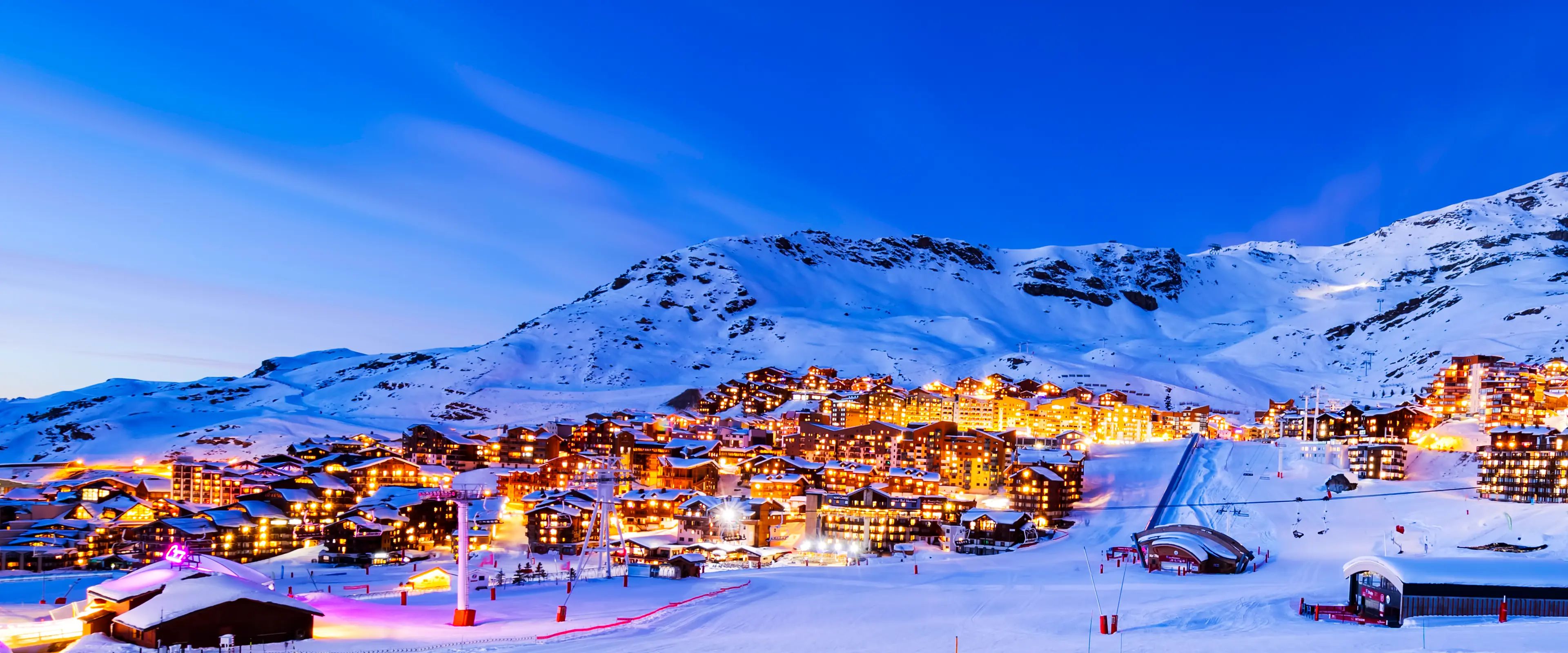
At 2,300m, Val Thorens is the highest resort in Europe - and in February that altitude translates directly into snow quality. While lower resorts can see the base soften on sunny afternoons, Val Thorens holds powder conditions well into the afternoon, and its north-facing slopes keep the snowpack cold and consistent. The resort also sits at the top of the Three Valleys, the largest linked ski area in the world, which means 600km of pistes spread the half-term crowds across a vast network of lifts and runs.
February's longer daylight hours work particularly well here. The morning light hits the Peclet glacier early, and by mid-afternoon you still have time to loop across to Meribel or Courchevel before the lifts close. For anyone timing a trip around half term, the sheer scale of the area means you're unlikely to feel hemmed in, even during the peak week.
✓ Europe's highest resort keeps snow quality consistent through the busiest month.
✓ 600km of linked Three Valleys terrain absorbs half-term crowds across three valleys.
✓ North-facing slopes hold powder well into February afternoons.
| Country | France |
|---|---|
| Ski area | Three Valleys - 600km of pistes |
| Altitude | 2,300m - 3,230m |
| Runs | 49 green + 87 blue + 76 red + 32 black runs (Three Valleys total) |
| Ski school | ESF Val Thorens, Prosneige - English-speaking instructors |
| Transfer time | Geneva (3h 30m); Lyon (3h 15m); Chambery (2h 15m) |
WeSki insider tip: Head to the Cime de Caron cable car first thing on a clear February morning. The panoramic view from 3,200m is at its most dramatic when the snowpack is deepest, and the long red run back down is usually freshly groomed and quiet before 10am.
Lech sits in the Arlberg region of western Austria, one of the snowiest corners of the Alps. Average February snowfall here is among the highest in Europe, and the resort's position between 1,450m and 2,810m means both village-level and high-altitude runs benefit. The Ski Arlberg lift pass links Lech with Zurs, St. Anton, and several smaller villages, giving access to 305km of marked pistes - enough terrain to keep a full February week varied without repeating the same runs.
The village itself is compact and traditional, with a car-free centre that stays atmospheric even when occupancy is high. February half term fills the hotels, but the ski area's layout - spread across multiple valleys with no single bottleneck - keeps the pistes manageable. Off-piste, the powder after a February dump is some of the best in the Alps, particularly on the runs between Zurs and Lech.
✓ One of the snowiest resorts in the Alps - February averages among the highest in Europe.
✓ 305km of Ski Arlberg terrain spreads across multiple valleys to manage busy periods.
✓ Traditional village with a car-free centre that keeps its character during half term.
| Country | Austria |
|---|---|
| Ski area | Ski Arlberg - 305km of pistes |
| Altitude | 1,450m - 2,810m |
| Runs | 47 blue + 131 red + 51 black runs |
| Ski school | Skischule Lech, Ski School Oberlech - English-speaking instructors |
| Transfer time | Innsbruck (1h 45m); Zurich (2h 30m); Friedrichshafen (1h 30m) |
WeSki insider tip: The Zuger Hochlicht run from the top of the Trittkopf lift is one of the quietest long descents in the area, even during half term. Most skiers head the other way towards St. Anton, leaving this side of the mountain noticeably emptier.
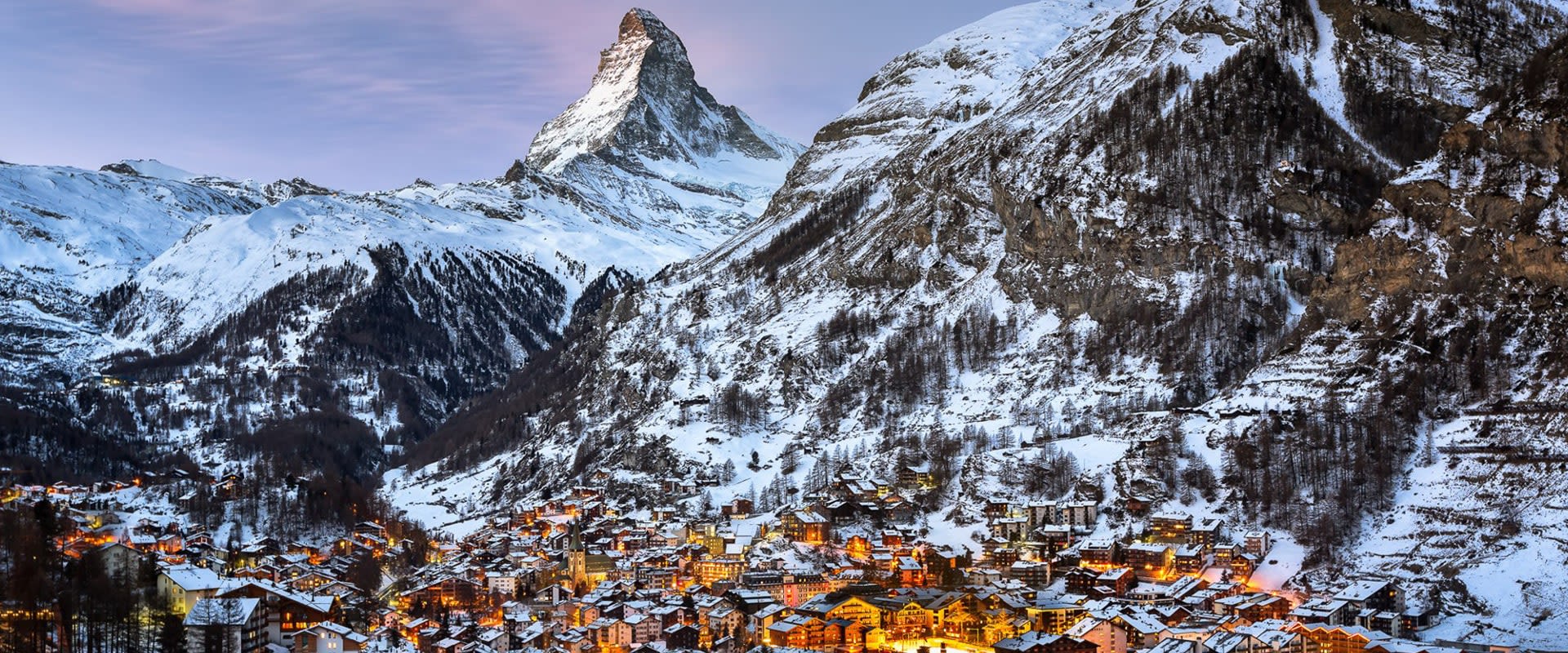
Zermatt's car-free village and Matterhorn backdrop are well known, but what makes it a strong February choice is the altitude profile. With skiing between 1,620m and 3,883m on the Klein Matterhorn, the high-altitude terrain holds snow reliably through the entire month. The link to Cervinia on the Italian side adds variety and sunshine - the south-facing Italian runs catch afternoon light that makes a real difference in February when temperatures are low.
The ski area is 360km in total, split across four distinct sectors, so there's room to move even during the busiest week. Zermatt also benefits from good snowmaking coverage on the lower slopes, which bridges any gaps between natural falls. The glacier skiing at the top stays in excellent condition right through February, and the views from the Matterhorn Glacier Paradise are worth a morning on their own.
✓ Skiing up to 3,883m means reliable snow from village level to glacier throughout February.
✓ 360km across four sectors and two countries gives enough space for the busiest weeks.
✓ South-facing Cervinia link adds Italian sunshine and variety on cold February days.
| Country | Switzerland |
|---|---|
| Ski area | Matterhorn ski paradise - 360km of pistes |
| Altitude | 1,620m - 3,883m |
| Runs | 74 blue + 60 red + 31 black runs |
| Ski school | Stoked Swiss Ski School, Summit Ski School - English-speaking instructors |
| Transfer time | Geneva (3h 45m); Zurich (3h 30m); Milan (3h) |
WeSki insider tip: Cross to the Cervinia side by late morning on sunny February days. The Italian mountain restaurants have longer lunch traditions, and the south-facing terraces are warm enough to sit outside comfortably - a welcome break when it's cold on the Swiss side.
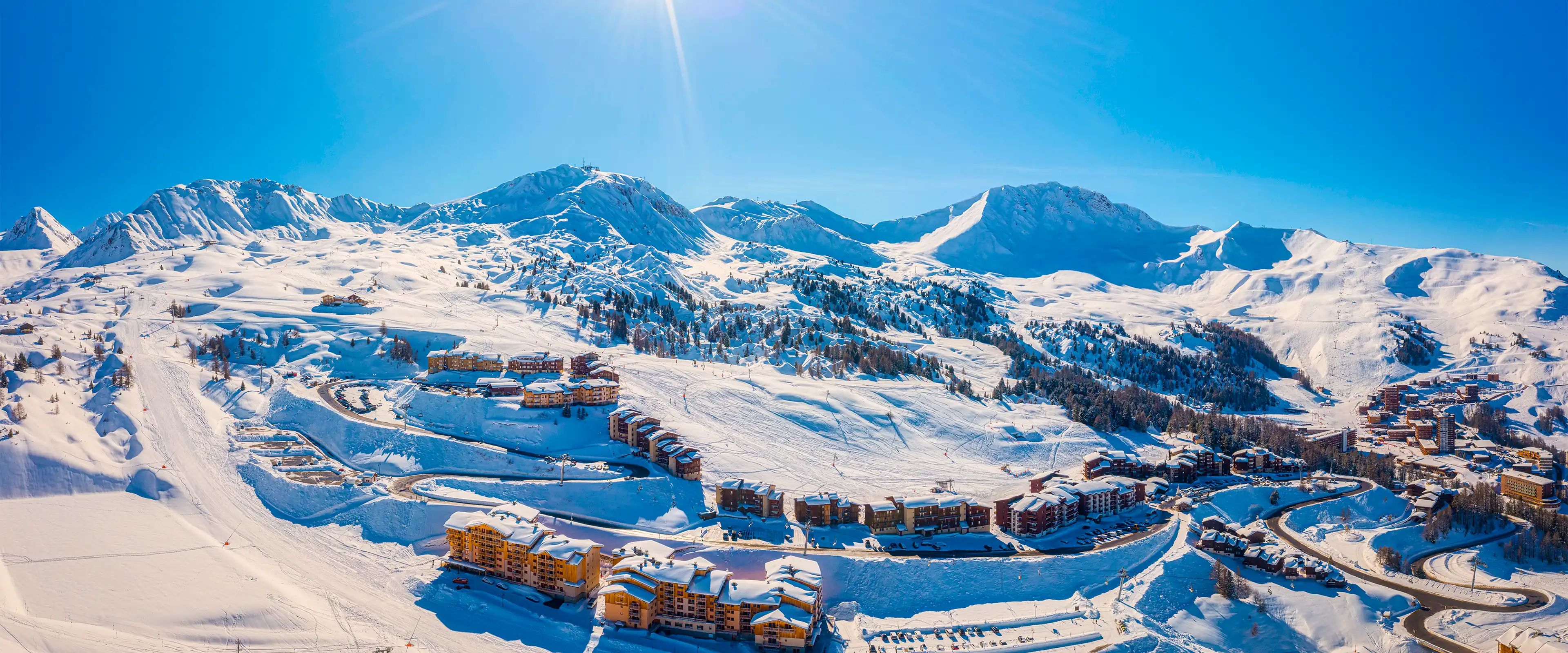
La Plagne is one of the largest resorts in France for a reason: 225km of its own pistes, plus the Paradiski link to Les Arcs adding another 200km. In February, that size matters. The resort is popular with families during half term, and the terrain layout - spread across ten interconnected villages between 1,250m and 3,250m - means the crowds disperse naturally rather than concentrating on a handful of lifts.
The tree-lined runs at mid-altitude are where La Plagne really comes into its own in February. When visibility drops - a common occurrence in heavy snowfall periods - the trees give definition to the terrain and make skiing enjoyable when higher, exposed runs become difficult to read. The altitude range also means good snow reliability, with the glacier area at the top providing a fallback if lower slopes thin out during a warm spell.
✓ 425km of Paradiski terrain across ten villages spreads February half-term crowds effectively.
✓ Tree-lined mid-altitude runs stay skiable in poor visibility, which is common in heavy February snowfall.
✓ Altitude range up to 3,250m with glacier access keeps snow consistent through the month.
| Country | France |
|---|---|
| Ski area | Paradiski - 425km of pistes |
| Altitude | 1,250m - 3,250m |
| Runs | 69 green + 79 blue + 57 red + 27 black runs (Paradiski total) |
| Ski school | ESF La Plagne, Oxygene - English-speaking instructors |
| Transfer time | Geneva (2h 45m); Lyon (3h); Chambery (2h) |
WeSki insider tip: The Plagne 1800 and Plagne Bellecote villages are quieter bases than the main Plagne Centre, with direct lift access to the same ski area. In February, the shorter lift queues from these satellite villages can save you 20 minutes each morning.
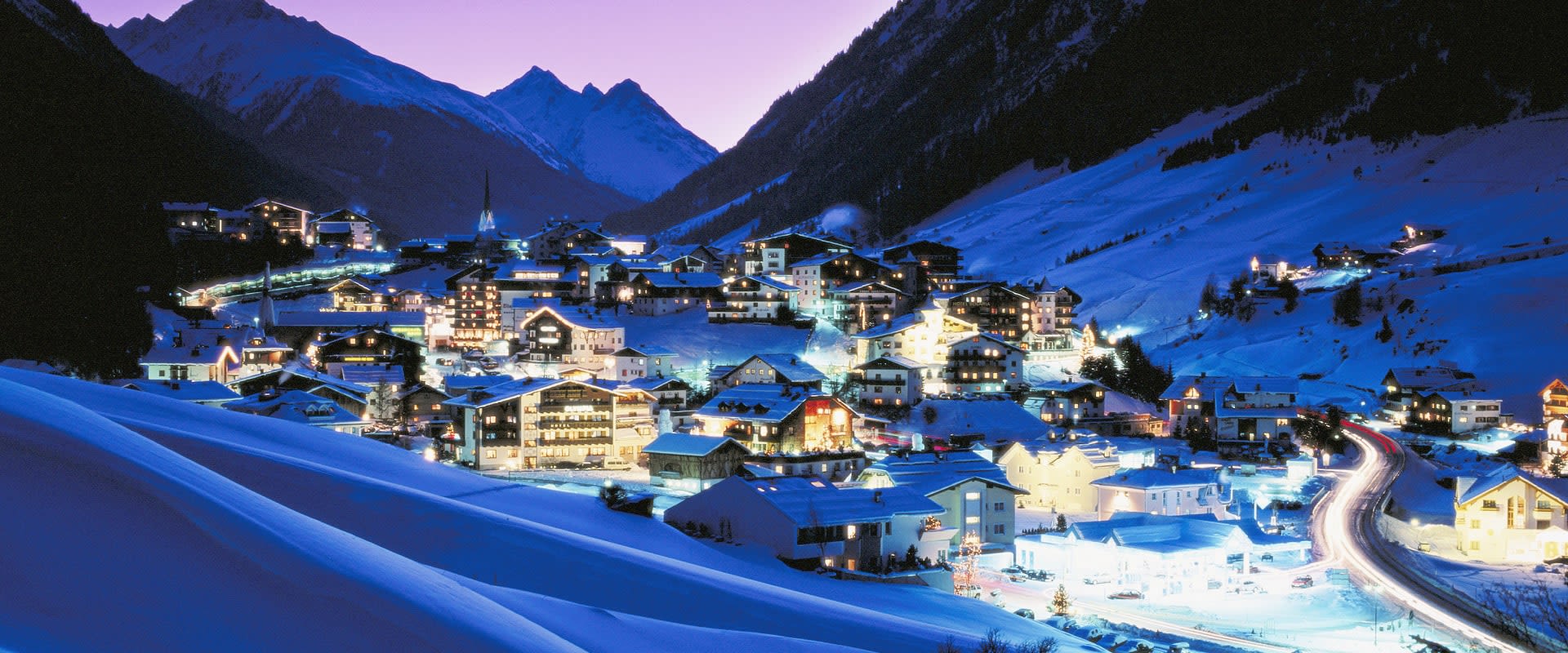
Ischgl sits in the Paznaun valley of Tyrol, and its ski area ranges from 1,400m up to 2,872m. The high-altitude terrain is predominantly north-facing, which keeps snow conditions consistent through February. The resort's investment in snowmaking is among the most extensive in Austria - over 1,100 snow cannons cover the majority of pistes - so even in a low-snowfall February, coverage stays strong.
The ski area links across the border into Samnaun, Switzerland, adding a cross-border element that makes for interesting day-long loops. February's extended daylight lets you comfortably ski the full Ischgl-Samnaun circuit, stopping for lunch on the Swiss side before returning to Austria for the afternoon. The resort has a reputation for lively apres-ski, which adds an extra dimension during the sociable half-term period.
✓ North-facing terrain up to 2,872m holds February snow quality exceptionally well.
✓ Over 1,100 snow cannons provide backup coverage even in lower-snowfall years.
✓ Cross-border link to Samnaun, Switzerland, creates varied full-day ski circuits.
| Country | Austria |
|---|---|
| Ski area | Silvretta Arena (Ischgl-Samnaun) - 239km of pistes |
| Altitude | 1,400m - 2,872m |
| Runs | 24 blue + 45 red + 17 black runs |
| Ski school | Skischule Ischgl, Ski School Silvretta - English-speaking instructors |
| Transfer time | Innsbruck (1h 30m); Zurich (2h 45m); Friedrichshafen (2h) |
WeSki insider tip: Take the Fimbabahn gondola towards Samnaun mid-morning when Ischgl's main lifts are at their busiest. The Swiss side is consistently quieter, and the long red runs back towards Austria empty out after 2pm when day visitors head home.
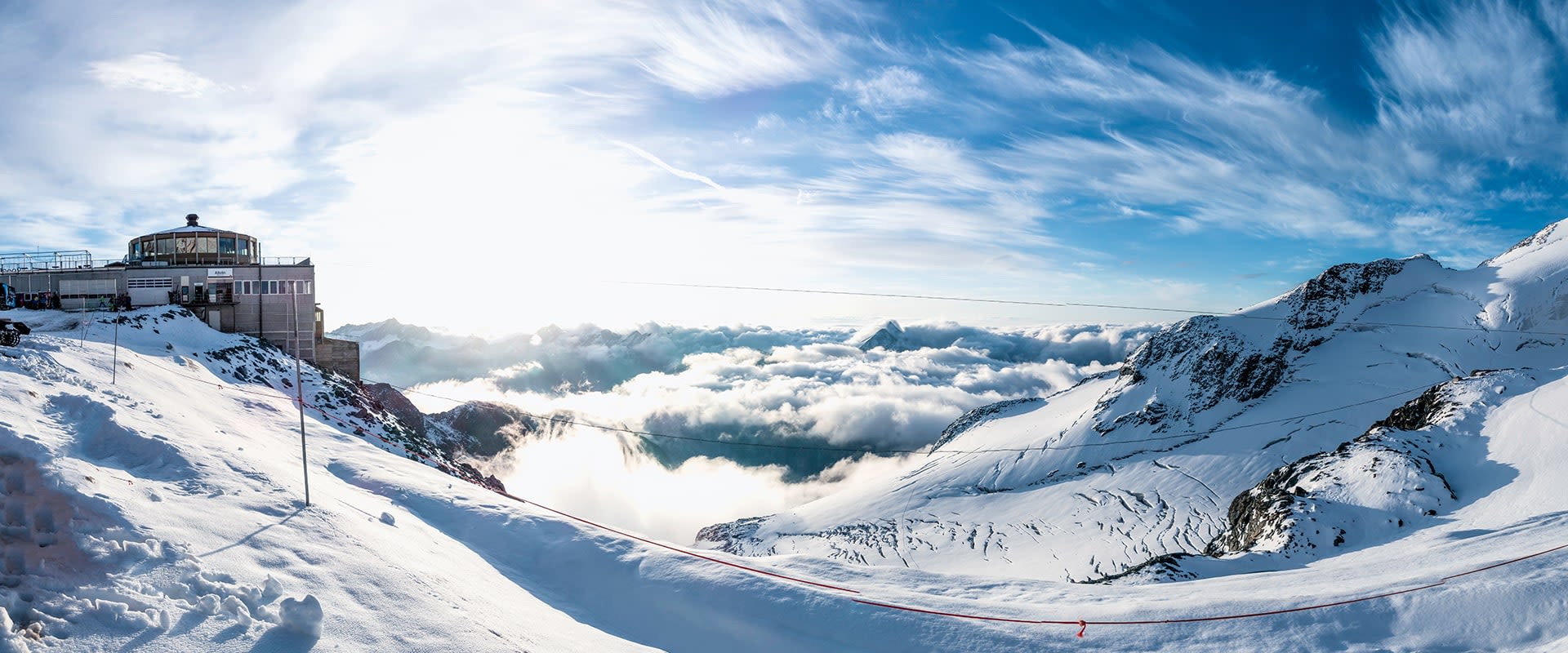
Saas-Fee is a car-free village at 1,800m, surrounded by eighteen peaks over 4,000m. The setting alone makes it distinctive, but the practical advantage in February is the altitude: the ski area climbs to 3,600m on the Allalin glacier, and the combination of height and north-facing orientation means snow quality in February is about as reliable as it gets in the Alps. The glacier runs stay in excellent shape all month, and the lower slopes benefit from the cold air that pools in the valley.
It's a smaller ski area than some on this list - 100km of pistes - but that works in February's favour. The resort attracts fewer half-term visitors than the mega-resorts, so queues stay short even during the peak week. The village atmosphere is quieter and more relaxed than the big-name destinations, which suits anyone looking for deep snow without the scrum.
✓ Glacier skiing to 3,600m with consistent north-facing snow quality all February.
✓ Smaller, quieter village attracts fewer half-term visitors - shorter queues during peak week.
✓ Car-free setting at 1,800m with eighteen 4,000m peaks creates a distinctive mountain atmosphere.
| Country | Switzerland |
|---|---|
| Ski area | Saas-Fee - 100km of pistes |
| Altitude | 1,800m - 3,600m |
| Runs | 9 blue + 12 red + 5 black runs |
| Ski school | Swiss Ski School Saas-Fee, Eskimos Ski School - English-speaking instructors |
| Transfer time | Geneva (3h 15m); Zurich (3h 30m); Milan (2h 30m) |
WeSki insider tip: The revolving restaurant at Allalin (3,500m) is the highest of its kind in the world. Go for lunch rather than a quick coffee - the full rotation takes about an hour and the panoramic views across to the Mischabel range are clearest on cold February days.
The Sella Ronda is a 40km circuit around the Sella massif in the Dolomites, linking four valleys and their resorts: Val Gardena, Alta Badia, Arabba, and Val di Fassa. In February, the Dolomites get a combination that's hard to match elsewhere - reliable snow at altitude, cold temperatures that preserve conditions, and an average of six hours of sunshine per day even in mid-winter. The south-facing aspect of many slopes means you can ski in sunshine while the snow stays firm.
The Dolomiti Superski pass covers over 1,200km of pistes across 12 linked areas, making it the largest ski network by lift pass in the world. February's longer days give you enough time to complete the full Sella Ronda circuit - either clockwise or anti-clockwise - and still have time left for exploring side valleys. Mountain restaurants across the Italian Dolomites are a highlight in their own right, and February lunch on a sunny terrace at 2,000m is one of those experiences that defines a ski holiday.
✓ The 40km Sella Ronda circuit is best enjoyed with February's longer daylight hours.
✓ Dolomites sunshine - averaging six hours daily in February - keeps pistes bright and spirits high.
✓ Over 1,200km on the Dolomiti Superski pass means crowds spread across twelve linked areas.
| Country | Italy |
|---|---|
| Ski area | Dolomiti Superski - 1,200km of pistes |
| Altitude | 1,236m - 3,269m |
| Runs | 240+ blue + 330+ red + 70+ black runs (Dolomiti Superski total) |
| Ski school | Multiple schools across each valley - English-speaking instructors available |
| Transfer time | Innsbruck (1h 30m); Venice (2h 45m); Verona (2h 30m) |
WeSki insider tip: Start the Sella Ronda circuit anti-clockwise on a February morning. Most guided groups go clockwise, so the anti-clockwise direction is quieter, and you hit the sunniest sectors of Alta Badia in the afternoon when the light is at its best.
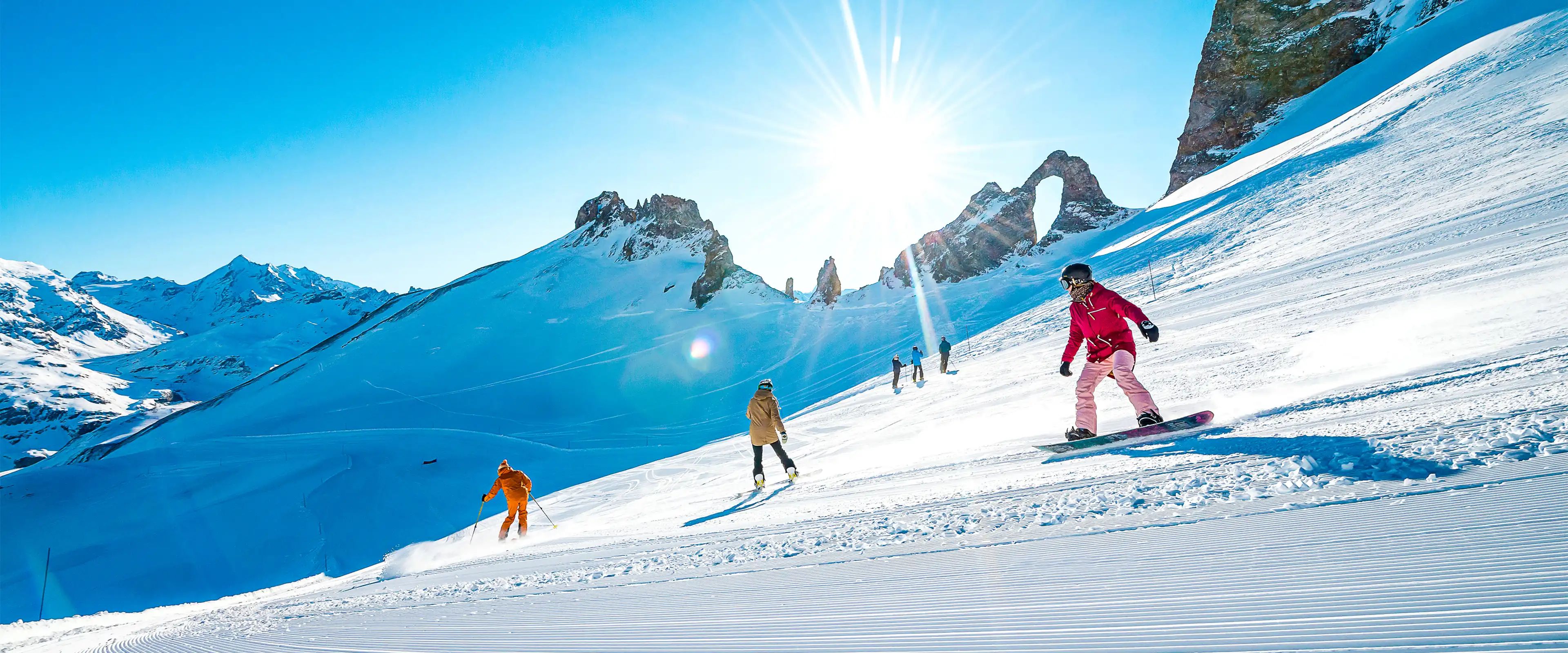
Tignes sits at 2,100m and shares the Espace Killy ski area with Val d'Isere, giving access to 300km of pistes. The high altitude means snow reliability in February is excellent - the resort regularly records the deepest base depths in the French Alps by mid-February - and the Grande Motte glacier at 3,456m provides conditions that stay consistent regardless of weather lower down.
What distinguishes Tignes in February is the variety of terrain at altitude. The runs above 2,500m aren't just glacier traverses - there are proper red and black runs with good gradient and varied terrain, which means experienced skiers get a proper workout even when staying in the snow-safe high zone. The resort is popular during half term, but the Espace Killy's size and the fast modern lift system keep things moving. Tignes-le-Lac, the main village, has a functional rather than pretty character, but the skiing itself is what draws people back.
✓ Resort base at 2,100m with glacier to 3,456m means February snow depth is among the best in France.
✓ 300km of Espace Killy terrain shared with Val d'Isere keeps half-term lift queues manageable.
✓ Varied high-altitude terrain above 2,500m gives experienced skiers proper runs in snow-safe conditions.
| Country | France |
|---|---|
| Ski area | Espace Killy (Tignes - Val d'Isere) - 300km of pistes |
| Altitude | 1,550m - 3,456m |
| Runs | 22 green + 61 blue + 47 red + 26 black runs |
| Ski school | ESF Tignes, Evolution 2 - English-speaking instructors |
| Transfer time | Geneva (3h 15m); Lyon (3h 15m); Chambery (2h 15m) |
WeSki insider tip: On a powder morning, head straight for the Toviere sector between Tignes and Val d'Isere. The north-facing slopes here hold fresh snow longer than the main bowl, and most visitors from Val d'Isere don't cross into this area until after lunch.
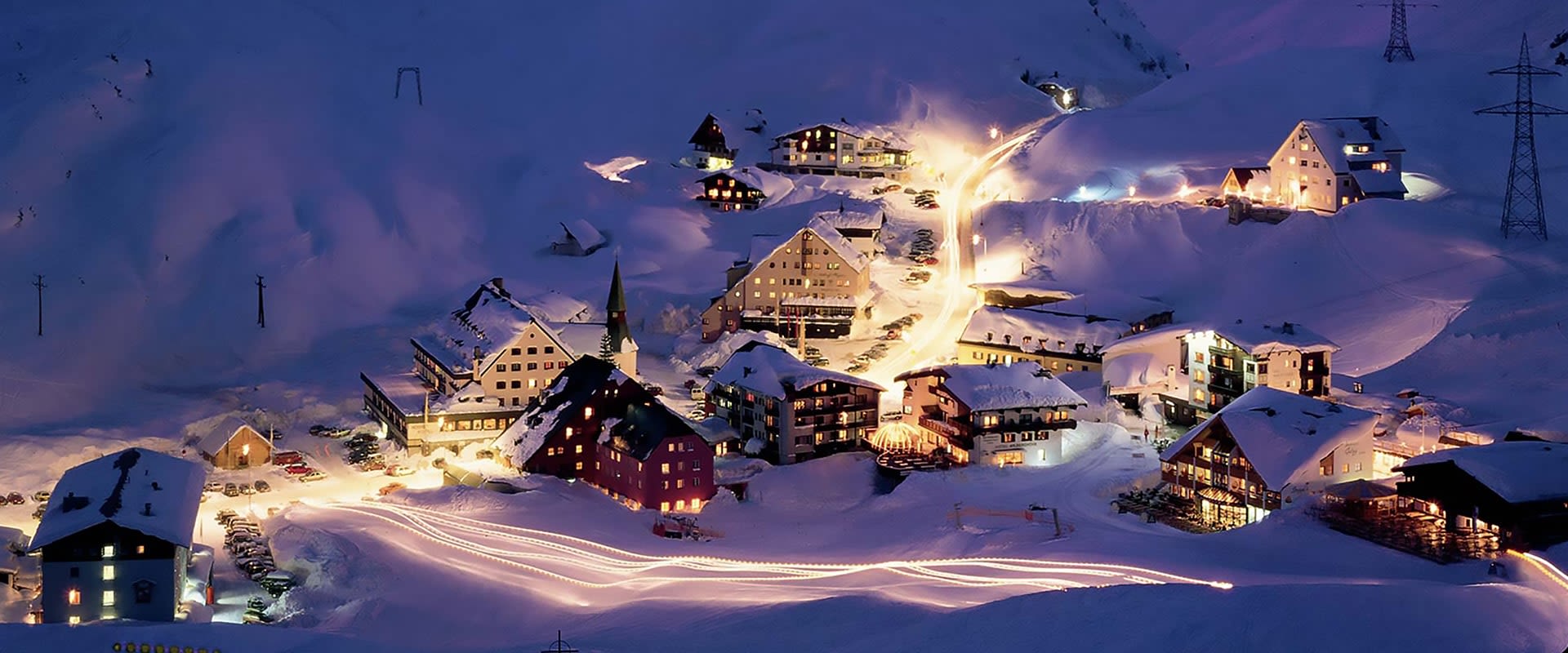
St. Anton is the other side of the Ski Arlberg pass from Lech-Zurs, and it brings a different character. Where Lech is traditional and measured, St. Anton is the Arlberg's wilder face - steeper terrain, a bigger off-piste reputation, and a livelier village atmosphere. February snowfall in the Arlberg region is heavy and frequent, and St. Anton's terrain is designed to make the most of it. The Valluga, at 2,811m, anchors some of the most challenging marked runs in Austria, and after fresh snow the off-piste options multiply.
The 305km Ski Arlberg pass links St. Anton to Lech, Zurs, Stuben, and several smaller areas, giving variety across a full February week. The modern Galzigbahn gondola has reduced queues at the main base station, and the newer Flexenbahn link to Zurs means you can ski across the whole Arlberg without taking a bus. February evenings in St. Anton are sociable - the apres-ski scene is lively without being overwhelming, and the village restaurants stay busy late.
✓ Heavy February snowfall in the Arlberg feeds some of Austria's best on- and off-piste terrain.
✓ 305km linked to Lech, Zurs, and Stuben - with the Flexenbahn removing the last bus transfer.
✓ Lively village atmosphere and strong apres-ski scene make February evenings as good as the days.
| Country | Austria |
|---|---|
| Ski area | Ski Arlberg - 305km of pistes |
| Altitude | 1,304m - 2,811m |
| Runs | 47 blue + 131 red + 51 black runs |
| Ski school | Ski School Arlberg, Skischule St. Anton - English-speaking instructors |
| Transfer time | Innsbruck (1h 15m); Zurich (2h 15m); Friedrichshafen (1h 30m) |
WeSki insider tip: Take the Flexenbahn towards Stuben on a February powder day. The north-facing runs above Stuben hold untracked snow for hours after the main St. Anton slopes have been skied out, and Stuben's single mountain restaurant is a peaceful contrast to the busier Arlberg stops.
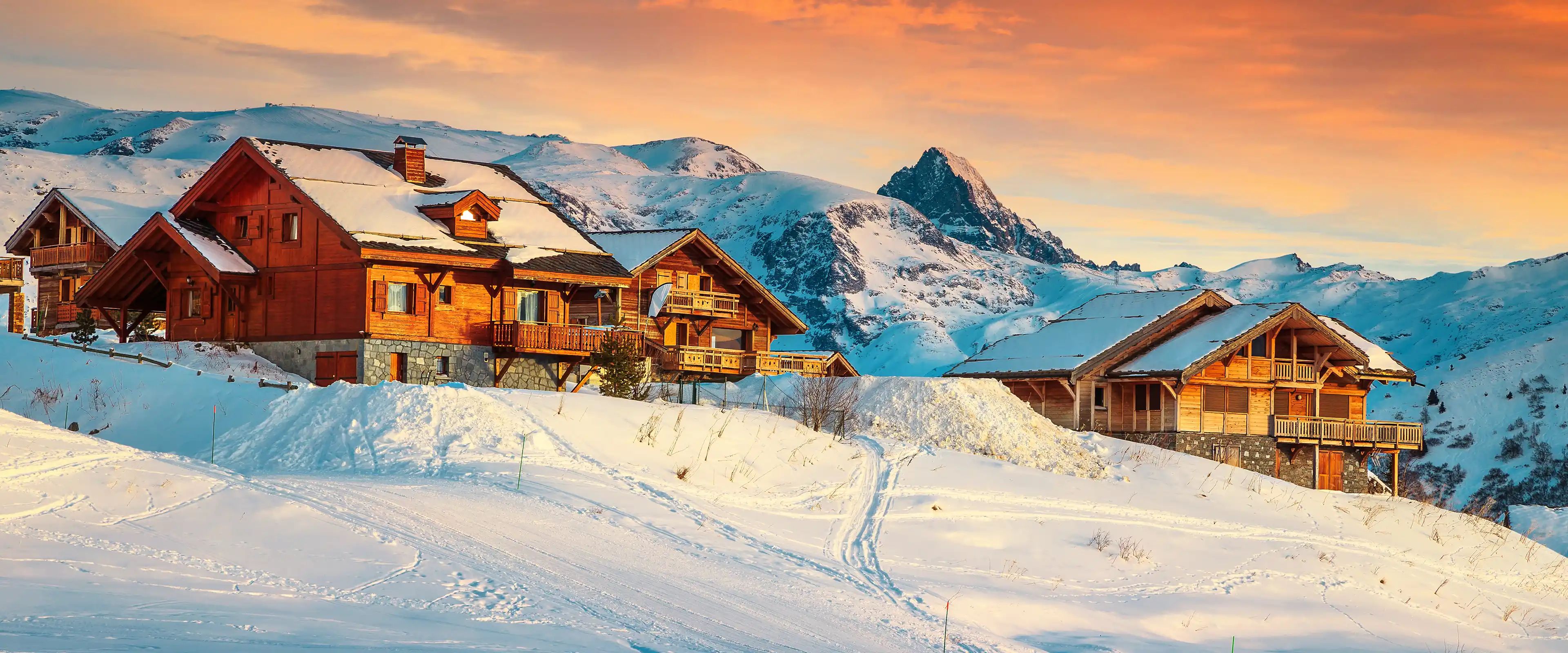
Alpe d'Huez is known as the Island in the Sun - the resort's south-facing position means it catches more sunshine hours than almost any other major Alpine resort. In February, when temperatures are still cold enough to preserve snow quality, that sunshine transforms the skiing experience. The slopes get natural light from early morning until late afternoon, the views stretch across to Mont Blanc and the Ecrins, and the combination of cold air and warm sun creates some of the most pleasant skiing conditions of the year.
The ski area covers 250km of pistes between 1,100m and 3,330m, with the Pic Blanc glacier providing a snow-safe summit. The famous Sarenne run - at 16km, one of the longest black runs in Europe - is at its best in February when the full length has reliable cover. The resort also sits above a frequent cloud inversion layer, which means February mornings often start with a sea of cloud below and blue sky above - a striking sight that makes early starts worthwhile.
✓ South-facing position means more February sunshine hours than almost any major Alpine resort.
✓ 16km Sarenne black run is at its best in February with full snow cover from top to bottom.
✓ Sits above the cloud inversion layer - February mornings often feature blue skies above a sea of cloud.
| Country | France |
|---|---|
| Ski area | Alpe d'Huez Grand Domaine - 250km of pistes |
| Altitude | 1,100m - 3,330m |
| Runs | 33 green + 34 blue + 30 red + 16 black runs |
| Ski school | ESF Alpe d'Huez, Masterclass Ski - English-speaking instructors |
| Transfer time | Grenoble (1h 30m); Lyon (2h 30m); Geneva (3h 30m) |
WeSki insider tip: Book the Sarenne run for a February afternoon - the south-facing aspect means the snow softens just enough to make the 16km descent a smooth, cruisy experience rather than an icy challenge. Most people ski it in the morning when it's harder and faster.
February is one of the strongest months for snow conditions in the Alps. Base depths are typically at their annual peak, most resorts are running their full lift network, and the days are getting noticeably longer than in December or January. The trade-off is that February includes half-term week in most of the UK, which makes it the busiest and most expensive period of the season. If you can travel in the first or last week of the month rather than the middle, you'll find the same snow with fewer people on the mountain.
Half-term week is the busiest period of the ski season for UK visitors. Lift queues are longer, ski school classes fill up faster, and accommodation prices are at their highest. That said, larger resorts handle the influx better than smaller ones - anywhere with 200km or more of pistes tends to absorb the crowds without the slopes feeling overcrowded. Booking lessons and transfers well ahead of the trip makes the biggest practical difference during this period.
Temperatures in February vary by altitude and location, but mid-mountain in the Alps you can expect daytime temperatures between minus five and plus five degrees. That's cold, but proper layering makes it comfortable. The cold is actually an advantage for snow quality - it keeps the piste surface firm and prevents the slushy conditions that arrive later in the season. South-facing resorts like Alpe d'Huez or the Sella Ronda are good choices if warmth and sunshine matter to you.
For February half-term specifically, booking early makes a real difference. Popular resorts and family-friendly accommodation sell out months ahead, and flight prices rise sharply as half term approaches. Booking in the autumn - September to November - typically gives you the widest choice and the best value. If you're flexible on dates and can travel in the first or last week of February instead of half term itself, booking windows are more forgiving. Our half term ski holidays planning guide has more detail on timing and what to prioritise.
January and March both work well for families who can travel outside half term. January has excellent snow and significantly fewer visitors, while March brings longer days, warmer temperatures, and the snow at altitude is still deep. Easter is another option, though snow reliability becomes more variable at lower altitudes. The key is choosing a high-altitude resort if you're skiing later in the season. Our guide to skiing in January covers why that month is worth considering.
Trying to decide which February resort is right for you? WeSki's AI trip planner matches you to resorts based on what matters most - whether that's snow reliability, crowd levels, or family facilities. Tell it your dates, your priorities, and your budget, and get a shortlist built around your trip.

WeSki is a trading name operated by Wetrip Weski Ltd (BR021500). All the flights and flight-inclusive holidays on this website are financially protected by the ATOL scheme. When you pay you will be supplied with an ATOL Certificate. Please ask for it and check to ensure that everything you booked (flights, hotels and other services) is listed on it. Please see our booking conditions for further information or for more information about financial protection and the ATOL Certificate go to: www.caa.co.uk.
Package holidays that do not include travel by air are financially protected via ABTOT.
For the latest travel advice from the Foreign & Commonwealth Office visit www.gov.uk/foreign-travel-advice.