
EN
EN

January is when European ski resorts hit their stride. The snow is at its deepest, the holiday crowds have gone home, and lift queues are noticeably shorter than they'll be once half term arrives in February. It's a month that rewards flexibility - if you can travel outside school holidays, you'll find resorts in peak condition without the peak-season atmosphere. This list covers 10 resorts that are particularly strong in January, whether you're chasing powder, gentle slopes to learn on, or long days exploring a big ski area. For a wider look at the month and what makes it worth considering, our guide to skiing in January covers conditions, weather patterns, and what to pack.
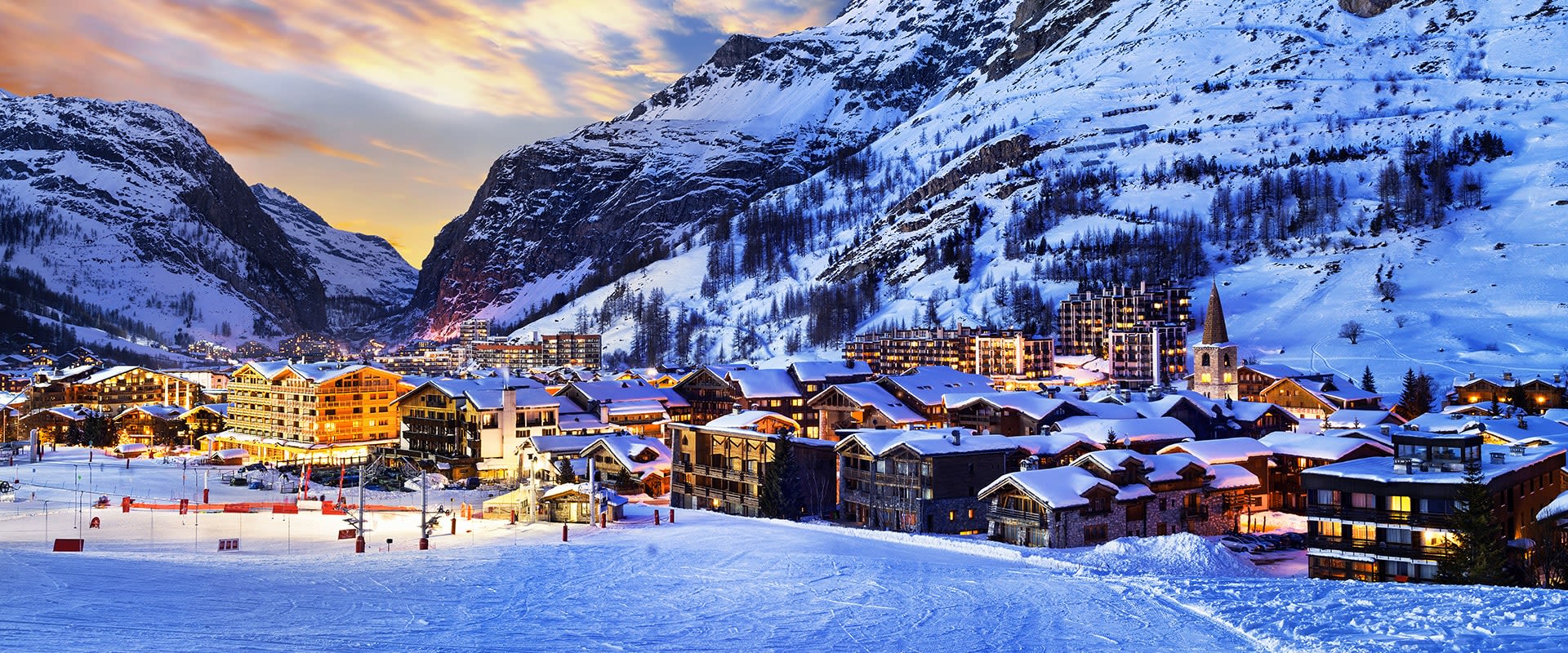
January is arguably Val d'Isere's strongest month. The resort sits at 1,850m with skiing up to 3,456m, so snow coverage is rarely a concern - and by mid-January, the base is typically deep enough to open every sector of the vast Espace Killy area it shares with Tignes. What changes in January is the pace. The New Year rush has cleared, and with French schools still in session, the slopes are markedly quieter than they'll be for the rest of the season. That makes a real difference in a resort this size: you can ski La Face or the Solaise bowl without queuing, and the off-piste between the two valleys is often at its best after fresh January snowfall.
The village has a buzzy atmosphere even in quieter weeks, with enough restaurants and bars to fill your evenings without the scrum of peak season. For intermediate and advanced skiers, the sheer variety of terrain - long cruising reds, steep mogul runs, and a serious off-piste reputation - means a week here barely scratches the surface.
✓ Extensive high-altitude terrain with reliable January snow cover across the Espace Killy.
✓ Noticeably quieter slopes between New Year and half term, with shorter lift queues.
✓ Strong off-piste conditions after frequent mid-January snowfalls.
| Country | France |
|---|---|
| Ski area | Espace Killy - 300 km of pistes |
| Altitude | 1,550m - 3,456m |
| Runs | 79 runs (21 green, 30 blue, 20 red, 8 black) |
| Ski school | ESF Val d'Isere, Snow Fun, Oxygene - English-speaking instructors |
| Transfer time | Geneva (3h 30m); Lyon (3h 30m); Chambery (2h 30m) |
WeSki insider tip: The Manchet Valley sector between Val d'Isere and Tignes is often overlooked by visitors who stick to the main lifts above the village. In January, when the snow is fresh and the crowds are thin, it's some of the best intermediate skiing in the area - long reds with barely anyone on them.
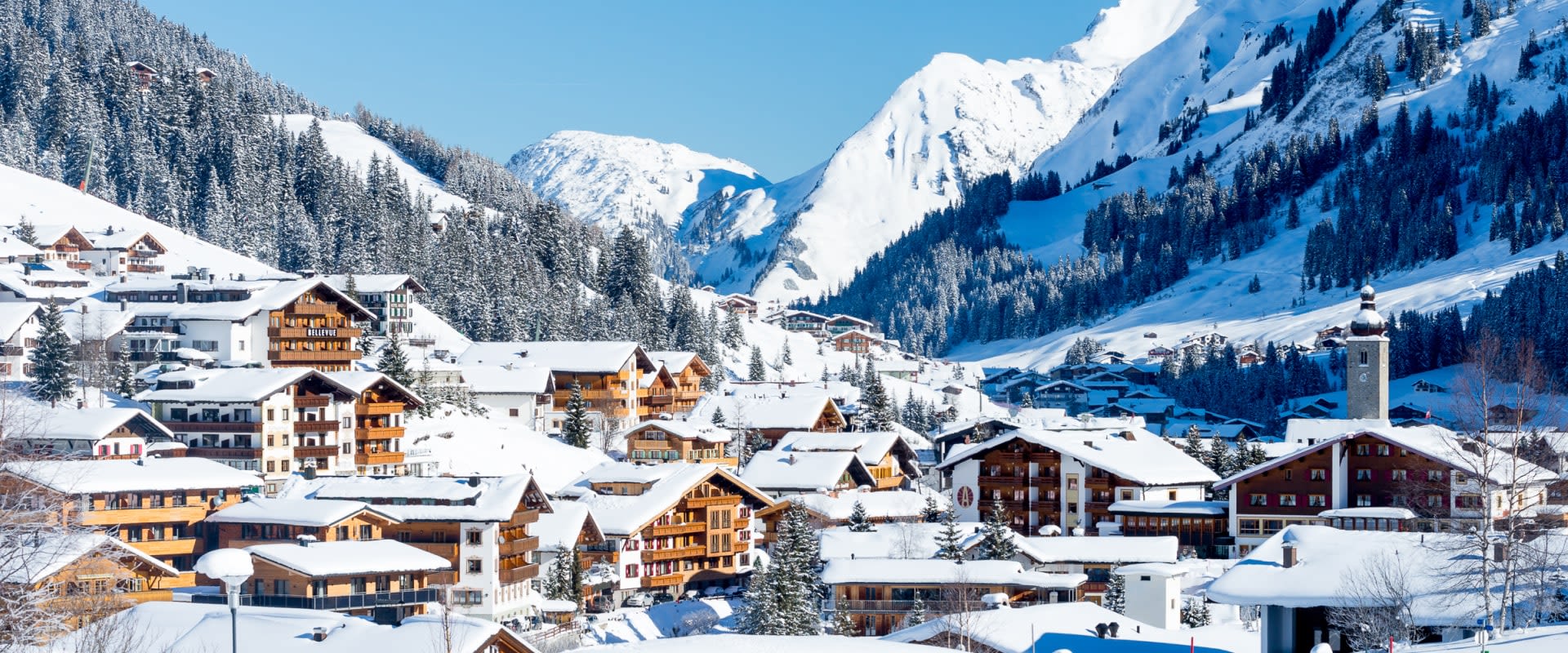
Lech has a reputation as one of the snowiest resorts in the Alps, and January is when that reputation is earned. Average January snowfall here regularly exceeds other major Austrian resorts, partly because of Lech's position at the head of the Arlberg valley where weather systems pile in from the northwest. The Ski Arlberg area - connecting Lech, Zurs, St. Anton, Stuben, and the smaller villages between them - is one of the largest linked ski areas in the world at 305 km, and by January the full network is open and skiable.
The resort itself has a quieter, more refined feel than its neighbour St. Anton. January amplifies that: the streets are unhurried, restaurants are easy to book, and the slopes have a sense of space that's harder to find in February. For families or mixed-ability groups, the gentle runs around Oberlech (reachable by gondola from the village) are well-groomed and never feel overcrowded.
✓ One of the highest average snowfalls in the Alps, making January conditions consistently strong.
✓ Part of the 305 km Ski Arlberg network, fully open and linked by mid-January.
✓ Quieter village atmosphere with easy restaurant bookings and uncrowded slopes.
| Country | Austria |
|---|---|
| Ski area | Ski Arlberg - 305 km of pistes |
| Altitude | 1,450m - 2,811m |
| Runs | 131 runs across the Arlberg (43 blue, 72 red, 16 black) |
| Ski school | Skischule Lech, Ski School Oberlech - English-speaking instructors |
| Transfer time | Innsbruck (1h 40m); Zurich (2h 30m); Friedrichshafen (1h 30m) |
WeSki insider tip: The Zuger Hochlicht sector above Zurs gets morning sun and holds fresh snow well. On a clear January morning, head straight up the Trittkopf lift before crossing into the main Lech ski area - you'll often get first tracks on freshly groomed reds with views across the whole Arlberg.
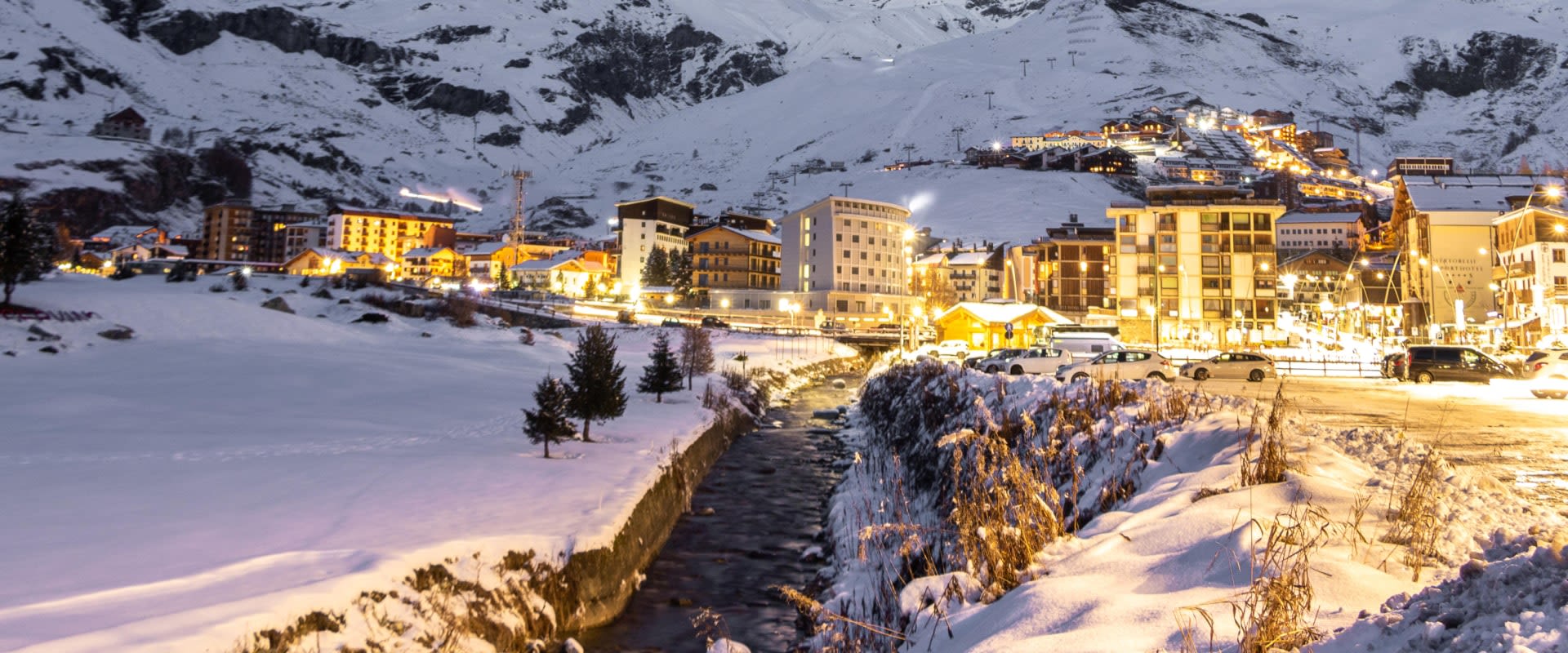
Cervinia's altitude is its defining feature in January. The resort's skiing starts at 2,050m and climbs to 3,480m on the Italian side alone - with the link to Zermatt taking you higher still. At these heights, January snow is virtually guaranteed, and the long south-facing runs stay well-covered because the cold temperatures lock the snow in place. The terrain is ideal for confident intermediates and improving skiers: long, wide, well-groomed pistes that let you build speed and rhythm without the tight turns and icy patches common at lower resorts early in the season.
January is also when Cervinia feels most distinctly Italian. The Milanese weekend crowds thin out midweek, and long lunches on sun-drenched terraces become a real part of the ski day. If you're happy to cross the border to Zermatt (included in the international lift pass), the skiing expands to over 360 km of linked pistes - one of the largest ski areas anywhere.
✓ Skiing from 2,050m to 3,480m with guaranteed January snow at every level.
✓ Long, wide pistes suited to intermediates and improvers building confidence.
✓ Link to Zermatt expands the skiing to 360+ km of connected pistes.
| Country | Italy |
|---|---|
| Ski area | Cervinia-Valtournenche (link to Zermatt) - 360 km of pistes |
| Altitude | 2,050m - 3,480m (3,883m via Zermatt) |
| Runs | 73 runs on Italian side (15 blue, 30 red, 28 black) |
| Ski school | Scuola di Sci del Cervino, Cervinia Ski School - English-speaking instructors |
| Transfer time | Turin (2h); Milan Malpensa (2h 30m); Geneva (3h) |
WeSki insider tip: Plan B on the Italian side is worthwhile. The Valtournenche sector below the main resort is often ignored, but its sheltered tree-lined runs are a lifesaver on windy January days when the high exposed pistes above Cervinia close.
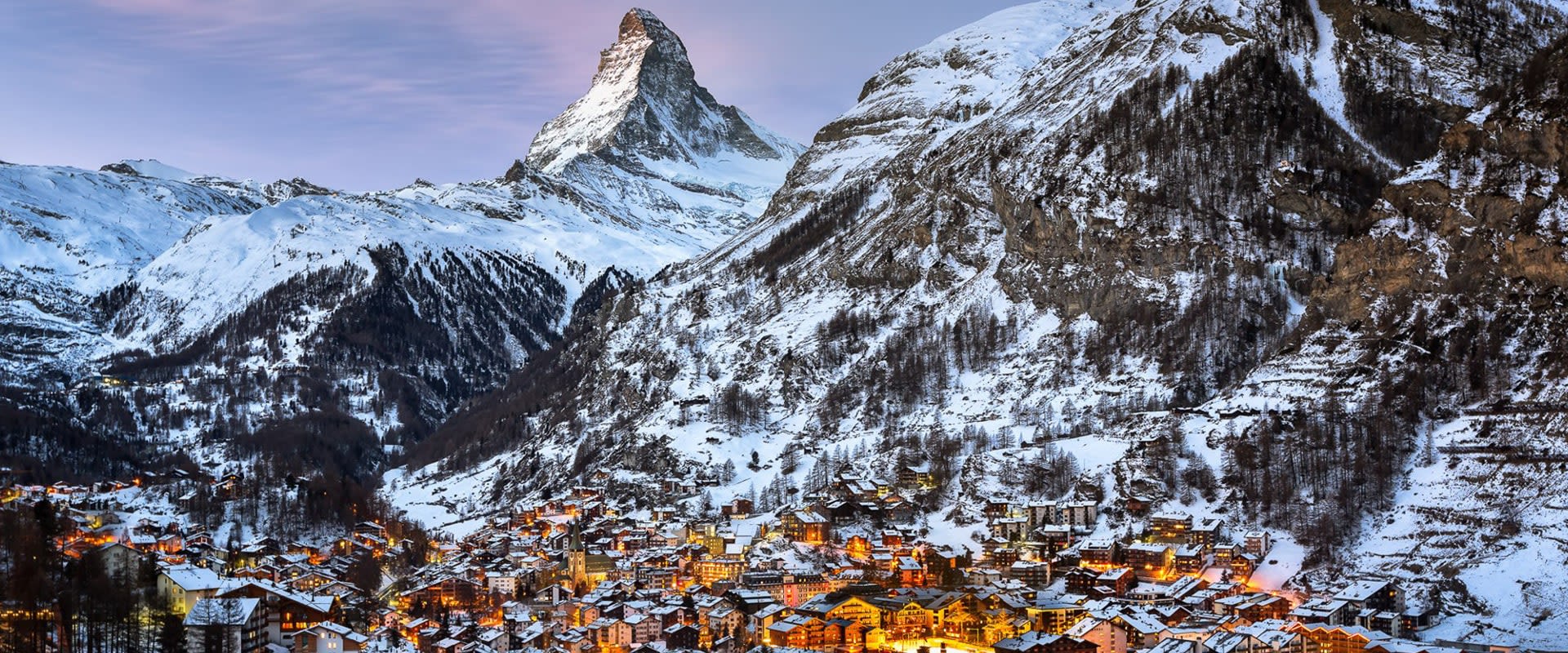
If altitude and snow reliability are your priorities, Zermatt is hard to beat. Skiing reaches 3,883m on the Klein Matterhorn, making it the highest lift-served terrain in Europe. January here means cold, dry snow - the kind that squeaks underfoot and holds its quality through the day. The resort's glacier skiing area is open year-round, but in January the full 360 km network (shared with Cervinia) is operational, and the lower slopes benefit from the deep snowpack that's been building since November.
Zermatt's car-free village adds something to a January visit that's hard to quantify: without traffic noise, the snow-muffled streets have a stillness that feels earned rather than artificial. The restaurant scene is strong and varied, from mountain huts serving rosti to village spots with more ambitious menus. It's not the cheapest destination on this list, but in January you get the resort at its most composed - deep snow, sharp air, and the Matterhorn framed against clear winter skies more often than not.
✓ Highest lift-served skiing in Europe at 3,883m, with cold dry January powder.
✓ Full 360 km network shared with Cervinia is operational by early January.
✓ Car-free village with a distinctive atmosphere during quieter January weeks.
| Country | Switzerland |
|---|---|
| Ski area | Matterhorn Ski Paradise - 360 km of pistes |
| Altitude | 1,620m - 3,883m |
| Runs | 145 runs across the linked area (30 blue, 65 red, 35 black, 15 marked itineraries) |
| Ski school | Zermatt Ski School, Stoked, Summit Ski School - English-speaking instructors |
| Transfer time | Geneva (3h 30m + train); Zurich (3h 30m + train); Milan Malpensa (3h) |
WeSki insider tip: The Rothorn sector on the east side of the valley gets morning sun and is often quieter than the busy Sunnegga-Blauherd runs directly above the village. In January, the Kumme run from the top of Rothorn is a superb long red with panoramic Matterhorn views.
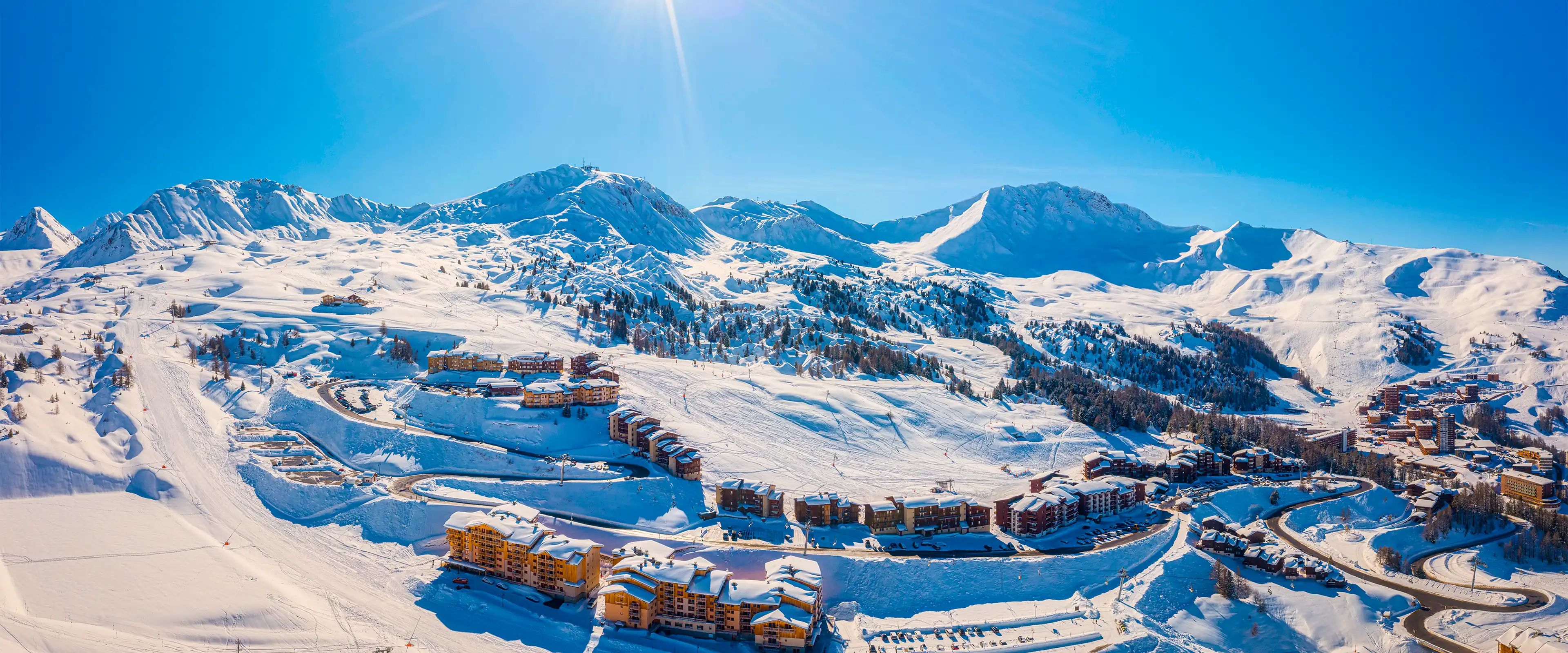
La Plagne's strength in January comes from a combination that's hard to find elsewhere: a properly large ski area (linked with Les Arcs as Paradiski, 425 km of pistes), altitude that runs from 1,250m to 3,250m, and a terrain profile that favours beginners and intermediates without boring more experienced skiers. The nursery slopes above Plagne Centre and Belle Plagne sit at around 2,000m, high enough that January snow is dependable and the pistes hold their shape all day.
For families or groups with mixed abilities, January at La Plagne is especially well-suited. Children's lessons are easier to book, group sizes are smaller, and the gentle blues that connect the resort's satellite villages are quiet enough to ski at your own pace. The higher-altitude sectors above Bellecote and towards the glacier give advanced skiers steep terrain and reliable off-piste, while the link to Les Arcs opens up a second mountain's worth of variety.
✓ Nursery slopes at 2,000m with reliable January snow and well-groomed pistes.
✓ Part of the 425 km Paradiski area with the Les Arcs link fully operational.
✓ Smaller lesson group sizes and shorter booking queues in January.
| Country | France |
|---|---|
| Ski area | Paradiski (La Plagne + Les Arcs) - 425 km of pistes |
| Altitude | 1,250m - 3,250m |
| Runs | 141 runs on La Plagne side (10 green, 69 blue, 34 red, 28 black) |
| Ski school | ESF La Plagne, Oxygene, Evolution 2 - English-speaking instructors |
| Transfer time | Geneva (2h 30m); Lyon (3h); Chambery (2h) |
WeSki insider tip: The Champagny sector on the southern edge of La Plagne is the quietest area in January. It faces south, catches the sun from mid-morning, and has a handful of long reds through the trees that feel like a private ski area on weekdays.
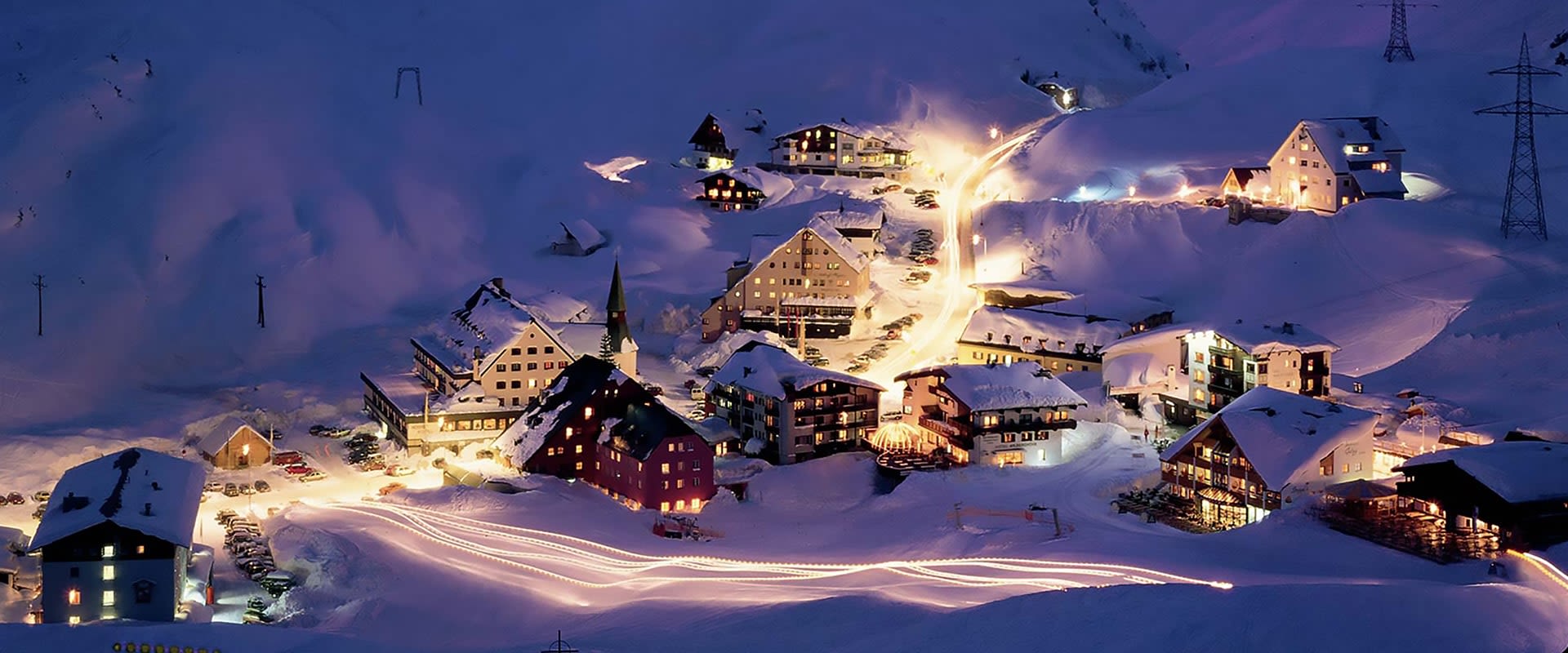
St. Anton is one of those resorts that changes character with the season, and January reveals its most rewarding side. The famous apres-ski scene is still there, but dialled back from its February and March volume - which means the skiing, rather than the parties, takes centre stage. And the skiing in January is exceptional. The Arlberg's position means it catches snowfall from both northwest and south, and the combination of altitude (up to 2,811m) and north-facing bowls above the village means the snow stays cold and light.
This is a resort that suits confident skiers. The pisted runs are graded honestly - reds here are steeper and narrower than reds in many French resorts - and the off-piste is exceptional when conditions align. January regularly provides those conditions. For less experienced skiers, the Galzig and Gampen sectors above the village have friendlier terrain, and the link through to Lech and Zurs opens up gentler alternatives without leaving the lift system.
✓ Cold, dry January snow on north-facing terrain - ideal for off-piste and powder skiing.
✓ Quieter apres-ski atmosphere that lets the skiing take priority.
✓ Linked to Lech and Zurs through the 305 km Ski Arlberg network.
| Country | Austria |
|---|---|
| Ski area | Ski Arlberg - 305 km of pistes |
| Altitude | 1,304m - 2,811m |
| Runs | 131 runs across the Arlberg (43 blue, 72 red, 16 black) |
| Ski school | Ski School Arlberg, Piste to Powder - English-speaking instructors |
| Transfer time | Innsbruck (1h 15m); Zurich (2h 30m); Friedrichshafen (1h 30m) |
WeSki insider tip: After fresh snowfall, the Schindler Kar bowl above Galzig is one of the first off-piste areas to be tracked out. Instead, take the Valluga lift and traverse skier's right towards the Paziel Valley - it holds untracked snow much longer because fewer people know the entry point.
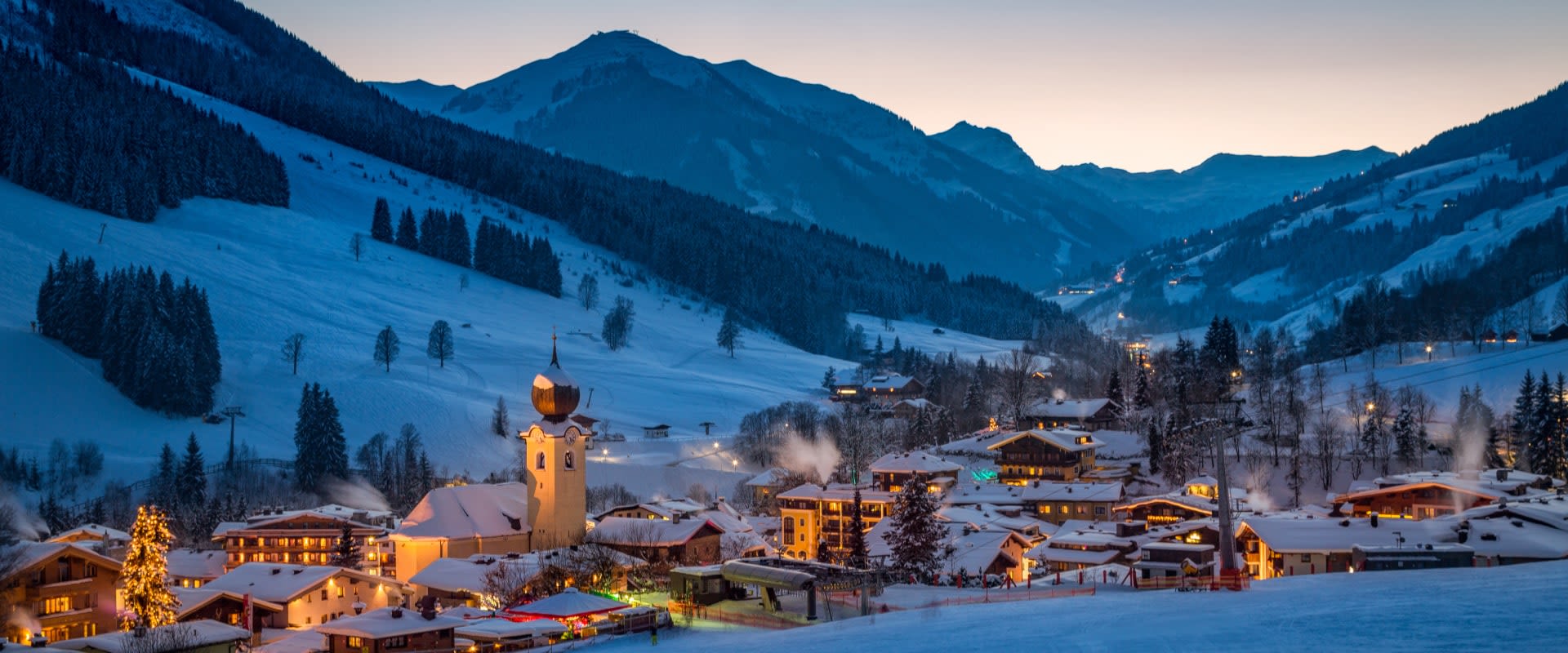
Saalbach is a different proposition from the high-altitude giants on this list - and that's precisely why it works in January. The skiing tops out at 2,096m, which might look modest on paper, but the Skicircus area's 270 km of pistes are backed by extensive snowmaking and a grooming operation that keeps the runs in strong shape even when natural snowfall is slow to arrive. In January, the cold temperatures mean the snow cannons are at their most effective, and the pistes hold their form from first lift to last.
What Saalbach has that higher resorts sometimes lack is a warmth to the experience. The valley is south-facing, so January days are sunnier than you might expect - you can sit outside mountain restaurants at lunchtime and actually feel warm. The ski circuit that loops between Saalbach, Hinterglemm, Leogang, and Fieberbrunn gives you a natural structure to the ski day: pick a direction and work your way around. It's one of the most enjoyable intermediate circuits in the Alps, and in January, you can complete it without the bottlenecks that form in busier weeks.
✓ 270 km ski circuit linking four villages - completable without queues in January.
✓ South-facing valley with sunny January days and warm mountain restaurant terraces.
✓ Comprehensive snowmaking keeps all runs open regardless of natural snowfall.
| Country | Austria |
|---|---|
| Ski area | Skicircus Saalbach Hinterglemm Leogang Fieberbrunn - 270 km of pistes |
| Altitude | 1,003m - 2,096m |
| Runs | 70 runs (24 blue, 29 red, 17 black) |
| Ski school | Ski School Saalbach, Snow Academy - English-speaking instructors |
| Transfer time | Salzburg (1h 30m); Munich (2h 30m); Innsbruck (2h) |
WeSki insider tip: Start the Skicircus loop clockwise from Saalbach on a clear January morning. The Schattberg side catches early sun while the Hinterglemm side stays cold and firm - by the time you reach it in the afternoon, the grooming is still holding perfectly.
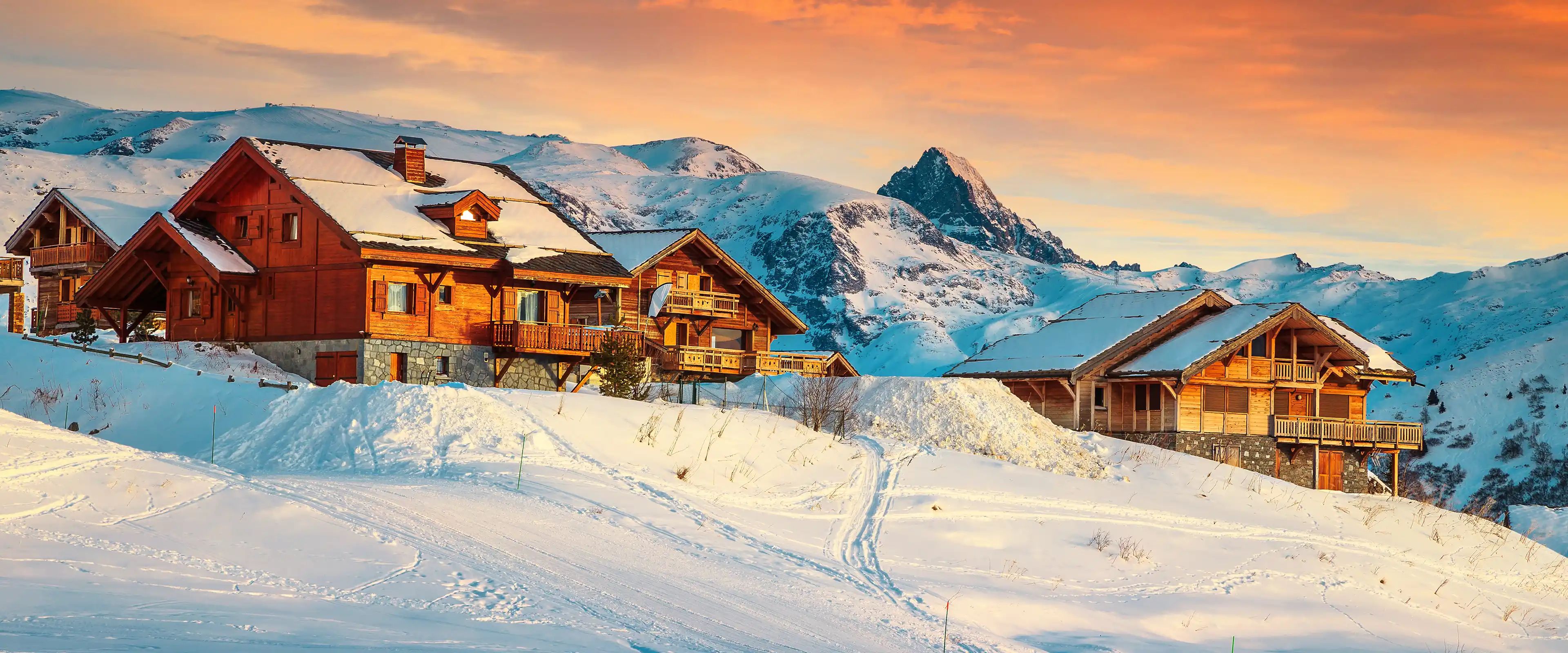
Alpe d'Huez is famous for sunshine - the resort markets itself as 'the island in the sun' - and in January that reputation works in your favour. Cold, clear days mean firm pistes in the morning, softening as the sun warms them through the afternoon. The skiing reaches 3,330m at the top of the Pic Blanc, where January conditions are consistently winter-grade, while the lower slopes benefit from one of the most extensive snowmaking networks in France.
The resort has a long, gentle beginner area right in the centre of town, and the terrain above it graduates smoothly through blues and reds that suit improving skiers. For stronger skiers, the Sarenne run - a 16 km black that descends over 2,000m of vertical - is one of the longest pisted runs in the world, and in January you can ski it without the crowds that make it a slow procession later in the season. The village is compact and walkable, with a good spread of restaurants and a friendlier atmosphere than some of the larger French purpose-built stations.
✓ Consistent January sunshine on a south-facing resort, with cold clear mornings.
✓ Skiing up to 3,330m with strong snowmaking backing the lower slopes.
✓ The 16 km Sarenne run is skiable without queues in January.
| Country | France |
|---|---|
| Ski area | Alpe d'Huez Grand Domaine - 250 km of pistes |
| Altitude | 1,100m - 3,330m |
| Runs | 135 runs (34 green, 34 blue, 40 red, 27 black) |
| Ski school | ESF Alpe d'Huez, Masterclass, EasyRiders - English-speaking instructors |
| Transfer time | Grenoble (1h 30m); Lyon (2h 30m); Geneva (3h 30m) |
WeSki insider tip: Take the Pic Blanc cable car first thing on a clear January morning and ski the top section before the sun softens it. The view from 3,330m stretches from Mont Blanc to the Ecrins massif, and the snow at that altitude is consistently cold and fast.
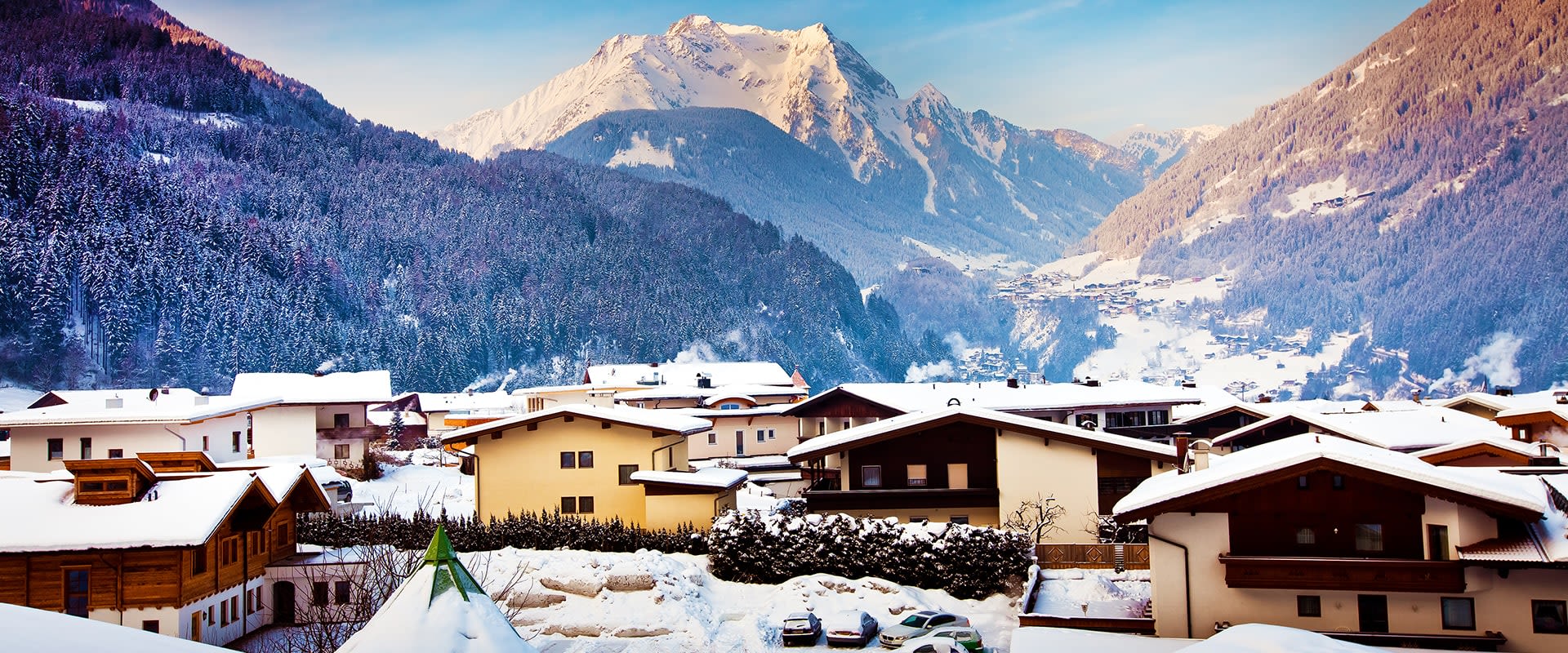
Mayrhofen sits at the head of the Zillertal valley, and in January the narrow valley funnels cold air that keeps the snow in excellent condition. The Penken ski area above the town climbs to 2,500m, with a mix of wide cruising runs on one side and the steep Harakiri piste - Austria's steepest groomed run at 78% gradient - on the other. The Hintertux Glacier, included on the Zillertal Superskipass, adds year-round skiing up to 3,250m if you want guaranteed high-altitude conditions.
The town itself is one of the most appealing base villages in the Zillertal: traditional Tyrolean architecture, a good selection of restaurants, and a short walk from the Penken gondola. January midweek is when Mayrhofen is at its most accessible - the pistes are quiet, lessons are easy to arrange, and the mountain restaurants are relaxed enough to linger over a long lunch without feeling rushed.
✓ Cold valley position keeps January snow in excellent condition on the Penken.
✓ Access to Hintertux Glacier (3,250m) for guaranteed high-altitude skiing.
✓ Traditional Tyrolean village with good restaurants and a compact, walkable centre.
| Country | Austria |
|---|---|
| Ski area | Mayrhofen-Hippach (Zillertal Superskipass - 542 km) - 142 km local pistes |
| Altitude | 630m - 2,500m (3,250m via Hintertux Glacier) |
| Runs | 57 local runs (10 blue, 28 red, 19 black) |
| Ski school | Skischule Total, SMT Mayrhofen - English-speaking instructors |
| Transfer time | Innsbruck (1h 15m); Salzburg (2h 15m); Munich (2h 30m) |
WeSki insider tip: The Ahorn area, reached by cable car from the edge of town, is far quieter than the Penken and has a gentle, wide piste at the top that's one of the best warm-up runs in the Zillertal. In January, you may have the whole sector to yourself before 10 am.
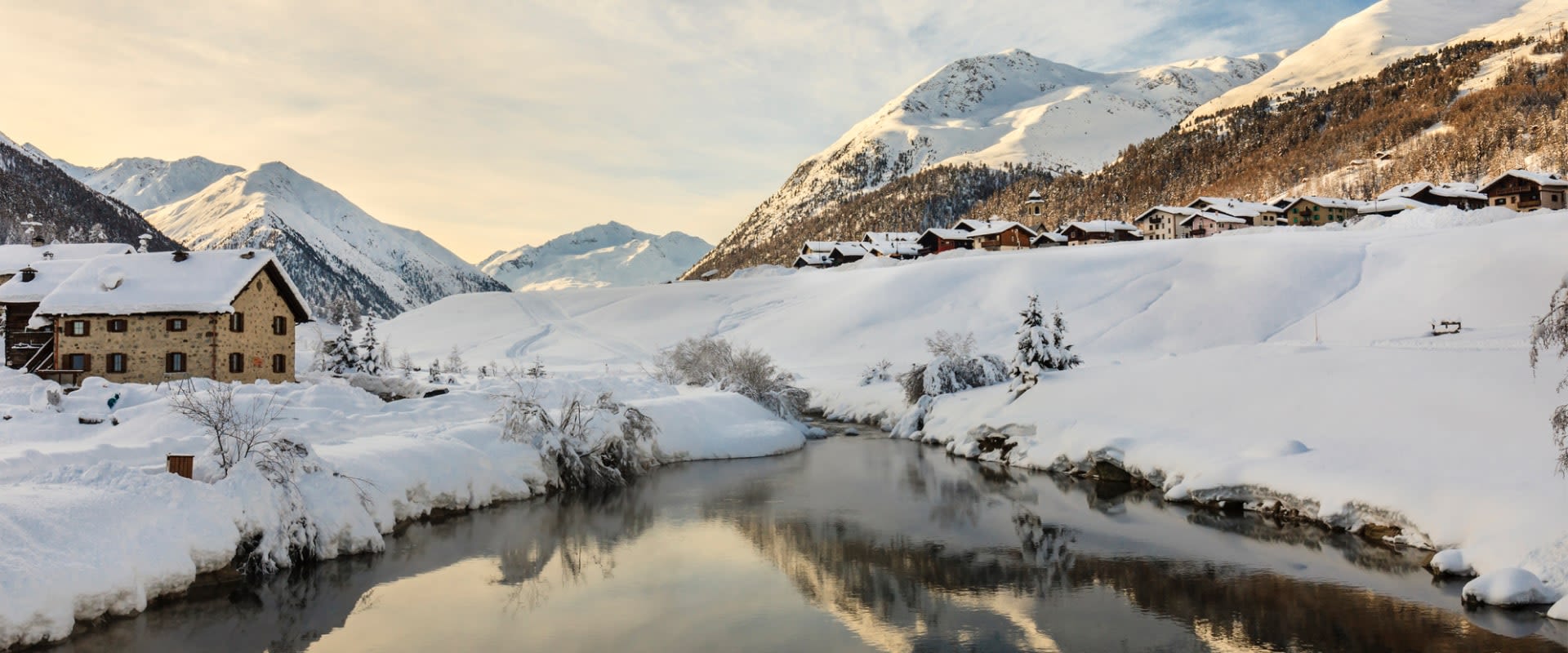
Livigno sits in a high, enclosed valley at 1,816m - one of the coldest spots in the Italian Alps - and that elevation makes it one of the most snow-reliable resorts in Europe during January. The cold temperatures preserve snow quality even on sunny days, and the resort's snowmaking covers most of the 115 km of pistes as backup. The terrain is spread across two sides of the valley, Carosello and Mottolino, with a strong emphasis on intermediate runs: long, well-groomed blues and reds that make for satisfying skiing without demanding expert-level fitness.
Livigno's other January advantage is its duty-free status. The village has a lively high street with shops, restaurants, and a relaxed atmosphere that's distinctly Italian - more mountain town than purpose-built resort. It's not the easiest resort to reach (the access tunnel closes in bad weather), but once you're there, the combination of reliable snow, uncrowded slopes, and a self-contained village makes for a rewarding January week.
✓ High valley at 1,816m with some of the coldest, most reliable January snow in Italy.
✓ Well-groomed intermediate terrain across two linked ski areas.
✓ Duty-free village with a relaxed Italian mountain-town atmosphere.
| Country | Italy |
|---|---|
| Ski area | Livigno (Carosello + Mottolino) - 115 km of pistes |
| Altitude | 1,816m - 2,798m |
| Runs | 37 runs (12 blue, 17 red, 8 black) |
| Ski school | Scuola Italiana Sci Livigno, Central School - English-speaking instructors |
| Transfer time | Innsbruck (2h 30m); Bergamo (3h 30m); Milan Malpensa (3h 30m) |
WeSki insider tip: The Carosello 3000 side catches afternoon sun and has the more scenic runs. In January, the morning light on the Mottolino side is better for photography and the snow stays firm longer - so plan your day with sun position in mind.
January is one of the strongest months in the European ski season. Snow coverage is typically at or near its peak, temperatures are cold enough to preserve snow quality, and most resorts have their full terrain open. The added benefit is timing: between New Year and half term, slopes are noticeably quieter than they will be for the rest of the winter. If you have flexibility on dates, the second and third weeks of January tend to be the quietest.
January is the coldest month in most Alpine resorts, with temperatures often dropping below -10°C at altitude. That cold is what keeps the snow in such good condition, but it does mean you'll want to dress in proper layers - a good base layer, insulating mid-layer, and a windproof outer shell make a big difference. For practical advice on what to bring, our guide to what to wear skiing covers layering in detail.
Significantly. February includes school half terms across the UK and much of Europe, which is the single busiest period of the ski season. January, by contrast, sits between the New Year peak and that half-term rush. Lift queues are shorter, ski lessons have smaller group sizes, and restaurants are easier to book. The snow conditions are often better too - fewer people means less wear on the pistes.
France, Austria, Switzerland, and Italy all have strong options. Austria and France tend to have the widest range of resorts at different altitudes, while Switzerland and Italy have some of the highest skiing in Europe. For reliable January conditions, altitude matters more than country - resorts above 1,800m will almost always have full snow coverage. The resorts on this list span all four countries, so the best choice depends on your priorities: terrain type, transfer time, village character, and budget.
January gives you more flexibility than most other months. Because it falls outside school holidays (except for the very start of January in Scotland), accommodation availability is better and last-minute bookings are more feasible. That said, the most popular resorts still fill up - especially for the best-value properties. Booking a few months ahead gives you the widest choice without the urgency of peak-season deadlines.
Narrowing it down? WeSki's AI trip planner can match your dates, group size, and priorities to the right January resort in seconds.
WeSki is a trading name operated by Wetrip Weski Ltd (BR021500). All the flights and flight-inclusive holidays on this website are financially protected by the ATOL scheme. When you pay you will be supplied with an ATOL Certificate. Please ask for it and check to ensure that everything you booked (flights, hotels and other services) is listed on it. Please see our booking conditions for further information or for more information about financial protection and the ATOL Certificate go to: www.caa.co.uk.
Package holidays that do not include travel by air are financially protected via ABTOT.
For the latest travel advice from the Foreign & Commonwealth Office visit www.gov.uk/foreign-travel-advice.