
EN
EN
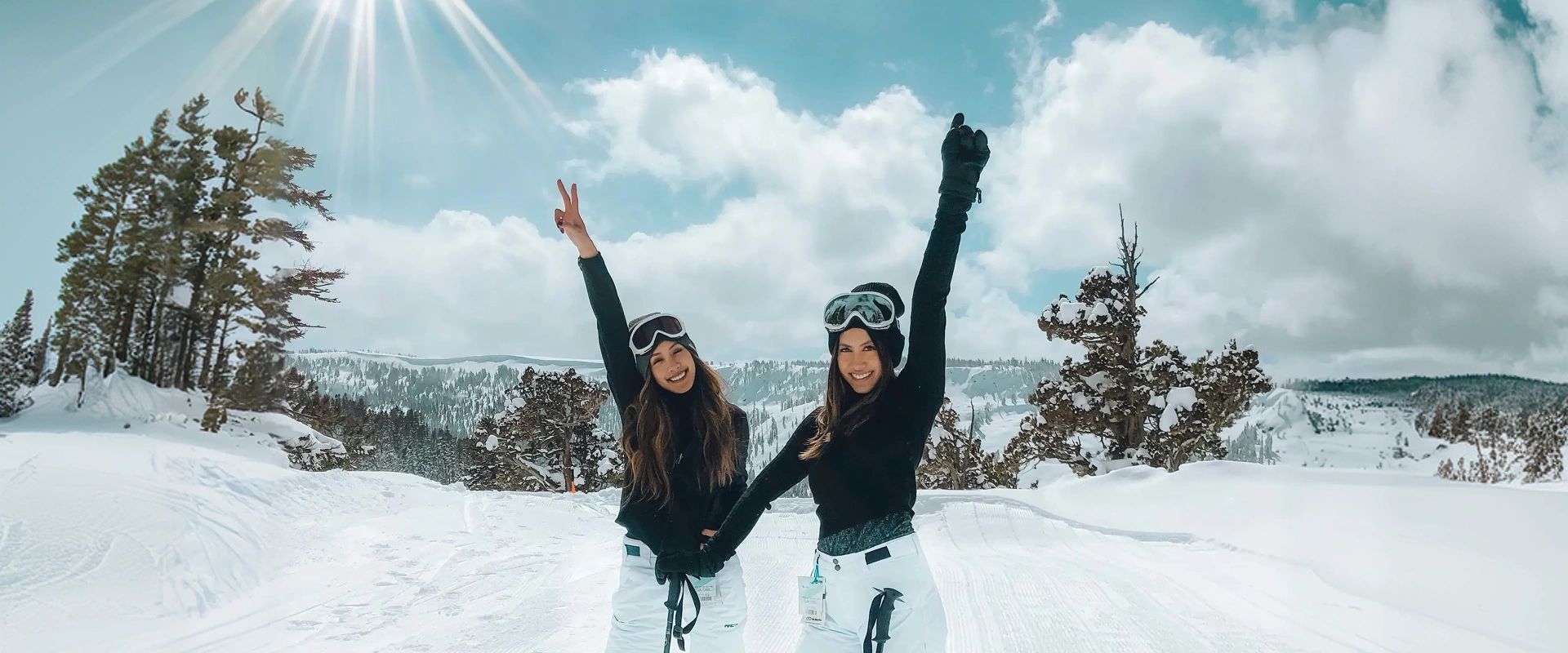
April is the month that divides opinion in skiing. Some people assume the season is over by then. Others - usually the ones who've tried it - consider it one of the best months to go. The reality is somewhere in between, and it depends heavily on where you go. This guide covers what April skiing actually looks like: which resorts stay open, what the snow and weather are like, who it suits, and what to watch out for. If you're already sold and want to compare specific resorts, our list of the best ski resorts to visit in April has ten options with full details on each.
Not every resort makes it to April. Lower-altitude resorts in Austria, Italy, and France typically close in late March or the first week of April, depending on snow levels. The resorts that stay open through April and into May share a few common traits: high altitude (village above 1,500m, skiing above 2,500m), glacier access, and north-facing terrain that holds snow longer.
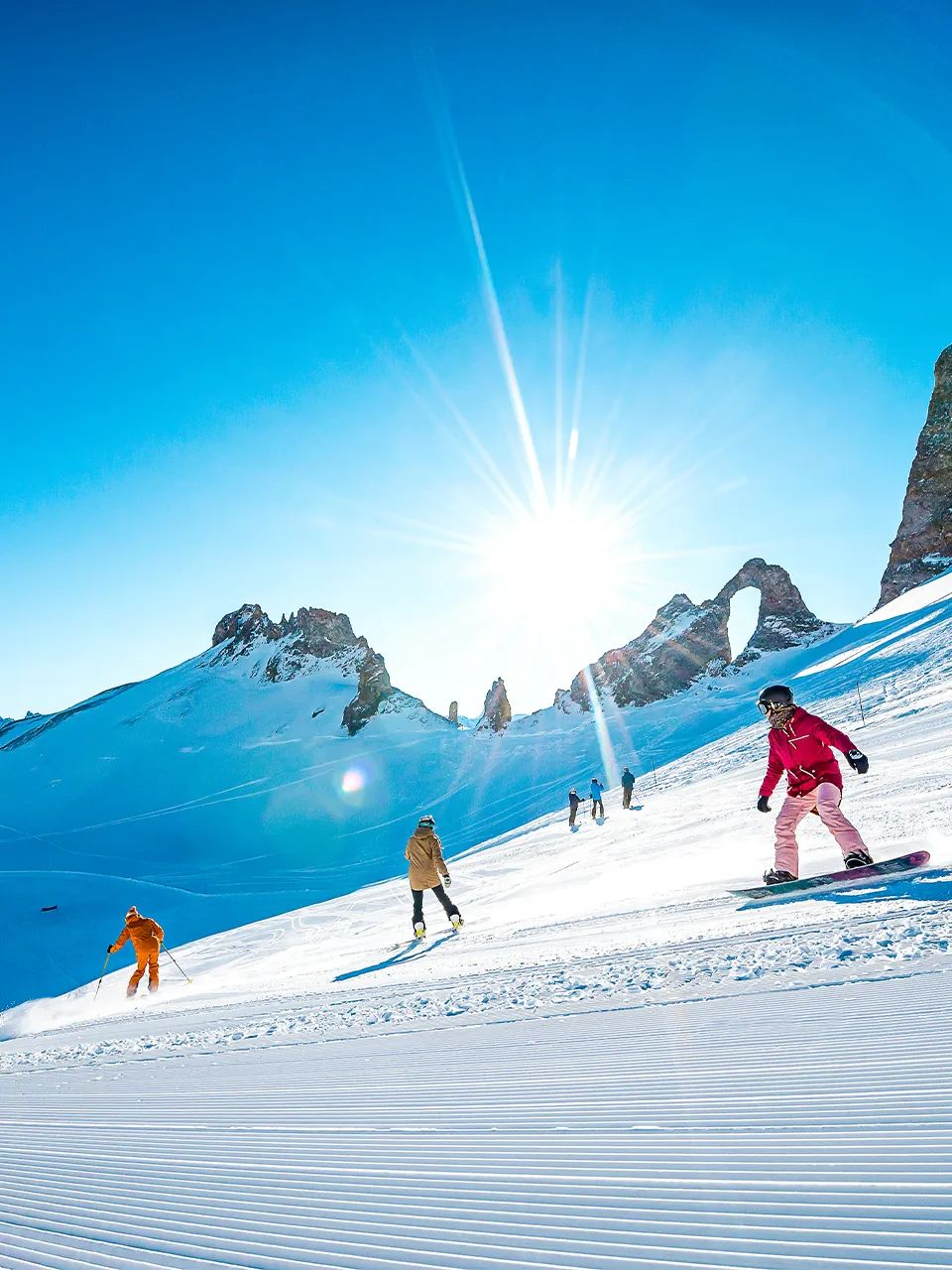
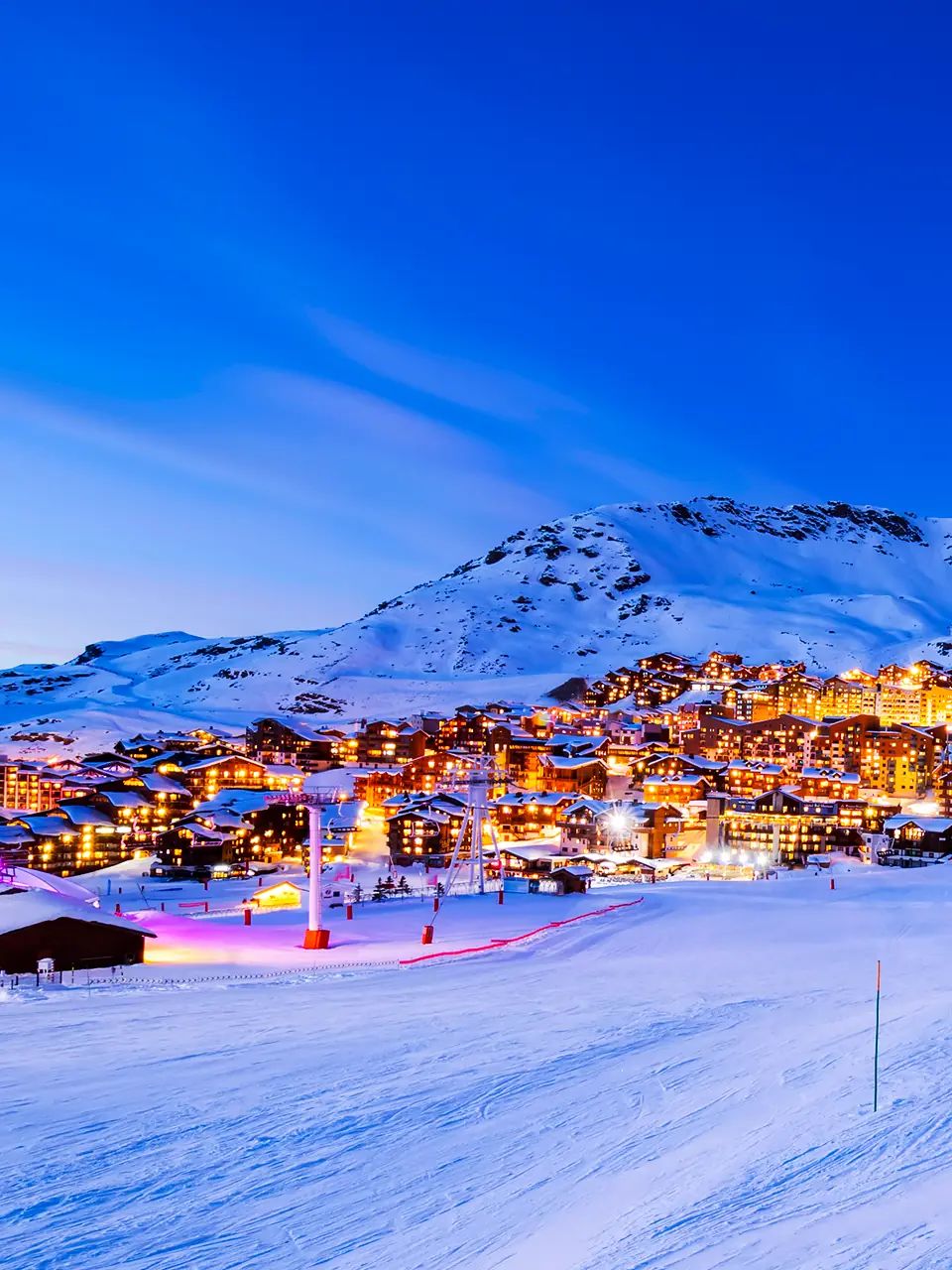
In France, the big three for late-season skiing are Val Thorens, Tignes, and Val d'Isere - all part of high-altitude ski areas that routinely stay open until early May. In Austria, Ischgl and Obergurgl typically close in late April, while Hintertux's glacier stays open year-round. In Switzerland, Zermatt and Saas-Fee both have glacier skiing that runs through the entire spring and summer. Italy's best April option is Cervinia, which shares its glacier terrain with Zermatt across the border.
The pattern is clear: altitude is everything in April. A resort that's perfect in January at 1,200m may have patchy cover by April, while a resort at 2,300m is still in full operation. If you're booking an April trip, start with altitude and work backwards from there.
April snow is different from midwinter snow, and understanding the difference is what makes or breaks a spring ski trip. Overnight temperatures in the mountains still drop below freezing at altitude, which means mornings start with firm, groomed pistes that ski fast and smooth. As the sun comes up and warms the surface, the snow gradually softens through the morning into what's called 'spring snow' - a smooth, forgiving texture that many experienced skiers prefer to the hard-packed ice of January.
By early to mid-afternoon, lower-altitude and south-facing slopes can become slushy and heavy. This is the daily rhythm of spring skiing: firm and fast in the morning, soft and pleasant by late morning, and progressively heavier into the afternoon. The best strategy is to follow the sun - start on east-facing slopes that soften first, move to south-facing terrain by mid-morning, and save the north-facing runs for the afternoon when they've warmed just enough.
Above 2,500m, this cycle plays out more slowly, which is why high-altitude resorts still feel like full-winter skiing until well into the afternoon. Below that line, you'll want to plan your day around the conditions rather than just skiing wherever you fancy.
One of April's biggest selling points is the weather. In the Alps, April brings longer days (around 13 to 14 hours of daylight), stronger sunshine, and milder temperatures than midwinter. On the mountain, you can expect mornings around freezing at altitude, rising to 5-10 degrees Celsius on sunlit pistes by lunchtime. In resort villages, afternoon temperatures regularly reach 12-18 degrees, which makes terrace lunches and outdoor apres-ski a real pleasure rather than an endurance test.
The layering approach changes in spring. A heavy ski jacket that's essential in January can feel stifling by 11am in April. Most experienced spring skiers wear a lighter shell over a mid-layer, and carry the mid-layer in a backpack once the sun's out. Sunscreen becomes more important than in midwinter - UV at altitude is strong, and the combination of direct sun and reflection off snow can catch people out. A good pair of goggles with a lighter lens tint is also worth considering, since the bright spring light is very different from the flat grey days of January.
April can still produce cold snaps and fresh snowfall - it's not unusual to get a 20cm dump in early April that transforms conditions overnight. These late-season powder days are a bonus rather than the norm, but they do happen, and they're often followed by brilliant blue-sky days.
April works well for a few different types of skier. If you have the flexibility to travel outside school holidays - couples without children, retired skiers, remote workers - April is one of the best-value windows of the season. Accommodation and flights are typically cheaper than peak periods, and the slopes are noticeably quieter.
It's also a strong option for beginners. Warmer weather, softer snow, and quieter pistes make learning less intimidating, and ski schools in the resorts that stay open are usually running at full capacity with smaller class sizes. The one caveat is that nursery slopes at lower altitudes can thin out, so choosing a resort with beginner areas above 2,000m is important.
Experienced skiers who enjoy off-piste and freeride terrain often rate April as their favourite month. The spring snowpack is consolidated and stable after months of layering, making it safer and more predictable than the avalanche-prone midwinter weeks. Corn snow - the distinctive granular texture that forms when the surface melts and refreezes repeatedly - is considered some of the most enjoyable snow to ski on.
The group it suits less well is anyone who wants guaranteed top-to-bottom snow coverage on every run. If you're set on skiing back to the village door at the end of each day on a white carpet, January or February is a safer bet. April skiing rewards flexibility and a willingness to ski where the conditions are best, rather than following a fixed route.
The atmosphere in an April ski resort is markedly different from midwinter. The crowds thin out, the pace slows down, and there's a communal, end-of-term feeling among the skiers and staff who are still there. Many resorts lean into this with end-of-season events - Ischgl's Top of the Mountain concert is probably the most famous, but Tignes, Val Thorens, and others run festivals, freestyle competitions, and open-air music through the closing weeks.
Apres-ski in April also shifts outdoors. Sun-drenched terraces replace crowded indoor bars, and the vibe is more relaxed than the high-energy peak-season apres of February. If your version of a ski holiday includes an afternoon beer in the sunshine after a morning on the mountain, April is hard to beat.
The practical side of the quieter atmosphere is also worth noting. Lift queues are shorter, restaurants take walk-ins rather than requiring bookings, and the mountain in general feels less competitive. For people who find the intensity of peak-season skiing stressful, April is a different experience entirely.
A few practical adjustments make April skiing work better. First, book early in the month if you can - the first two weeks of April have more resorts open and more terrain accessible than the last two. By the final week of April, only the highest-altitude resorts and glaciers are still running.
Second, plan your days around the snow cycle. Get up early, ski hard in the morning when the pistes are firm, and be willing to stop by early afternoon if the snow has turned heavy. This isn't a limitation - it's how locals ski in spring, and it leaves time for the terrace lunches and village exploring that make April special.
Third, choose your resort based on altitude rather than name recognition. A famous resort at 1,200m that's technically still open in April will give you a worse experience than a less well-known resort at 2,000m that's in full swing. The resorts listed in our best ski resorts to visit in April guide are all chosen for their late-season reliability.
Finally, adjust your gear. Lighter layers, high-SPF sunscreen, a lighter goggle lens, and waterproof gloves (spring snow is wetter than midwinter snow) are the main changes. If you're hiring equipment through your booking, the rental shop will set you up with the right gear for spring conditions.
| Key takeaways |
|---|
| ✓ April skiing works best at resorts above 1,500m with glacier access or north-facing terrain. |
| ✓ Snow conditions follow a daily cycle: firm mornings, soft midday, slushy afternoons at lower altitudes. |
| ✓ Warmer weather, longer days, and quieter slopes suit flexible travellers, beginners, and freeride enthusiasts. |
| ✓ Book early April for the widest choice of open resorts; late April is glacier territory only. |
| ✓ Adjust your approach: ski mornings, embrace the terraces, and choose altitude over reputation. |
For the right resorts, not at all. High-altitude destinations like Val Thorens, Tignes, Zermatt, and Hintertux routinely stay open into May. The key is choosing a resort where April is part of the planned season, not an afterthought. At lower-altitude resorts, April can mean patchy snow and limited terrain - which is why altitude is the most important factor when booking a late-season trip.
In the resorts that stay open until late April or beyond, ski schools typically run a full programme right through the spring. Class sizes tend to be smaller than in peak season, which can mean more instructor attention. It's worth confirming with your booking that lessons are available for your specific dates, particularly if you're travelling in the last week of April when some resorts are in their final days.
The biggest change is layering. A lighter shell jacket works better than a heavy insulated ski coat, and you'll want a mid-layer you can strip off as the day warms up. High-SPF sunscreen and lip balm are essential - spring sun at altitude is strong. Waterproof gloves handle wet spring snow better than the insulated mittens you'd wear in January. If you have a choice of goggle lenses, a lighter tint suits the bright spring light. For more on what to bring, our how to pack for a ski holiday guide covers the full list.
At the highest resorts - Val Thorens, Zermatt, Tignes, Hintertux, Saas-Fee - a full week in April is entirely viable. The terrain that's open is extensive enough to ski for seven days without repeating yourself, especially if you're on an interconnected ski area. At resorts that close in late April, the final week may see some lifts shut down, so a full week is best booked for the first half of the month if you want maximum terrain choice.
April is arguably the best month for the non-skiing side of a ski holiday. Walking trails start to open up as lower slopes lose their snow cover, village terraces are in full sun, and the general pace is more relaxed than midwinter. Mountain restaurants are still open and the scenery is dramatic - spring light and clear skies make the peaks look their sharpest. If you're travelling with a mixed group where not everyone skis, April gives the non-skiers a much better time than the dark, cold days of December or January.
Thinking about a spring trip? Tell WeSki’s AI trip planner your dates and preferences and it'll build you a shortlist of resorts that are open and suited to what you're after.



WeSki is a trading name operated by Wetrip Weski Ltd (BR021500). All the flights and flight-inclusive holidays on this website are financially protected by the ATOL scheme. When you pay you will be supplied with an ATOL Certificate. Please ask for it and check to ensure that everything you booked (flights, hotels and other services) is listed on it. Please see our booking conditions for further information or for more information about financial protection and the ATOL Certificate go to: www.caa.co.uk.
Package holidays that do not include travel by air are financially protected via ABTOT.
For the latest travel advice from the Foreign & Commonwealth Office visit www.gov.uk/foreign-travel-advice.