
EN
EN
The Silvretta Arena is a cross-border ski area centred on Ischgl in the Paznaun Valley of the Austrian Tyrol, connecting across to the duty-free Swiss village of Samnaun. Ischgl is the star - a resort with a reputation for high-energy après-ski, modern lift infrastructure, and consistently good snow thanks to its high-altitude terrain. The Silvretta Arena pass also covers three quieter resorts further down the Paznaun Valley: Galtür, Kappl, and See. Together, they offer a mix of big-area skiing and smaller, characterful alternatives.
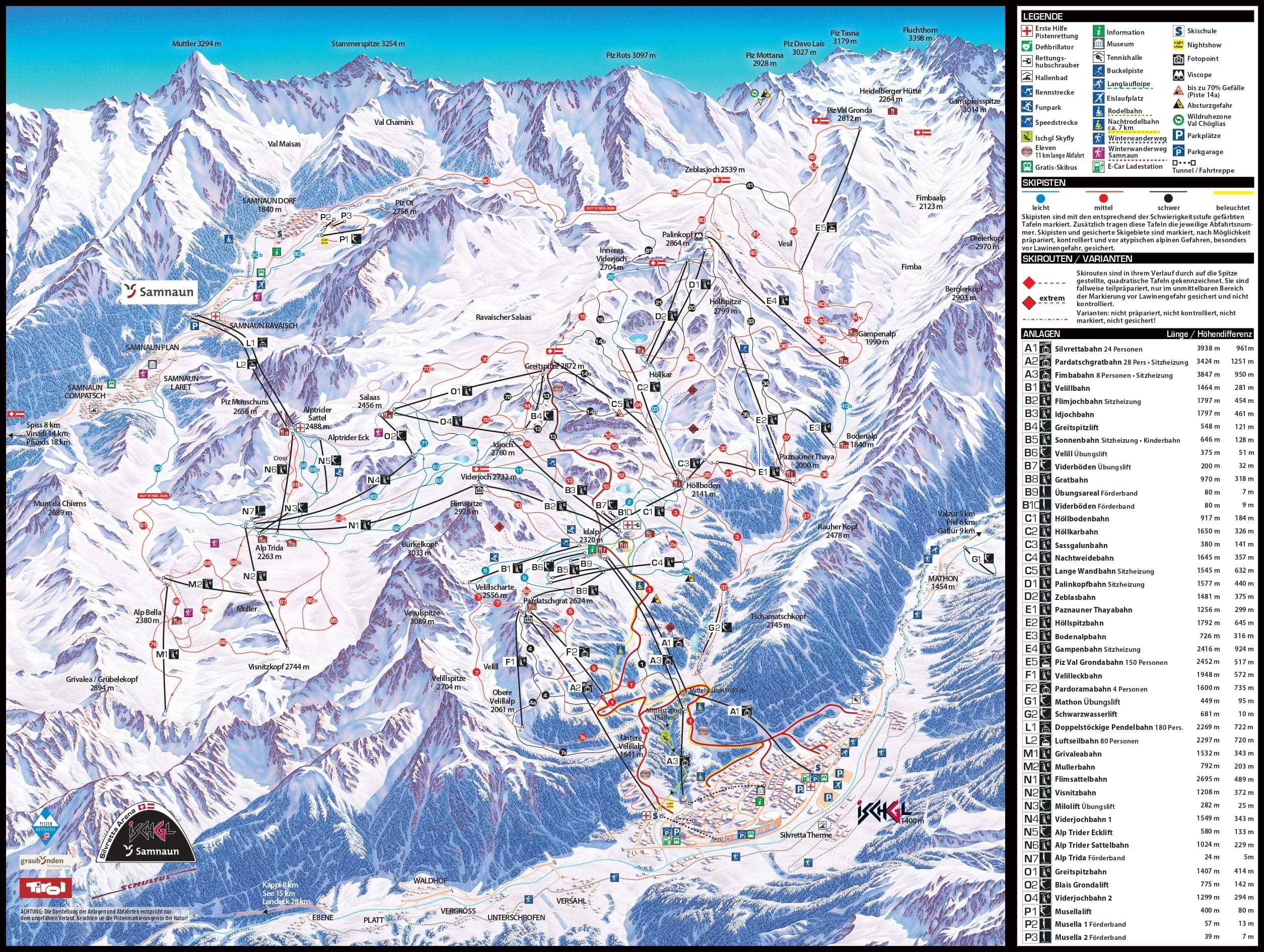
The main Ischgl-Samnaun ski area covers 239 km of marked piste served by 45 lifts, sitting between 1,377 m (Ischgl village) and 2,872 m at the Palinkopf. There are 143 runs: 28 blue, 72 red, and 43 black - the terrain skews noticeably towards intermediates and above. The season typically runs from late November to early May, one of the longest in Austria. The Silvretta Arena pass adds the separate ski areas of Galtür, Kappl, and See, bringing the total to over 300 km.
Ischgl is the main draw - a modern resort with a famous après-ski scene and skiing that crosses into Switzerland. Galtür is quieter and family-friendly. Kappl and See are small, local areas ideal for a calm day away from the main circuit. The cross-border link to Samnaun adds duty-free shopping to the ski experience. Browse Silvretta Arena ski deals on WeSki to start planning your trip.
| Country | Austria (and Switzerland - Samnaun) |
| Region | Tyrol (Paznaun Valley) |
| Total piste km | 239 km (Ischgl-Samnaun); additional terrain at Galtür, Kappl, and See |
| Altitude | 1,050 m (See) - 2,872 m (Palinkopf) |
| Linked resorts | 4 Ischgl Galtür Kappl See |
| Lifts | 45 (Ischgl-Samnaun); additional lifts across the other areas |
| Runs | 143 (Ischgl-Samnaun: 28 blue, 72 red, 43 black) |
| Season | Late November - early May (Ischgl) |
| Ski pass name | Silvretta Arena ski pass (covers Ischgl-Samnaun, Galtür, Kappl, and See) |
| Nearest airports | Innsbruck (~1 hr 30 min) Friedrichshafen (~2 hr) Zurich (~2 hr 30 min) Munich (~3 hr) |
| Glacier skiing | No |
| WeSki services | Transfers: all 4 resorts (private and shared to Ischgl, Galtür, Kappl, and See) Ski equipment hire: Ischgl No WeSki lessons currently available |
Ischgl is one of Austria's most well-known ski resorts - a compact village at 1,377 m in the Paznaun Valley with a reputation for high-quality skiing and even higher-energy nightlife. The resort has invested heavily in modern lift infrastructure: the Pardatschgratbahn and Silvrettabahn gondolas from the village get you onto the mountain quickly, and the lift system above is fast and efficient. The skiing fans out across a wide, high-altitude area with the bulk of the terrain between 2,000 m and 2,800 m, which keeps conditions reliable. The cross-border link to Samnaun in Switzerland is one of the area's defining features - you can ski into a different country for lunch and duty-free shopping. Ischgl also hosts the annual Top of the Mountain concerts, with major international acts performing on open-air stages at the season opening and closing.
Galtür is a small, traditional village at 1,584 m at the head of the Paznaun Valley - higher and quieter than Ischgl, with a distinctly more peaceful feel. The local ski area is compact (around 43 km of piste) and well-suited to families and intermediates, with gentle blues, well-groomed reds, and a calm atmosphere. The Silvretta Arena pass covers it, and a free ski bus connects Galtür to Ischgl in about 20 minutes. The village has an alpine museum, good local restaurants, and a strong community feel. It's the kind of place where families return year after year.
Kappl is a quiet village at 1,258 m between Ischgl and Landeck, with its own sunny, south-facing ski area called Dias. The slopes are gentle and family-friendly, with a good beginners' zone and pleasant blues through the trees. It's a separate ski area from Ischgl but covered by the Silvretta Arena pass. Kappl has a traditional Paznaun character - a few guesthouses, a church, and a pace that feels a long way from Ischgl's buzz. The free ski bus connects it to Ischgl for bigger days out.
See is the first village you reach in the Paznaun Valley, sitting at 1,050 m with a small, friendly ski area above. The terrain is gentle and uncrowded - ideal for beginners and young families. A gondola takes you up to the ski area, which has good views down the valley and well-maintained runs. Like Kappl, it's covered by the Silvretta Arena pass, with the free ski bus providing a link to Ischgl. It's the quietest base in the network and suited to visitors who want a calm village with the option of accessing Ischgl's bigger terrain when they want it.
Kappl, See, and Galtür are the best choices for beginners. All three have gentle, dedicated nursery areas separated from faster traffic, with easy progression onto blues. Kappl's Dias area is sunny and calm, and See's slopes are among the quietest in the Paznaun. In Ischgl, the Idalp plateau at 2,320 m has a good beginners' zone, though the terrain beyond gets steeper quickly and the busy atmosphere can feel overwhelming for first-timers. The smaller resorts provide a much calmer learning environment.
WeSki does not currently have lessons available in the Silvretta Arena area, but all resorts have local ski schools with English-speaking instructors.
WeSki tip: If you're a beginner, spend your first days at Kappl or Galtür rather than Ischgl. The slopes are gentler, quieter, and more forgiving. Once you're confident on blues, take the ski bus to Ischgl and head up to the Idalp - you'll appreciate the bigger terrain much more after a few days of building confidence in a calm setting.
Ischgl's 72 reds are the main event for intermediates. The terrain is spread across a wide, high-altitude area with long, well-groomed runs that rarely drop below 2,000 m. The circuit from Ischgl across to Samnaun and back is a popular day out - roughly 35 km of skiing that takes you across the border and through varied terrain on both sides. The reds off the Palinkopf (2,864 m) and the Pardatschgrat (2,624 m) are long, consistent, and have excellent snow. Galtür's reds are shorter but well-maintained and less crowded. The Silvretta Arena pass lets you mix Ischgl's big terrain with quieter days on the smaller mountains.
WeSki tip: The Ischgl-Samnaun circuit is best done clockwise - head up to the Idalp, across the Flimjoch into Switzerland, and ski down into Samnaun for a coffee (and some duty-free shopping if you're inclined). Return via the Viderjoch for a different view on the way back. Allow a relaxed half-day.
The 43 blacks in Ischgl-Samnaun are more than most visitors expect. The runs off the Palinkopf and the Greitspitze (2,872 m) are sustained and steep. The 14a/14b black runs from the Pardatschgrat have a genuine challenge to them. Off-piste, the high-altitude bowls above 2,500 m hold snow well after storms, and the terrain between the Fimbatal and the Vesil sector has some excellent freeride lines. Ischgl's position in the Silvretta range means it catches significant snowfall, and the north-facing slopes above the treeline are worth exploring with a guide.
WeSki tip: The Fimbatal on the Ischgl side is one of the best freeride zones in the area - a long, north-facing valley with varied terrain. After fresh snow, head to the Palinkopf and ski the open slopes above the valley before dropping in. Go early and take a guide - the terrain is serious and avalanche-prone.
The Silvretta Arena ski pass covers the full Ischgl-Samnaun ski area (239 km, 45 lifts) plus the separate areas of Galtür, Kappl, and See on a single ticket. Passes are available from one day up to the full season, with discounted rates for children, teens, and seniors. An Ischgl-Samnaun-only pass is also available if you don't plan to visit the other resorts. The pass includes the free ski bus connecting the Paznaun Valley villages.
You can add the lift pass directly to your WeSki booking, along with ski equipment hire at Ischgl - so everything's sorted before you arrive.
WeSki tip: The Silvretta Arena pass includes the smaller areas as well as Ischgl, so a day trip to Galtür or Kappl costs nothing extra. On a busy weekend or holiday, these quieter slopes are a welcome change of pace from the main Ischgl circuit. The ski bus runs regularly and is included in the pass.
Innsbruck is the closest major airport, around 1 hour 30 minutes' drive west via the Arlberg motorway. Friedrichshafen is about 2 hours, and Zurich roughly 2 hours 30 minutes. Munich is around 3 hours. By train, the nearest station is Landeck-Zams on the Innsbruck-Bludenz railway line, from where regular buses run up the Paznaun Valley to Ischgl (about 40 minutes), continuing to Galtür (about 55 minutes). A free ski bus connects all the Paznaun villages during the season.
WeSki has private and shared transfers to all four resorts: Ischgl, Galtür, Kappl, and See. Add them to your booking for a straightforward door-to-door trip.
The season runs from late November to early May - one of the longest in Austria. There's no glacier, but Ischgl's terrain sits predominantly between 2,000 m and 2,800 m, which keeps conditions reliable throughout the season. The north-facing slopes above the treeline hold snow well, and Ischgl's snowmaking is extensive. January to mid-March typically sees the deepest natural snowpack.
Austrian school holidays in February, Christmas-New Year, and Easter are the busiest periods in Ischgl. The Top of the Mountain concerts at the season opening (late November) and closing (late April/early May) draw large crowds and a festive atmosphere. If you've got flexibility, early January and the first half of March are quieter on the slopes. The late-season weeks in April are particularly good - long days, spring snow at altitude, and a closing-party energy in the village.
Yes, though resort choice matters. Kappl, See, and Galtür have dedicated, calm beginners' areas. Ischgl's Idalp has a learning zone but the resort is better suited to intermediates and above. WeSki does not currently have lessons available, but all resorts have local ski schools with English-speaking instructors.
The main Ischgl-Samnaun ski area covers 239 km of piste served by 45 lifts, ranging from 1,377 m to 2,872 m. The Silvretta Arena pass adds Galtür, Kappl, and See, bringing the total to over 300 km. There are 143 runs in the main area: 28 blue, 72 red, and 43 black.
Yes. The Ischgl-Samnaun ski area crosses the Austrian-Swiss border at altitude. You can ski from Ischgl over the Fimbajoch or Flimjoch into Samnaun in Switzerland and back. Samnaun is a duty-free zone, so shops there sell goods tax-free - a popular stop on the circuit. No passport is needed.
Ischgl is the main resort - modern, lively, and famous for its après-ski and cross-border skiing to Samnaun. Galtür is quieter, higher up the valley, and family-friendly. Kappl is a small, sunny village with gentle slopes. See is the quietest, with a compact ski area ideal for beginners. All four are covered by the same pass and connected by free ski bus.
The season runs from late November to early May - one of the longest in Austria. There is no glacier, but the high-altitude terrain (mostly above 2,000 m) and extensive snowmaking keep conditions reliable. The Top of the Mountain concerts mark the season opening and closing.
Fly to Innsbruck (about 1 hr 30 min drive), Friedrichshafen (2 hr), or Zurich (2 hr 30 min). By train, Landeck-Zams is the nearest station on the Innsbruck-Bludenz line, with buses to Ischgl taking about 40 minutes. WeSki has private and shared transfers to all four resorts.
Yes. Samnaun is a duty-free zone in Switzerland, accessible by ski lifts from Ischgl. Shops sell goods including alcohol, tobacco, perfume, and chocolate at tax-free prices. There are allowances on what you can bring back, so check current limits. Many skiers stop in Samnaun for a browse as part of the day's circuit.
Yes. Ski equipment hire is available through WeSki at Ischgl. WeSki does not currently have lessons available in the Silvretta Arena area. You can add equipment hire to your booking along with your lift pass and transfers.
Start building your dream ski trip today with our one-stop ski shop - hundreds of resorts, unlimited combinations.


 4.9/5
4.9/5I usually book flights, transfers, hotel, ski rental and lift passes myself but this year used WeSki for a trip to Morzine. It was so much easier. Everything worked perfectly - transfers arrived on time and there was plenty of feedback throughout the whole process giving you confidence the holiday would go smoothly.

A really useful service that is so much easier to use than other 'all-inclusive' sites. It nicely bridges the gap between a travel agent and booking the trip yourself online. I will use WeSki every time I go skiing from now on.
We booked a late minute skiing trip to Morzine through we ski. We looked at booking the trip ourselves but could get anywhere near the price quoted by we ski. The company was excellent and we had no problems at all from start to finish. I would definitely use them to book another weekend skiing trip.
Seamless experience from start to finish. I was spending ages trying to sort out a weekend break and managed to do it with we ski in minutes and for the same price as booking it all up yourself. Flight, transfer and accommodation was all as expected and faultless.

WeSki is a trading name operated by WeTrip Ltd. All the flights and flight-inclusive holidays on this website are financially protected by the ATOL scheme. When you pay you will be supplied with an ATOL Certificate. Please ask for it and check to ensure that everything you booked (flights, hotels and other services) is listed on it. Please see our booking conditions for further information or for more information about financial protection and the ATOL Certificate go to: www.caa.co.uk.
Package holidays that do not include travel by air are financially protected via ABTOT.
For the latest travel advice from the Foreign & Commonwealth Office visit www.gov.uk/foreign-travel-advice.