
EN
EN
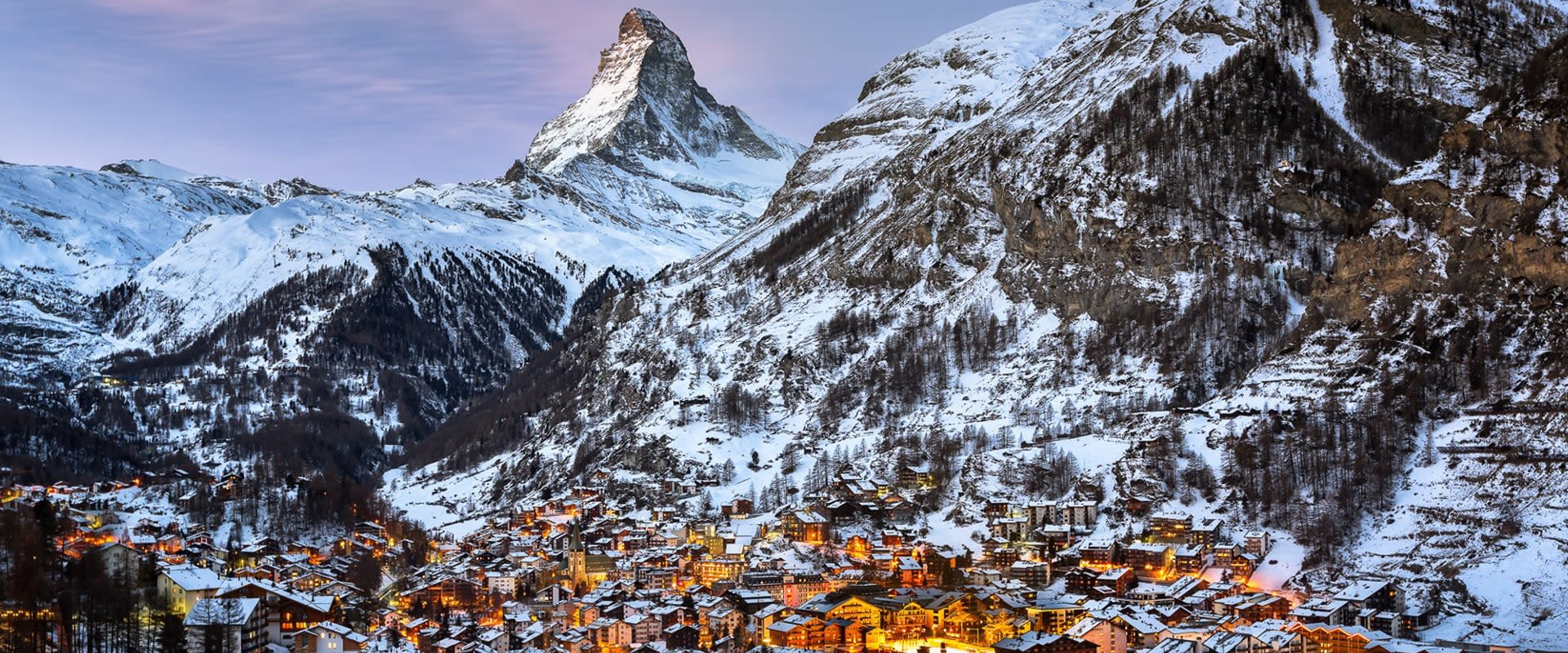

The Swiss side of the Matterhorn: Rothorn, Gornergrat and the Matterhorn glacier paradise, all rising out of Zermatt village and all on the Zermatt pass.
The Italian runs along the top edge of the sheet are Breuil-Cervinia and Valtournenche, and they need the international pass. Buy the Swiss ticket and the glacier is still yours — you just stop at the frontier instead of carrying on down the far side.
Zermatt ski resort guide · Matterhorn Ski Paradise
Zermatt is not one mountain and the map does not pretend otherwise. Three distinct sectors fan out above the village, each with its own railway or lift out of town, and they are only linked to each other well above 2,500 m. Down at village level you cannot ski between them. The practical effect is that the first lift of the morning is a commitment: whichever sector you ride into is broadly where your morning happens, and crossing to another one costs you a long traverse or a ride back down. The other thing to read off the sheet is the colour balance.
12 blue41 red21 black75 runs, 200 km, 43 lifts, 1,620 m to 3,899 m — and almost no green
Reached by an underground funicular from the village, which is why it fills first. Sunnegga at 2,288 m is the sunniest ground on the map and holds what passes for gentle terrain here; above it the Rothorn runs are long, open reds with the Matterhorn square in front of you.
This is the sector to use early and in the first half of the week. It is the easiest to reach and the quickest to get home from.
The cog railway climbs to 3,089 m through the centre of the map, and the runs off it are the longest sustained descents on the sheet — several of them bring you the whole way back to the village.
The train is slow compared with the lifts either side, so treat Gornergrat as a half-day rather than a shuttle. It also links across to the glacier sector at Riffelberg.
The high end: Schwarzsee, Trockener Steg and the top station at 3,883 m, the highest lift-served point in the Alps. Snow here is a certainty rather than a hope, and the terrain is wide, high and surprisingly forgiving.
It is also the only crossing to Italy. With the international pass you drop over to Cervinia from here; without it, you turn round at Testa Grigia.
This is the honest problem with Zermatt. There is essentially no green terrain on the map, the village nursery area is small, and the blues sit a long lift ride above town. It is a wonderful resort and a poor place to learn to ski — if that matters, look at Cervinia on the other side of the same mountain, which is far kinder.
Red is the house grading here, and most Zermatt reds would pass as blues in France. Sunnegga to the village, the Gornergrat descents and the whole glacier sector give you enormous mileage, and the altitude means it is all in condition from November to late April — few places in Europe are more snow-sure.
Twenty-one blacks, the Triftji and Stockhorn moguls above Gornergrat, and off-piste terrain that is among the most serious in the Alps. The glacier routes need a guide and the right kit, which is not a formality here — this is crevassed ground.
Over the top of this map on the Italian side, on the same mountain and the same glacier. Sunnier, gentler, cheaper, and shown along the top edge of this sheet.
Round the far side of the Mont Blanc massif on a separate pass — a much smaller map, but a village with considerably more life in it than Zermatt's.
Package holidays to Zermatt with flights, transfers, accommodation and lift pass, all booked together.
See Zermatt ski holidays


WeSki is a trading name operated by Wetrip Weski Ltd (BR021500). All the flights and flight-inclusive holidays on this website are financially protected by the ATOL scheme. When you pay you will be supplied with an ATOL Certificate. Please ask for it and check to ensure that everything you booked (flights, hotels and other services) is listed on it. Please see our booking conditions for further information or for more information about financial protection and the ATOL Certificate go to: www.caa.co.uk.
Package holidays that do not include travel by air are financially protected via ABTOT.
For the latest travel advice from the Foreign & Commonwealth Office visit www.gov.uk/foreign-travel-advice.
Weski Europe BV (Chamber of Commerce registration number 87334100) is a registered participant of SGR. You can verify this on www.sgr.nl/english. Holidays listed on this website are covered by SGR’s guarantee, within the terms of the SGR guarantee scheme. Under SGR’s guarantee, consumers shall have their prepaid travel sum refunded if their counterparty is unable to fulfil its contractual obligations due to financial inability. Insofar as the agreement includes the transport and the destination has already been reached, the return trip will be arranged.