EN
EN
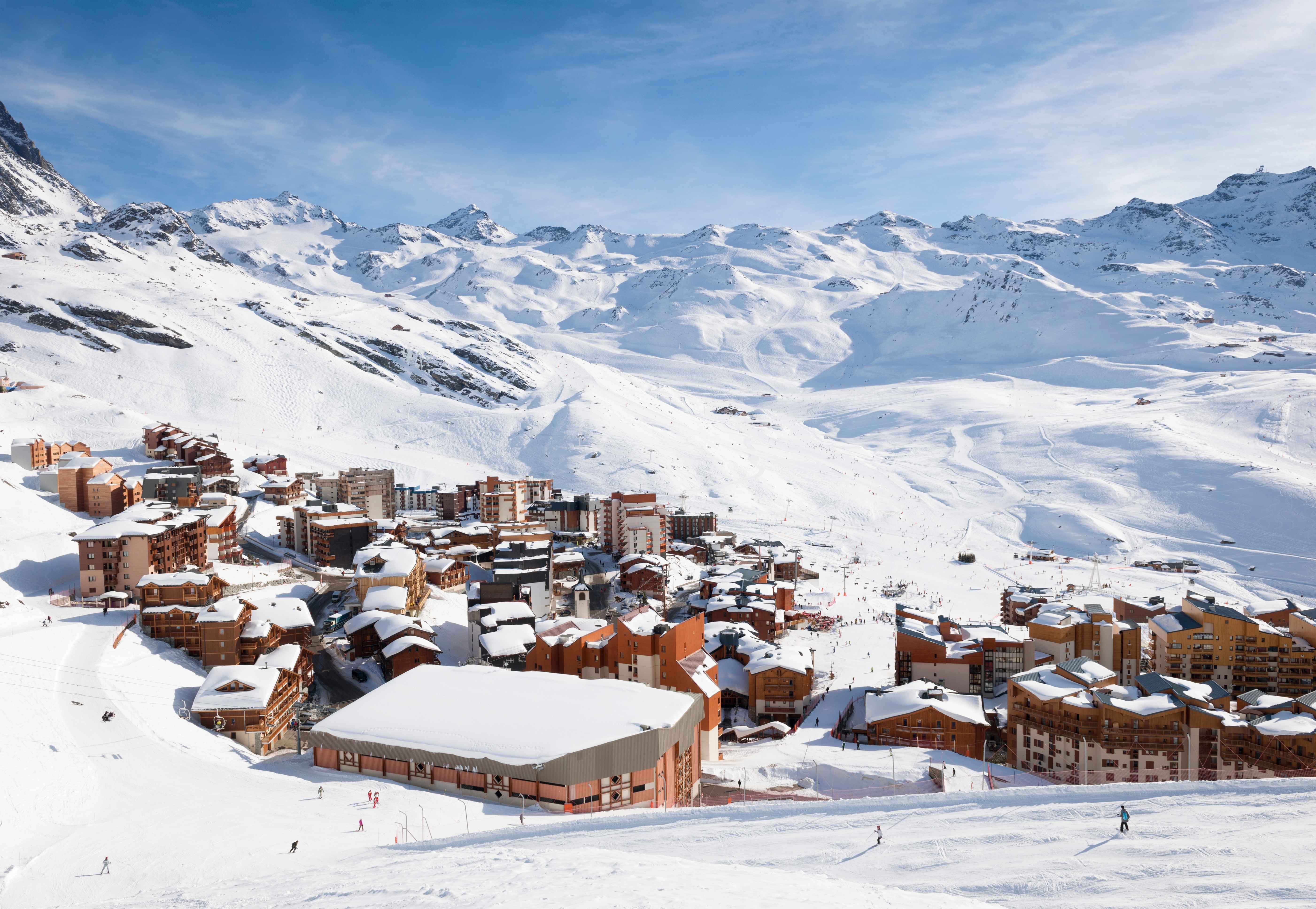
Méribel and Courchevel sit side by side in the Three Valleys, separated by a single ridge - the Saulire - and joined over it by lifts and pistes in both directions. On a Three Valleys pass they ski as one 600 km area. What divides them is everything around the skiing. Méribel is one chalet-built resort strung along a wooded valley at 1,450 m, in the middle of the area, and it has the livelier evenings of the two. Courchevel is four villages at four altitudes, from the hamlet of Le Praz at 1,300 m to Courchevel 1850 at the top of the French market, with north-facing slopes that keep their snow late. This guide compares them on passes, terrain, snow, villages, après and getting there, so you can pick the base that fits your week.
Choose Méribel for: a central base that puts both ends of the Three Valleys within a morning's skiing, one chalet-built village with a proper centre, après that carries on into the evening, and catered chalets that suit groups and mixed-ability parties.
Choose Courchevel for: north-facing pistes that hold their snow later into spring, the most varied local terrain in the area, a choice of four villages from quiet and wooded to polished and high, and some of the easiest beginner logistics in the Alps for families.


| Feature | Méribel | Courchevel |
|---|---|---|
| Country | France | France |
| Shared ski area | Three Valleys - 600 km of pistes | Three Valleys - 600 km of pistes |
| Local valley pass | Méribel valley - around 150 km | Courchevel valley, with La Tania - around 150 km |
| Village altitude | 1,450 m (Centre) / 1,750 m (Mottaret) | 1,300 m (Le Praz) to 1,850 m (Courchevel 1850) |
| Highest lift | 2,952 m (Mont Vallon) | 2,738 m (La Saulire, shared with Méribel) |
| Season | Roughly early December to mid April | Roughly early December to late April |
| Best for | Position, village life, après | Snow, beginners, choice of village |
| Village character | One chalet-built resort along a wooded valley | Four separate villages at four altitudes |
| Nearest airport | Chambéry (~1 hr 30 min); Geneva (~2 hr 30 min) | Chambéry (~1 hr 30 min); Geneva (~2 hr 30 min) |
Most comparisons stop at "same ski area, same pass", and on a full Three Valleys pass that holds. It does not hold for the local valley passes, and plenty of people buy one without realising where it stops. The Méribel valley pass covers around 150 km: Méribel Centre, Mottaret, Méribel Village and the gondola up from Brides-les-Bains. The Courchevel valley pass covers a similar 150 km across the four Courchevel villages and La Tania. Neither crosses the Saulire, so on a local pass Méribel and Courchevel are two separate resorts that happen to share a ridge. The Three Valleys pass joins them up and adds Val Thorens, Les Menuires, Saint-Martin-de-Belleville and Orelle. A local pass makes sense for a first-timer who will spend the week on nursery slopes and easy blues; for anyone who wants to ski both sides, the full pass is the one to buy.
Who it suits: to ski both resorts, buy the Three Valleys pass whichever you stay in; on a local pass, your base decides which half of this comparison you actually ski.
There are two ways across the ridge: over the Saulire itself, or via the Col de la Loze further along, which links the Méribel Altiport area with Courchevel 1850 and La Tania. Either crossing takes well under an hour. Courchevel's own sector is the more varied of the two - wooded runs above Le Praz and La Tania, long gentle blues around Moriond and 1850, and steeper ground under the Saulire and around the Chapelets. Méribel's terrain climbs both sides of a valley running north to south: the Saulire and Pas du Lac on one side, Tougnète on the other, with Mont Vallon at the head above Mottaret. What Méribel has that Courchevel lacks is position. Val Thorens and Les Menuires are one ridge away over Tougnète or the Mont de la Chambre, so every corner of the area is within a morning's skiing. From Courchevel, the Belleville valley means crossing Méribel first, and a Val Thorens day becomes a long one with an eye on the last lift.
Who it suits: for the most variety without crossing a ridge, Courchevel; for a base that reaches the whole Three Valleys comfortably, Méribel.
Aspect matters as much as altitude in this pairing. Courchevel's slopes face mostly north, so they stay out of the strongest sun and keep their snow firm and dry well into spring. Its main village also sits at 1,850 m, which helps when runs home elsewhere start to thin. Méribel's valley runs north to south, so its two sides face east and west - pleasant for a sunny lunch, but quicker to soften and refreeze in March and April. Méribel Centre at 1,450 m is the lower base, though Mottaret at 1,750 m and Mont Vallon at 2,952 m - the highest lift in either resort - make up much of the difference. Both have extensive snowmaking on the main runs home, and from January to March there is little between them. At either end of the season Courchevel is the steadier bet, with one caveat: Le Praz, at 1,300 m, has the lowest ski-home of any village in the pairing.
Who it suits: for an early-December or April trip, Courchevel, ideally 1850 or Moriond; through the core of the winter, either.
Méribel has one look and has kept it. The resort was laid out from the late 1930s under a rule that buildings use local timber and stone, and the result is a single chalet-built resort along a wooded valley road. Méribel Centre holds the shops and the evenings; Mottaret, 300 m higher, has more ski-in/ski-out and is quieter after dark; Méribel Village and Les Allues are smaller again. British-run catered chalets are part of the resort's history and still a large share of its beds. Courchevel is four villages that share a name. Le Praz is a hamlet in the trees, Courchevel Village at 1,550 m is quiet with quick lift access, Moriond at 1,650 m is sunny and relaxed, and Courchevel 1850 is the one people picture - palace hotels, designer windows and chalets at the top of the market. A free bus links them, but each feels like its own place. In Méribel you pick a resort; in Courchevel you pick a village, and that choice shapes the week more than the name on the booking.
Who it suits: for one village with a centre to walk back to, Méribel; for a base matched to a particular kind of week, from quiet to grand, Courchevel.
Méribel is the livelier of the two once the lifts close. La Folie Douce gets the afternoon going on the Méribel side of the Saulire, the Rond Point fills up on the piste above Méribel Centre as the runs empty, and the village keeps a handful of bars going late, with Mottaret calmer. Courchevel's après is as spread out as the resort. Moriond has the seasonnaire bars and the most relaxed nights, 1850 is polished and late, and Le Praz and Courchevel Village wind down early. Where Courchevel pulls clear is food. It holds one of the densest clusters of Michelin-starred kitchens in the Alps, and the mountain restaurants above 1850 run to the same standard. Méribel eats well across a broader middle ground - Savoyard restaurants and chalet dinners rather than tasting menus. In Courchevel, the village you choose largely sets the tone and the bill.
Who it suits: for après that runs into the night without any planning, Méribel; for the best dinner of the trip, Courchevel.
Courchevel has a strong claim here and does not always get credit for it. Each village has its own nursery area, several beginner lifts are free, and once a child can link turns, the long, wide greens and blues around 1850 and Moriond give them somewhere to go without being pushed onto anything steep. Aquamotion, one of the largest aquatic centres in the Alps, covers the day off. Méribel's beginner terrain is good but more scattered: the gentle greens around the Altiport are sheltered by trees, which helps on flat-light days, and Mottaret and Méribel Centre each have nursery slopes, but some accommodation means a bus or a walk to reach them. The Parc Olympique, built for the 1992 Winter Olympics, has the ice rink and pool. Both resorts have English-speaking ski schools in numbers, and both work for mixed-ability families - Méribel because everyone can reach somewhere interesting, Courchevel because the easy terrain stretches further.
Who it suits: for first-timers and young children, Courchevel has the easier logistics; for families mixing strong and new skiers, Méribel's position counts for more.
The two valleys co-hosted the 2023 Alpine World Ski Championships - the men's speed events on L'Éclipse in Courchevel, the women's on the Roc de Fer in Méribel - and both have steep ground to match. Courchevel has the better-known lift-served descents: the Grand Couloir off the Saulire, the bumps of the Creux Noirs, and the open off-piste around the Chapelets. Méribel answers with Mont Vallon, a long, high bowl that is the valley's best powder skiing after a storm, and short couloirs below the Saulire. For freestyle, the park above Mottaret has the stronger reputation; Courchevel's parks are good without being a reason to book. The larger difference for strong skiers is reach. From Méribel, the high terrain at Val Thorens and the Orelle side is one ridge away; from Courchevel it is two.
Who it suits: for lift-served couloirs and bumps on the doorstep, Courchevel; for park riders and skiers who want the whole area's off-piste within reach, Méribel.
Both resorts share the same approach - up the Tarentaise to Moûtiers, then a mountain road. Méribel's climb is the shorter and gentler of the two; Courchevel's hairpins up to 1850 add a little time, and more in a snowstorm. From Chambéry each is around an hour and a half, and from Geneva, the usual gateway for UK flights, roughly two and a half hours. Lyon is another option. Moûtiers has a station served by winter trains, with buses and taxis up to both resorts. One detail worth knowing: Brides-les-Bains, below Méribel, has a gondola that climbs straight into Méribel's ski area, which makes it a low, quiet base with a lift in place of the final road.
Who it suits: the transfers are close enough that this should not decide it; Méribel takes a few minutes and a few hairpins off each end.
WeSki insider tip: if you base in Méribel, follow the sun around the valley. The Tougnète side faces east and softens first, so ski it in the morning, then switch to the west-facing Saulire side after lunch. When spring snow turns heavy on both, cross the Col de la Loze into Courchevel - its north-facing pistes stay firm longest, and it is the quickest way to better snow without leaving the area.
On a full pass neither choice shuts anything out, so three questions tend to settle which one you come home to.
Which pass are you buying? On a Three Valleys pass both resorts reach everything, and Méribel's central position makes the far ends of the area easier. On a local valley pass, the base you pick is the only valley you ski: Courchevel's has more gentle mileage for newer skiers, Méribel's sits closer to the rest of the area if you upgrade mid-week.
When are you going? Between January and March there is little in it. For early December or anything into April, Courchevel's north-facing slopes and higher main village hold their snow better - and if Méribel is still the pull, stay in Mottaret rather than the Centre.
What should the evenings look like? Méribel gives you one lively centre to walk back to. In Courchevel the village decides it: Moriond for bars, 1850 for dining, Le Praz or Courchevel Village for quiet nights. If the group cannot agree on the evening, Méribel is the easier compromise.
If all three come out level, both will give you a good week - so choose the village you would rather walk home through.
Yes, as long as you have the right pass. The two resorts are linked over the Saulire and the Col de la Loze, and on a Three Valleys pass you can cross in either direction several times a day - the trip takes well under an hour. The local Méribel valley and Courchevel valley passes do not cover the link, though, so on one of those you stay on your own side of the ridge. If skiing both is part of the plan, book the full Three Valleys pass from the start.
Méribel, fairly clearly. It sits in the middle valley, so Courchevel is one ridge away in one direction and Val Thorens and Les Menuires one ridge away in the other. From Courchevel, reaching the Belleville valley means skiing through Méribel first, which turns a Val Thorens day into a long one. Courchevel makes up for it with more varied skiing in its own valley, so it suits people happy to spend most of the week on their own side.
Courchevel has the edge for most first-timers. Each of its villages has a nursery area, several beginner lifts are free, and the long, gentle runs around 1850 and Moriond give new skiers room to progress without facing anything steep. Méribel's tree-lined greens around the Altiport are lovely to learn on, especially in flat light, but the beginner areas are more spread out. Both have plenty of English-speaking instructors, so either works with a good ski school.
Courchevel, by a small but steady margin. Its slopes face mostly north and its main village sits at 1,850 m, so the snow stays firmer for longer, especially in spring. Méribel's east- and west-facing slopes catch more sun and its centre is lower at 1,450 m, though Mottaret and Mont Vallon close much of the gap. From January to March there is little between them; for an early-December or April trip, Courchevel is the safer booking.
It depends which Courchevel you mean. Courchevel 1850 sits at the very top of the French market, with palace hotels and fine dining to match. Le Praz, Courchevel Village and Moriond are far more mixed, with apartments and mid-range hotels on the same ski area. Méribel is more consistent across the resort, leaning towards catered chalets and Savoyard restaurants. The Three Valleys pass is the same whichever you choose, so the village matters more than the resort.
Both are strong family resorts, for different reasons. Courchevel wins on ski-school logistics, with nursery areas in every village, free beginner lifts and Aquamotion for a day off the snow. Méribel suits families with a wider range of abilities, since its central position lets stronger skiers explore the whole Three Valleys while younger ones stay close to the Altiport greens. Young beginners point to Courchevel; a mixed-ability family points to Méribel.

WeSki is a trading name operated by WeTrip Ltd. All the flights and flight-inclusive holidays on this website are financially protected by the ATOL scheme. When you pay you will be supplied with an ATOL Certificate. Please ask for it and check to ensure that everything you booked (flights, hotels and other services) is listed on it. Please see our booking conditions for further information or for more information about financial protection and the ATOL Certificate go to: www.caa.co.uk.
Package holidays that do not include travel by air are financially protected via ABTOT.
For the latest travel advice from the Foreign & Commonwealth Office visit www.gov.uk/foreign-travel-advice.