EN
EN
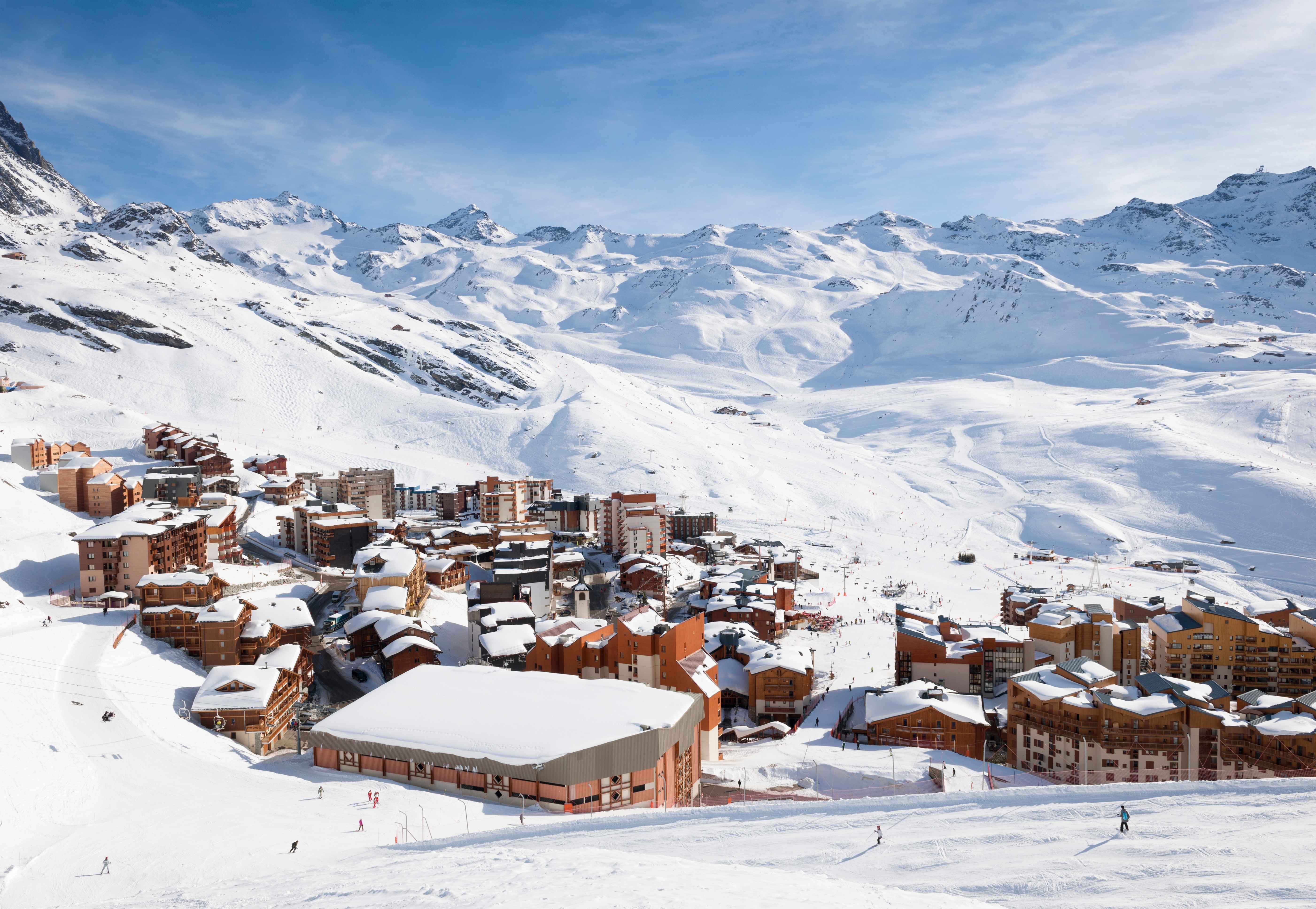
Val d'Isère and Tignes share the same 300 km of linked pistes on a single lift pass, in the ski area that now carries both their names - Tignes - Val d'Isère (formerly the Espace Killy). They sit a few minutes apart by road, yet the two villages give you very different weeks. Val d'Isère pairs a centuries-old Savoyard centre with polished hotels and one of the liveliest après scenes in the Alps. Tignes sits higher up the valley across a handful of purpose-built villages, with doorstep skiing and one of the longest seasons in France. This guide compares them side by side - terrain, snow, village character, après, families, experts and getting there - so you can pick the base that fits how you want to ski.
Choose Val d'Isère for: a real village with atmosphere and dining, race-pedigree pistes and steep terrain, and the bigger après nights.
Choose Tignes for: snow-sure altitude and a long season, ski-in/ski-out across every village, terrain parks, and self-catered apartments that work well for groups and families.


| Feature | Val d'Isère | Tignes |
|---|---|---|
| Country | France | France |
| Shared ski area | Tignes - Val d'Isère - 300 km of pistes | Tignes - Val d'Isère - 300 km of pistes |
| Village altitude | 1,850 m | 2,100 m (Le Lac) / 2,150 m (Val Claret) |
| Highest lift | 3,456 m (Grande Motte, shared) | 3,456 m (Grande Motte) |
| Season | Roughly late November to early May | Roughly late November to early May, plus glacier skiing |
| Best for | Village life, dining, après, steep pistes | Altitude, ski-in/ski-out, parks |
| Village character | Historic Savoyard centre | Purpose-built high-altitude villages |
| Nearest airport | Chambéry (~1 hr 45 min); Geneva (~3 hr) | Chambéry (~1 hr 45 min); Geneva (~3 hr) |
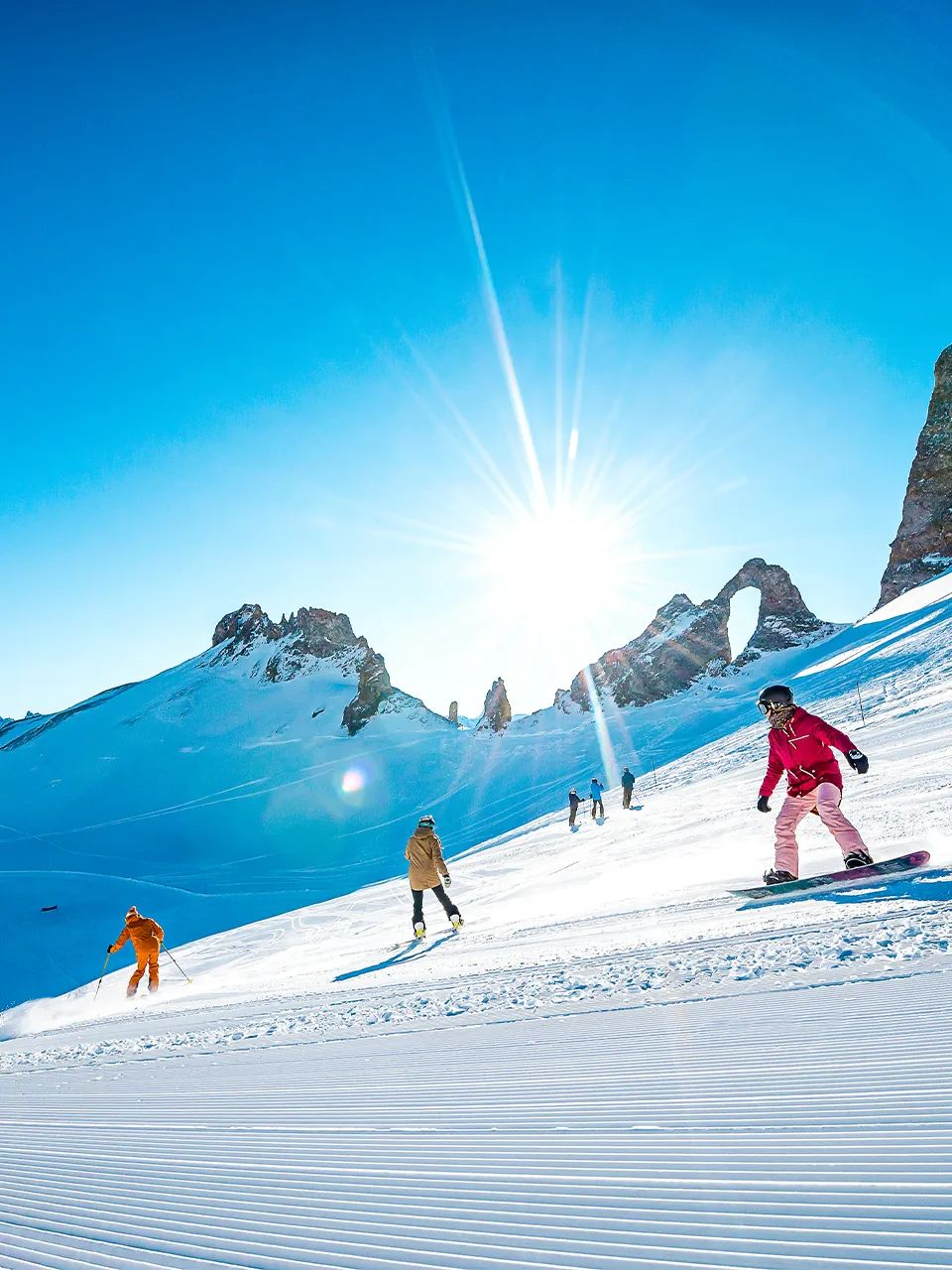
Both resorts ski the same 300 km, so on paper the terrain is identical. What differs is your doorstep. From Val d'Isère you drop straight onto Bellevarde and Solaise, home to the Face de Bellevarde - a steep, wide World Cup downhill - and long cruising runs on the sunnier side. Tignes opens onto the Grande Motte glacier and the bowls above Val Claret, with wide, high runs up top and sustained steeps lower down. Beginners get gentler, more sheltered nursery terrain on the Tignes side; skiers chasing pitch and off-piste have more on their doorstep at Val d'Isère. Whichever you base in, the other half of the area is a lift-ride away.
Who it suits: for steep home runs, lean Val d'Isère; for high, open cruising, lean Tignes.
Both resorts sit high and share the Grande Motte glacier at 3,456 m, which makes the Tignes - Val d'Isère ski area one of the more snow-sure areas in the Alps. Tignes has the edge on the numbers that matter: its villages start 250 - 300 m higher than Val d'Isère, and the glacier keeps the top of the area open at the very start and end of the season. Val d'Isère's slopes face largely north and it has strong snowmaking on the runs home, so it holds a solid base through the core months too. In a strong winter there is little between them from December to April.
Who it suits: in a lean winter, or for an early-season or spring trip, Tignes' altitude is the safer bet.
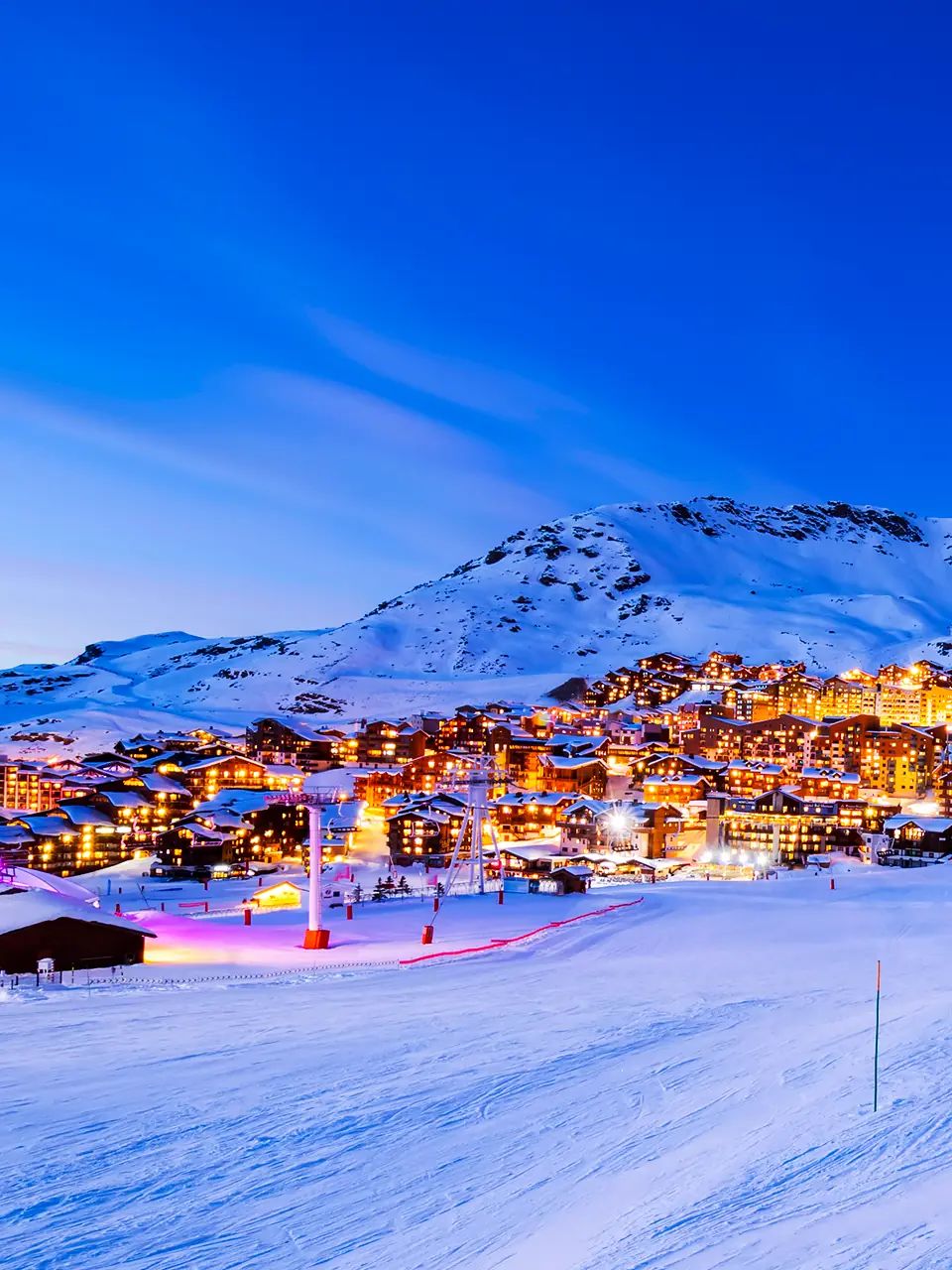
Val d'Isère has a proper old village at its heart - stone and timber, a baroque church, narrow streets that predate ski tourism. That gives it a character most high-altitude French resorts can't match, alongside smart hotels and chalets. Tignes makes no pretence at being old: its bases at Le Lac and Val Claret were built for function, and while decades of renovation have softened the look, the draw is convenience. Nearly everything is ski-in/ski-out, and self-catered apartments suit groups who want space and flexibility.
Who it suits: for evenings that spill into the village, Val d'Isère; for rolling out of bed onto the piste, Tignes.
Val d'Isère runs one of the most famous après scenes in the Alps. La Folie Douce on Bellevarde sets the afternoon tone, and the village keeps going after dark, backed by a dining scene that runs from Michelin-starred to hearty mountain fare. Tignes is quieter and sportier - a sunny terrace bar and an early night suit its crowd better than a late one, and its restaurants lean towards relaxed, family-run places. Neither is short of options; it is a question of volume.
Who it suits: if a big night out is part of the holiday, Val d'Isère; if you would rather bank an early start, Tignes.
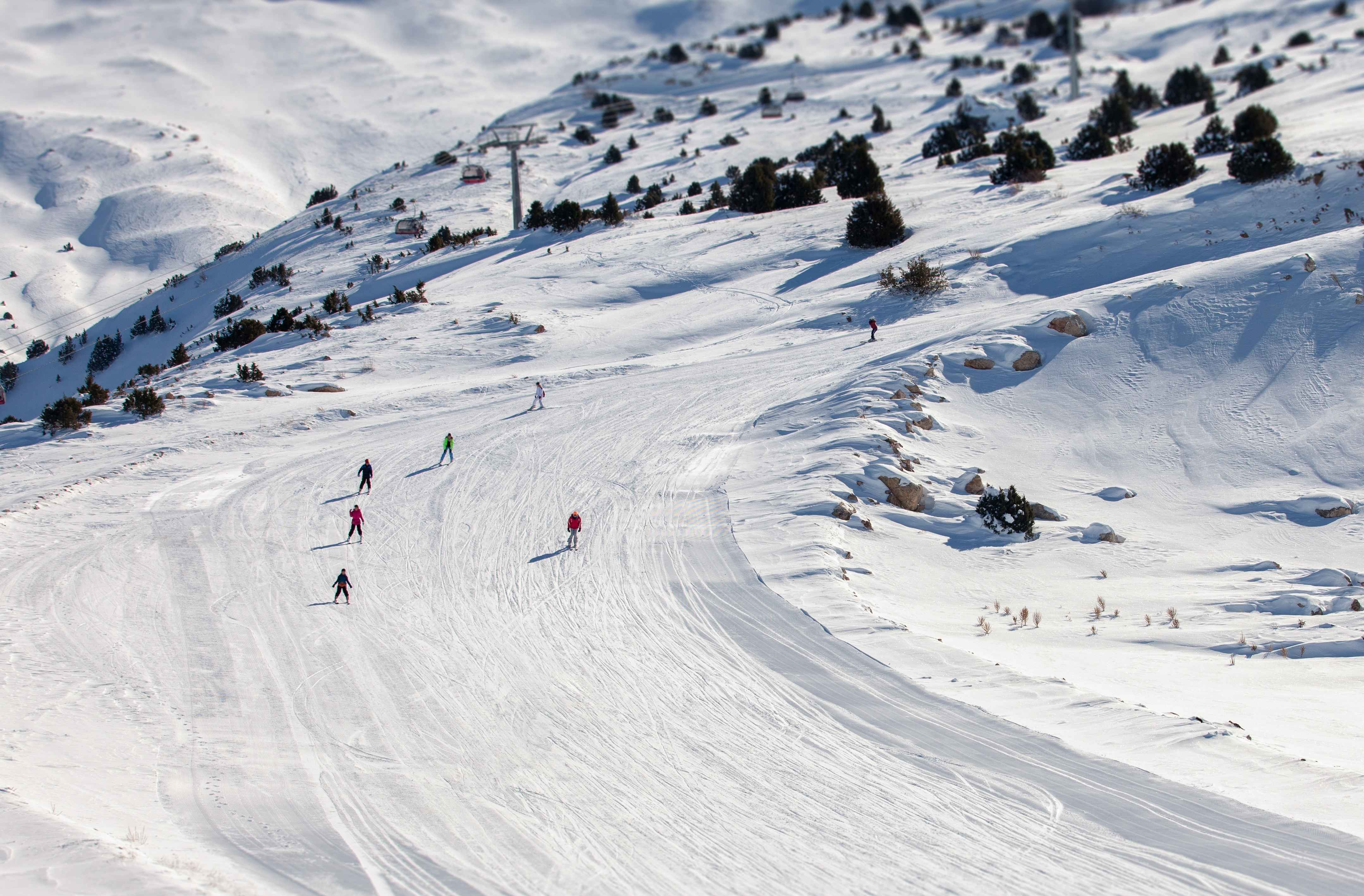
Tignes tends to suit first-timers and families well: the nursery areas at Le Lac and the gentle lower glacier are wide and forgiving, ski-in/ski-out cuts out walks in ski boots, and the Lagon leisure centre covers a day away from the snow. Val d'Isère welcomes families too, with village-centre snow gardens and reputable ski schools, but the main mountain steepens quickly, so newer skiers can feel boxed into a few zones early on.
Who it suits: for a smooth first week with children, Tignes has the gentler geography; for families with mixed abilities who will use the whole area, either works.
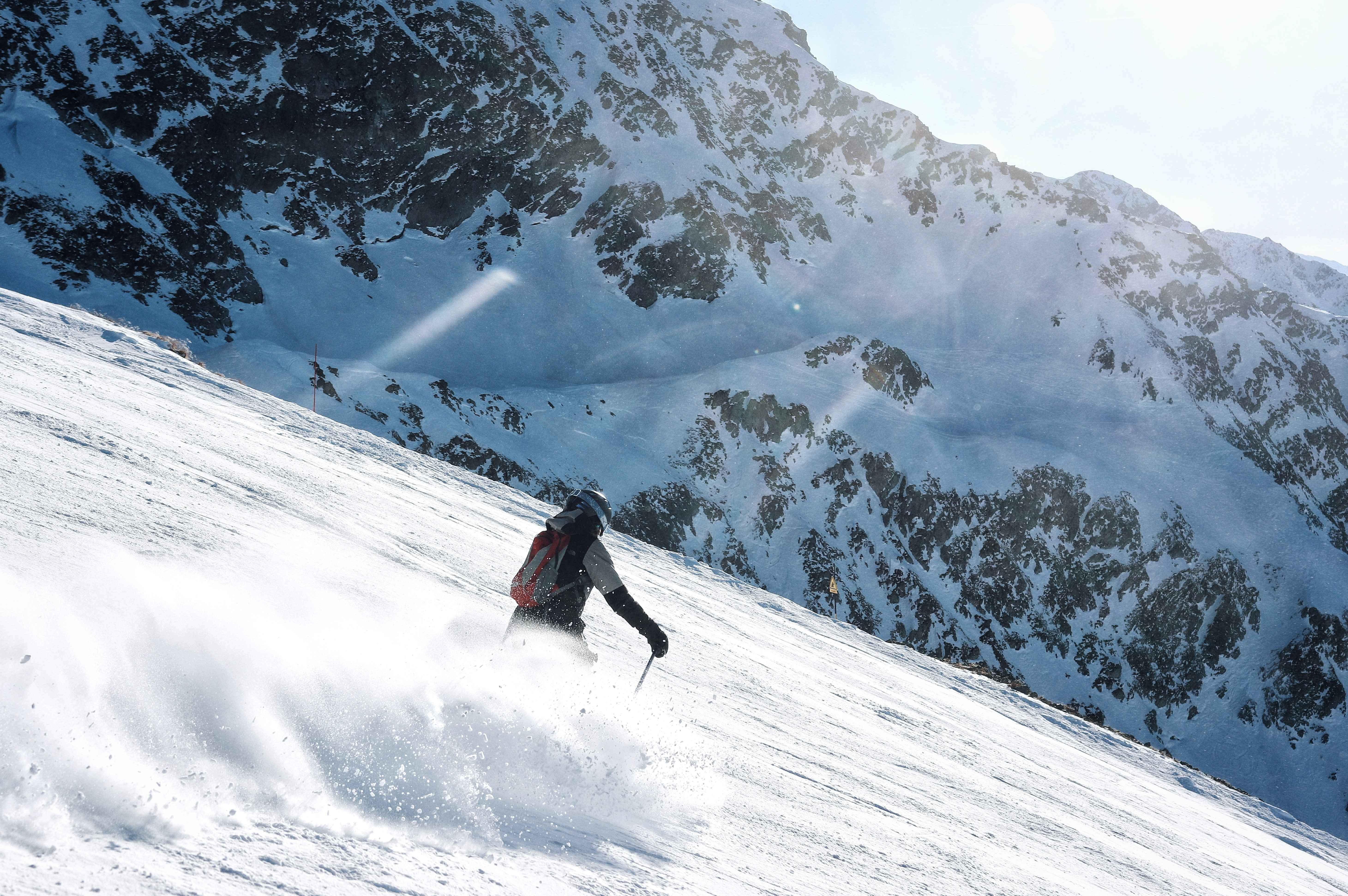
Val d'Isère's reputation with strong skiers rests on its front-of-house steeps: the Face de Bellevarde, plus the couloirs and open bowls around Le Fornet and La Daille, put pitch and off-piste close to the lifts, ideally taken with a guide. Tignes answers with the Grande Motte glacier and one of the better freestyle setups in Europe - a park with kicker lines and a pipe, plus long ungroomed descents such as the Sache. Put simply, Val d'Isère leans towards steep pistes and off-piste, Tignes towards parks, glacier laps and freeride.
Who it suits: experts after technical descents from the door lean Val d'Isère; park riders and freestylers lean Tignes.
The logistics are almost identical - both sit at the end of the same Tarentaise valley, and you share the road until the final fork. Chambéry is the closest airport at around 1 hour 45 minutes, though Geneva is the most common gateway for UK flights at around 3 hours, with Lyon another option. Tignes turns off slightly sooner, so its transfer is marginally shorter. Bourg-Saint-Maurice, at the foot of the valley, has a train station if you would rather arrive by rail.
Who it suits: in practice, if you can reach one resort you can reach the other, so transfers should not be the thing that decides it.
WeSki insider tip: if your group is split between steeps and cruising, base in Val d'Isère and ski over to the Grande Motte on the clearer mornings - the glacier is at its best early, before afternoon flat light settles on the top.
Same ski area, one lift pass - so unlike most pairings, neither choice shuts anything out. Three questions tend to settle which one you come home to.
How new is anyone in the group? The nursery areas at Le Lac and the gentle lower glacier give a first-timer more room than Val d'Isère's, where the mountain steepens quickly beyond the beginner zones. If someone is on day one, Tignes makes the week easier.
When are you going? Through January and February there is little in it. For late November, or anything into May, Tignes sits 250 - 300 m higher and has the Grande Motte glacier above it, which is the safer booking at both ends of the season.
What do you want the evening to look like? Val d'Isère has the old village, the dining and the bigger nights. Tignes suits skiers who would rather bank an early start. This is the one that decides it for most people, once the first two come out level.
Yes, freely. The two resorts form the Tignes - Val d'Isère ski area (formerly Espace Killy), a fully linked area of 300 km covered by one lift pass. Piste and lift connections run between them through the day, so you can ski in one in the morning, cross for lunch and be back by late afternoon. Most people staying a week end up skiing both sides at some point.
Tignes has a slight edge. The nursery areas at Le Lac and the wide, gentle lower glacier give first-timers room to find their feet, and ski-in/ski-out access saves tired legs. Val d'Isère's ski schools are excellent, but its nursery slopes sit closer to steeper terrain, which can feel busier for someone on day one. Both are strong for lessons; Tignes is just the gentler place to start.
Both are among the more snow-sure resorts in the Alps thanks to high altitude and the shared Grande Motte glacier. Tignes has the advantage on the margins: it sits higher and the glacier extends the season at both ends. Val d'Isère faces mostly north and has good snowmaking, so it holds its own through the core winter. For an early-season or spring trip, Tignes is the safer call.
Broadly, Val d'Isère skews towards higher-end hotels, chalets and dining, which lifts the overall feel of a stay there. Tignes has more self-catered apartments and relaxed, family-run places to eat, which tends to suit groups wanting flexibility. The lift pass is the same for both, since it covers the whole Tignes - Val d'Isère ski area. It comes down to the style of week you are after rather than one resort being the obvious choice.
For families, Tignes tends to have the edge on day-to-day convenience: ski-in/ski-out villages mean no walks in ski boots, and the gentle nursery areas suit younger skiers finding their feet. Val d'Isère brings reputable ski schools, village-centre snow gardens and more to do in the evenings, though its main mountain steepens quickly beyond the beginner zones. If easy logistics with young children matter most, lean Tignes; if you want more village life in the mix, Val d'Isère has it.

WeSki is a trading name operated by WeTrip Ltd. All the flights and flight-inclusive holidays on this website are financially protected by the ATOL scheme. When you pay you will be supplied with an ATOL Certificate. Please ask for it and check to ensure that everything you booked (flights, hotels and other services) is listed on it. Please see our booking conditions for further information or for more information about financial protection and the ATOL Certificate go to: www.caa.co.uk.
Package holidays that do not include travel by air are financially protected via ABTOT.
For the latest travel advice from the Foreign & Commonwealth Office visit www.gov.uk/foreign-travel-advice.