EN
EN
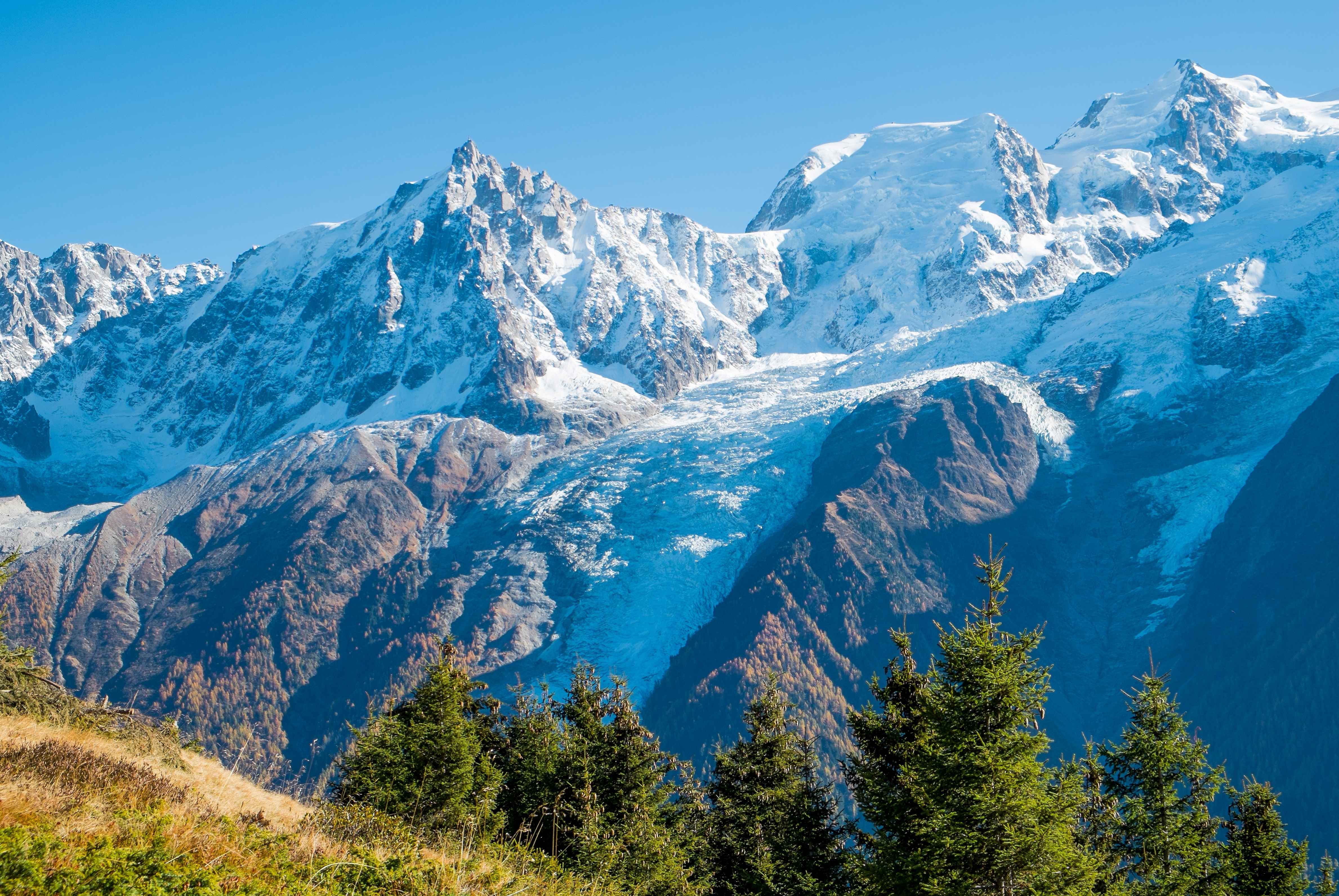
Courmayeur and Chamonix sit on opposite sides of Mont Blanc, around 20 km apart through the tunnel that runs beneath it. No lift or piste joins them, but one pass - Mont Blanc Unlimited - covers both, and the drive between them takes about half an hour. That makes this less a choice between two ski areas than a choice of which side to wake up on. Courmayeur is a compact Italian village with one connected ski area, long lunches and a slower pace. Chamonix is a busy mountain town with five separate sectors, the Aiguille du Midi above it and some of the most serious terrain in the Alps. This guide compares them side by side so you can pick the side that fits your week.
Choose Courmayeur for: a small, walkable Italian village, one linked ski area where a mixed group can meet for lunch, some of the best mountain food in the Alps, and a calmer week for intermediates and couples - with Chamonix a short bus ride away when you want it.
Choose Chamonix for: the biggest and highest terrain of the two, off-piste and glacier skiing people plan whole trips around, a town with bars and restaurants open late, and sightseeing a non-skier can fill a week with - useful when you are booking for a group who will not all be on the snow.


| Feature | Courmayeur | Chamonix |
|---|---|---|
| Country | Italy (Aosta Valley) | France (Haute-Savoie) |
| Ski area | Courmayeur Mont Blanc - 43 km in one linked area | Chamonix valley - around 155 km across five sectors |
| Village altitude | 1,224 m | 1,035 m |
| Highest lift | 2,755 m on piste (Cresta d'Arp); 3,466 m by Skyway Monte Bianco | 3,842 m (Aiguille du Midi) |
| Season | Roughly early December to early April | Roughly mid-December to early May on the high sectors |
| Lift pass | Courmayeur pass, or Mont Blanc Unlimited | Chamonix Le Pass, or Mont Blanc Unlimited |
| Best for | Intermediates, food, tree skiing, short breaks | Experts, off-piste, town life, sightseeing |
| Village character | Traditional Italian mountain village | Busy year-round mountain town |
| Nearest airport | Geneva or Turin (~1 hr 45 min) | Geneva (~1 hr 20 min) |
The two ski areas are built in completely different ways. Courmayeur's is a single connected mountain above the village: a cable car from the centre, or the gondola from Dolonne, lifts you to Plan Checrouit, and from there lifts spread across two sides - the sunnier Checrouit bowl and the shadier, wooded Val Veny facing Mont Blanc. It adds up to 43 km of pistes, mostly reds and blues, topping out at 2,755 m on Cresta d'Arp, and you can ski all of it without taking off your skis. Chamonix's terrain comes in five sectors strung along the valley floor - Brévent and Flégère, which link to each other, Grands Montets above Argentière, Balme at Le Tour, and the Les Houches hillside - joined by bus and train rather than by lift. There is around three to four times as much skiing, much of it steeper and higher, but you spend part of each day getting to it.
Who it suits: for one mountain you can learn in a day and ski all week, Courmayeur; for sheer variety and pitch, Chamonix.
This is the part most comparisons get wrong. Chamonix Le Pass - the standard pass in the valley - covers Brévent-Flégère, Grands Montets and Balme, and does not include Courmayeur. Mont Blanc Unlimited does: it covers the Chamonix sectors, the Aiguille du Midi and the Montenvers railway, Les Houches, the Evasion Mont-Blanc areas, all of Courmayeur and the Skyway Monte Bianco cable car, with a day in Crans-Montana on longer passes. It is sold on both sides of the tunnel, so it works whichever village you choose.
Courmayeur's own multi-day pass works differently. Rather than looking north to France, it looks down the Aosta Valley: longer passes include days on the Skyway or at other Aosta Valley resorts such as La Thuile, Pila and Cervinia. So the pass you buy decides which direction your day trips go. Base in Courmayeur on its own pass and your extra days are Italian; buy Mont Blanc Unlimited and Chamonix opens up. Base in Chamonix on Le Pass and Courmayeur is off the table unless you upgrade.
Who it suits: if you want both sides of Mont Blanc in one week, buy Mont Blanc Unlimited whichever village you stay in; if one side is enough, the local pass keeps it simple.
Altitude favours Chamonix. Its high sectors climb well past 3,000 m, Grands Montets faces north, and cover holds there into spring, which is why the valley's season runs on after Courmayeur's has finished. Courmayeur's pistes top out at 2,755 m and lean on snowmaking, which covers most of the area, and the sunnier Checrouit side softens quickly late in the season while the shadier Val Veny holds its snow better. What makes this pairing unusual is the weather. Mont Blanc is a wall between the two, so storms from the north-west tend to hit Chamonix first, while systems from the south can load up the Italian side instead - and on any given morning one valley can be in cloud while the other is in sun. Courmayeur's Val Veny trees also give you something to ski in flat light, when Chamonix's open, high terrain turns hard to read.
Who it suits: for depth and a late-season trip, Chamonix; for a week with a bad-weather plan built in, Courmayeur - especially with a pass that covers both.
Courmayeur is an old Aosta Valley village rather than a ski resort that grew a centre. Via Roma, its pedestrianised main street, is lined with stone buildings, delis, wine bars and boutiques, and the whole place is small enough to walk. Weekends bring a well-dressed crowd up from Turin and Milan; midweek it is noticeably quieter. Accommodation leans towards hotels, many of them family-run, within walking distance of the cable car. Chamonix is a proper town with a life outside skiing - climbing shops, a river through the middle, a train station and year-round trade - and a far wider spread of places to stay, including plenty of apartments for groups who want to self-cater.
Who it suits: for a small, pretty village where everything is a short walk, Courmayeur; for range of accommodation and a town that stays busy, Chamonix.
Food is where Courmayeur is hardest to beat. Mountain restaurants around Plan Checrouit and Val Veny serve proper Aosta Valley cooking - polenta, fontina, cured meats, fresh pasta - and lunch is treated as part of the skiing rather than an interruption to it. In the evening the village runs on aperitivo: a drink and something to eat in a bar on Via Roma before a late dinner, rather than a loud session in ski boots. Chamonix has the volume and the late nights. Bars fill as the lifts close, Chambre Neuf by the station has been a fixture for decades, and the restaurant scene runs from Savoyard staples to fine dining and everything in between, which matters when a big group needs to agree on somewhere to eat.
Who it suits: if long lunches and good dinners are the point, Courmayeur; if a big night out is part of the holiday, Chamonix.
Courmayeur's advantage for families is shape. Everything is on one connected mountain, so a mixed group can ski different runs in the morning and meet at the same restaurant for lunch. Its beginner areas sit up at Plan Checrouit and Maison Vieille, reached by cable car, with gentle lifts for first days and blues to move on to - though the terrain is mostly red, so a beginner runs out of new ground before a confident intermediate does. Chamonix has four nursery areas and strong ski schools, but they sit apart from the main sectors, so a beginner can spend the week somewhere different from everyone else, and the mountain steepens quickly beyond them. For a family trip with mixed abilities, Courmayeur keeps people together; Chamonix gives the stronger skiers more to do.
Who it suits: for families who want to ski and eat together, Courmayeur; for families where only one person is learning and the rest want big terrain, Chamonix.
Chamonix is why a lot of strong skiers come to the Alps at all. Grands Montets puts long, steep descents and serious off-piste a couple of lifts above the valley, and the Vallée Blanche - roughly 20 km of glacier from the Aiguille du Midi back towards town - is the run people build trips around, always with a guide. Courmayeur's pistes are rarely steep, but it has more for experts than its size suggests. Off-piste in the Val Veny trees is excellent after a storm, and the Skyway Monte Bianco climbs to Punta Helbronner at 3,466 m for glacier descents with a guide, including a start to the Vallée Blanche that finishes in Chamonix. The Italian side also allows heli-skiing, which is banned in France - so it is Courmayeur, not Chamonix, where you can book a helicopter drop on the Mont Blanc massif.
Who it suits: for a week of steep and high lift-served skiing, Chamonix; for a strong skier who wants freeride days and heli-skiing with a gentler base, Courmayeur.
Geneva is the main gateway for both. Chamonix is the shorter transfer at around 1 hour 20 minutes; Courmayeur adds the tunnel and comes in at around 1 hour 45 minutes. Turin is an alternative for Courmayeur at a similar time. Chamonix also has a railway - the Mont Blanc Express from Saint-Gervais - while Courmayeur has no practical rail connection, so a car-free trip there means a transfer or bus. Between the two, the Mont Blanc Tunnel is about 11.6 km long and the drive between village centres takes around 20 - 30 minutes. It is a toll road, and Mont Blanc Unlimited holders get a reduced rate. Ski buses also run through the tunnel during the season, so a day on the other side does not need a car.
Who it suits: for the shortest transfer or arriving by rail, Chamonix; for flying into Turin, or simply wanting the Italian side, the extra half hour to Courmayeur is easy to absorb.
WeSki insider tip: with Mont Blanc Unlimited, check the webcams on both sides before you pick a valley for the day. Because Mont Blanc splits the weather, it is common for one side to sit in cloud while the other is clear - and half an hour through the tunnel can turn a lost day into the best of the week.
One pass covers both sides, so this comes down to where you want to come home to each evening. Three questions usually settle it.
How strong are the skiers in your group? This matters more here than in most pairings. Courmayeur's 43 km is mostly reds and blues - plenty for intermediates over a week, but a group of strong skiers will run out of new ground. Chamonix has the steeps, the high terrain and the Vallée Blanche on the doorstep.
What do you want from the evenings? Courmayeur is aperitivo, long dinners and a quiet walk home. Chamonix is bars that fill at four and a town that keeps going. For many people this decides it once the skiing comes out level.
How long is the trip? For a short break, Courmayeur's single linked mountain is easy to make the most of in three or four days, with no buses between sectors. Over a full week, Chamonix's spread of terrain - plus a Courmayeur day through the tunnel on Mont Blanc Unlimited - gives you more variety.
Either way, the tunnel means you are never really choosing one side only.
Not on skis, no. There is no piste or lift link across Mont Blanc in winter - the two are joined by the Mont Blanc Tunnel instead, around 20 - 30 minutes by road or ski bus. The one exception is the Vallée Blanche: with a guide, you can take the Skyway from Courmayeur to Punta Helbronner and ski the glacier down into Chamonix, then come back through the tunnel.
It depends which pass you buy, and this catches a lot of people out. Chamonix Le Pass, the standard valley pass, does not include Courmayeur. Mont Blanc Unlimited does, along with the Skyway Monte Bianco, the Aiguille du Midi and the Evasion Mont-Blanc areas. It is sold in Courmayeur too, so it works whichever side you stay on. If you want days on both sides of the mountain, that is the one to buy.
For a complete beginner it is close, but Courmayeur tends to suit a mixed group better. Its beginner areas sit on the same connected mountain as everyone else, so learners can meet the group for lunch. The catch is that Courmayeur's terrain is mostly red, so progression ground runs out sooner. Chamonix has four well-run nursery areas, though they sit apart from the main sectors and the step up from them is steeper.
Chamonix, on altitude. Its high sectors climb well past 3,000 m and Grands Montets faces north, so cover lasts longer and the season runs into spring. Courmayeur tops out at 2,755 m and relies more on snowmaking, which covers most of its pistes. The weather often splits, though: storms that bury one side can miss the other, so having access to both is often worth more than picking the snowier one.
Through the Mont Blanc Tunnel, which runs about 11.6 km under the mountain. By car it takes around 20 - 30 minutes between the two village centres, and it is a toll road, with a reduced rate for Mont Blanc Unlimited holders. Ski buses run through the tunnel during the season, so you do not need a car. Allow a little extra for tunnel queues on busy weekends.
Broadly, the two feel different rather than one being clearly pricier. Courmayeur leans towards hotels and sit-down mountain lunches, with a smart weekend crowd from Milan and Turin. Chamonix has a wider range, from apartments and hostels to luxury hotels, which gives more ways to shape a trip. It comes down to the kind of week you are after.



WeSki is a trading name operated by WeTrip Ltd. All the flights and flight-inclusive holidays on this website are financially protected by the ATOL scheme. When you pay you will be supplied with an ATOL Certificate. Please ask for it and check to ensure that everything you booked (flights, hotels and other services) is listed on it. Please see our booking conditions for further information or for more information about financial protection and the ATOL Certificate go to: www.caa.co.uk.
Package holidays that do not include travel by air are financially protected via ABTOT.
For the latest travel advice from the Foreign & Commonwealth Office visit www.gov.uk/foreign-travel-advice.