EN
EN
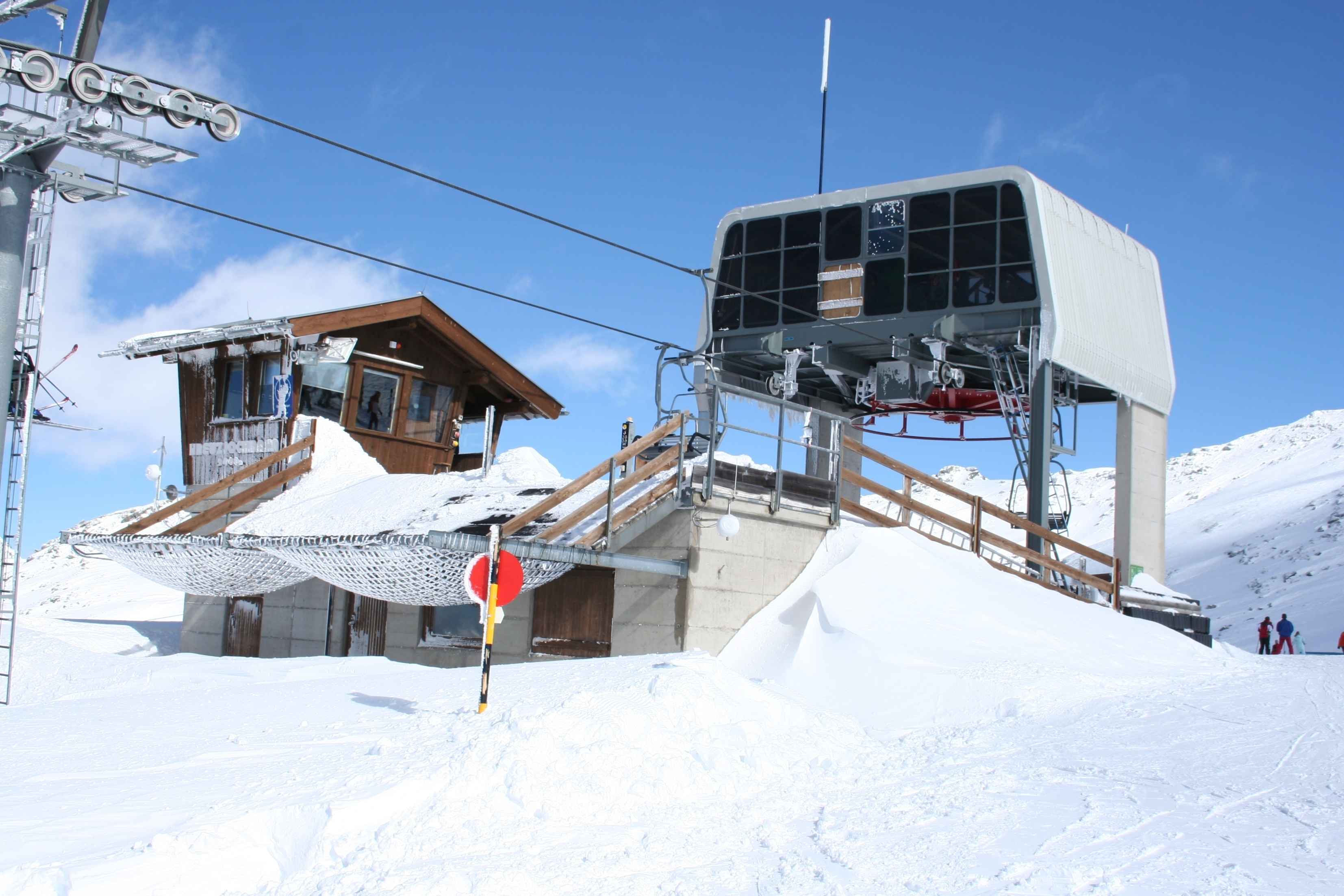
Mayrhofen and Hintertux sit around 17 km apart at the top of Austria's Zillertal, and they ski as one area: Ski & Glacier World Zillertal 3000, around 200 km of pistes on a single pass. Hintertux is the highest of the villages that make up Tux, strung along a side valley that climbs from Vorderlanersbach and Lanersbach to the foot of the Hintertux Glacier. The two bases could hardly feel more different. Mayrhofen is a busy market town at 630 m, with two gondolas from the centre, one of the liveliest après scenes in Austria and the Harakiri, the country's steepest groomed piste. Hintertux sits at 1,500 m below a glacier that skis all year, with quiet evenings and snow on the doorstep. This guide compares the pass and the link, terrain, snow, villages, après, families, experts and getting there, so you can choose the base that fits your week.
Choose Mayrhofen for: a lively town with shops, restaurants and big après, two very different home mountains in Penken and Ahorn, one of Europe's best-known terrain parks, and evenings that suit groups who want the nightlife as much as the skiing.
Choose Hintertux for: a glacier that skis all year, snow at village level when the valley floor is green, a short walk or bus hop to the lifts, and calm evenings in traditional hotels that suit couples and families of confident skiers.


| Feature | Mayrhofen | Hintertux (Tux) |
|---|---|---|
| Country | Austria (Tyrol) | Austria (Tyrol) |
| Shared ski area | Zillertal 3000 - around 200 km of pistes | Zillertal 3000 - around 200 km of pistes |
| Village altitude | 630 m | 1,500 m (Hintertux) / around 1,300 m (Lanersbach) |
| Highest lift | Around 2,500 m (Penken - Rastkogel) | 3,250 m (Hintertux Glacier) |
| Season | Roughly early December to mid-April | Glacier open all year; lower Tux areas roughly December to mid-April |
| Best for | Après, parks, varied terrain, ski schools | Snow-sure glacier, long season, quiet evenings |
| Village character | Busy market town at the head of the main valley | Small, traditional villages up a side valley |
| Nearest airport | Innsbruck (~1 hr); Munich (~2 hr) | Innsbruck (~1 hr 30 min); Munich (~2 hr 30 min) |
For a ski week, the Zillertal 3000 pass covers both resorts: Mayrhofen's Penken and Ahorn, Finkenberg, the Rastkogel above Vorderlanersbach, the Eggalm above Lanersbach and the Hintertux Glacier. The Zillertal Superskipass goes further, adding every area in the valley - more than 500 km, including Hochzillertal above Kaltenbach and the Zillertal Arena above Gerlos. Both include the free ski buses.
What most guides skip is how the two connect. From the top of the Penken you can ski across to the Rastkogel and on to the Eggalm without taking off your skis, so a skier based in Mayrhofen gets most of the way up the Tux valley on the pistes. The last stretch, from the Eggalm to the glacier lifts at Hintertux, is a short ski bus ride. In the other direction the same route brings a Hintertux guest to the Penken, with a bus or the gondola down to Mayrhofen at the end of the day. A direct bus also runs between Mayrhofen and the glacier, taking around half an hour, and most people use it for glacier days rather than skiing the whole circuit. Within Mayrhofen, Penken and Ahorn sit on opposite sides of the town and are not linked by lift, though both gondolas are a short walk from the centre.
Who it suits: if you will ski the glacier more than once, the Zillertal 3000 pass covers it; if you want day trips to the rest of the valley, take the Superskipass.
Mayrhofen's home skiing is split across two mountains with different personalities. The Penken is the big one, linked to Finkenberg and the Horberg and on to the Rastkogel, with long reds, the Harakiri and a park that draws freestylers from across Europe. The Ahorn, on the other side of town, is broad, sunny and gentle - a plateau of wide blues and easy reds, with a long run back to the valley when the snow allows. Together they give around 140 km of pistes before you reach the glacier. From Hintertux, the skiing starts on the glacier itself: high, open runs from 3,250 m that reward early starts, with more sheltered slopes lower down and a long valley run back to the village. The Eggalm and Rastkogel, a bus hop and a lift away, are wide and quiet, and suit days when the glacier is cold or windy. Neither base is short of terrain for a week. The difference is what sits on your doorstep.
Who it suits: for variety, parks and the busiest choice of runs from the door, Mayrhofen; for high, snow-sure glacier skiing first thing, Hintertux.
This is where the two separate most clearly. Mayrhofen sits at 630 m, one of the lower bases in the Alps, but its skiing is high by Austrian standards: most runs on the Penken and Ahorn lie between about 1,500 m and 2,500 m, and snowmaking covers the main pistes. The weak point is the town itself. Most people ride the gondola back down, and the valley runs are the first to close in a mild spell or late in the season. Hintertux is the opposite. The village sits at 1,500 m, and above it the glacier reaches 3,250 m and stays open all year - the only ski area in Austria that does. That means skiing from autumn to early summer, with the glacier often the only reliable snow in the valley in October or May. In midwinter there is little between them, since a Mayrhofen guest can be on the glacier in half an hour. At the margins, staying in Hintertux puts the snow on your doorstep rather than at the end of a bus ride.
Who it suits: for a midwinter week, either works; for autumn, late spring or a trip in a lean winter, Hintertux.
Mayrhofen is the main town of the upper Zillertal, with a pedestrianised centre, shops, supermarkets and a busy main street that runs between the two gondola stations. Accommodation covers every style, from large hotels and guesthouses to self-catered apartments that suit groups, and almost everything is within a walk or a short bus ride of a lift. Very little is ski-in/ski-out, so expect to carry skis to the gondola. Tux is a different shape: five small villages spread along the Tux valley, each with a farming past and a handful of hotels. Hintertux, at the head, is little more than a cluster of family-run hotels around the glacier lifts, several of them with spas fed by the village's natural thermal spring. Lanersbach and Vorderlanersbach sit lower down by the Eggalm and Rastkogel lifts, with more choice and a little more going on.
Who it suits: for choice, apartments and a town to walk around, Mayrhofen; for a quiet hotel by the lifts, Hintertux or Lanersbach.
Mayrhofen's après is a big part of its reputation, especially with British skiers. Bars fill from mid-afternoon around the foot of the Penkenbahn, the Ice Bar among the best known, and the town carries on late with clubs and music bars. Each spring it hosts Snowbombing, a long-running music festival that takes over the town for a week - worth knowing about whether you want to join in or avoid it. Dining runs from pizza and Tyrolean inns to smarter hotel restaurants. Hintertux is calmer by a distance. The Hohenhaus Tenne by the glacier lifts is the landmark for a drink after the last run, and Lanersbach has a few bars of its own, but most evenings revolve around half-board dinners, hotel spas and early nights before first lifts on the glacier. A bus or taxi down to Mayrhofen for a bigger night is easy, but it is the exception rather than the rhythm of the week.
Who it suits: for big afternoons and late nights, Mayrhofen; for one drink, a sauna and dinner, Hintertux.
Mayrhofen tends to suit first-timers better, largely because of the Ahorn. Its plateau has wide, quiet nursery areas and gentle blues, and the town has a long list of ski schools and hire shops used to teaching beginners, many of them in English. The drawback is getting there: the beginner terrain is up the mountain, so day one starts and ends with a gondola ride rather than a walk from the hotel. Hintertux is a harder place to learn. The glacier is high, cold and exposed, the air is thin for young children, and its runs are better enjoyed once someone can ski with confidence. Families based in Tux usually start their children on the gentler slopes of the Eggalm and the Rastkogel, which are wide and sunny. For a day without skis, Mayrhofen has more to do, while Hintertux has guided tours into the glacier's ice cave and hotel pools.
Who it suits: for first-timers and mixed-ability families, Mayrhofen; for families who already ski and want quiet evenings, Tux.
Strong skiers have plenty on both sides. Mayrhofen's headline is the Harakiri on the Penken, a groomed black reaching a gradient of 78% and the steepest prepared piste in Austria. The Penken Park is one of the best-known terrain parks in Europe, with lines for every level, and there is good off-piste within reach of the lifts, best taken with a guide. Hintertux answers with altitude: steeper glacier runs, freeride terrain that holds fresh snow long after storms, and a high park that is usually among the first in the Alps to open in autumn, when pro riders come to train. Glacier off-piste carries crevasse risk, so a guide is essential. A strong skier in either resort can reach the other's best terrain in a morning on the same pass.
Who it suits: for a steep piste to tick off and a park to ride all day, Mayrhofen; for high-altitude freeride and autumn park sessions, Hintertux.
Both share the same approach. From Innsbruck, the motorway runs east along the Inn valley to the mouth of the Zillertal, then up the valley to Mayrhofen in around an hour. Hintertux is around half an hour further, up the winding road into the Tux valley, so allow around 1 hour 30 minutes. Munich is around 2 hours from Mayrhofen and Salzburg a similar distance. By rail, change at Jenbach on the main line for the narrow-gauge Zillertalbahn, which ends in Mayrhofen; from there, buses run up the Tux valley. On busy Saturdays the valley road can be slow for both.
Who it suits: for the shortest transfer and arrival by train, Mayrhofen; the extra half hour to Hintertux is the price of the altitude.
WeSki insider tip: staying in Mayrhofen? On a clear morning after fresh snow, skip the ski-over and take the first direct bus to the glacier. The top runs are at their best early, before the wind and afternoon light set in, and you can ski home along the Rastkogel and Penken in the afternoon.
Same pass, a ski route most of the way and a bus for the rest - so neither base shuts the other out. Three questions tend to settle it.
When are you going? In January or February there is little in it, since the glacier is half an hour from Mayrhofen. For autumn, May or a late Easter, Hintertux puts the only certain snow in the valley outside your door.
What should the evenings look like? Mayrhofen's après and nightlife are among the biggest in Austria. Hintertux winds down early, with hotel spas and dinner. This is the one that decides it for most groups.
Is anyone new to skiing? Mayrhofen's Ahorn and its choice of ski schools give a first-timer the easier start. If everyone already skis with confidence, Hintertux's altitude counts for more than its lack of nursery slopes.
If all three come out level, choose the place you would rather walk around at the end of the day - the skiing is shared.
Almost. From the Penken above Mayrhofen you can ski across to the Rastkogel and on to the Eggalm above Lanersbach, all on one pass. The final stretch from the Eggalm to the Hintertux Glacier lifts is a short ride on the free ski bus. A direct bus also links Mayrhofen and the glacier in around half an hour, which is the quicker option if the glacier is your goal for the day.
Yes. The Zillertal 3000 pass covers both resorts, including Penken, Ahorn, Finkenberg, Rastkogel, Eggalm and the Hintertux Glacier, along with the ski buses between them. The Zillertal Superskipass covers all of that plus every other ski area in the valley, which is worth it if you want days in Gerlos or Hochzillertal. Either way, you do not need a separate ticket for the glacier.
Mayrhofen usually has the edge for a first week. The Ahorn has wide, quiet nursery areas and gentle blues, and the town has plenty of ski schools used to teaching beginners. Hintertux's glacier is high, cold and best left until someone can ski with confidence, though the Eggalm and Rastkogel above the lower Tux villages have friendly slopes for a second or third week.
Hintertux, thanks to the glacier, which reaches 3,250 m and is open all year. Mayrhofen's slopes are high for Austria and well covered by snowmaking, so midwinter conditions are usually good, but the town sits at 630 m and its valley runs close first. As both share the glacier on one pass, the real question is whether you want that snow on your doorstep or half an hour away.
Mayrhofen, by a long way. Its bars fill from mid-afternoon at the foot of the Penken, the town keeps going late, and it hosts the Snowbombing festival in spring. Hintertux has a lively bar or two by the glacier lifts, but evenings are mostly hotel dinners and spas. Plenty of Hintertux guests take the bus down to Mayrhofen for a big night, then head back up for an early start.
The difference is more about the style of stay than one being the obvious choice. Mayrhofen has the widest spread in the valley, from guesthouses and self-catered apartments to large hotels, which gives groups flexibility. Hintertux leans towards family-run, half-board hotels, many with spas, where most of the week happens under one roof. The lift pass is the same wherever you sleep.



WeSki is a trading name operated by WeTrip Ltd. All the flights and flight-inclusive holidays on this website are financially protected by the ATOL scheme. When you pay you will be supplied with an ATOL Certificate. Please ask for it and check to ensure that everything you booked (flights, hotels and other services) is listed on it. Please see our booking conditions for further information or for more information about financial protection and the ATOL Certificate go to: www.caa.co.uk.
Package holidays that do not include travel by air are financially protected via ABTOT.
For the latest travel advice from the Foreign & Commonwealth Office visit www.gov.uk/foreign-travel-advice.