EN
EN
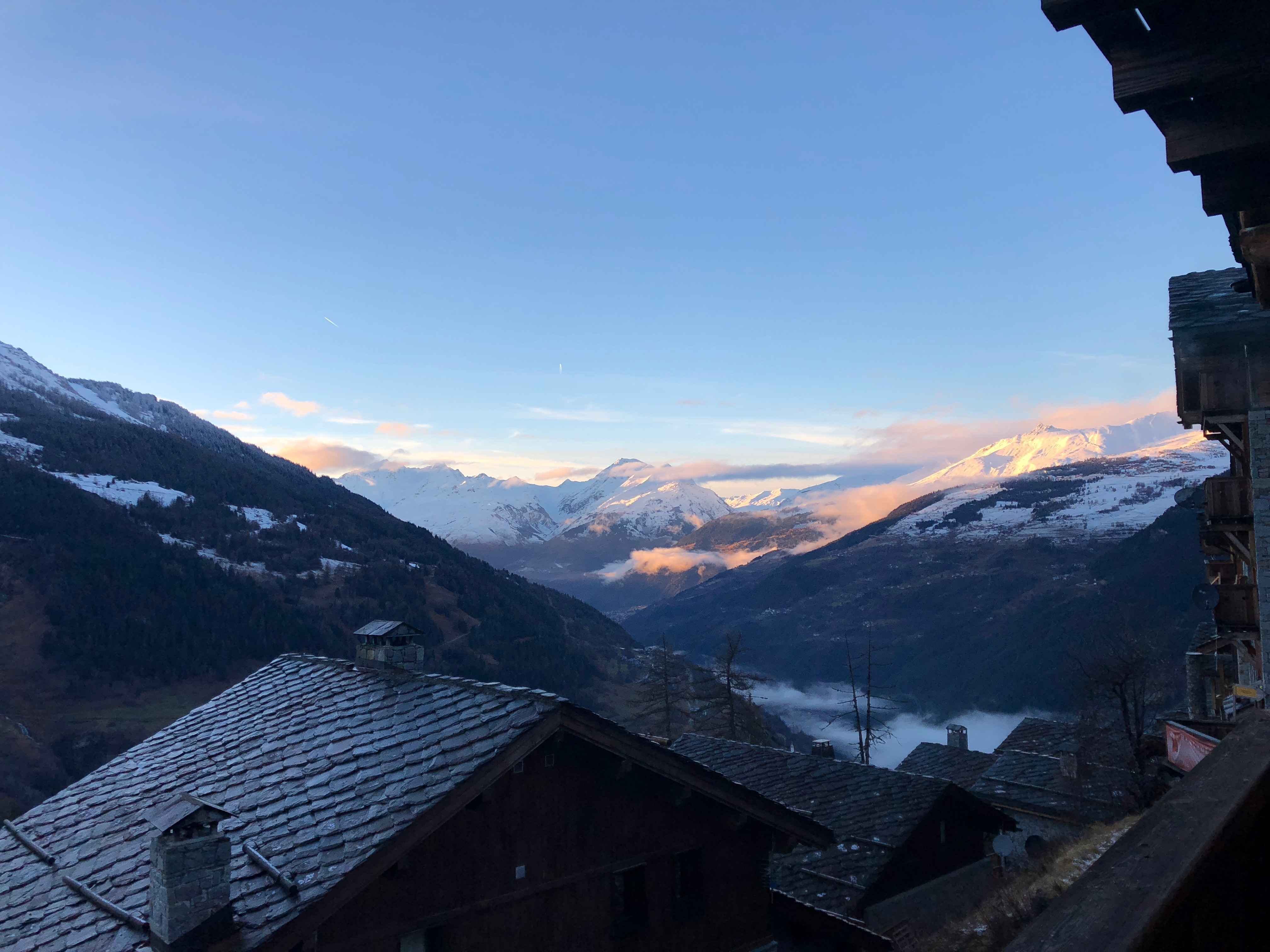
Sainte Foy and Val d'Isère sit in the same high corner of the Tarentaise, on the road that climbs from Bourg-Saint-Maurice towards the Col de l'Iseran, and they are only around half an hour apart by car. They do not share a lift pass, though, and no lift or piste joins them. Val d'Isère is one half of the Tignes - Val d'Isère ski area, 300 km of linked pistes climbing well above 3,000 m, with a lively old village at its centre. Sainte Foy is a small resort of around 40 km, mostly cut through larch forest, known for quiet pistes and some of the most respected off-piste in the valley. So the question is less which one is better and more what shape of week you want: everything on one pass from the door, or a quiet base with the big areas a short drive away. This guide compares them side by side so you can pick the base that fits.
Choose Sainte Foy for: quiet, uncrowded pistes, tree-lined off-piste that holds its powder for days with a guide, lifts that start at the edge of a small village, and a calm, compact base that works well for families - with a car, the bigger areas next door become day trips.
Choose Val d'Isère for: 300 km on one pass without needing a car, steep pistes and high, snow-sure terrain, one of the liveliest après scenes in the Alps, and a wide spread of hotels, chalets and apartments that makes it easy to house mixed groups.


| Feature | Sainte Foy | Val d'Isère |
|---|---|---|
| Country | France | France |
| Ski area | Sainte Foy - around 40 km of pistes (own pass) | Tignes - Val d'Isère - 300 km of pistes |
| Village altitude | 1,550 m | 1,850 m |
| Highest lift | 2,620 m | 3,456 m (Grande Motte, via Tignes) |
| Season | Roughly mid-December to mid-April | Roughly late November to early May |
| Best for | Quiet pistes, tree skiing, guided off-piste | Mileage, steep pistes, après |
| Village character | Small stone-and-timber resort above an old farming village | Historic Savoyard centre, busy and lively |
| Nearest airport | Chambéry (~1 hr 30 min); Geneva (~2 hr 30 min) | Chambéry (~1 hr 45 min); Geneva (~3 hr) |
This is the point most guides skip, and it shapes everything else. Sainte Foy has its own lift pass, covering its own slopes and nothing more. Val d'Isère's main pass covers the whole Tignes - Val d'Isère ski area, linking it over the ridge with Tignes, and a cheaper local pass covers Val d'Isère's own sectors. Nothing joins Sainte Foy to either on skis. From Sainte Foy's lift base to La Daille, at the entrance to Val d'Isère, is a little over 20 km of mountain road - around half an hour by car. Longer passes on each side have at times carried a free or reduced day on the other, but the terms change from season to season, so ask when you buy rather than plan around it. In practice the choice splits cleanly. Stay in Val d'Isère and you have 300 km on one pass, a free bus between its villages and no need for a car; Sainte Foy becomes an occasional side trip. Stay in Sainte Foy and the local pass covers a few days of quiet skiing, with Val d'Isère, Tignes and Les Arcs - reached by the lift at Villaroger, a short drive away - bought as day passes when you want them. That works well with a car and is awkward without one.
Who it suits: for one pass and no car, Val d'Isère; for a car-based week that mixes quiet days with big-area days, Sainte Foy.
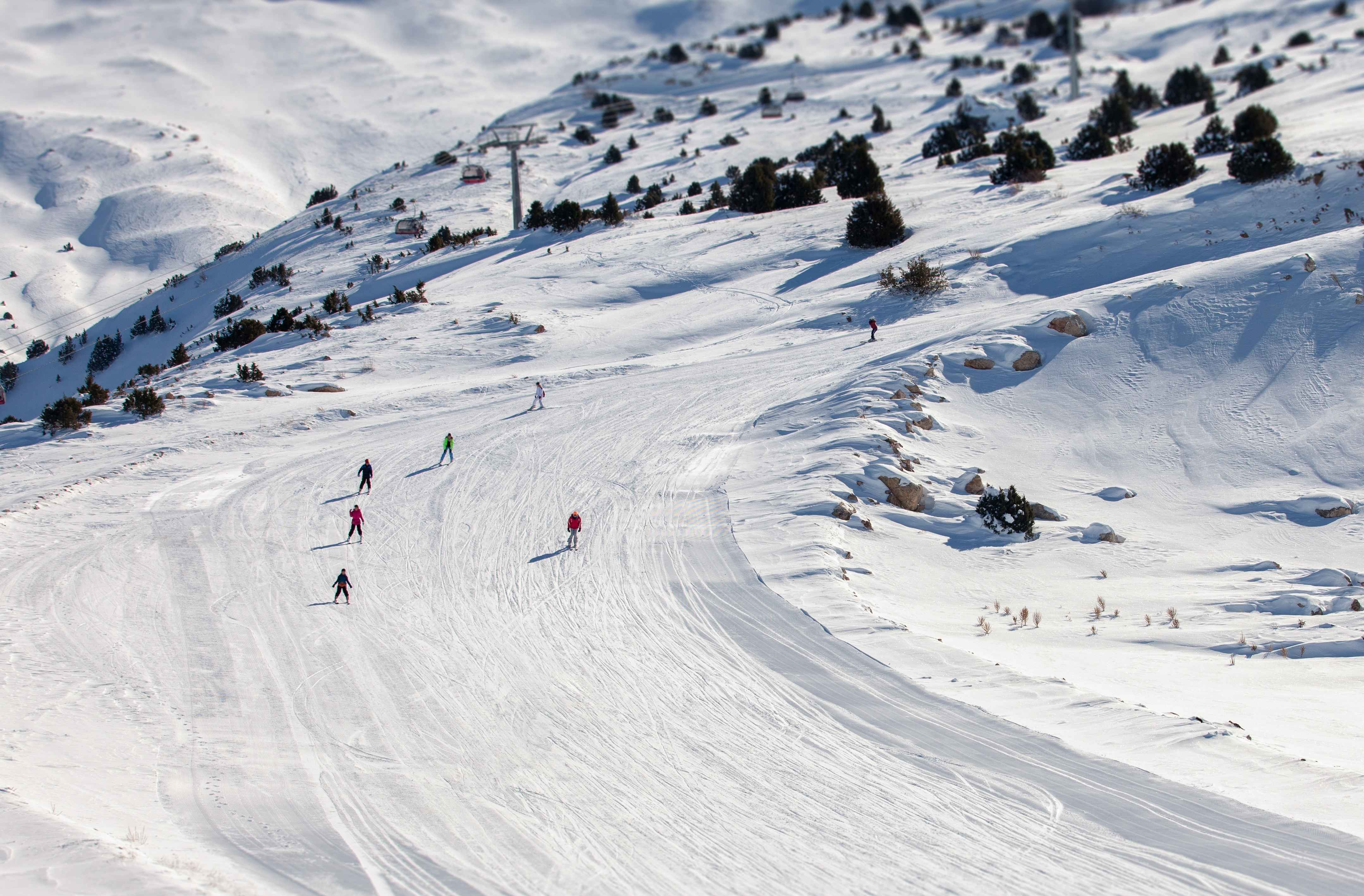
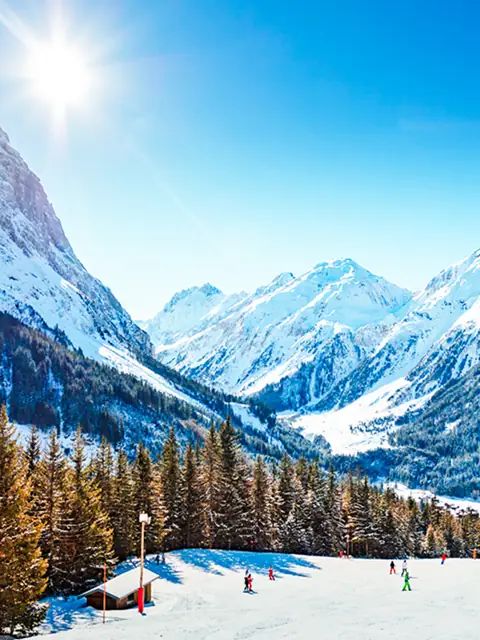
Sainte Foy is small and vertical. A short chain of chairlifts climbs from 1,550 m to 2,620 m, just over 1,000 m of drop, and most of the runs back down are reds and blues winding through larch forest, with open bowls under the Pointe de la Foglietta at the top. The piste map does not look like much, but the runs are long and the lifts rarely have a queue, so a day there covers more distance than the numbers suggest. Val d'Isère is a different scale. Bellevarde, Solaise and Le Fornet each hold a day's skiing on their own, from the steep Face de Bellevarde to long cruising reds on the sunnier side, and the link over to Tignes doubles the area again. A week in Val d'Isère can pass without repeating a run; a week in Sainte Foy means getting to know one mountain well.
Who it suits: for variety across a full week, Val d'Isère; for repeat laps on empty pistes and through the trees, Sainte Foy.
On altitude, Val d'Isère is the safer bet. The village sits around 300 m higher, the upper slopes climb past 3,000 m, the Pissaillas glacier above Le Fornet holds snow at both ends of the winter, and much of the skiing faces north, backed by strong snowmaking on the runs home. That is why it opens in late November and runs into May, while Sainte Foy typically opens mid-December and closes mid-April. Sainte Foy has its own strengths. Its slopes face largely north-west, so they keep their snow well through the core months, and the trees matter on bad days: when it is snowing or the light goes flat, the forest gives definition that the open, treeless upper mountain above Val d'Isère cannot. With so few skiers, fresh snow also lasts days rather than hours. The weakness is the top height - at 2,620 m, in a lean winter or late in the spring the lower runs feel it first.
Who it suits: for early-season and spring trips, Val d'Isère; for mid-winter weeks and storm-day skiing, Sainte Foy holds its own.
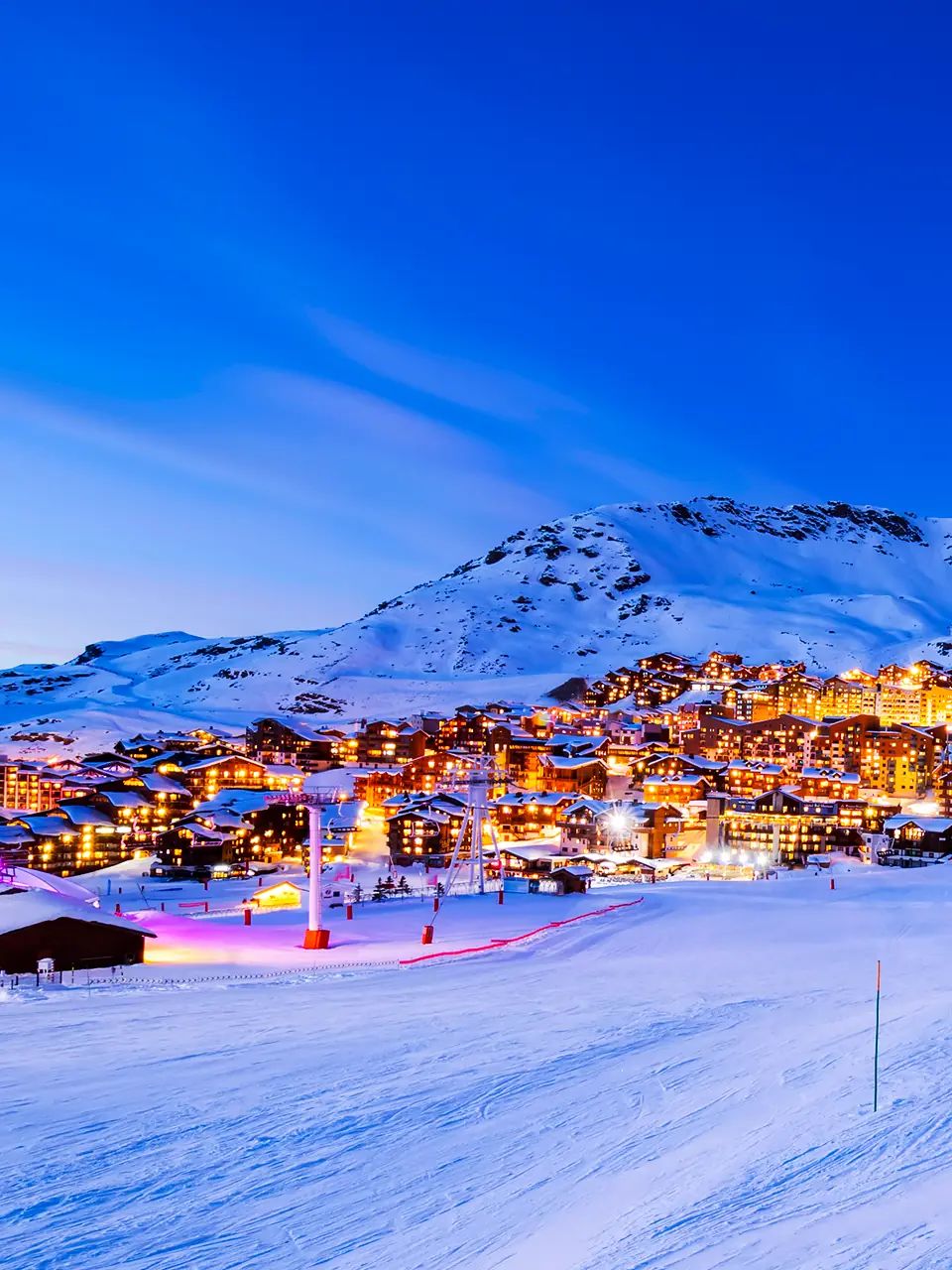
Sainte Foy's resort, Sainte Foy Station, was built from the early 1990s and built well - stone and timber, low-rise, a small cluster of chalets and residences at the foot of the lifts, four kilometres above the old village. Most stays are ski-in or a short walk from the slopes, and self-catered apartments make up much of the accommodation, many in residences with a pool and spa. Below it, the commune spreads into farming hamlets, some centuries old, and the resort itself has only a handful of shops and restaurants. Val d'Isère is a real town by comparison. Its centre keeps a stone church and old Savoyard buildings among the hotels and boutiques, with La Daille and Le Fornet strung along the valley on a free bus. The choice runs from apartments and family hotels to some of the most polished catered chalets in the Alps.
Who it suits: for space, calm and the slopes outside the door, Sainte Foy; for choice of accommodation and a busy village to come home to, Val d'Isère.
Val d'Isère runs one of the best-known après scenes in the Alps. La Folie Douce, above La Daille, sets the tone in the afternoon, and the village bars keep going well into the night, alongside a dining scene that runs from hearty mountain food to Michelin-starred tables. Sainte Foy is the opposite end of the scale. A drink on a terrace at the foot of the slopes, dinner in one of a few restaurants such as La Bergerie, and an early night are the usual pattern. The mountain lunches are where it stands out: old stone farmhouses turned restaurants in the hamlets below the pistes, some reached on skis, some with a guide. If you are based in Sainte Foy and want one big night in Val d'Isère, plan for a designated driver or a taxi home.
Who it suits: for big afternoons and late nights, Val d'Isère; for long lunches and quiet evenings, Sainte Foy.
Sainte Foy is one of the easier places in the Tarentaise to take young children. Everything happens at one base: the ski schools meet by the lifts, the nursery area with its moving carpets sits beside the residences, and with little through-traffic the slopes feel calm. Parents can ski nearby while lessons run, and everyone ends the day in the same place. The limit is what comes after the first week - with few greens and blues above the nursery, progression for nervous beginners can stall. Val d'Isère has village-centre snow gardens and large, well-run ski schools, and the free bus helps with tired legs. Its main mountain steepens quickly, though, so newer skiers often spend time on the gentler Tignes side, and the village is busier to navigate with small children and kit.
Who it suits: for young children and a calm first week, Sainte Foy; for families with confident children who want to explore, Val d'Isère.
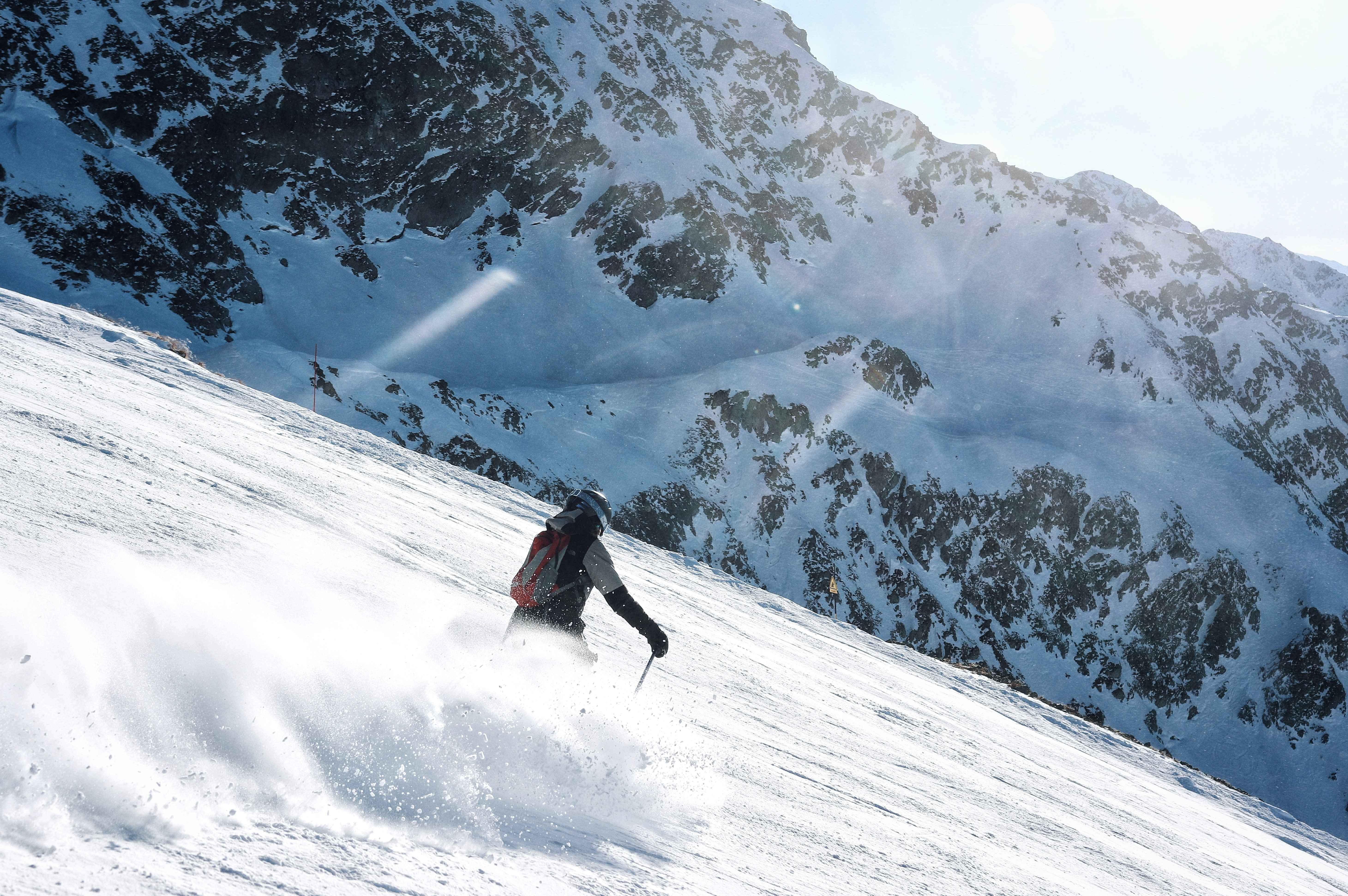
Sainte Foy's reputation with strong skiers rests almost entirely on its off-piste. North-facing slopes off the Foglietta, open bowls below the summit lifts and long descents through the forest to old hamlets such as Le Monal give it some of the most varied freeride terrain in the area for its size. Instructors from the bigger neighbouring resorts are known to ski here on their days off, and because so few people are chasing it, fresh snow stays untracked long after a storm. Much of the best terrain needs a guide, and the longer routes need one to arrange the way back. Val d'Isère answers with more lift-served pitch: the Face de Bellevarde, couloirs off Solaise and Le Fornet, and a big guided off-piste scene, plus the terrain park on the Tignes side for freestyle. Its powder goes quickly, though, and the obvious lines are tracked early on a busy morning.
Who it suits: for lift-served steeps and a park, Val d'Isère; for quiet powder days in the trees with a guide, Sainte Foy.
Both are reached through Bourg-Saint-Maurice, which has a mainline railway station at the foot of the valley. The road up to Val d'Isère runs straight past the turning for Sainte Foy, so Sainte Foy's transfer is the shorter by around half an hour: roughly 1 hour 30 minutes from Chambéry and 2 hours 30 minutes from Geneva, against around 1 hour 45 minutes and 3 hours for Val d'Isère, with Lyon another option for both. On the ground, the bigger difference is the car. In Val d'Isère you can leave it at home and use the free bus. In Sainte Foy, a car is what turns a small resort into a base for the whole valley.
Who it suits: for the shorter transfer and a car-based week, Sainte Foy; for arriving without a car, Val d'Isère.
WeSki insider tip: with a car, plan your days around the forecast rather than the map. On clear, cold days the high, open terrain above Val d'Isère is at its best. When it snows or the light goes flat, drive to Sainte Foy - the trees keep their definition and the fresh snow lasts. Whichever village you sleep in, swapping on the weather gets you the best of both.
Unlike most pairings in this series, these two do not share a pass, so the choice shapes the whole week. Three questions settle it for most people.
Will you have a car? Without one, Val d'Isère makes more sense: 300 km on one pass and a free bus cover everything. Sainte Foy is a strong base when you can drive to the bigger areas on the days you want them.
When are you going? Before Christmas, or from late March, Val d'Isère's altitude and glacier make it the safer booking. Through January and February, Sainte Foy's trees and empty slopes come into their own.
How much variety does the group need? Sainte Foy's 40 km is plenty for a few days on the pistes and for powder hunters with a guide. A full week of mixed-ability cruising across different mountains points to Val d'Isère.
If all three come out even, choose by the evening you want - a busy village, or a quiet one with the mountain to yourself the next morning.
Yes, but not on skis and not on the same pass. There is no lift or piste link between the two, so you drive - a little over 20 km, around half an hour from Sainte Foy's lifts to La Daille - and buy a Val d'Isère or Tignes - Val d'Isère day pass. Longer passes have at times included a free or reduced day on the other side, so it is worth asking when you buy. Public transport between them is limited, which is why a car makes this work.
For the first few days, Sainte Foy is usually the calmer start. The nursery area sits right by the accommodation, ski schools meet at one base, and the slopes are quiet. The catch is what comes next: there are few greens and blues above the nursery, so progress can stall. Val d'Isère has excellent ski schools and village snow gardens, and the gentler Tignes side gives improvers more room, though its own mountain steepens quickly.
Val d'Isère, on altitude alone. Its village sits around 300 m higher, the slopes climb past 3,000 m and the Pissaillas glacier keeps the top open at both ends of the season. Sainte Foy tops out at 2,620 m, so early and late in the winter it is the more exposed of the two. Through the core months, though, its north-west-facing, tree-lined slopes hold snow well, and with so few skiers the powder lasts much longer.
Broadly, a week in Val d'Isère feels more upmarket. It has a deep choice of smart hotels, catered chalets and high-end restaurants, and a lift pass that covers 300 km. Sainte Foy is mostly self-catered apartments and a few relaxed restaurants, with a lift pass that covers a much smaller area. It comes down to the style of trip you want.
Both are excellent, in different ways. Sainte Foy is the quieter choice: north-facing slopes, long descents through the forest and so few skiers that fresh snow stays untracked for days. Most of it needs a guide. Val d'Isère has far more lift-served steep terrain, from couloirs to the Face de Bellevarde, and a big guiding scene, but its obvious lines get tracked quickly.
For young children, Sainte Foy usually has the edge on everyday ease: one compact base, ski-in accommodation, a calm nursery area and quiet slopes where parents can ski close to lessons. Val d'Isère suits families with older, confident children who want more terrain and more to do in the evenings, and its free bus means no car is needed.


WeSki is a trading name operated by WeTrip Ltd. All the flights and flight-inclusive holidays on this website are financially protected by the ATOL scheme. When you pay you will be supplied with an ATOL Certificate. Please ask for it and check to ensure that everything you booked (flights, hotels and other services) is listed on it. Please see our booking conditions for further information or for more information about financial protection and the ATOL Certificate go to: www.caa.co.uk.
Package holidays that do not include travel by air are financially protected via ABTOT.
For the latest travel advice from the Foreign & Commonwealth Office visit www.gov.uk/foreign-travel-advice.