EN
EN
Bardonecchia and Sestriere sit less than an hour apart in the Italian Piedmont, both within easy reach of Turin, and they are sold side by side often enough that people assume they are two halves of the same thing. They are not. Sestriere is the high point of the Via Lattea, the 400 km circuit it shares with Sauze d'Oulx, Sansicario, Cesana and Claviere. Bardonecchia is a self-contained 100 km area across the valley, joined to that circuit by a commercial agreement rather than a chairlift - there is no lift and no piste between them. That makes this a real choice rather than a question of which village you sleep in. This guide compares them on terrain, the pass, snow, village, après, families, experts and transfers.
Choose Bardonecchia for: a working Alpine town rather than a resort, a mainline station in the middle of it, two contrasting mountains - sheltered forest runs on one side of the valley and open high-altitude skiing at around 2,800 m on the other - learning slopes at town level, and the Olympic snowpark and halfpipe at Melezet. It suits families for reasons of layout as much as atmosphere.
Choose Sestriere for: the highest village base in this corner of the Alps at 2,035 m, direct lift access to the whole 400 km Via Lattea circuit on the standard ticket, the Olympic race pistes off Monte Motta and Monte Sises, and enough mileage that a confident intermediate can fill a week without repeating a run - which is what makes it work for groups of mixed pace.


| Feature | Bardonecchia | Sestriere |
|---|---|---|
| Country | Italy | Italy |
| Ski area | Bardonecchia - self-contained, no piste link to the Via Lattea | Via Lattea (Milky Way) - around 400 km across eight linked villages |
| Local pistes | Around 100 km across three sectors | Around 100 km on Sestriere's own three sectors |
| Village altitude | 1,312 m | 2,035 m |
| Highest lift | Around 2,800 m (Jafferau) | Around 2,800 m (Monte Motta) |
| Slope aspect | Mainly north and north-west - larch forest below, open ground on Jafferau | Mainly north-west and open, with forest on the lower Motta runs |
| Lift pass | Bardonecchia's own pass for its own area | Via Lattea covers the whole Italian circuit; six consecutive days or more adds one Montgenèvre day and one Bardonecchia day |
| Season | Roughly early December to mid-April | Roughly early December to mid-April |
| Best for | Families, tree skiing, freestyle, arriving by train | Intermediate mileage, race pistes, altitude |
| Village character | Working town with a cobbled old quarter | Purpose-built 1930s resort on a high pass |
| Nearest airport | Turin (~1 hr 15 min); Milan Malpensa (~2 hr 30 min) | Turin (~1 hr 45 min); Milan Malpensa (~3 hr) |
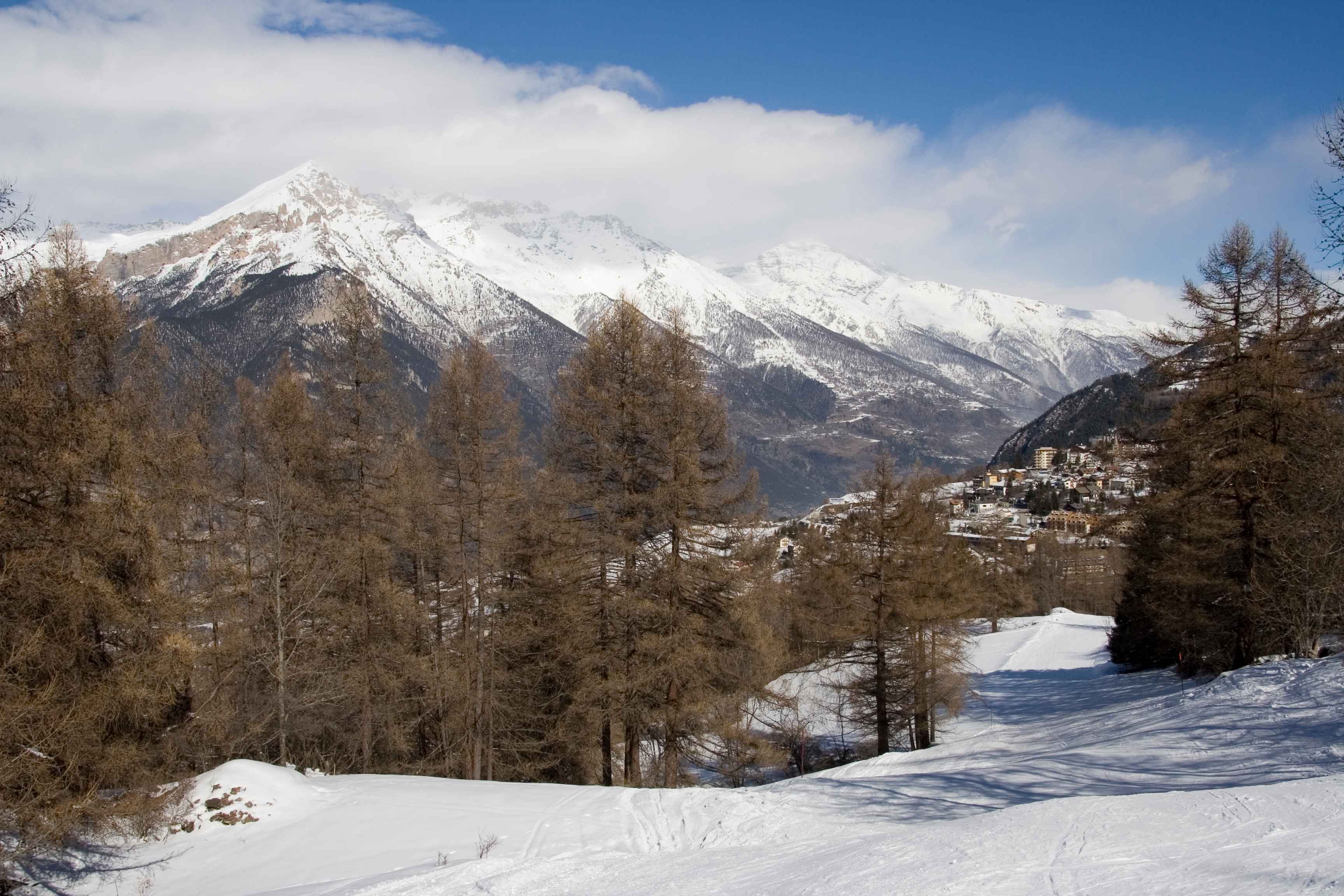
Bardonecchia's 100 km splits across two mountainsides that never meet on skis. Campo Smith, at the edge of town at around 1,330 m, feeds the linked Colomion-Les Arnauds and Melezet sectors: a dense web of runs cut mostly through larch forest, topping out on the open plateau of Vallon Cros at 2,400 m. Across the valley, Jafferau is reached by a free shuttle from the centre, five minutes away, and it skis like a different resort - almost entirely above the treeline, rising to around 2,800 m, red-dominated, with open ground either side of the pistes. Sestriere's own skiing is a similar size but arranged around one village instead of across a valley. Monte Sises rises straight out of the centre, Monte Motta holds the longest and steepest descents down to Borgata, and Monte Fraiteve behind the village is the junction where the rest of the circuit opens up towards Sansicario and Sauze d'Oulx. Reds dominate on both sides of the valley, and true greens are scarce at Sestriere.
Who it suits: for two contrasting mountains inside one small area, Bardonecchia; for a circuit you can ski point to point all week, Sestriere.
This settles more of the decision than the terrain does. Sestriere's standard ticket is the Via Lattea pass, and it covers the entire Italian circuit - Sestriere, Sauze d'Oulx, Sansicario and Cesana, Claviere, Oulx and Pragelato - so a week there really is 400 km wide, skied on the lifts rather than driven between. Buy six consecutive days or more and the same pass carries one day in Montgenèvre, over the French border, and one day in Bardonecchia. Bardonecchia sells its own pass, covering its own three sectors and nothing else, with a separate combined season ticket for anyone who wants both areas all winter. What links the two is ownership rather than infrastructure - Bardonecchia's area now sits under the same company as Sestriere's, which is why they share pass literature despite having no lift between them. The benefit runs one way. From Sestriere, Bardonecchia is a day out you have already paid for; from Bardonecchia, the Via Lattea is a separate ticket.
Who it suits: for the most ground covered on one ticket, Sestriere; for a smaller area at a smaller outlay, Bardonecchia.
The altitude gap between the two villages is over 700 m, which is wider than almost any pairing in this library, and it matters less than it looks. Sestriere sits at 2,035 m on an open pass with its slopes facing mainly north-west, and the Via Lattea runs snowmaking across a good share of the circuit, so the runs back into the village hold a base when lower resorts are struggling. It is the safer booking at either end of the season and in a lean winter. Bardonecchia starts at 1,312 m, but almost none of its skiing happens at that height: Campo Smith is the bottom of the mountain rather than the middle of it, the forest above the town shelters what falls, and Jafferau tops out level with Monte Motta. Where the gap shows is the last stretch home, which thins first in a warm spell. The trees are the compensation - when cloud settles on Sestriere's open pass there is nothing to see by, and Melezet still skis.
Who it suits: for late season or a thin winter, Sestriere; for visibility while it is snowing, Bardonecchia's forest is the better place to be.
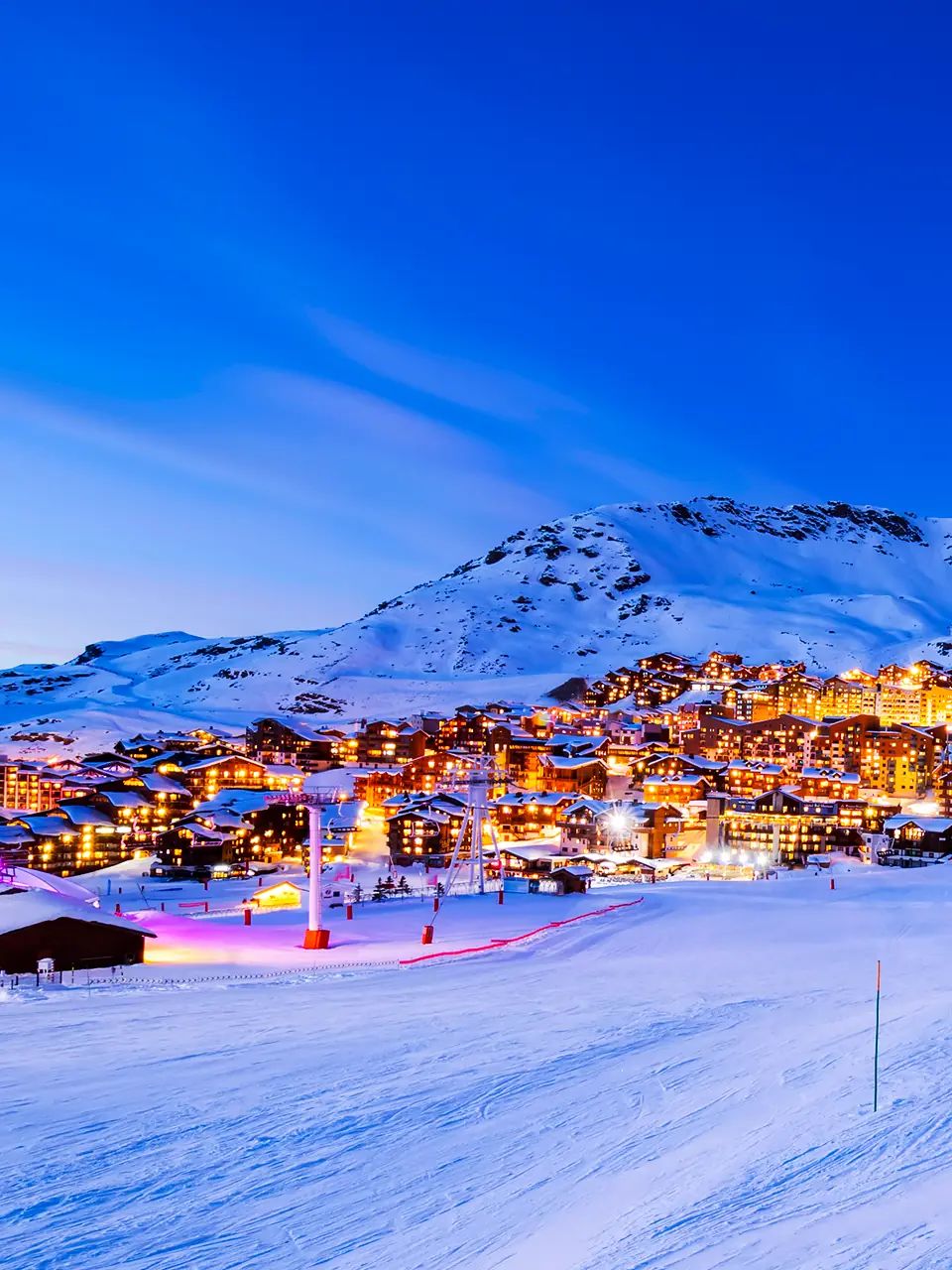
Sestriere was Europe's first purpose-built ski resort, put up in the 1930s by the Agnelli family of Fiat as a company retreat within reach of Turin, and its two cylindrical towers still announce the fact from a distance. Nobody books it for the architecture. What it gives you is compactness: the village sits on the pass, nearly everything is a short walk from a lift, and the stock runs to hotels and apartments on or beside the snow. Bardonecchia is a town before it is a resort - a few thousand residents, a cobbled old quarter, a weekly market that predates the skiing by several centuries, and shops that stay open because people live there. Apartments are plentiful and a week costs less than in Sestriere, though accommodation is spread through the town rather than lined up along a piste, so most mornings start with a short walk or the free shuttle.
Who it suits: for stepping out of the door and onto a lift, Sestriere; for streets worth wandering and somewhere open on a Tuesday, Bardonecchia.
Neither is an après resort in the way the word is usually meant, and anyone after a late one is better served by Sauze d'Oulx down the valley. Sestriere runs on aperitivo: a handful of bars, a couple of small clubs, and evenings that are quiet from Monday to Thursday before Turin arrives on Friday and the whole place changes gear for two days. Book midweek and you get empty pistes and a subdued village, which some people are looking for and others are not. Bardonecchia has more going on simply because it is a town. Piedmontese cooking is the draw - the valley's own dishes rather than a resort menu - and the restaurants and pizzerias fill with locals as well as visitors. It also gets its own weekend surge, so the pattern is the same; there is just more of a village underneath it.
Who it suits: for eating well in a place that exists year round, Bardonecchia; for quiet midweek evenings and a lively Saturday, Sestriere.
Bardonecchia makes the easier first week, and the reason is geography. Its green runs and nursery ground sit at Campo Smith and Melezet at the bottom of the mountain, inside the town, served by magic carpets and short drags, so a first-timer skis from the door and finishes where everyone else does. Away from the snow there is an ice rink, a sledging area and a pool, and a town to walk around in the evening rather than a single street. That combination is why it suits first-timers better than its size suggests. Sestriere has nursery drags in the village itself, which beats riding a gondola to a lesson, but greens are scarce across the whole 400 km - the circuit is built on blues and reds, so a child who has just found their feet gets pushed onto steeper ground faster than they would elsewhere.
Who it suits: for a first week or young children, Bardonecchia; Sestriere suits families whose children already ski blues comfortably.
Sestriere has the pistes. The Kandahar Banchetta drops from the top of Monte Motta down to Borgata, a World Cup downhill with a steep upper wall, and Sises alongside it is long and sustained in a way that little else in the area is. Off the runs, Monte Fraiteve gives lift-served freeride and the larch below Motta holds fresh snow for days after a storm, both worth a guide and a look at the bulletin. Bardonecchia answers on two fronts. Jafferau is the freeride ground: open, high and thinly skied, with lines either side of the pistes that stay untracked long after the Via Lattea has been picked over. And Melezet holds the Olympic snowpark and halfpipe built for the 2006 Games, which is still the most serious freestyle setup in this part of Piedmont and the reason a lot of snowboarders come here rather than Sestriere.
Who it suits: for steep race pistes and big off-piste mileage, Sestriere; for quiet freeride and a proper park, Bardonecchia.
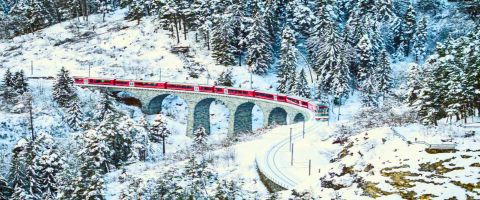
Turin is the gateway for both and it is close by Alpine standards: around an hour and a quarter to Bardonecchia, around an hour and three-quarters to Sestriere, which sits further up a side valley. Milan Malpensa works as a fallback and adds roughly an hour and a quarter to either. The real difference is the railway. Bardonecchia has an international station in the middle of the town, on the main line between Paris, Turin and Milan, a short walk or shuttle ride from the lifts - one of very few Alpine resorts you can reach with no transfer at all. Sestriere's nearest station is Oulx, around 25 km down the valley, and the bus or taxi up from there takes roughly another forty minutes. If nobody in the group wants to drive or book a transfer, that difference is large.
Who it suits: for arriving by train, Bardonecchia, by a distance; by road or transfer, either works comfortably from Turin.
WeSki insider tip: if you book Sestriere for six consecutive days or more, your pass carries a Bardonecchia day and most people never use it. Take it, and go to Jafferau rather than Campo Smith - the open, high-altitude half of Bardonecchia is unlike anything on the Via Lattea, and the forest runs you can approximate at Sauze d'Oulx. Two things to sort first. Check at the ticket office how your extension day is issued, because it has been loaded onto the chip in some seasons and needed a coupon in others. And take the road, about forty-five minutes each way, or the train from Oulx, which is nearer fifteen.
With no lift between them, this is a decision you are stuck with for the week rather than one you can revisit on the Wednesday. Three questions tend to settle it.
How much ground do you want to cover? If the appeal is skiing somewhere different each day and coming home on the lifts, Sestriere and the Via Lattea answer that and Bardonecchia cannot. If a hundred kilometres split across two contrasting mountains is plenty for a week, Bardonecchia gives you a better village for the same money.
Is anyone in the group learning? Bardonecchia, without much argument. Its green runs and nursery ground are in the town, and there is more of a resort to fill an afternoon off. Sestriere teaches just as well but has few true greens to progress onto.
How are you travelling? A mainline station in the town is worth more than most people expect on arrival day, especially with children and kit. If you are flying into Turin and taking a transfer anyway, this one cancels out and the first two questions decide it.
No, and this is the thing most worth knowing before you book. The two ski areas sit on opposite sides of the upper Susa valley with no lift or piste between them, so there is no equivalent of the Via Lattea circuit joining them. Getting from one to the other means the road, around forty-five minutes, or the train via Oulx, which is quicker. Plenty of people do it as a day trip - it is a short hop by Alpine standards - but it is a day out, not a morning's skiing, and your base decides which area you ski by default.
Commercially yes, physically no. Bardonecchia's ski area was brought into the Via Lattea network after it came under the same ownership as Sestriere's, which is why the two now appear on the same pass literature and why combined season tickets exist. What has not changed is the geography: the areas are not lift-linked and never have been. Treat the Via Lattea's 400 km as Sestriere's figure and Bardonecchia's 100 km as its own, and you will not be caught out by the marketing.
On a longer pass, partly. A Via Lattea pass bought for six consecutive days or more carries one day in Bardonecchia, along with one day in Montgenèvre across the French border. Buy five days and you lose both, which is why the sixth day is better value than the price difference suggests. How the Bardonecchia day is issued has varied between seasons, so ask at the ticket office whether it is already on your chip or needs claiming. It does not work the same way round: a Bardonecchia pass covers Bardonecchia.
Bardonecchia, fairly clearly, and it comes down to where the easy ground sits rather than the teaching. Its green runs and learning areas are at Campo Smith and Melezet at town level, so a first week involves no lift before the lesson and none after it. Sestriere has nursery drags in the village, which is better than most high resorts manage, but there are very few true green runs anywhere in the 400 km, so the step up to blues arrives sooner than a nervous skier would like. Both have English-speaking ski schools.
Sestriere, on the numbers. Its village sits at 2,035 m against 1,312 m, its slopes face mainly north-west, and snowmaking covers much of the circuit, so it holds a base at both ends of the season. Bardonecchia performs better than its base altitude suggests, though, because the skiing starts above the town, the forest shelters the lower runs and Jafferau reaches the same height as Sestriere's top lift. The first thing to go thin at Bardonecchia is the run home rather than the mountain.
Broadly, yes. Sestriere's beds carry a premium that comes with being the best-known name in the area and the one Turin drives to at weekends, and the Via Lattea pass covers far more ground than Bardonecchia's, so it costs accordingly. Bardonecchia is a town with normal town prices for eating out, and its apartment stock keeps the cost of a week down for families and groups. The honest framing is that you are buying a bigger ski area at Sestriere rather than a better week - which of those two is worth more depends on how far you actually ski.

WeSki is a trading name operated by WeTrip Ltd. All the flights and flight-inclusive holidays on this website are financially protected by the ATOL scheme. When you pay you will be supplied with an ATOL Certificate. Please ask for it and check to ensure that everything you booked (flights, hotels and other services) is listed on it. Please see our booking conditions for further information or for more information about financial protection and the ATOL Certificate go to: www.caa.co.uk.
Package holidays that do not include travel by air are financially protected via ABTOT.
For the latest travel advice from the Foreign & Commonwealth Office visit www.gov.uk/foreign-travel-advice.